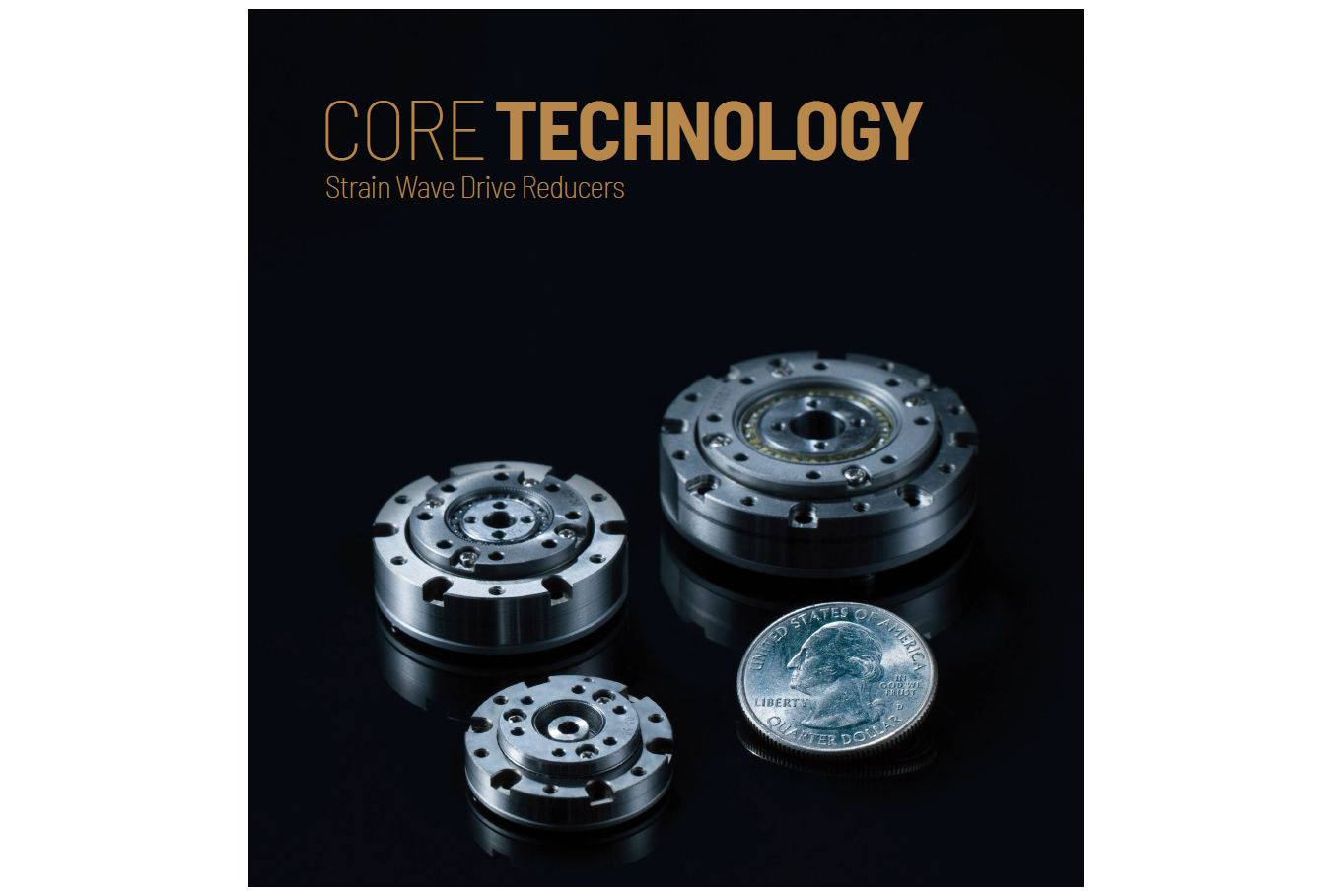
The SHD-03 Ultra-Mini Harmonic Drive is a next-generation 25mm strain wave reducer designed for compact robotic joints, servo actuators, humanoid robots, and advanced micro-mechanisms requiring ultra-high precision and lightweight transmission.
Despite its tiny size—only 7.3mm thick and weighing just 16g—the SHD-03 delivers exceptional torque, ultra-low backlash and stable, smooth motion ideal for professional robotic applications.


✨ Key Features
✔ Ultra-Compact Design
Only 25mm outer diameter and 7.3mm thickness, enabling use in extremely tight installation spaces such as micro-robots, wearable robotics, and precision actuators.
✔ High Precision Strain Wave Transmission
Near-zero backlash (≤20 arcsec), smooth rotation, and high positioning accuracy make it suitable for advanced servo control systems.
✔ High Torque Density
Delivers surprising torque for its size:
-
Rated torque: 0.08–0.13 Nm
-
Peak torque: up to 0.24 Nm
-
Momentary torque: up to 0.50 Nm
✔ High Input Speed Compatibility
Supports up to 10,000 rpm, pairing perfectly with ultra-fast micro servo motors.
✔ Multiple Gear Ratio Options
Optimized ratios for robots and micro-actuators:
30 : 1 / 50 : 1 / 80 : 1 / 100 : 1 / 120 : 1
✔ Industrial-Grade Construction
Precision bearings + steel flex spline ensure long-term durability, stability, and shock resistance.

📐 Technical Specifications
| Parameter | Ratio 30 | Ratio 50 | Notes |
|---|---|---|---|
| Rated Torque (Nm) | 0.08 | 0.13 | @2000 rpm |
| Repeated Peak Torque (Nm) | 0.15 | 0.24 | Continuous |
| Average Torque Limit (Nm) | 0.12 | 0.16 | — |
| Momentary Peak Torque (Nm) | 0.25 | 0.50 | Short time |
| Max Input Speed (rpm) | 10,000 | 10,000 | — |
| Avg Input Speed Limit (rpm) | 6500 | 6500 | — |
| Backlash | ≤20 arcsec | ≤20 arcsec | — |
| Outer Diameter | 25mm | — | — |
| Thickness | 7.3mm | — | — |
| Weight | 0.016kg | — | — |
| Mounting Holes | M1.5 / M2 | — | See drawing |
📦 Package Includes
-
1 × SHD-03 Ultra-Mini Harmonic Drive Reducer (selected ratio)
🔧 Applications
Perfect for:
-
Robotic Joints & Servo Actuators
-
Humanoid Robots & Bionic Arms
-
Micro Robotics & Education Robots
-
Pan-Tilt Gimbals & Camera Stabilizers
-
Precision Automation Systems
-
AI Mobility & Wearable Robotics
-
Medical Devices & Lab Automation
❓ Frequently Asked Questions (FAQ)
Q1: Is this harmonic drive compatible with any motor?
Yes. It works with most coreless motors, brushless DC motors, servo motors, and custom micro actuators.
Q2: What is the maximum load capacity?
0.25–0.5 Nm depending on the gear ratio.
Q3: Does it require lubrication?
It is factory pre-lubricated, maintenance-free in normal use.
Q4: Can it be used for humanoid robot joints?
Absolutely. Its size and precision make it ideal for fingers, wrists, and micro-joint actuators.
⚠ Installation & Safety Instructions
Please follow the guidelines below to ensure correct installation and optimal performance of the SHD-03 Mini Harmonic Drive Reducer.
🔧 1. Lubrication Guidelines
-
If the reducer’s output end is positioned facing downward for extended periods, ensure the lubricant applied to the flexspline’s inner wall cavity fully covers and extends beyond the gear-meshing tooth surface.
-
Proper lubrication prevents wear, overheating, and premature failure.
🔩 2. Assembly & Sealing Requirements
-
Apply a static seal between:
-
the rigid wheel and its connector mounting surfaces
-
the flexspline and its connector mounting surfaces
-
-
This sealing step is essential to prevent grease leakage during operation.
-
Grease loss can lead to insufficient lubrication, resulting in internal damage.
🛠 3. Handling Precautions
-
Do not strike, drop, or apply heavy force to any part of the reducer.
-
Avoid using hard tools or excessive pressure during installation.
-
Improper handling may cause:
-
deformation of precision components
-
reduced torque accuracy
-
shortened service life
-
📞 4. Installation Support
If you experience any issues during installation or testing, please contact our support team. Providing clear photos or videos will help us assist you more efficiently.