Overview
The Hiwonder Ackermann steering robot car chassis is an all-metal aluminum-alloy platform designed for educational and research use cases such as autonomous driving structure learning and ROS robot development. It uses a front-wheel Ackermann steering structure and rear-wheel electronic differential, and is built around a metal chassis with solid rubber tires, 12V encoder geared motors, and an LD-1501MG high-precision digital steering servo.
Key Features
- Ackermann steering structure: inner wheel turns at a greater angle than the outer wheel during cornering; rear wheels remain parallel.
- All-aluminum body (all-metal aluminum alloy) with anodized surface; chassis color: Black.
- High-performance 12V encoder geared motors (AB dual-phase encoder).
- High-precision steering with LD-1501MG large-torque digital servo (metal gear).
- Compatible with various controllers; supports expansion of electronic systems such as STM32.
- Solid rubber tires for higher friction and slip resistance.
- Provided materials include a detailed assembly tutorial and chassis control materials.
- Adapt to diverse terrains: On the Road / On Rocks / On Grass / On the Floor.
Specifications
Chassis / Plate Parameters
| Material | Aluminum alloy |
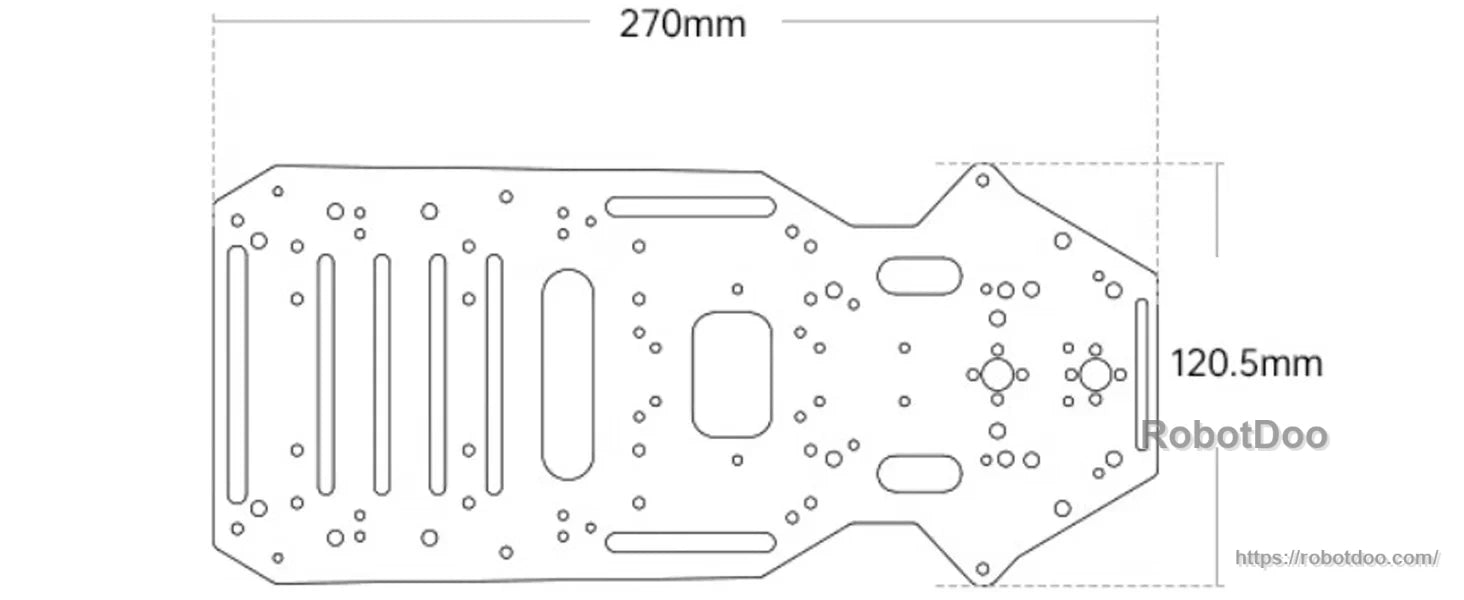
| Dial length | 270mm |
| Thickness | 2mm |
| Weight | 126g |
| Chassis width | 120.5mm |
| Chassis color | Black |
Chassis / Package Information
| Material | Aluminum alloy |
| Length | 270mm |
| Width | 197mm |
| Thickness | 2mm |
| Package weight | Single Layer: 0.96kg; Double Layer: 1.06kg |
| Chassis color | Black |
| Package weight | 1.4kg |
| Package size | 320*250*130mm |
Encoder Geared Motor
| Rated voltage | 12V |
| Rated power | about 8.3W |
| Motor type | permanent magnet brushed |
| Stall current | 3.2A |
| Stall torque | 15kg.cm |
| Rated current | 0.36A |
| Locked torque | 2.6kg.cm |
| Gear ratio | 1:90 |
| No-load speed | 110rpm |
| Rated speed | 85rpm |
| Shaft diameter | 6mm (D-shaped shaft) |
| Encoder specification | AB Dual-Phase Encoder |
| Number of magnetic poles | 11 poles |
| Port type | PH2.0-6PIN |
LD-1501MG High-precision Servo
| Weight | 61g |
| Stal current | 2.4~3A |
| Size | 40*20*40.5mm |
| Servo precision | 0.3° |
| Working voltage | 6-8.4V |
| Control method | PWM pulse width control |
| Rotation speed | 0.16sec/60°7.4V |
| Gear type | metal teeth |
| Stalling torque | 13kg.cm 6V; 15kg.cm 6.5V; 17kg.cm 7.4V |
| PWM pulse width range | 500~2500us, corresponding to 0~180° |
| Rotation range | 0~180° |
| Line length | 300mm |
| No-load current | 100mA |
| Apply to | diverse bionic robot joints |
Wiring / Port Labels (from provided diagrams)
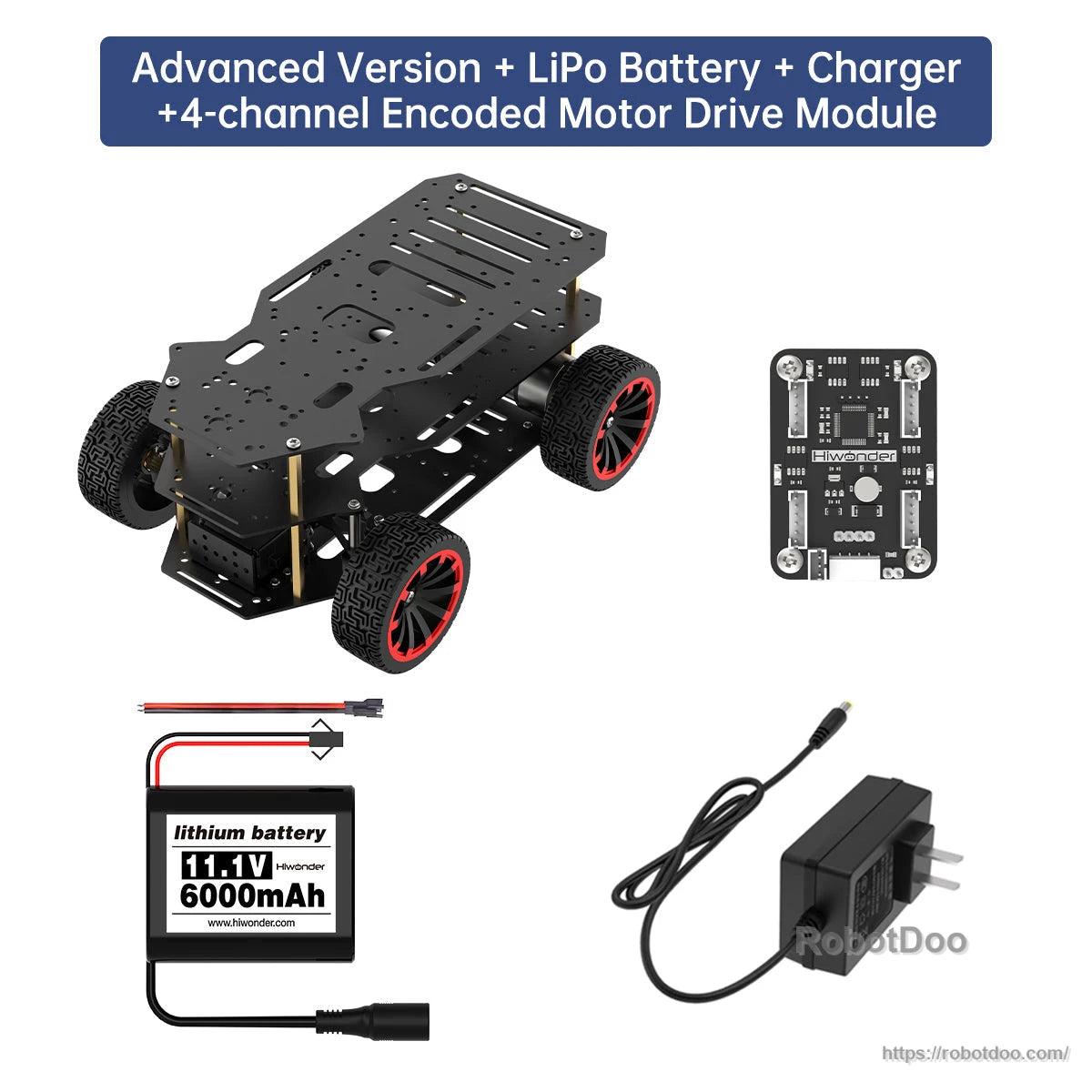
- 4-channel encoded motor drive module labels: Encoded Motor Port; 3Pin Power Port; IIC Port; Power Port.
- Encoder geared motor wire labels: Motor power cable +; Sensor signal positive 5V/3.3V; Sensor signal wire A phase; Sensor signal wire B phase; Sensor signal negative; Motor power cable.
Mechanical Drawing Labels (unit: mm)
- Chassis outline drawing labels: 197mm, 118mm, 270mm, 75mm, 30mm.
- Chassis plate drawing labels: 270mm x 120.5mm.
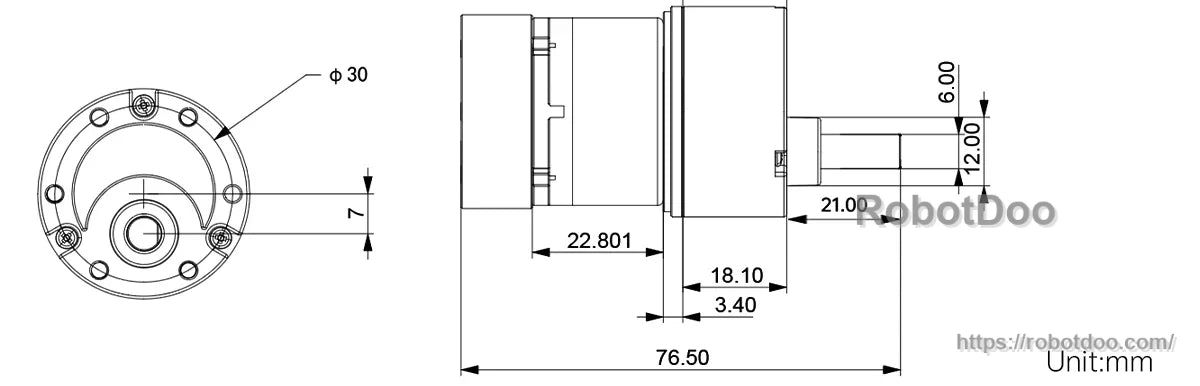
- Encoder motor drawing labels (Unit: mm): Phi 30; 7; 76.50; 22.801; 18.10; 3.40; 21.00; 6.00; 12.00.
- Servo drawing labels (Unit: mm): 45.5; 40.5; 40.0; 54.4; 20.0; 49.5.
Applications
- Educational Ackermann steering structure learning
- Autonomous driving research prototyping
- Robot chassis base for ROS robot development
Manuals
Documentation and source code: https://docs.hiwonder.com/projects/Ackermann-Chassis/en/latest/
Details
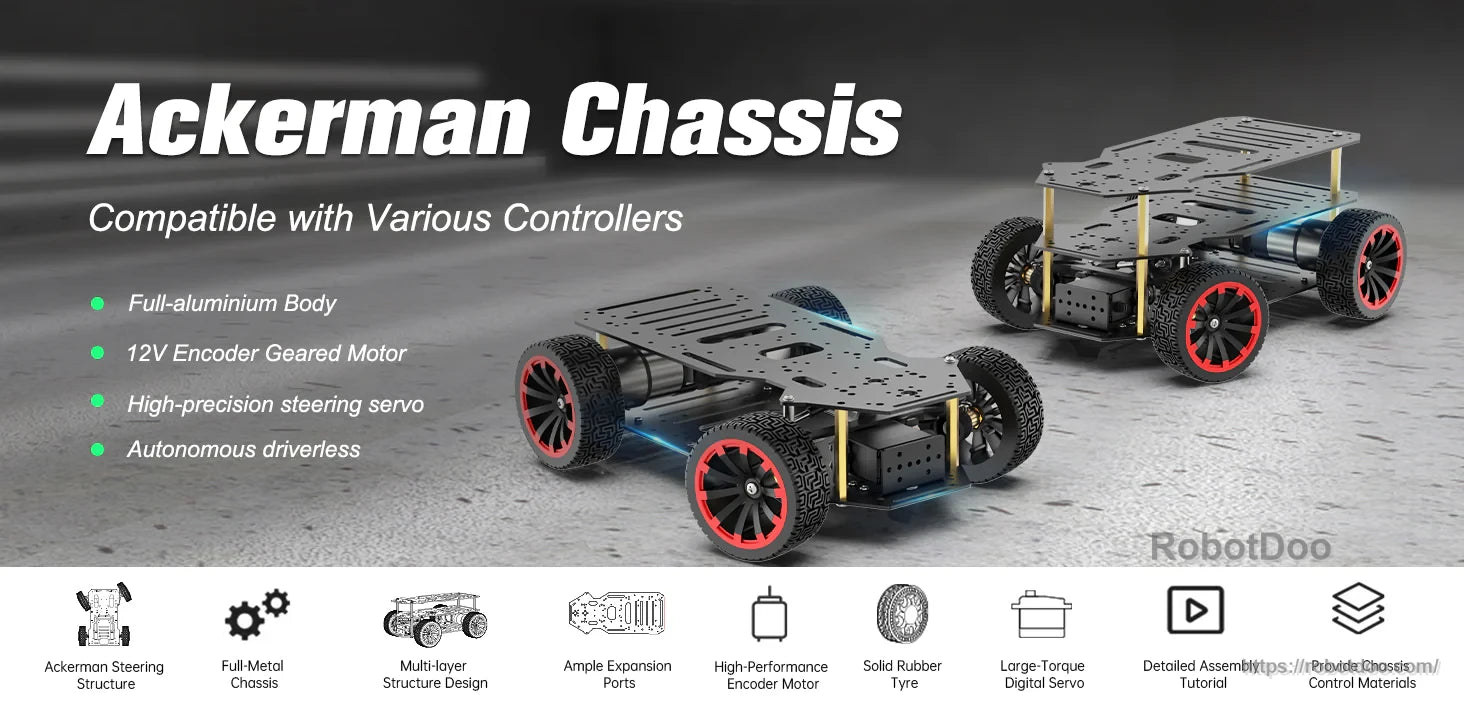
An all-metal Ackermann steering chassis built for ROS learning and autonomous driving experiments, with encoder motors and a high-torque steering servo.
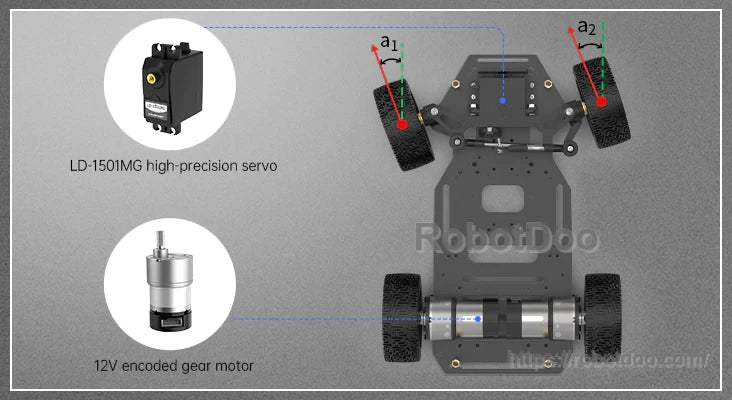
Front-wheel Ackermann steering pairs a precision digital servo with 12V encoder geared motors for closed-loop speed feedback.
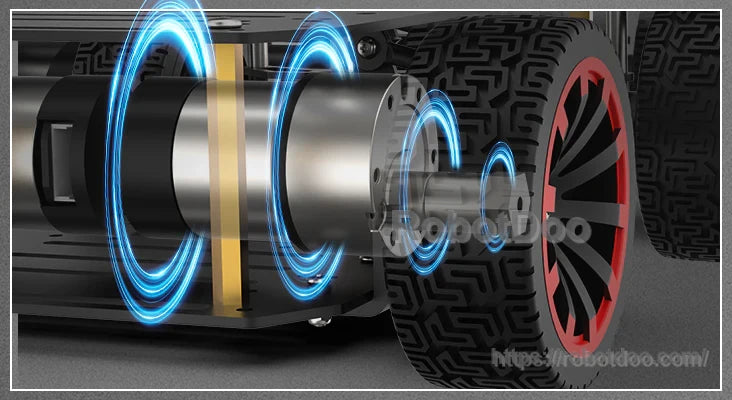
Encoder geared motors provide accurate rotation feedback for odometry and motion control.
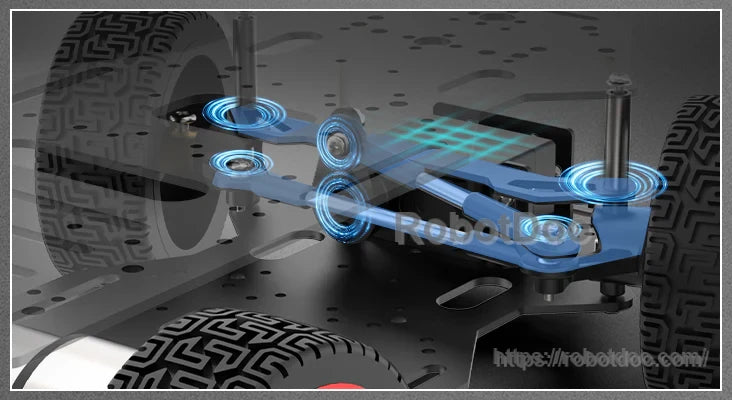
A rear-wheel electronic differential helps maintain smooth cornering by balancing left and right wheel speeds.
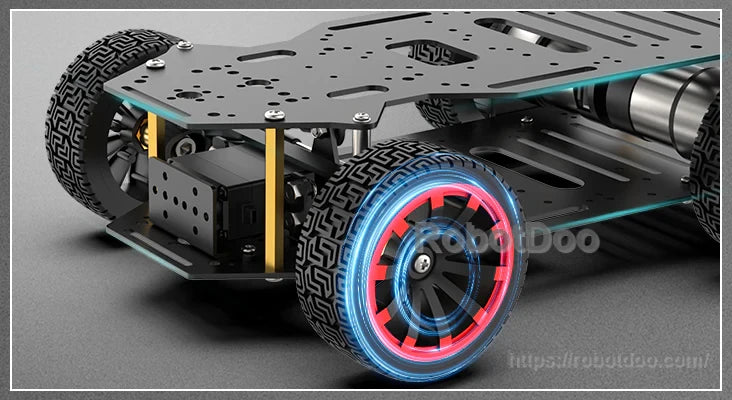
Solid rubber tires and a rigid aluminum frame add grip and stability for classroom and lab testing.
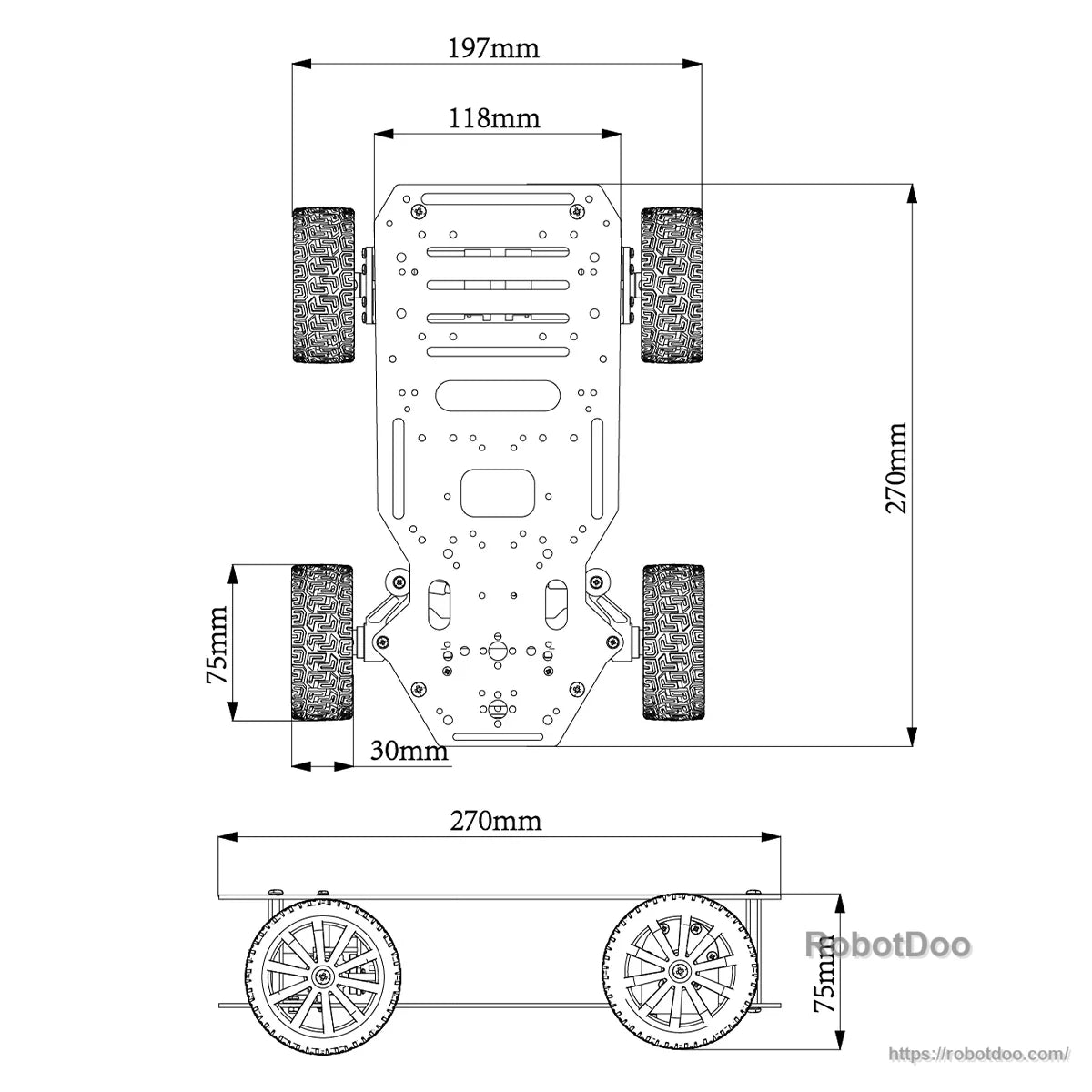
Compact footprint makes it easy to mount controllers, sensors, and expansion plates without sacrificing stability.
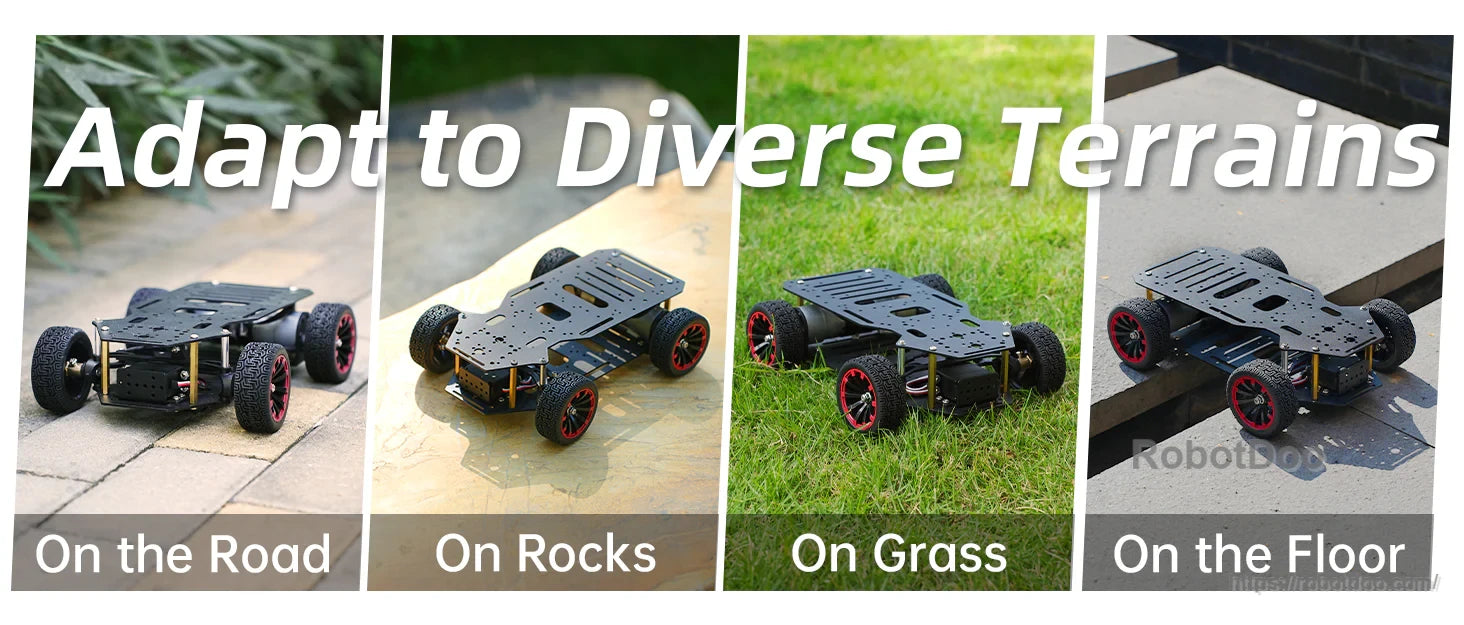
Designed to handle common test surfaces from smooth floors to grass and light gravel paths.
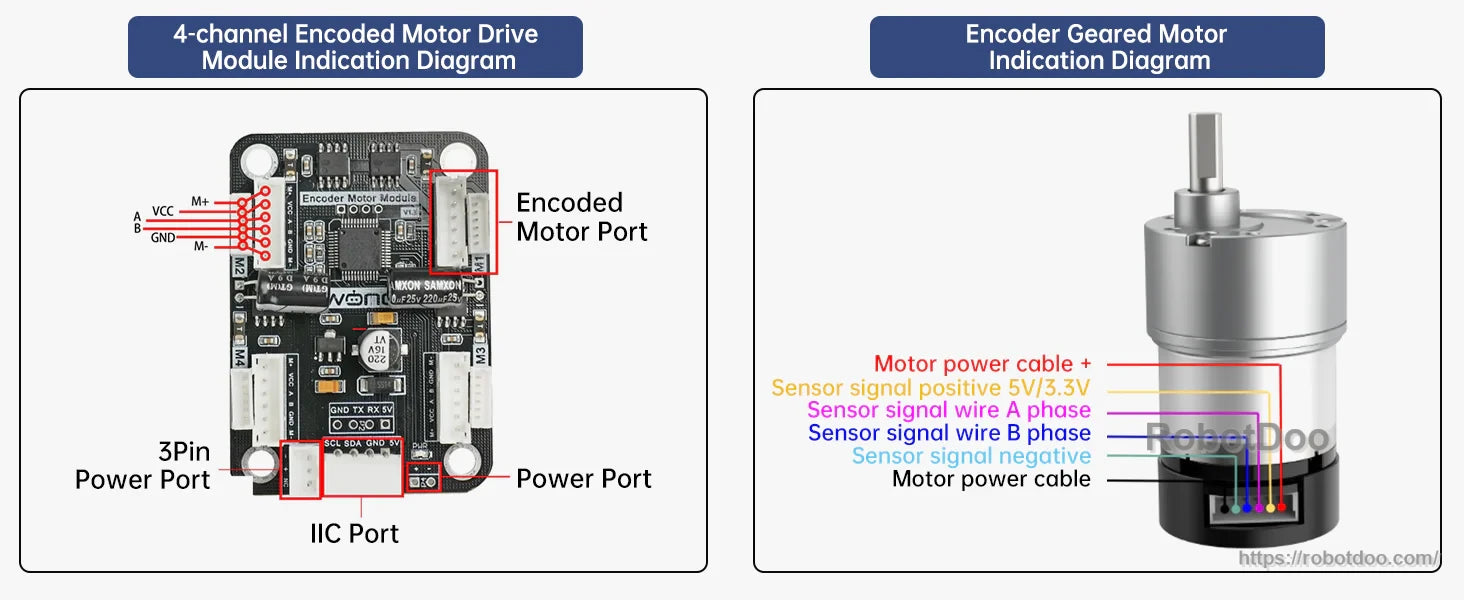
Clear port labels simplify wiring the motor driver and matching encoder signal lines during assembly.
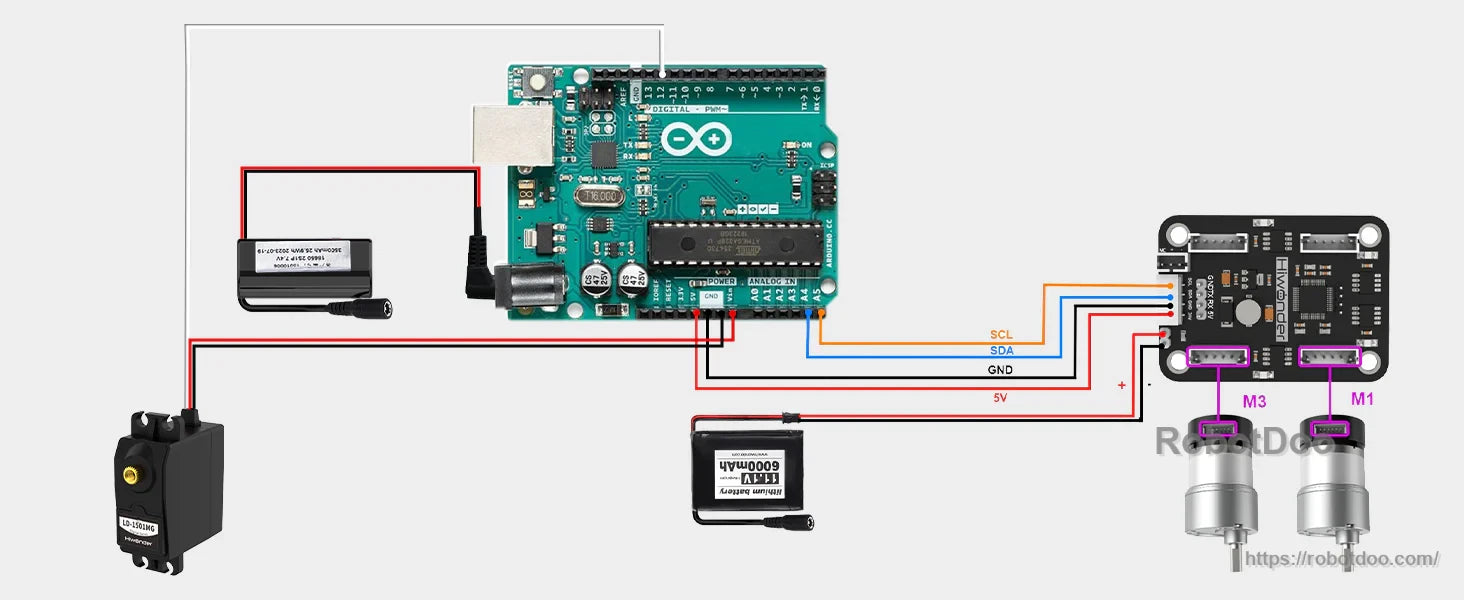
A typical control setup connects the steering servo and dual encoder motors through a motor driver for quick prototyping.