Overview
This ROS robot control board is based on the STM32F407VET6 (Cortex-M4, 168MHz) and integrates an MPU6050 IMU (6-axis pose sensor). It provides motor/servo control interfaces plus USB communication peripherals, supporting ROS expansion and controller switching for platforms such as Raspberry Pi and NVIDIA Jetson series controllers. ROS1 and ROS2 SDKs (Python 3) and ROS chassis source code are provided, covering motor control, attitude calculation, and PC communication.
Key Features
- STM32F407VET6 main control: Cortex-M4 core, 168MHz main frequency, built-in FPU, Murata crystal oscillator.
- 4-channel encoder motor drive: supports up to 4 encoder motors with PID speed control.
- Servo expansion: 4-channel PWM servo port (5V drive) and 2 serial bus servo ports (drive voltage equals power supply voltage).
- Multiple control/IO interfaces: USB, SBUS, I2C expansion, Bluetooth (UART), USB HOST, UART and GPIO expansion.
- Line follower support: dedicated I2C port supports connection to 4-channel line follower and 6-channel photoelectric line follower.
- Protection circuits: reverse connection, overcurrent, overheating, backflow protection; also overheat, short-circuit, and over-current protection.
- Power options: DC 7-14V input; Type-C external power supply port (independent 5V5A) for powering devices such as Raspberry Pi and Jetson Nano.
Specifications
| Main control chip | STM32 F407VET6 |
| Core / frequency | Cortex-M4, 168MHz; built-in FPU |
| USB serial ports | 2 |
| USB HOST port | 1 (connect USB devices such as USB handle receivers) |
| Maximum encoder motors driven | 4 |
| PWM servos driven | 4 PWM servos; drive voltage 5V |
| Serial bus servo ports | 2; drive voltage is the same as the power supply voltage |
| Robot arm types supported | PWM servo robot arm; serial bus servo robot arm |
| CAN port | Integrated CAN chip |
| Expansion ports | 26 |
| SBUS port | 1; SBUS protocol port (remote controller receiver interface) |
| I2C (IIC) port | 1; can connect to 4-channel line follower and 6-channel photoelectric line follower |
| Bluetooth module port | 1; UART port |
| Display interfaces | 0.96-inch LCD display interface; OLED display port (SPI); color display port |
| Download / debug | One-click serial port downloading; reserved SWD debugging interface (compatible with JLink and STLink tools) |
| External power supply port | 1 Type-C interface; independent 5V5A |
| Power input | DC 7-14V |
| IMU chip | On-board MPU6050 |
| Switches | Main power switch and motor enable switch (both provided) |
| Buttons / indicators | Reset button: 1 (reset STM32F407); User buttons: 2; User LED: 1; buzzer: 1 |
| Board size | 85*60mm (overall); thickness 16mm |
| Weight | 39.5g |
| Installation hole spacing | 57*49mm |
| PCB layer count | 4 |
| Software support | ROS chassis source code and ROS SDK: Provide; ROS1 and ROS2 SDKs based on Python 3 |
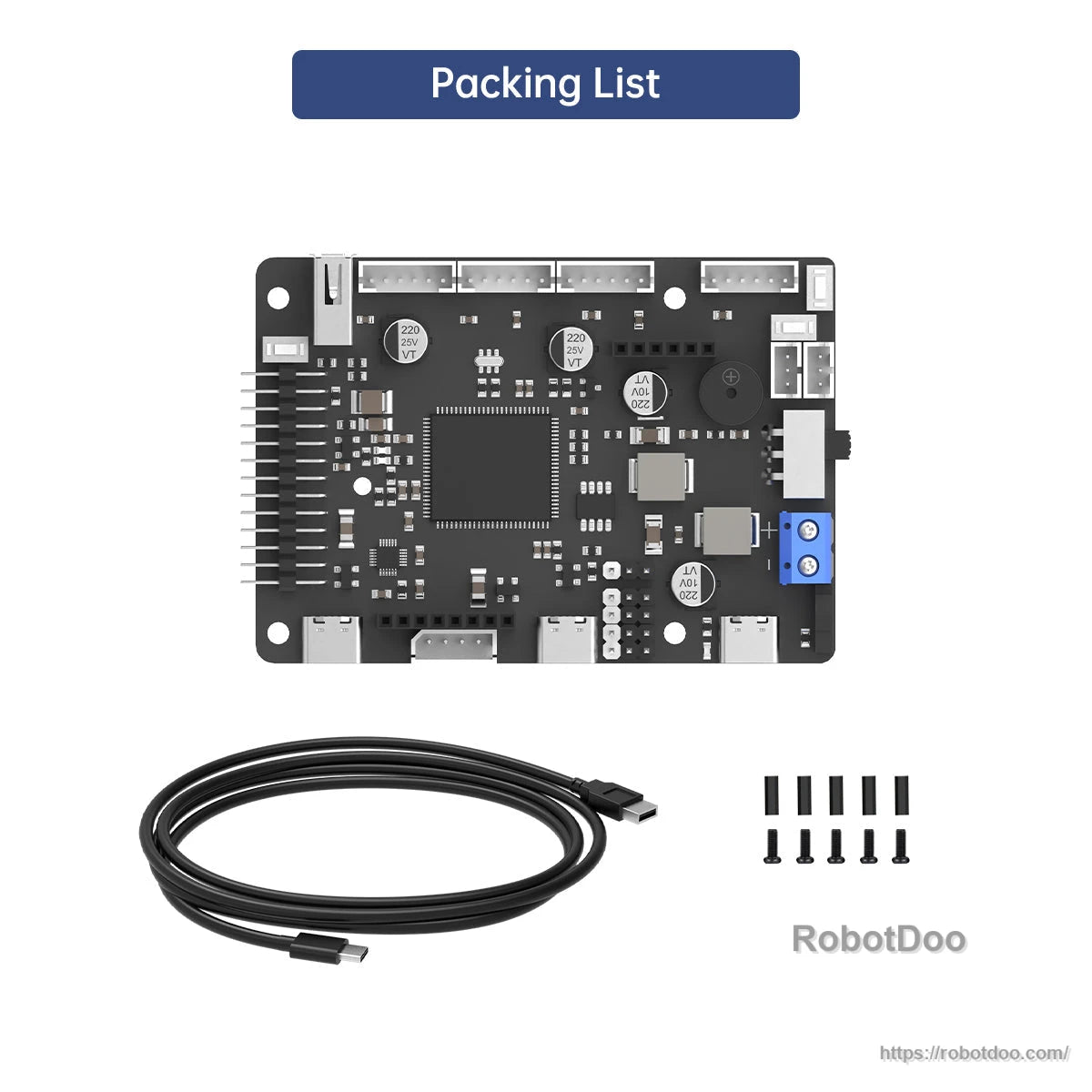
What's Included
- ROS robot controller board
- Type-C data cable (1 meter)
- Accessory bag
Applications
- ROS mobile robot chassis (2WD, 4WD differential, mecanum, omnidirectional, steering, Ackermann)
- Encoder motor closed-loop speed control projects
- PWM/serial bus servo robot arms (5/6DOF expansion) and articulated robots
- Line-following robots using 4-channel line follower or 6-channel photoelectric line follower via I2C
Details
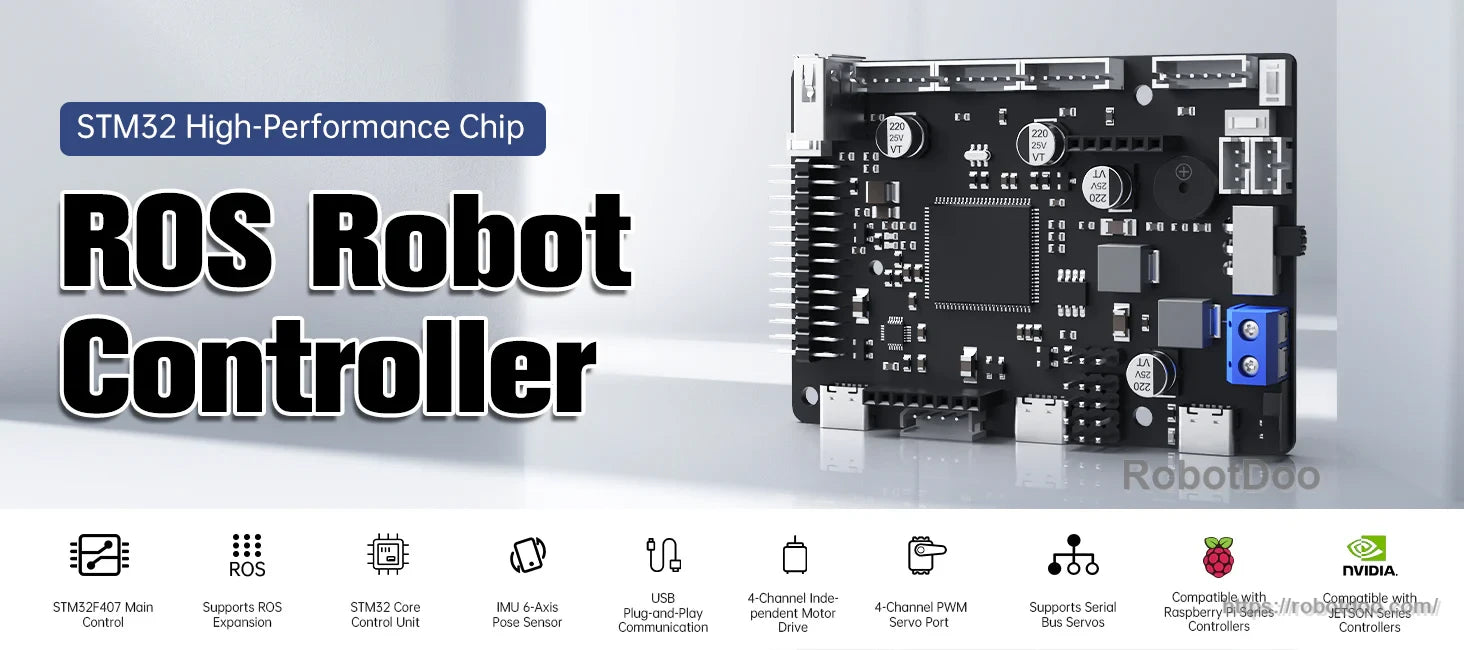
Designed around the STM32F407VET6 (Cortex‑M4, 168MHz), the board integrates motor/servo control and USB connectivity for ROS robots.
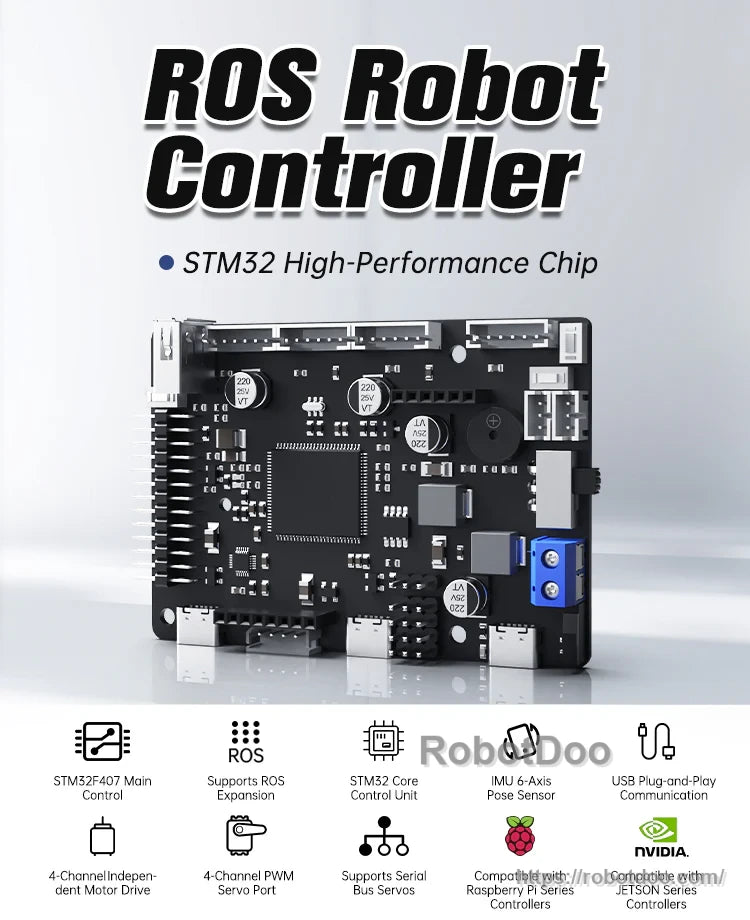
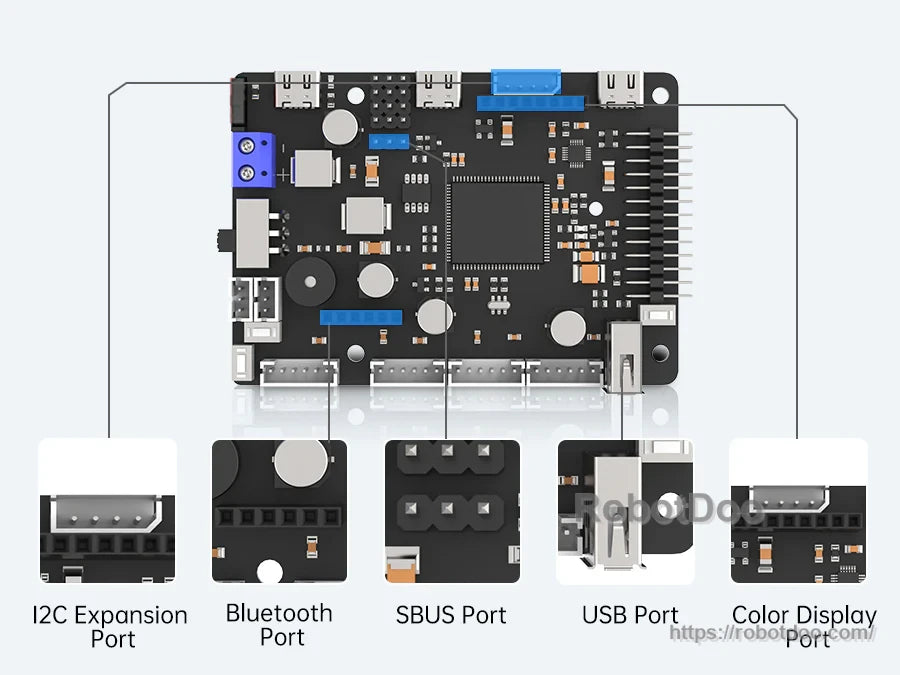
Dedicated ports make it easy to add an I2C line follower, SBUS receiver, Bluetooth module, USB devices, and optional displays.
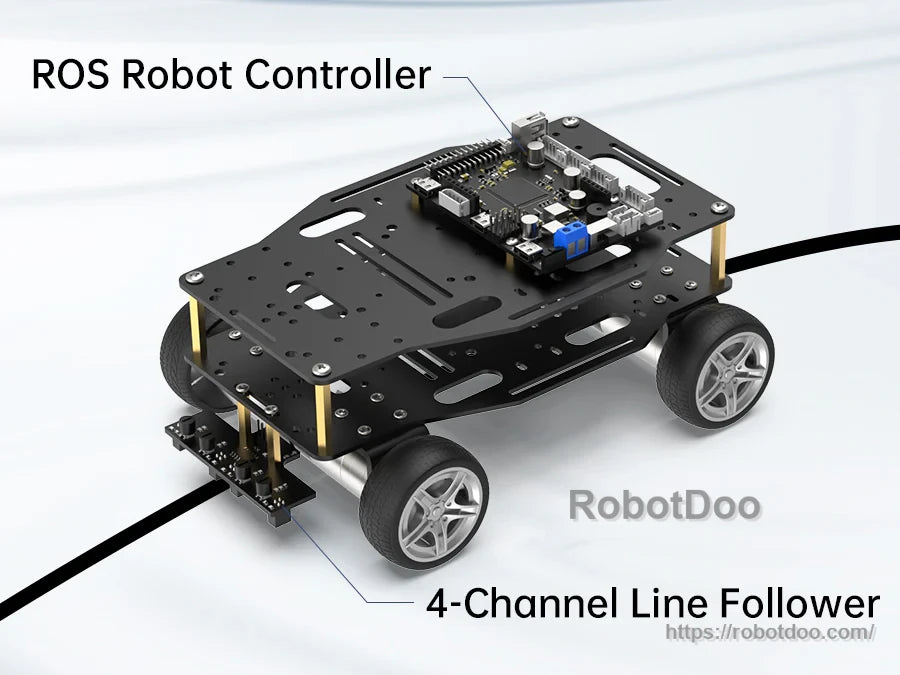
An I2C line-follower interface supports common 4‑channel tracking modules for chassis navigation.
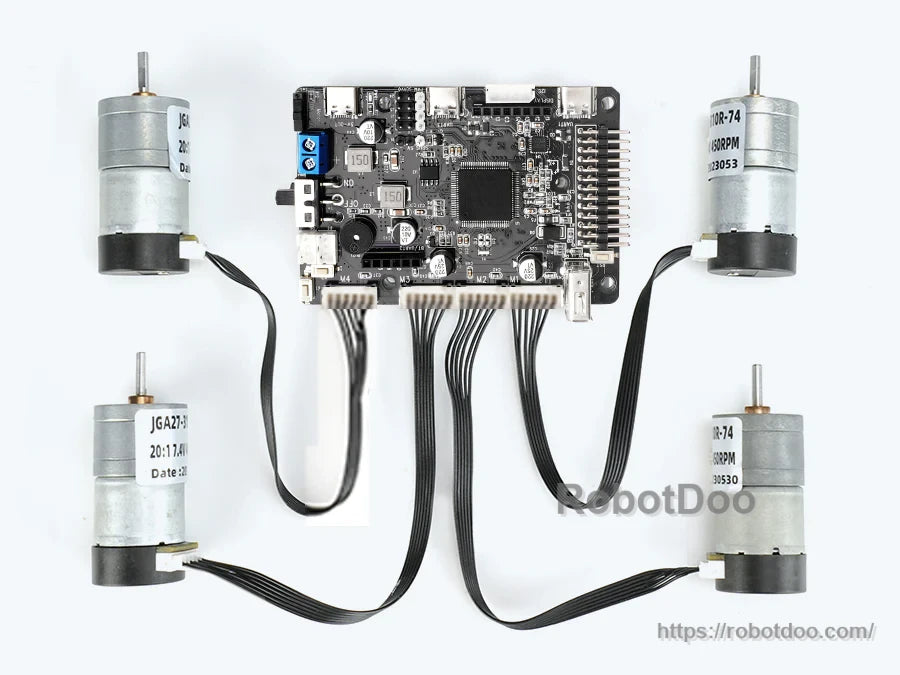
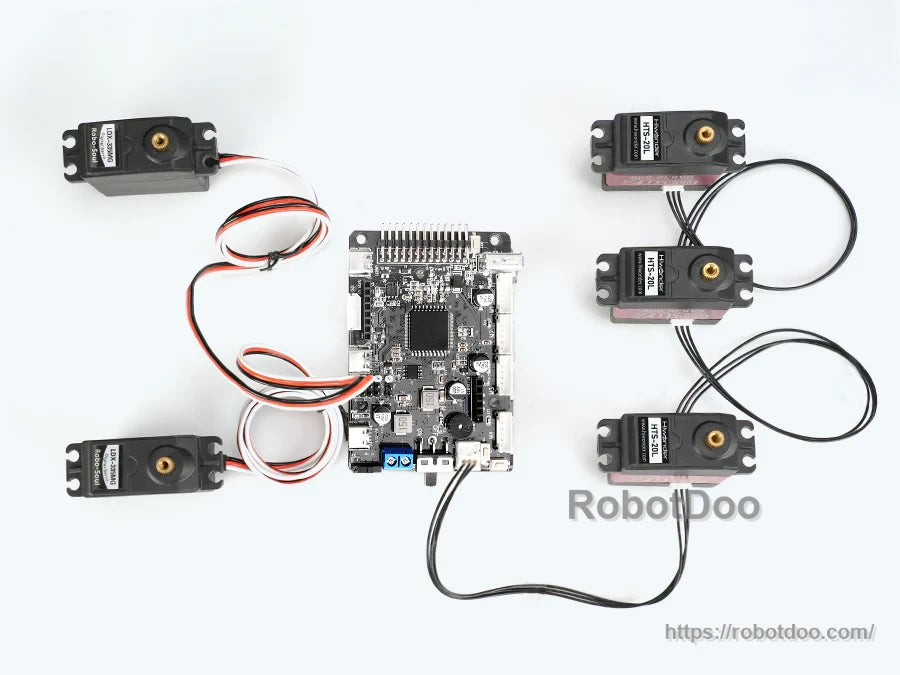
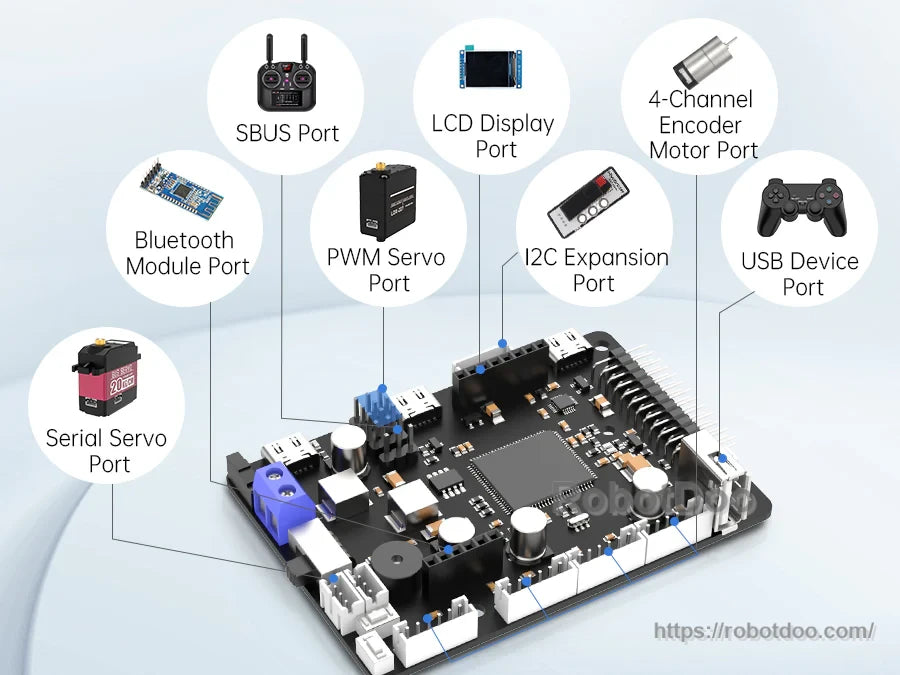
Motor, servo, and expansion connectors are laid out for clean wiring on mobile robots and small robot arms.
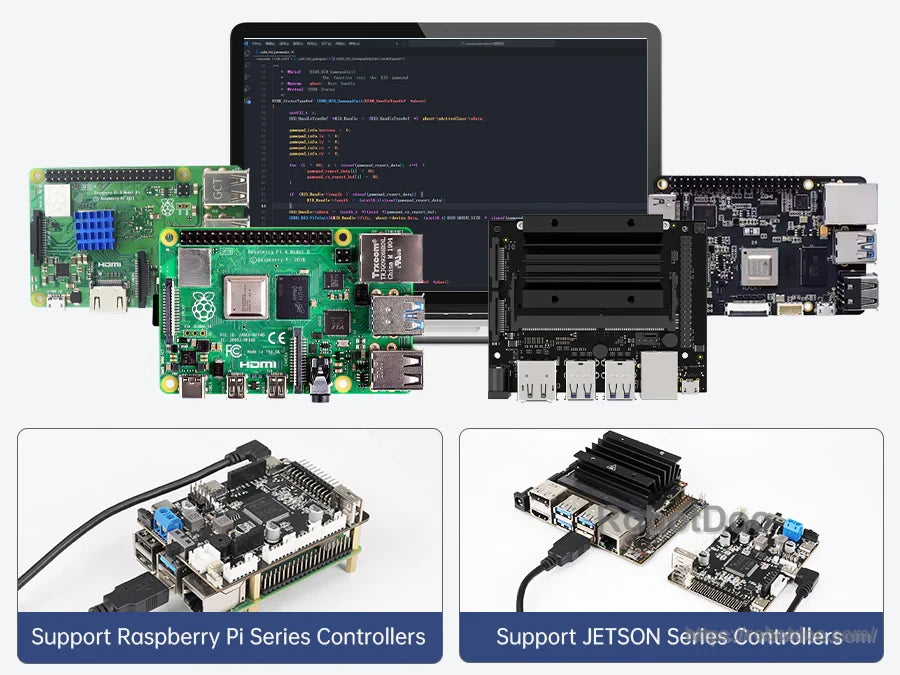
Connect to Raspberry Pi or NVIDIA Jetson as the host controller while the STM32 handles real-time motor and sensor tasks.
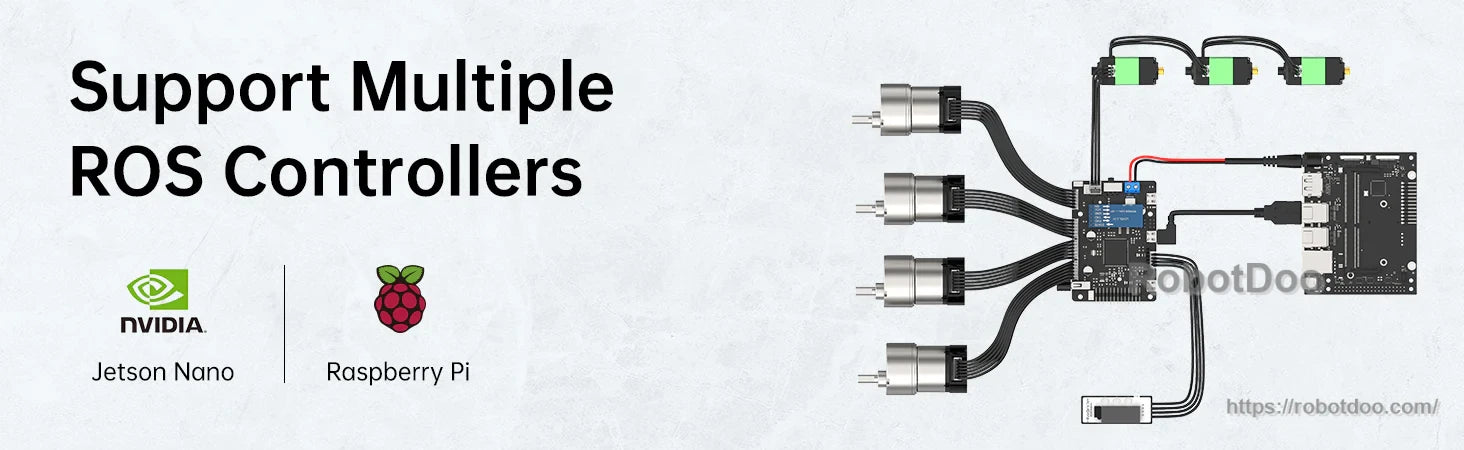
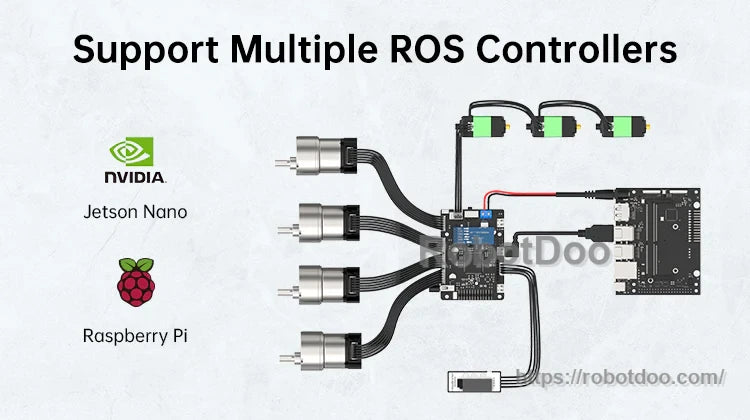
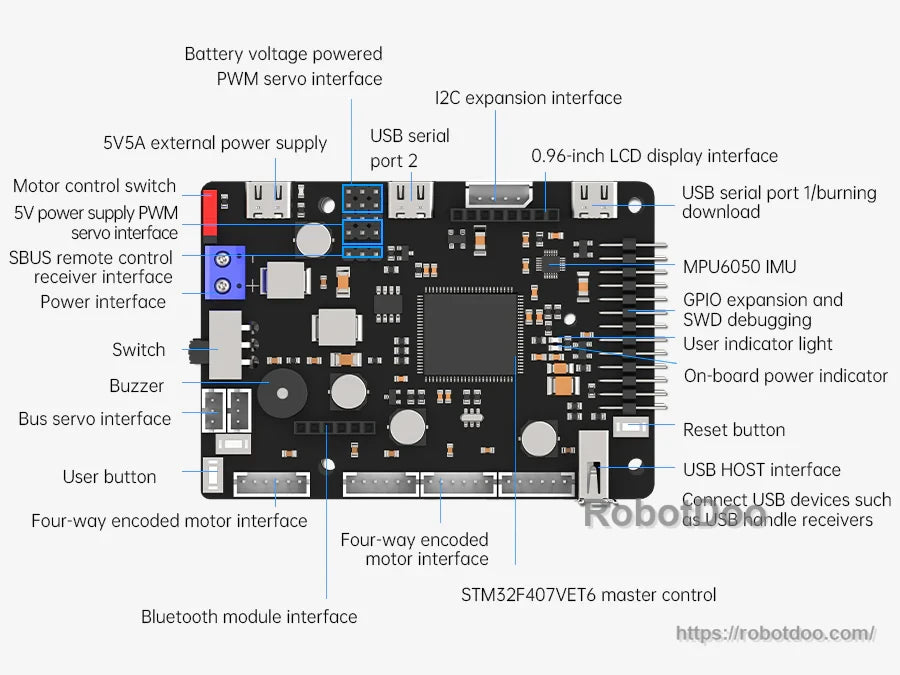
On-board MPU6050 IMU plus USB HOST, dual USB serial, GPIO/SWD, and motor/servo ports support complete ROS chassis builds.
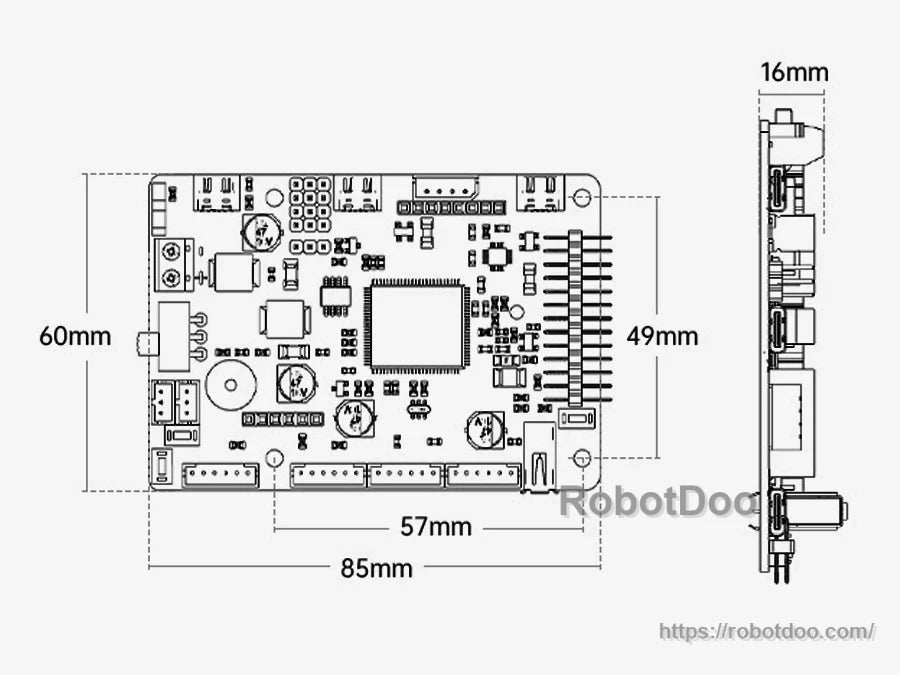
Compact 85×60 mm board size simplifies integration into small chassis and stacked controller builds.
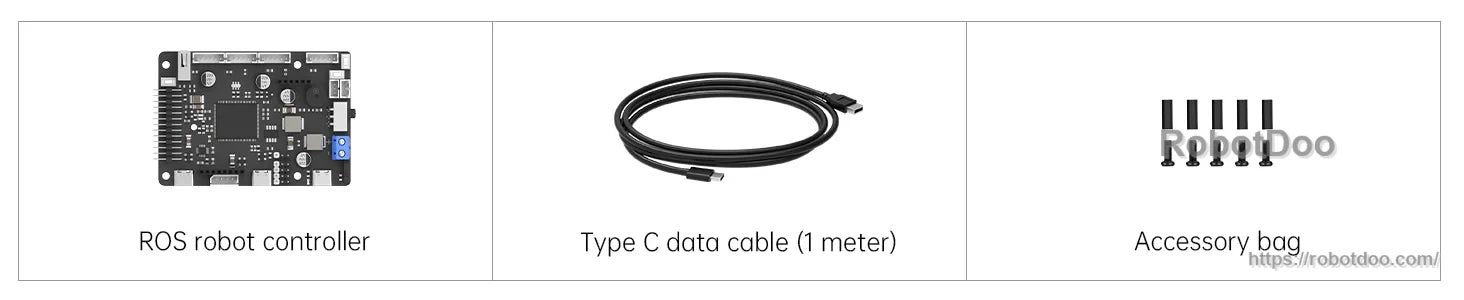
Included accessories cover basic setup, including a Type‑C data cable for configuration and communication.