Overview
The Hiwonder JetHexa ROS Hexapod Robot Kit is a Jetson Nano-powered robotics development platform for ROS learning, autonomous navigation, computer vision, and AI interaction projects. It combines a lidar sensor, 3D depth camera, 6-channel circular microphone array, ROS controller, and ROS expansion board in a six-legged aluminum-alloy chassis.
Running Ubuntu 18.04 LTS with ROS Melodic, JetHexa supports Python, C, C++, and JavaScript development. The platform is designed for experimentation with mapping, navigation, vision processing, deep-learning workflows, and robot motion control.
Key Features
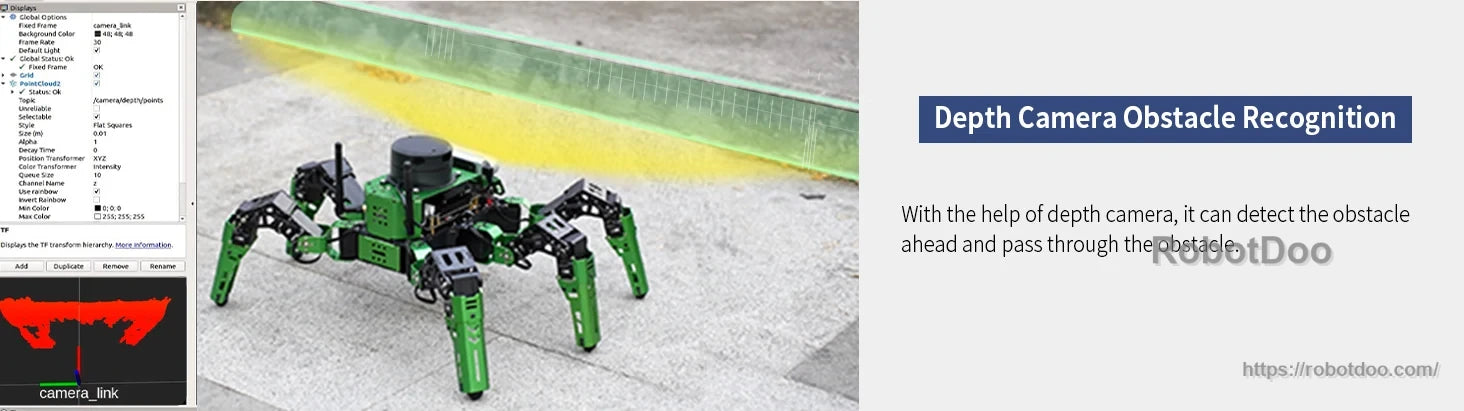
- ROS navigation platform: Lidar-based mapping supports Gmapping, Hector, Karto, and Cartographer algorithms, with fixed-point and multi-point navigation, TEB path planning, and obstacle avoidance functions.
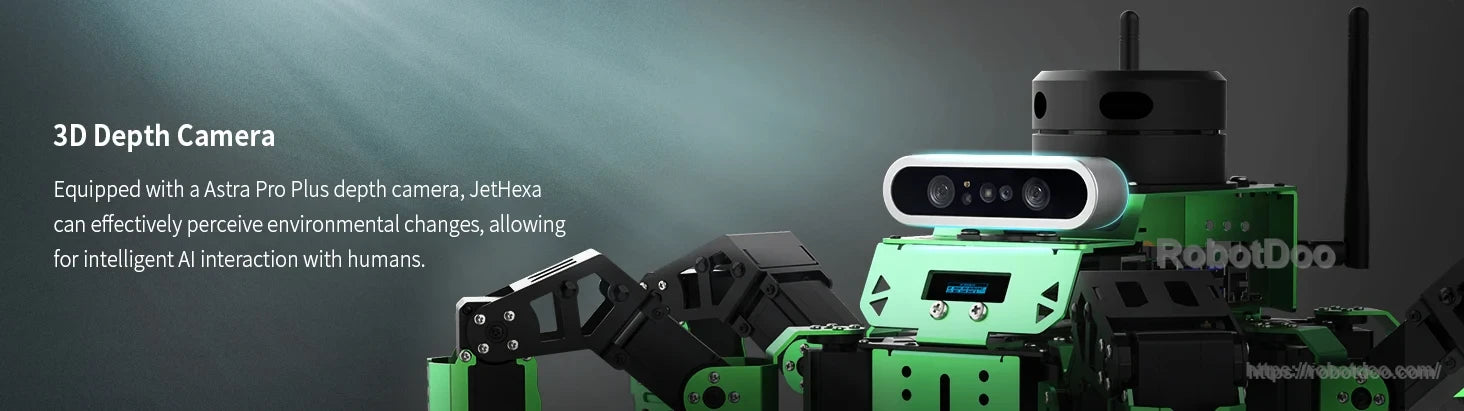
- 3D depth perception: The Astra Pro Plus depth camera supports depth-map, color-image, and point-cloud data access. RTAB-VSLAM 3D mapping and navigation are supported.
- AI vision development: Supports camera calibration, RGB sensor data display, YOLOv5 and TensorRT object recognition workflows, ARTag pose estimation, MediaPipe development, color recognition, line following, KCF target tracking, and tag recognition.
- Voice interaction: The 6-channel circular microphone array supports sound-source localization, voice recognition, voice control, and text-to-speech broadcast.
- Smart servo drive: HX-35H intelligent serial bus servos provide feedback and support a 240-degree rotation range. The servo system includes temperature and voltage feedback, over-temperature protection, and anti-blocking functionality.
- Simulation tools: Supports Gazebo simulation and RViz visualization with a URDF model for algorithm testing and robot motion development.
- Flexible control: Supports PC software, mobile app, wireless handle, VNC remote control, SSH remote control, and action-editor control.
- Expansion board interfaces: The ROS expansion board supports serial communication, serial bus servo and PWM servo control, battery-voltage reading, IMU data processing, custom key control, IIC communication, buzzer control, and OLED status display.
Specifications
| Controller | NVIDIA Jetson Nano |
| Operating system | Ubuntu 18.04 LTS + ROS Melodic |
| Hardware | ROS controller and ROS expansion board |
| Servo | HX-35H intelligent serial bus servo |
| Camera | Astra Pro Plus 3D depth camera |
| Microphone array | 6-channel circular microphone array |
| Storage | 32GB TF card |
| Battery | 11.1V 3500mAh 5C LiPo battery, removable |
| Continuous working time | 60 min |
| Material | Anodized aluminum alloy bracket |
| Robot weight | 2.5 kg |
| Communication | USB, Wi-Fi, Ethernet |
| Programming languages | Python, C, C++, JavaScript |
| Control methods | Computer, phone, wireless handle |
| Package size | 39 x 36 x 21 cm |
| Package weight | About 3.6 kg |
Applications
Suitable for ROS education, autonomous navigation experiments, SLAM mapping, robot simulation, depth-image processing, computer vision, voice-interaction development, and AI model training projects.
Learning Resources
Schematics, source code, videos, and experimental projects are available through the JetHexa tutorial resources. For product assistance, visit RobotDoo.
Details
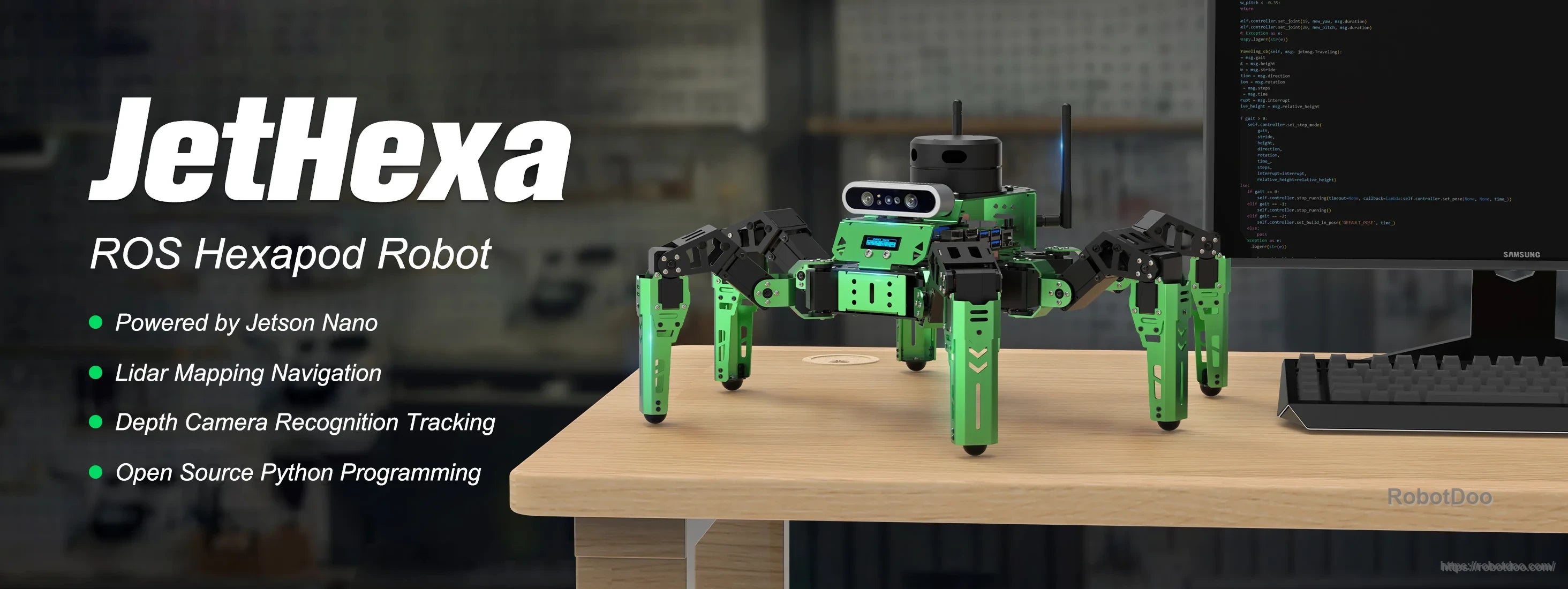
The Hiwonder JetHexa ROS Hexapod Robot combines a six-legged chassis with Jetson Nano computing for ROS and AI development.
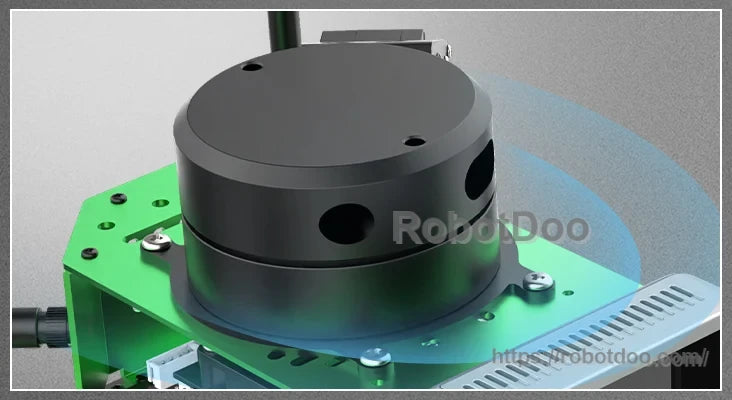
Lidar data supports mapping, navigation, path planning, and obstacle-avoidance experiments in ROS.
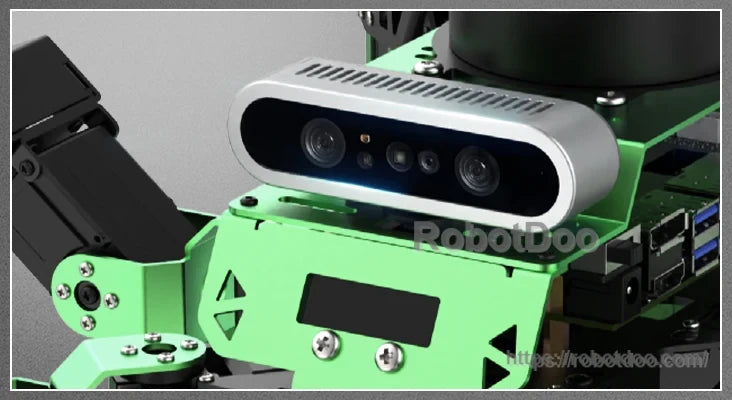
The front-mounted depth camera provides color, depth, and point-cloud data for vision projects.
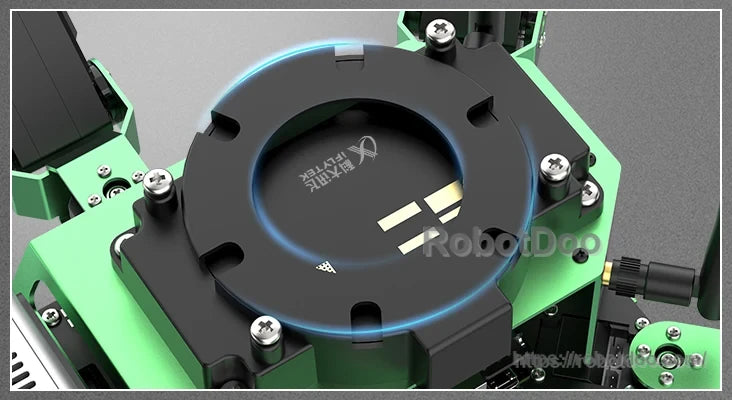
A six-channel microphone array enables sound-source localization, voice recognition, and voice-control projects.
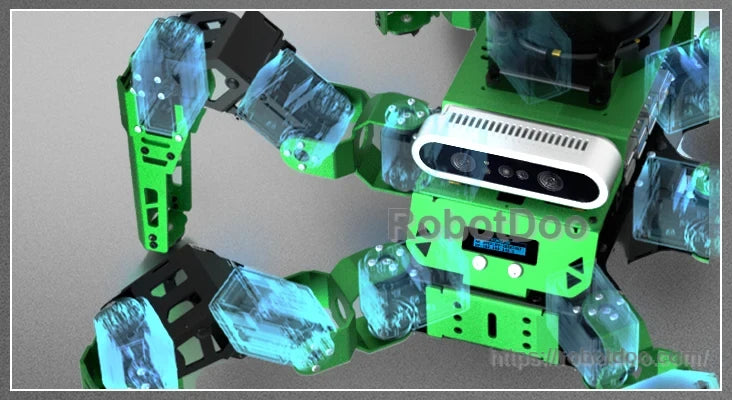
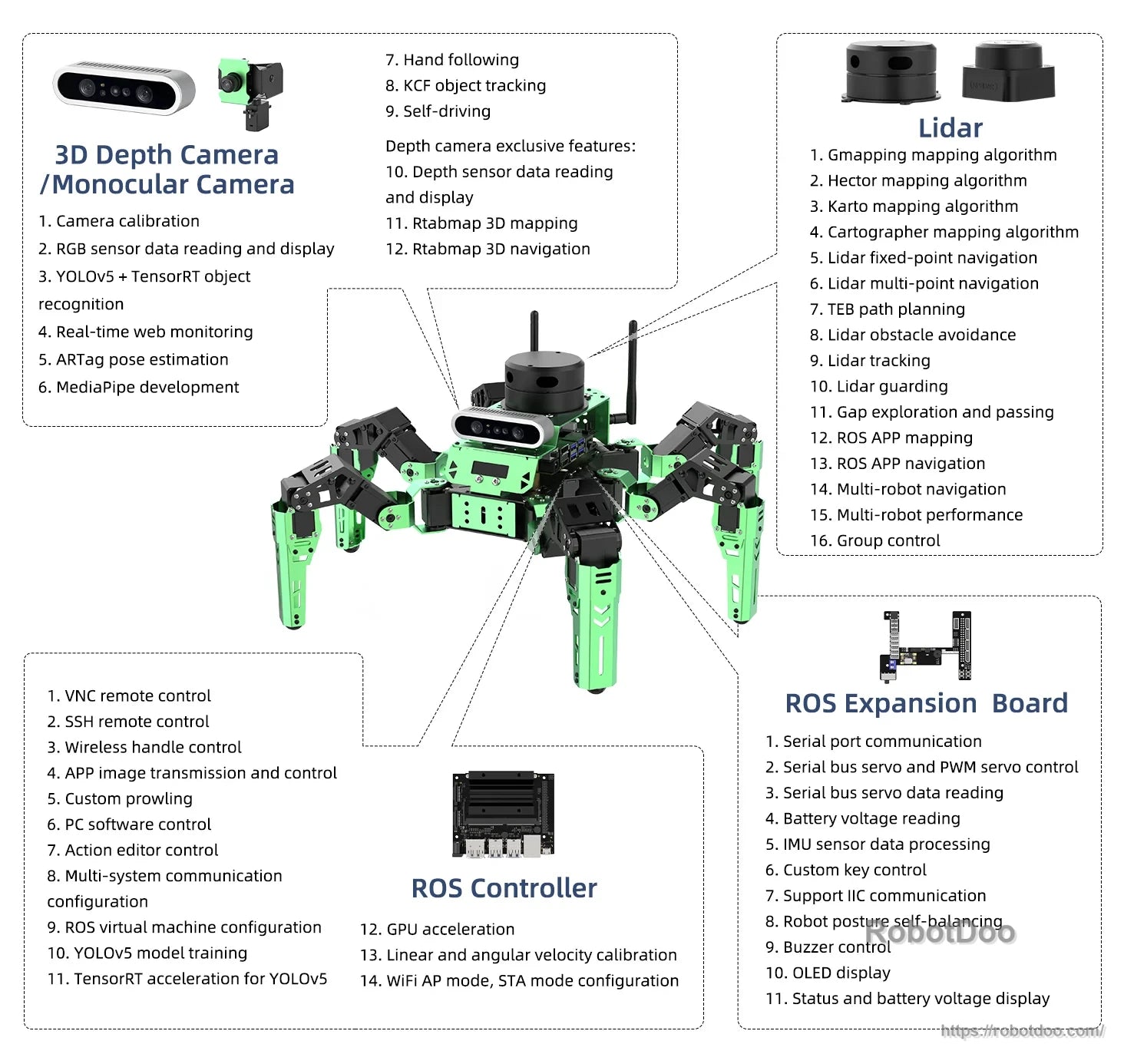
Integrated sensing, computing, and expansion hardware provide a versatile foundation for robotics experiments.
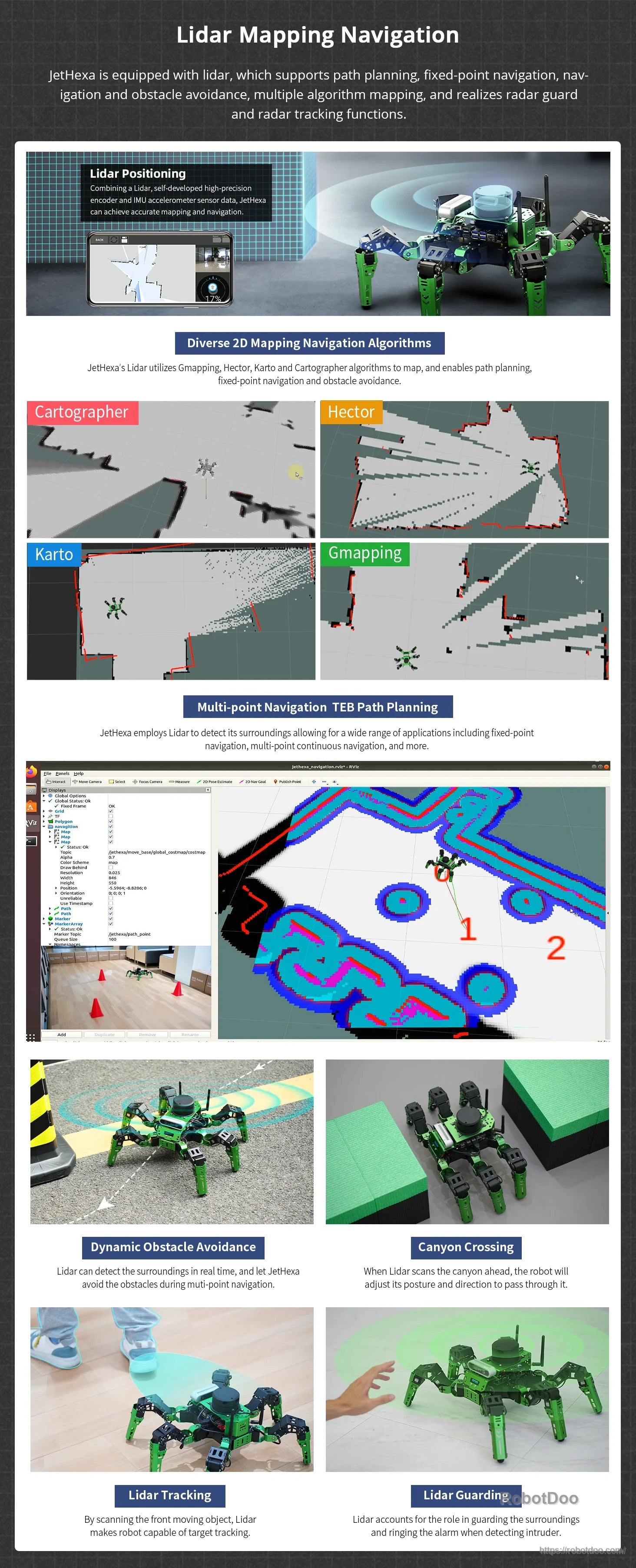
ROS mapping workflows support lidar-based maps, navigation targets, and obstacle-aware route planning.
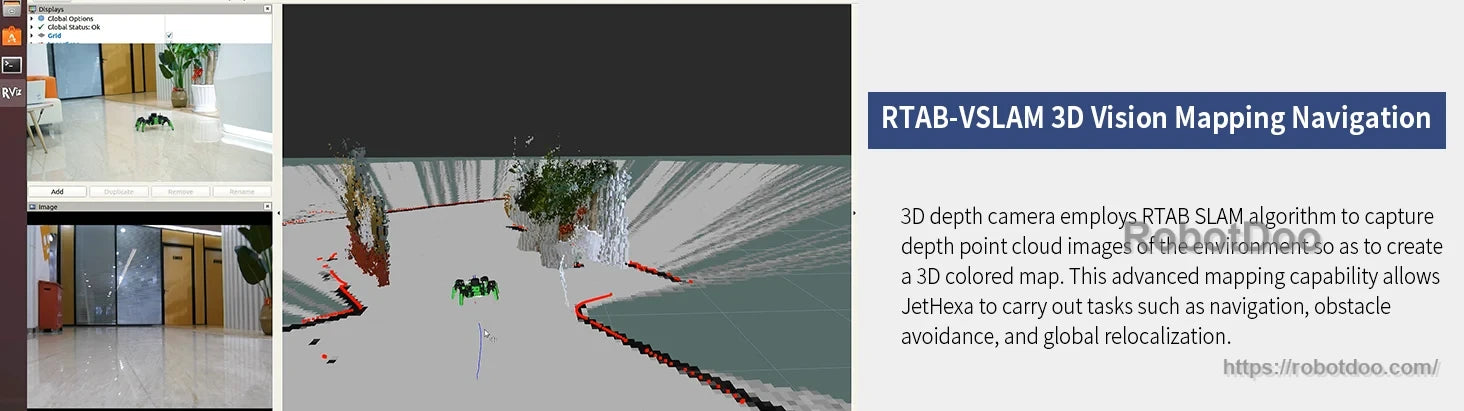
RTAB-VSLAM can use depth-camera data to build 3D maps for localization and navigation development.
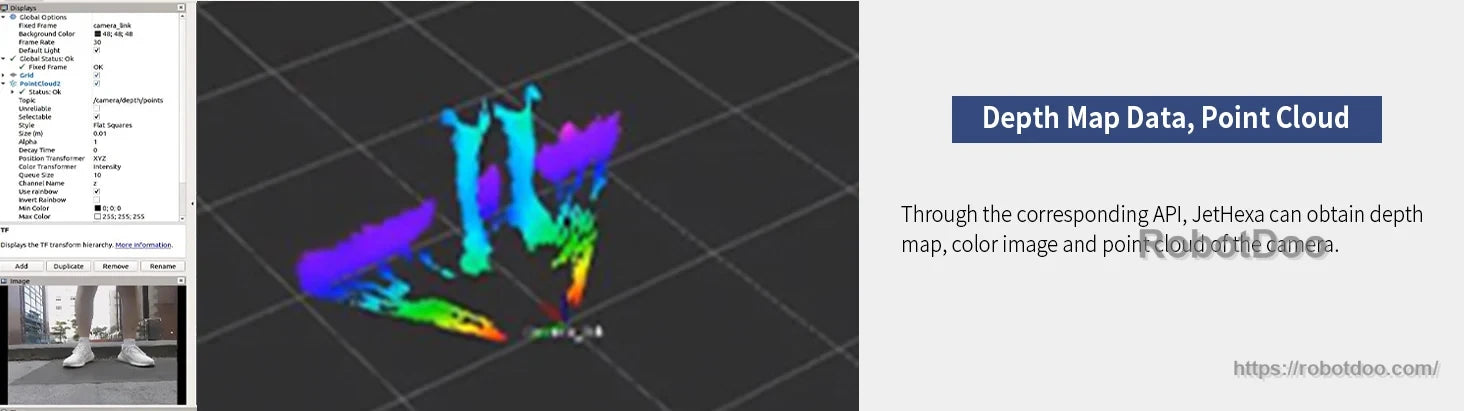
Depth maps, color images, and point clouds can be visualized for perception and 3D mapping workflows.
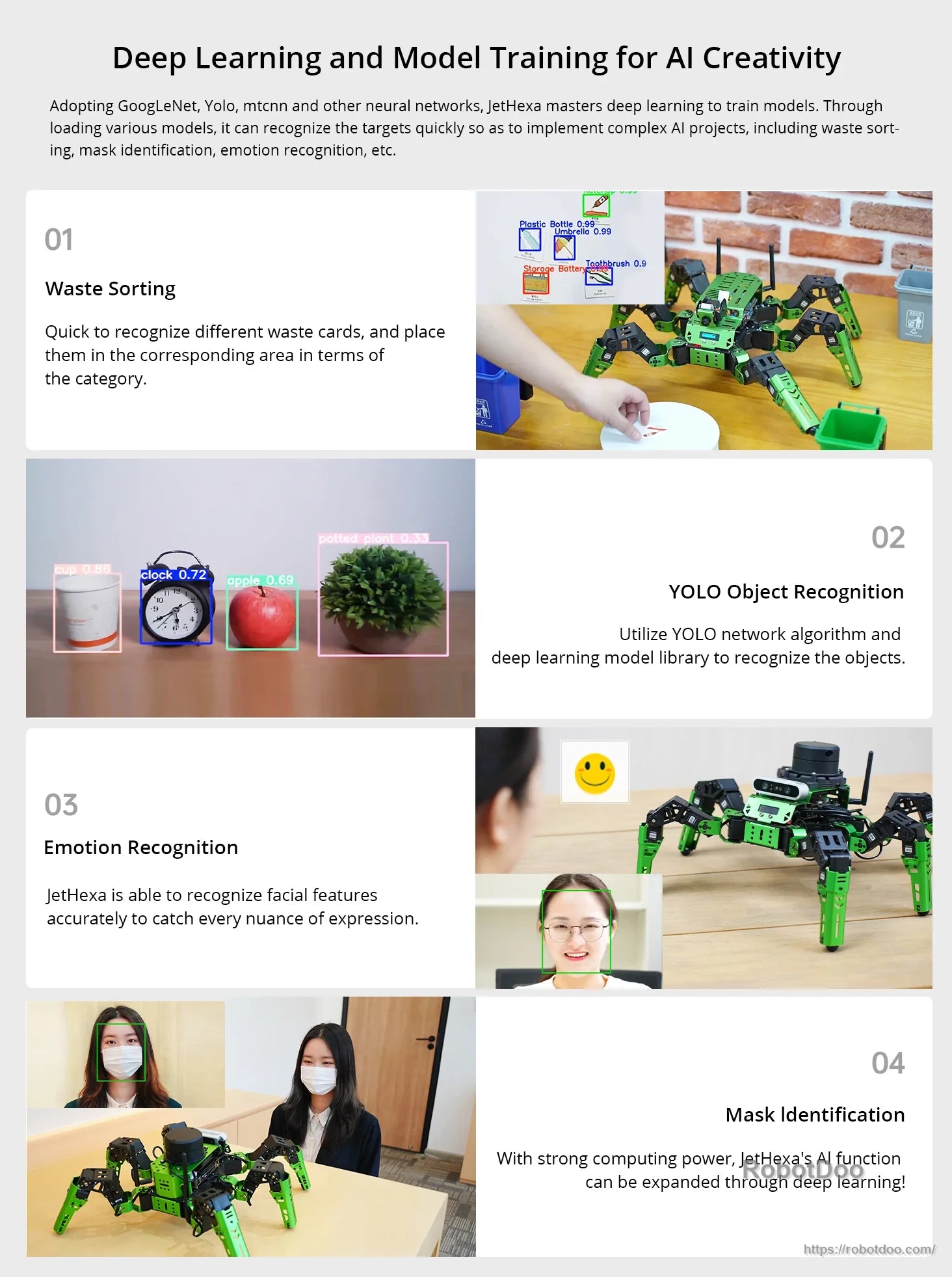
AI vision workflows include object recognition, color sorting, emotion recognition, and mask-identification development.
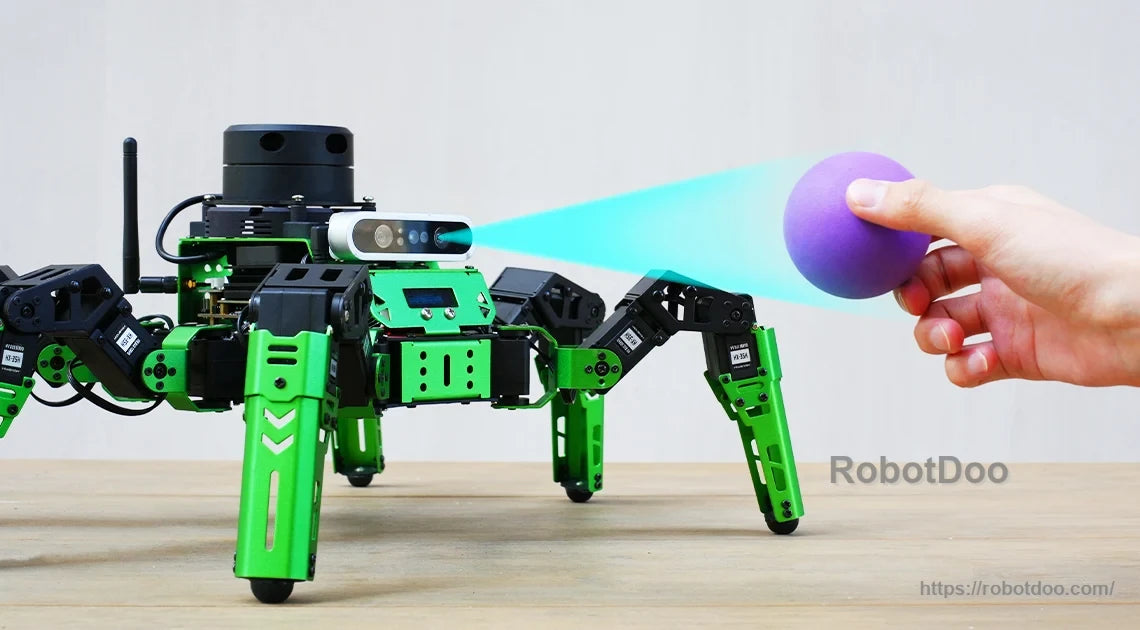
Color-recognition projects can use camera input to identify and track selected objects.
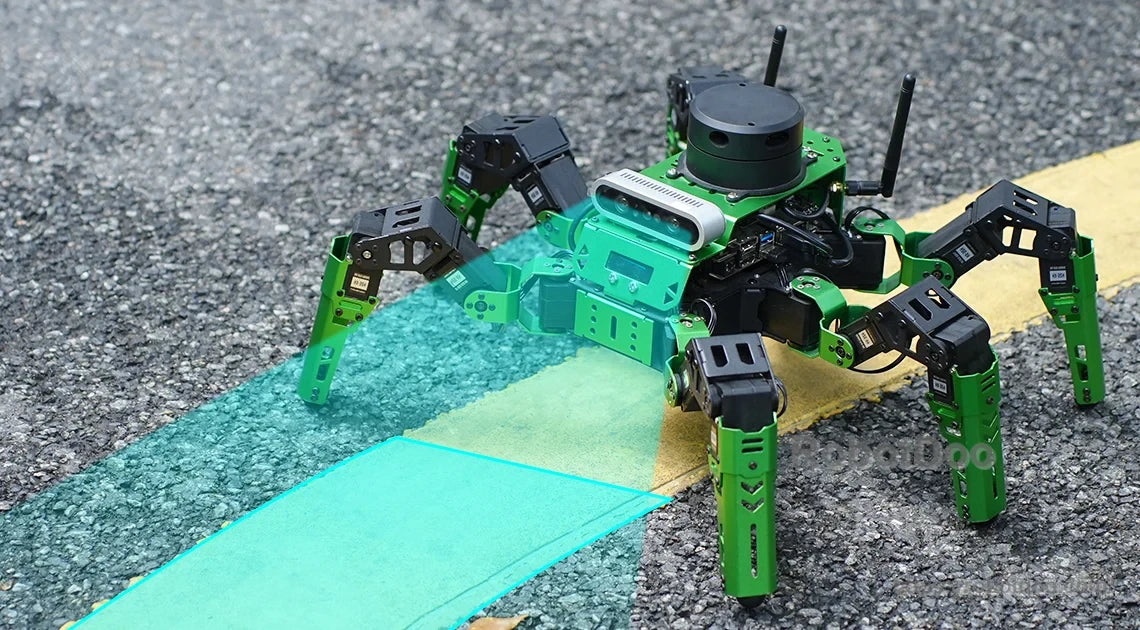
Line-following functions pair visual detection with the robot's multi-leg motion control.
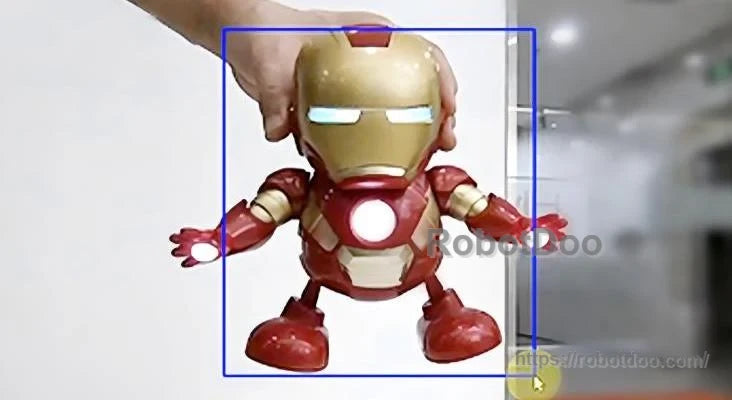
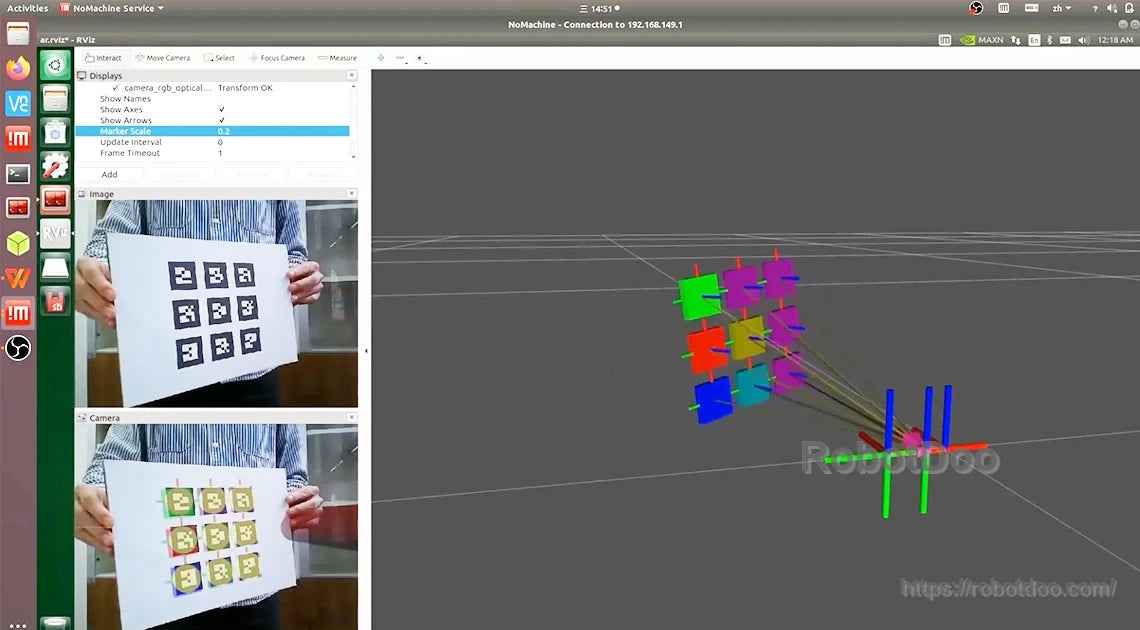
ARTag pose estimation supports marker detection and spatial visualization in ROS tools.
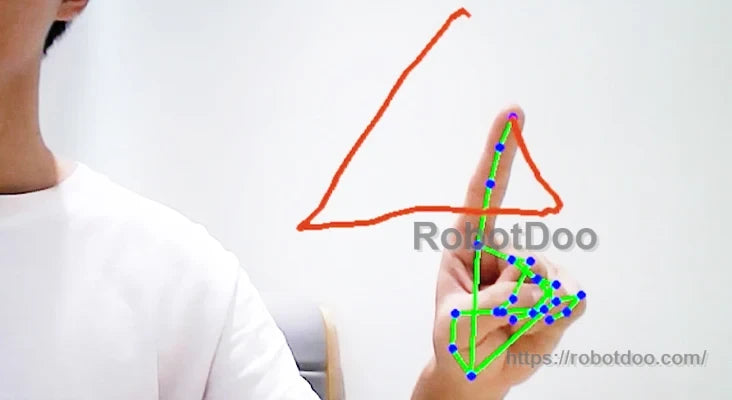
MediaPipe development enables hand-landmark tracking and gesture-based interaction experiments.
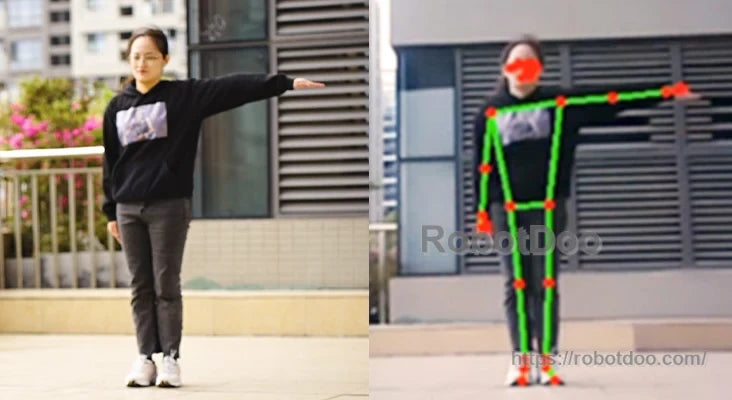
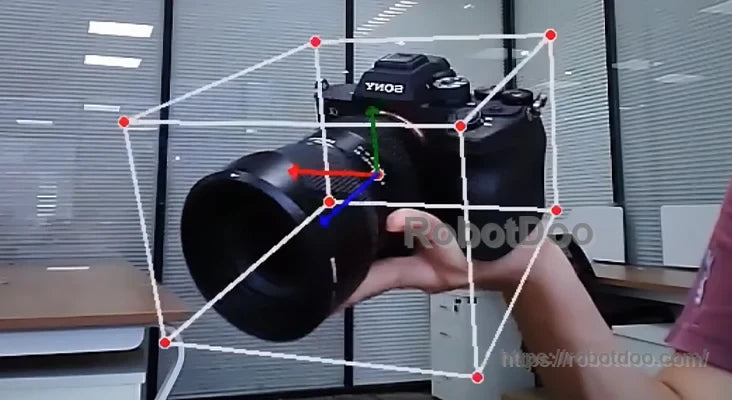
The Hiwonder JetHexa ROS hexapod robot supports vision-based pose detection for interactive robotics projects.
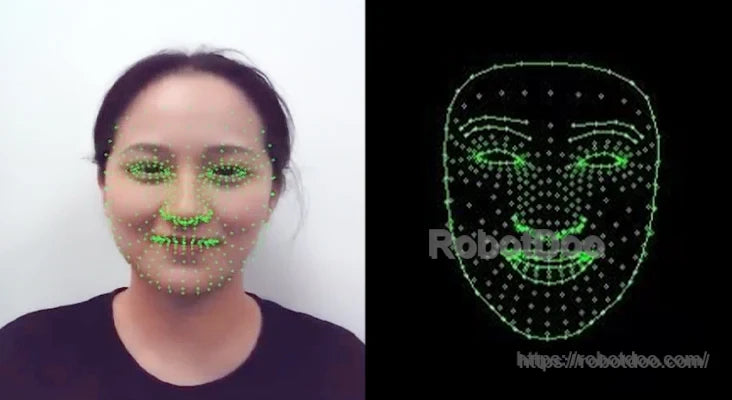
Facial landmark tracking maps key points across a face to support vision-based recognition and interaction projects.
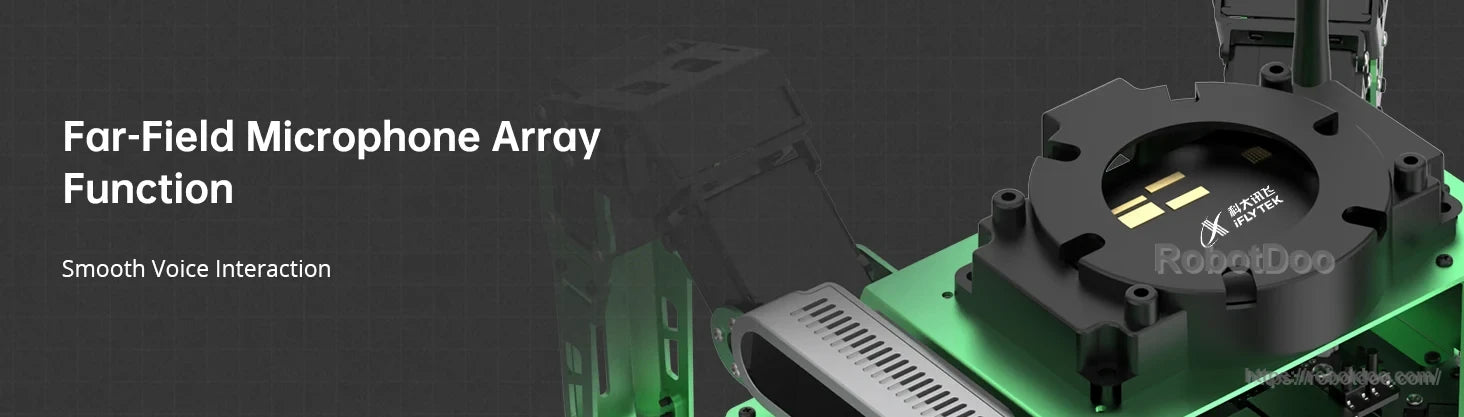
The JetHexa integrates a far-field microphone array to support smooth voice interaction.
The JetHexa ROS hexapod robot combines a six-legged articulated chassis with a top-mounted sensor module for interactive robotics projects.
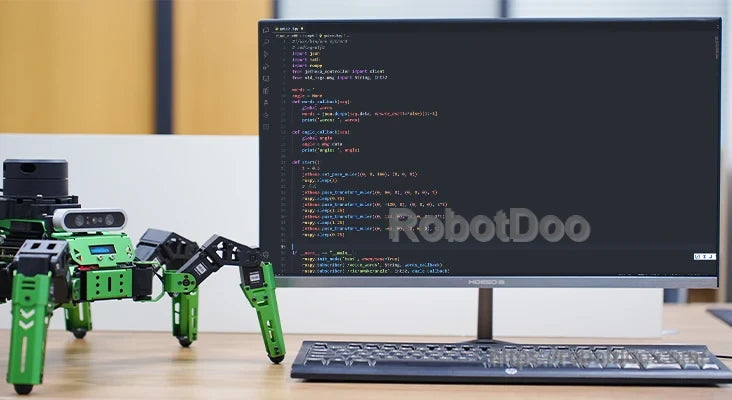
The JetHexa ROS hexapod robot pairs articulated six-leg hardware with a desktop coding environment for development and control.
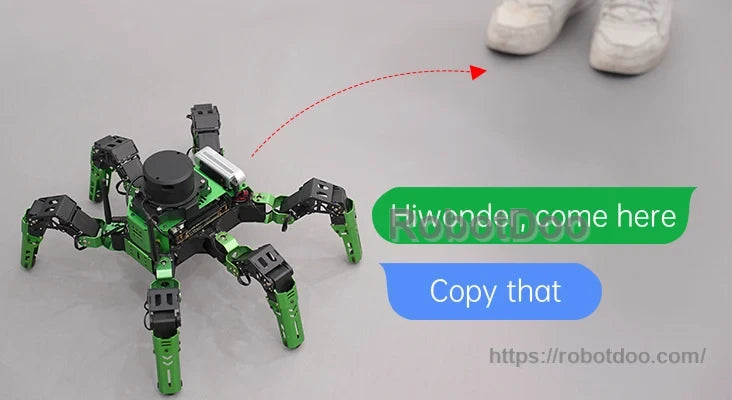
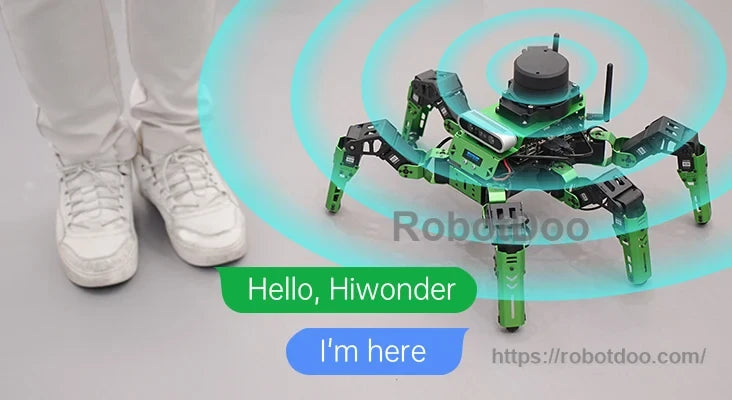
The JetHexa ROS hexapod robot is presented with a voice-command interaction overlay for “Hiwonder come here” and “Copy that.”
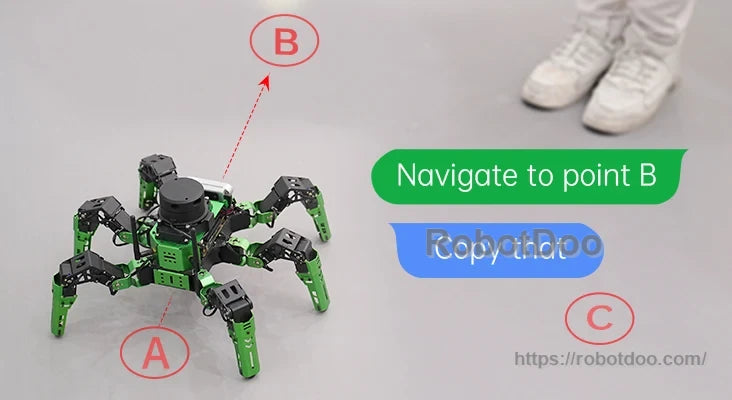
The JetHexa ROS hexapod robot supports point-to-point navigation for autonomous movement tasks.
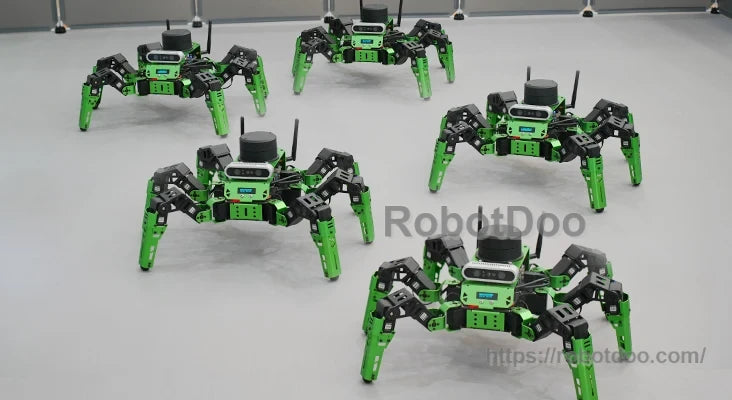
The Hiwonder JetHexa ROS hexapod robot uses six articulated legs in a compact green and black chassis.
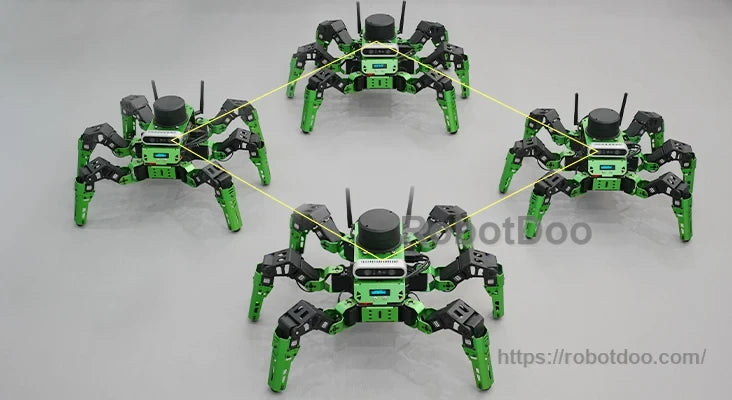
The JetHexa ROS hexapod robot combines a six-legged chassis with a compact sensor-equipped body for robotic development.
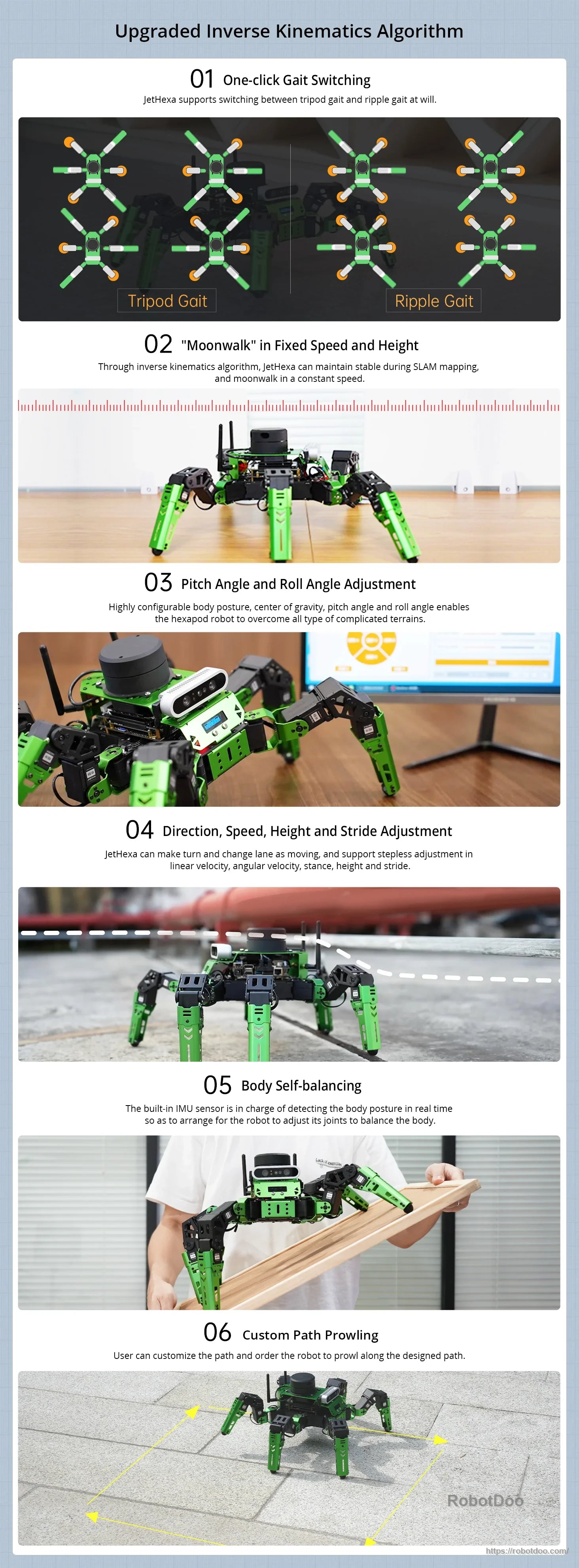
The JetHexa ROS hexapod robot uses six articulated legs for stable walking across indoor floors, uneven ground, and sloped surfaces.

JetHexa integrates ROS and MoveIt with communication mechanisms, development tools, application functions, and a supporting ecosystem.
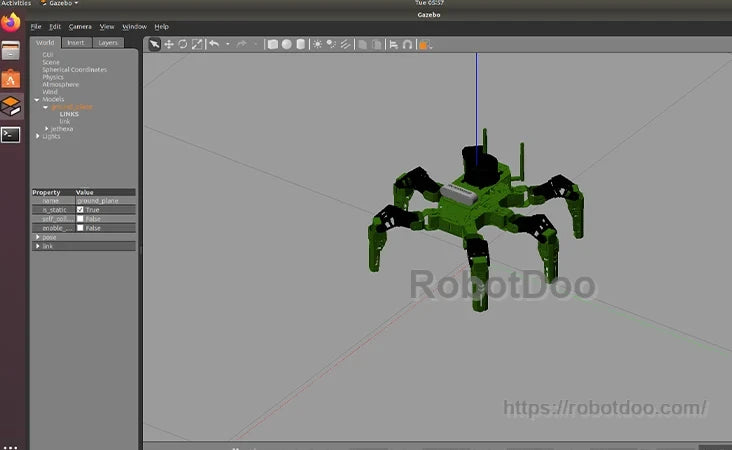
The JetHexa ROS hexapod robot is supported in Gazebo simulation for developing and testing six-legged movement.
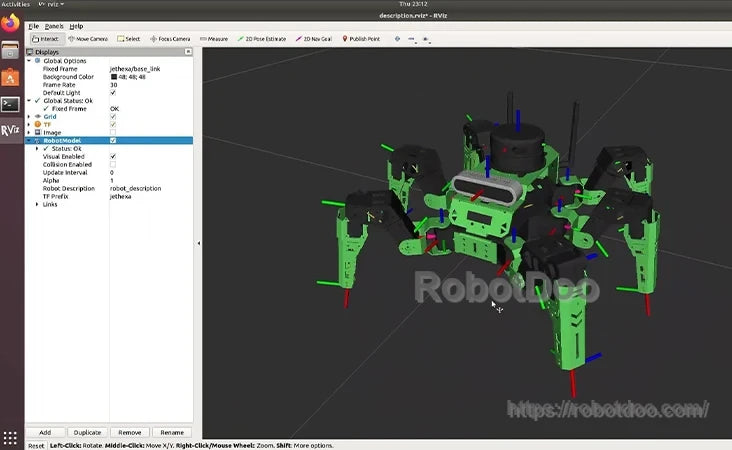
The JetHexa ROS hexapod robot uses six articulated legs around a compact central body for a stable walking platform.
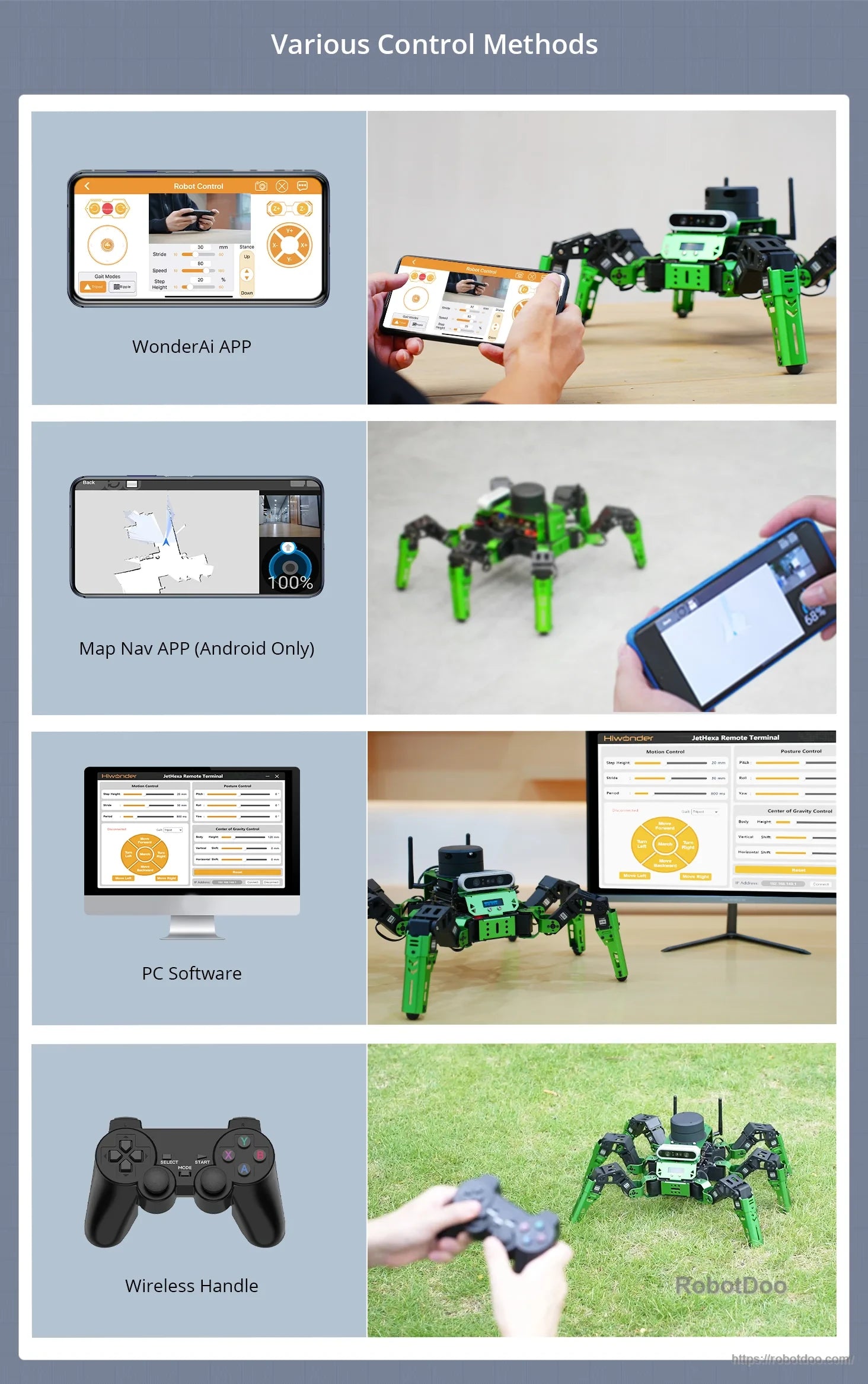
JetHexa supports control through a mobile app, PC software, web interface, and a wireless gamepad for flexible operation.
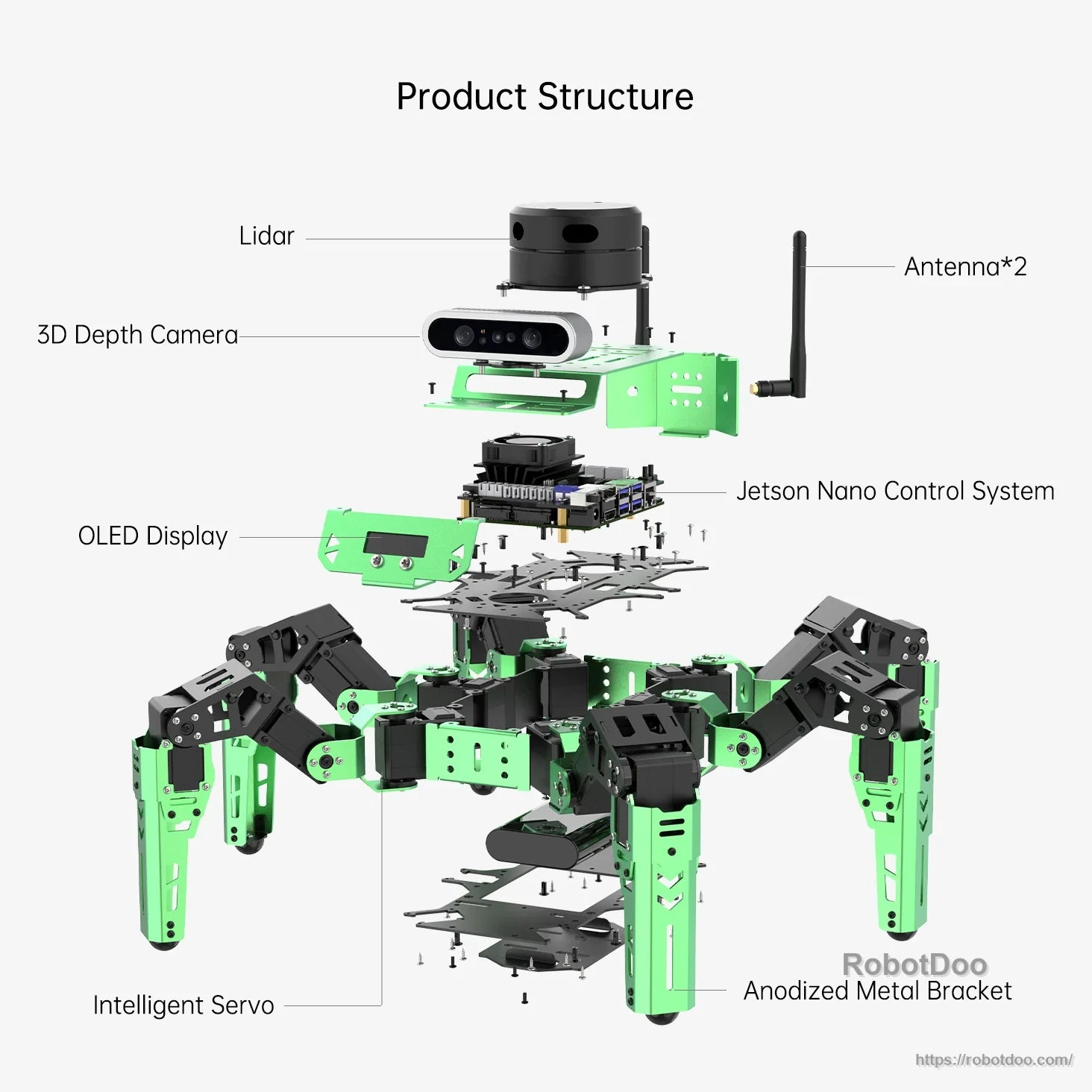
The JetHexa ROS hexapod integrates lidar, a 3D depth camera, OLED display, Jetson Nano control system, dual antennas, and intelligent servos.
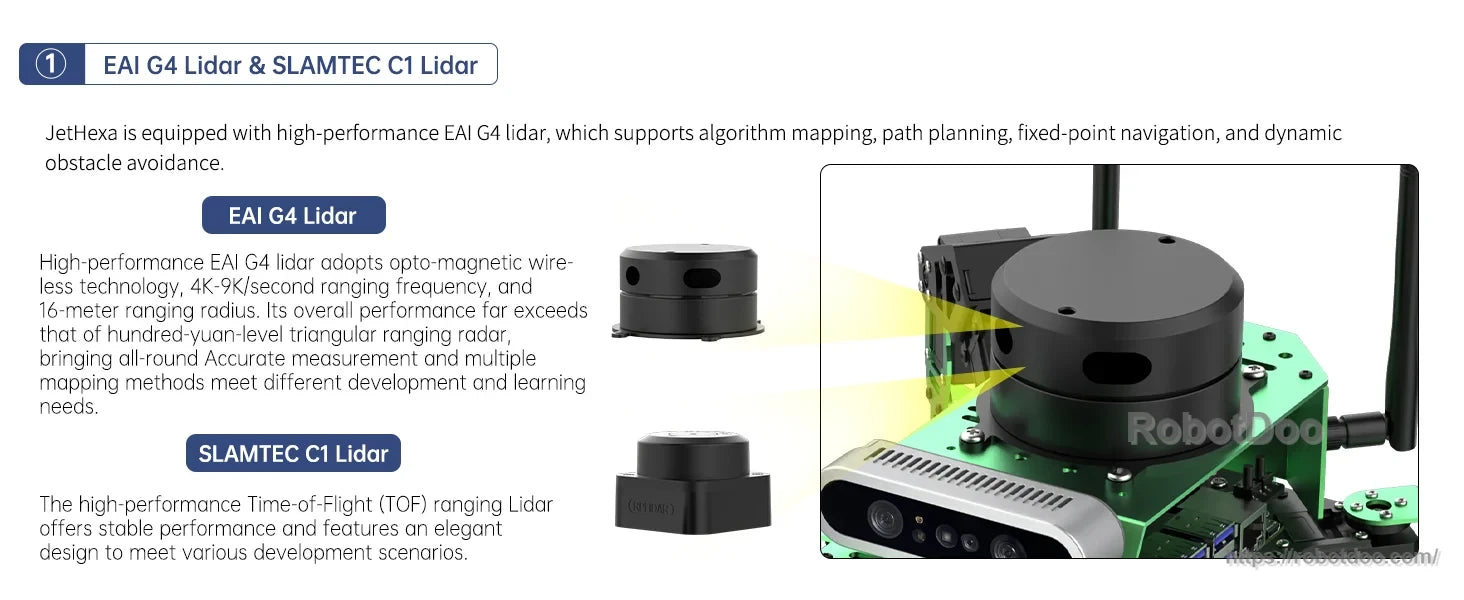
EAI G4 LiDAR and SLAMTEC C1 LiDAR options support mapping, path planning, obstacle avoidance, and navigation.
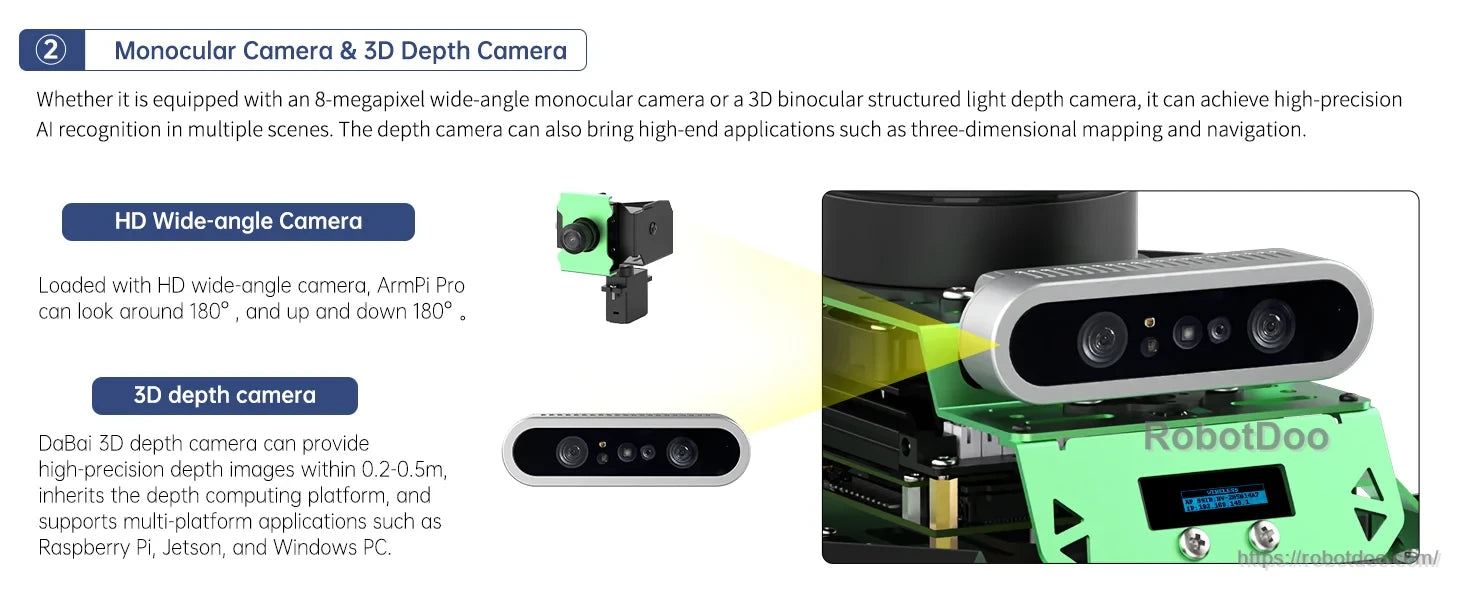
Monocular wide-angle and 3D depth cameras provide visual and depth sensing for robot perception and navigation.
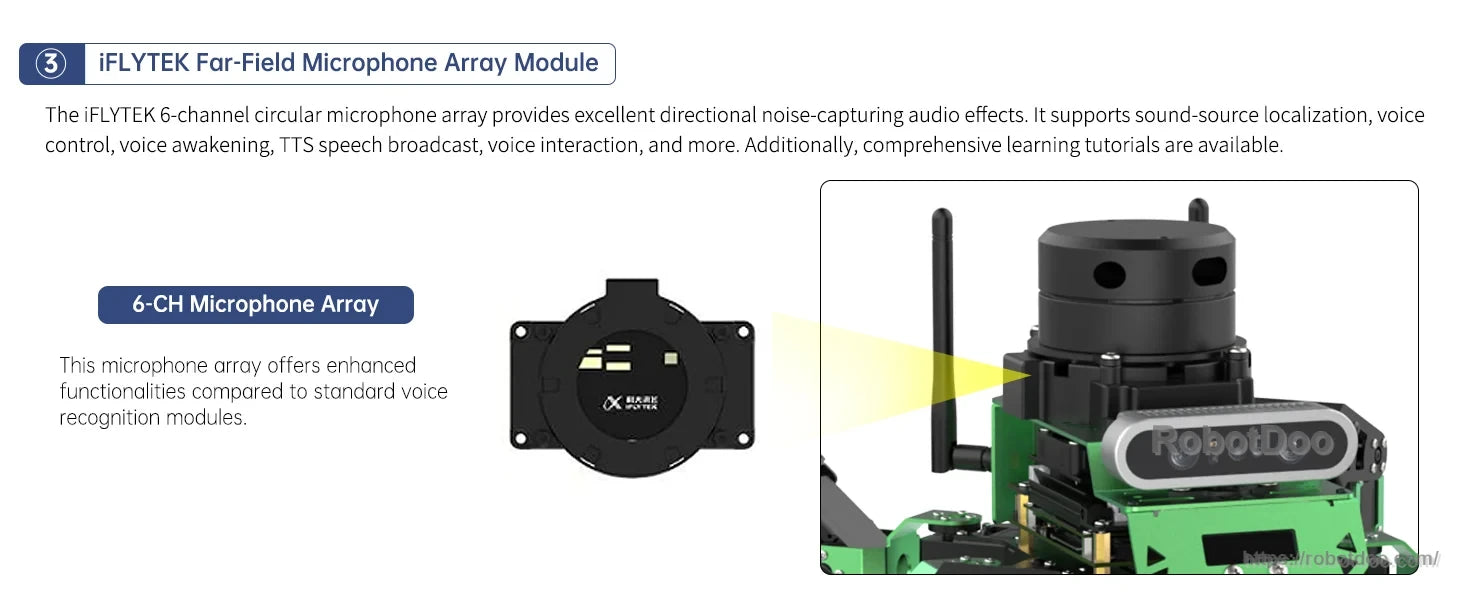
The 6-channel circular microphone array supports sound-source localization, voice control, and TTS speech broadcasting for interactive robot operation.
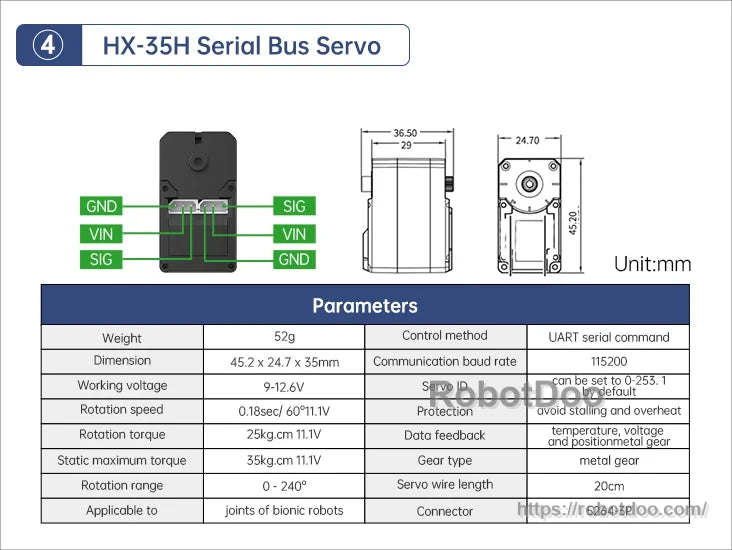
The HX-35H serial bus servo uses GND, VIN and SIG connections and measures 45.2 × 24.7 × 35 mm for bionic robot joint applications.
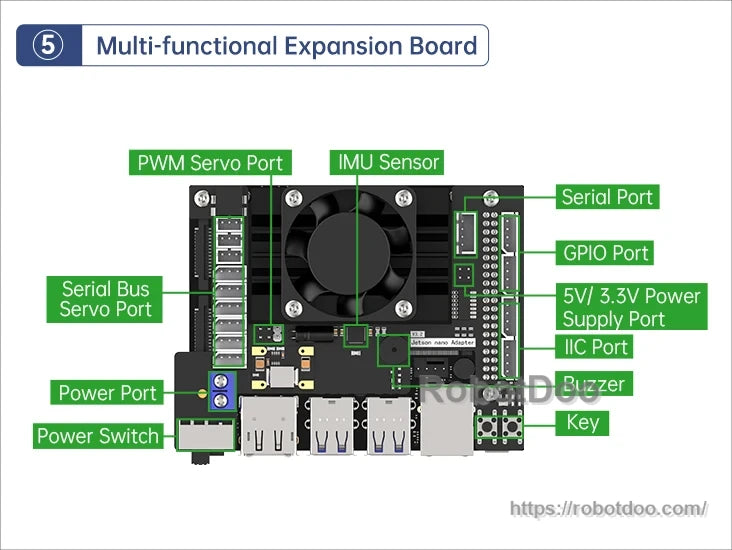
The multifunction expansion board provides PWM and serial bus servo ports, an IMU sensor, GPIO, IIC, serial connectivity, and 5V/3.3V power outputs.
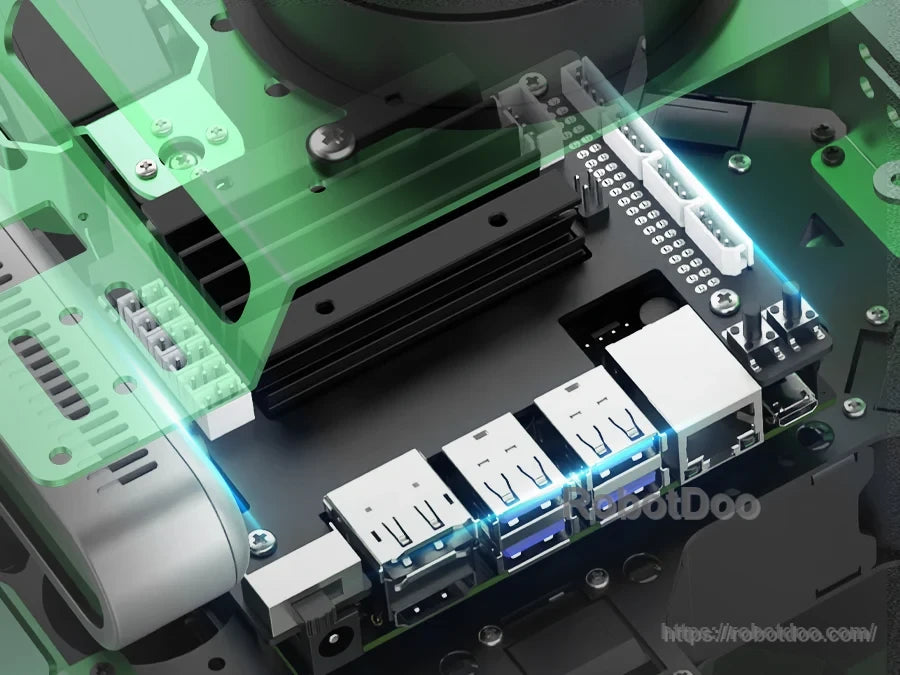
The JetHexa ROS hexapod robot integrates a Raspberry Pi board with accessible USB, Ethernet and GPIO connections for development and peripheral wiring.
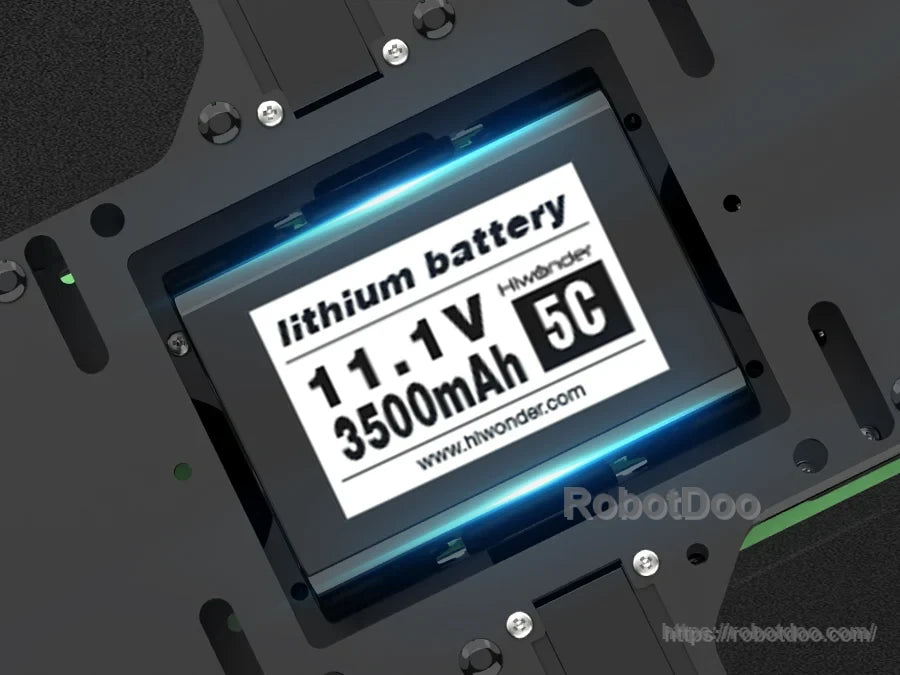
The JetHexa hexapod uses a removable 11.1V 3500mAh 5C lithium battery pack mounted beneath the chassis.
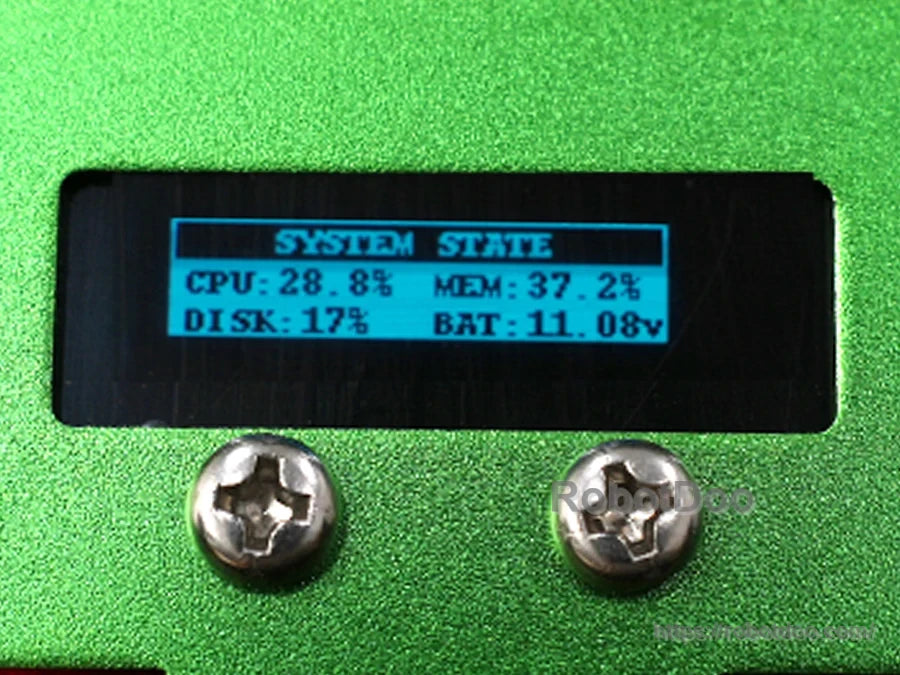
The onboard system display provides at-a-glance CPU, memory, disk, and battery-voltage status.
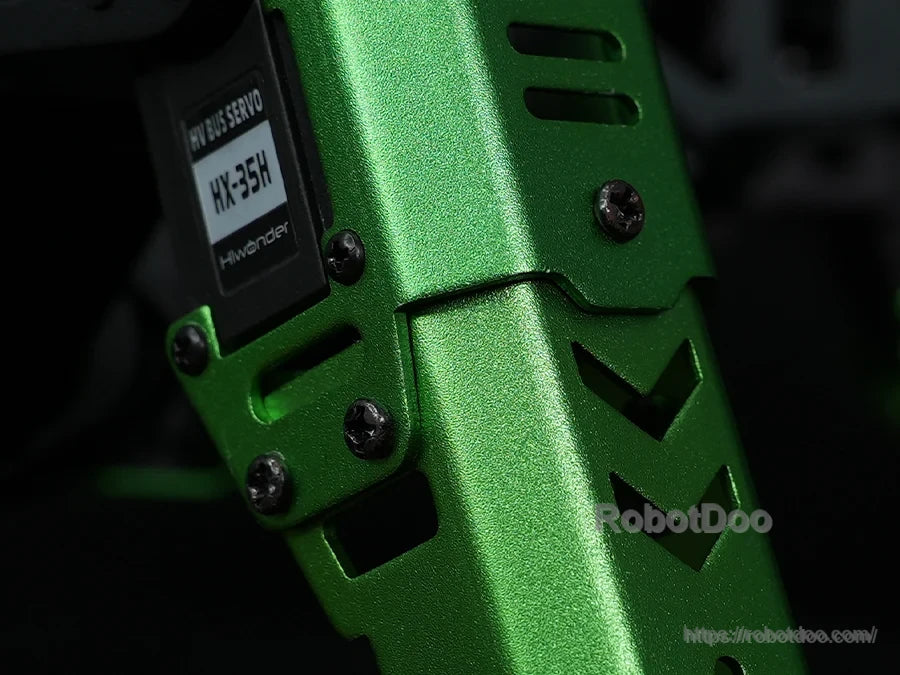
The green metal leg joint houses an HX-35H servo and uses a bolted bracket design for secure assembly.
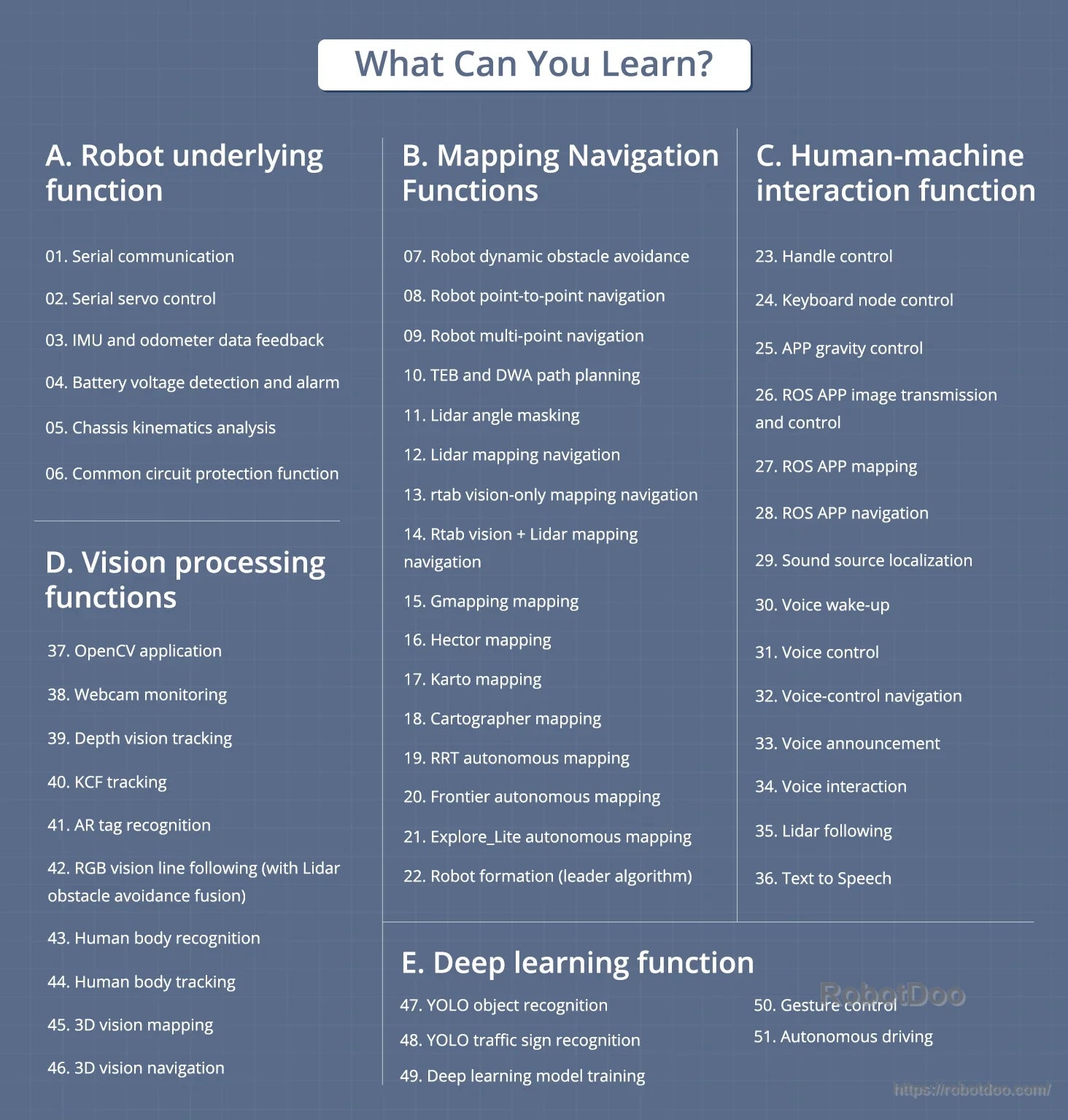
The JetHexa ROS hexapod robot learning curriculum covers robot fundamentals, mapping navigation, vision processing, deep learning, and human-machine interaction.
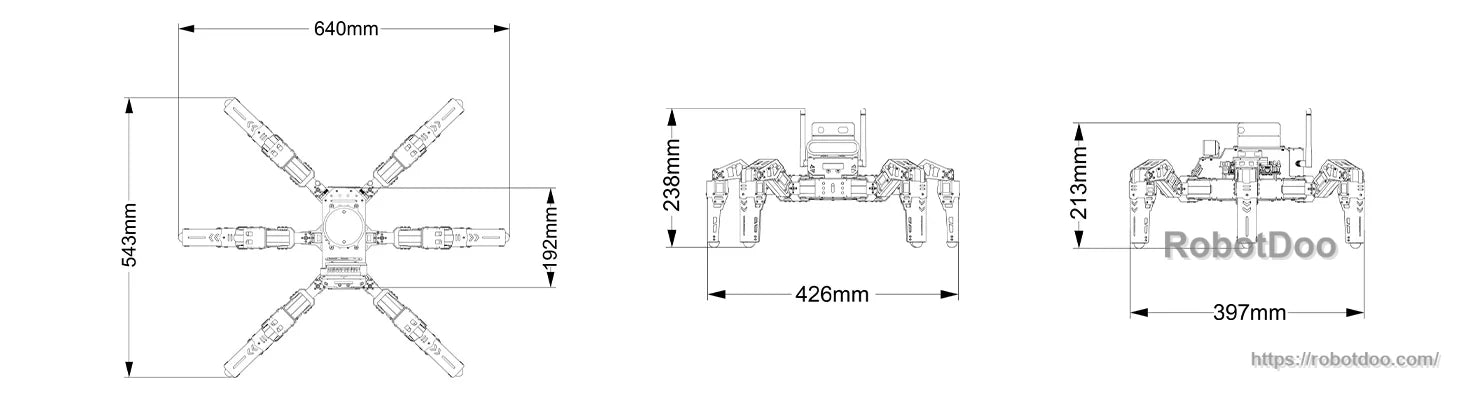
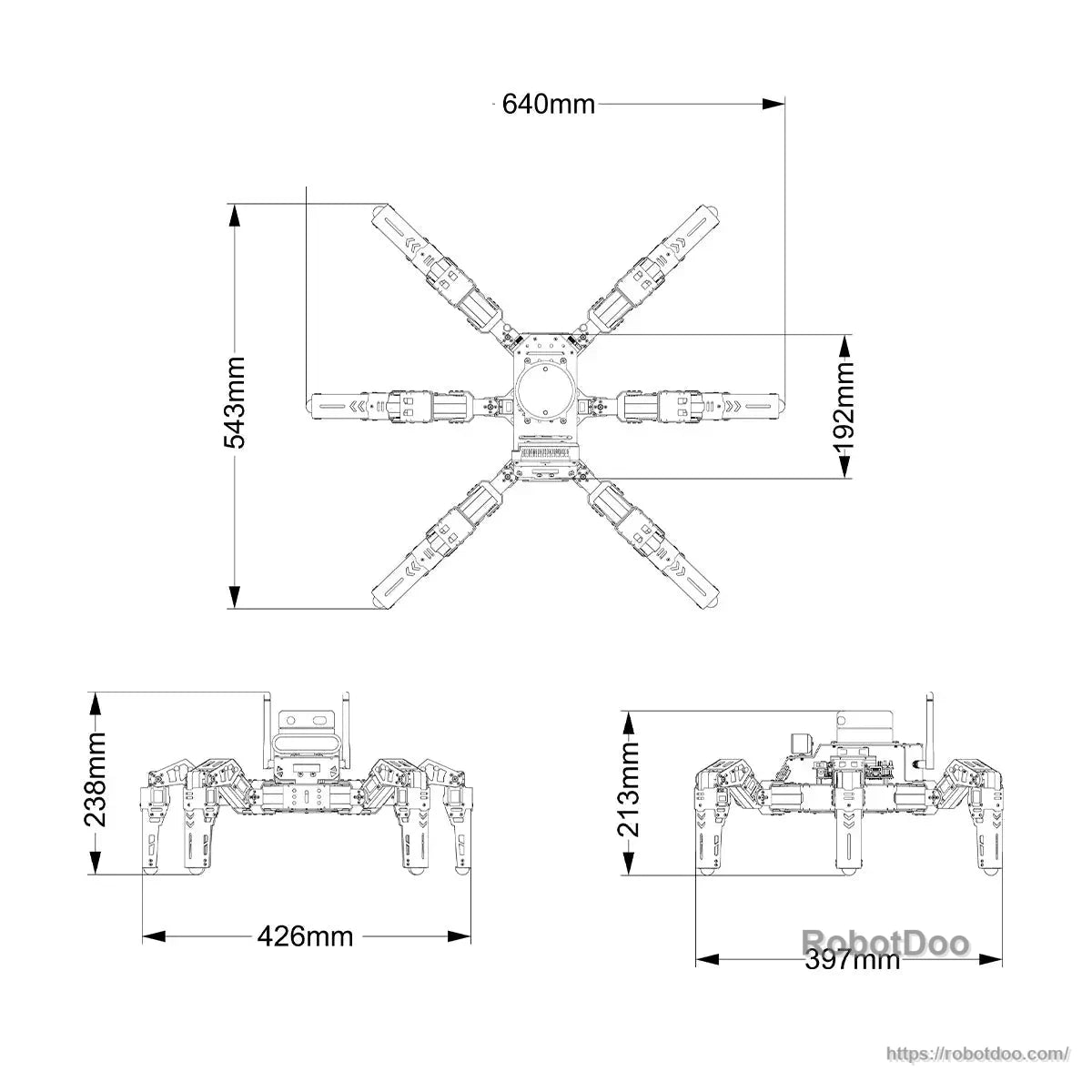
The JetHexa hexapod robot has a 640 mm overall span, with a body height of about 230 mm.
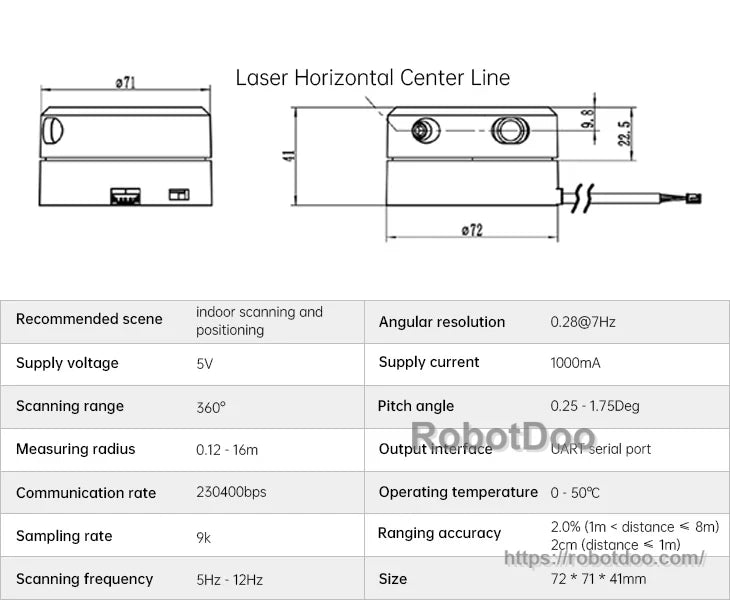
The 5 V laser scanning sensor supports 360° indoor scanning and positioning with a 0.12–16 m measuring radius.
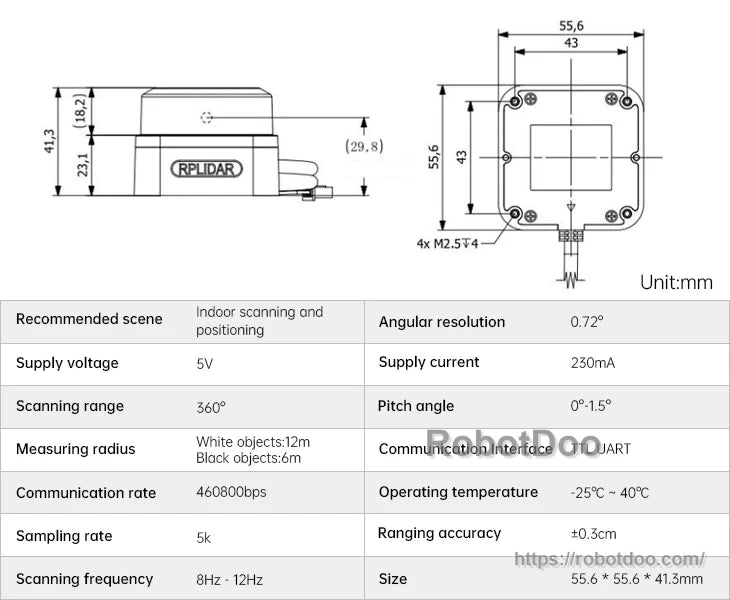
The RPLIDAR module supports 360° indoor scanning and positioning with a compact 55.6 × 55.6 × 41.3 mm housing.
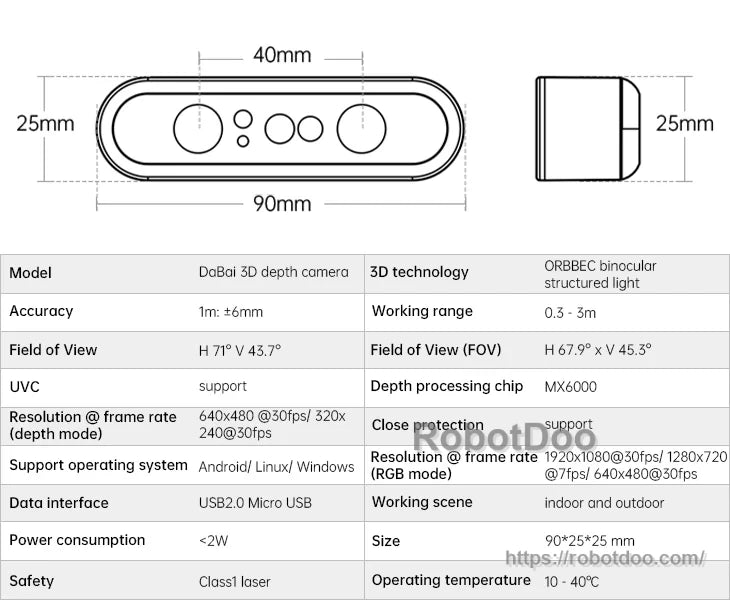
The depth camera module uses binocular structured light, USB 2.0 Micro USB connectivity, and supports Android, Linux, and Windows.
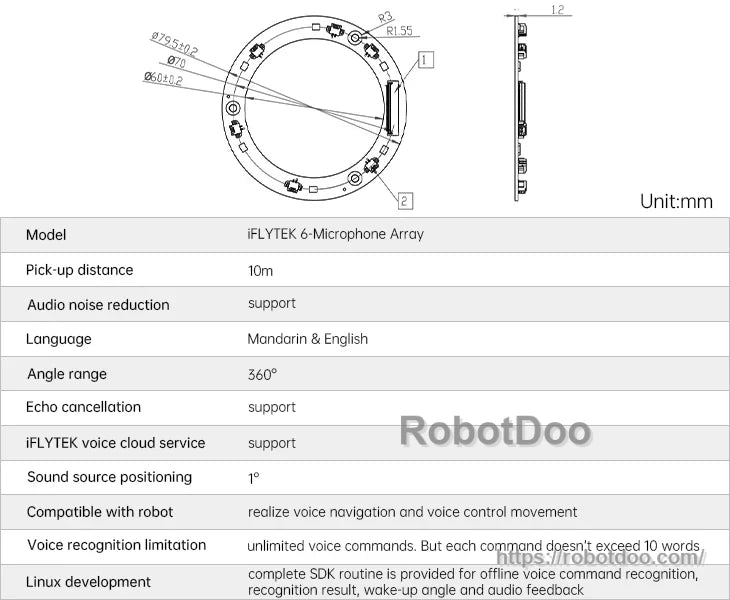
The iFLYTEK 6-microphone array supports 360° sound pickup, Mandarin and English recognition, and voice-control functions for robot operation.
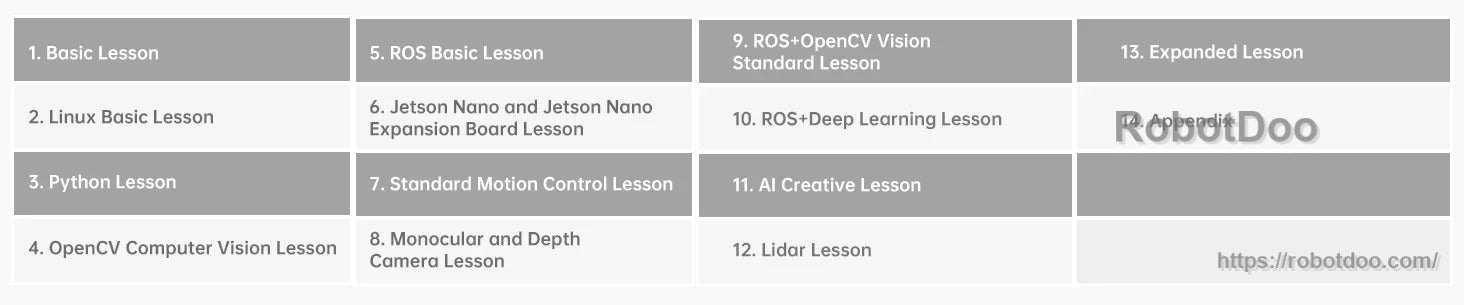
The learning roadmap covers ROS basics, Linux, Python, computer vision, AI, motion control, and expanded lessons for structured JetHexa development.
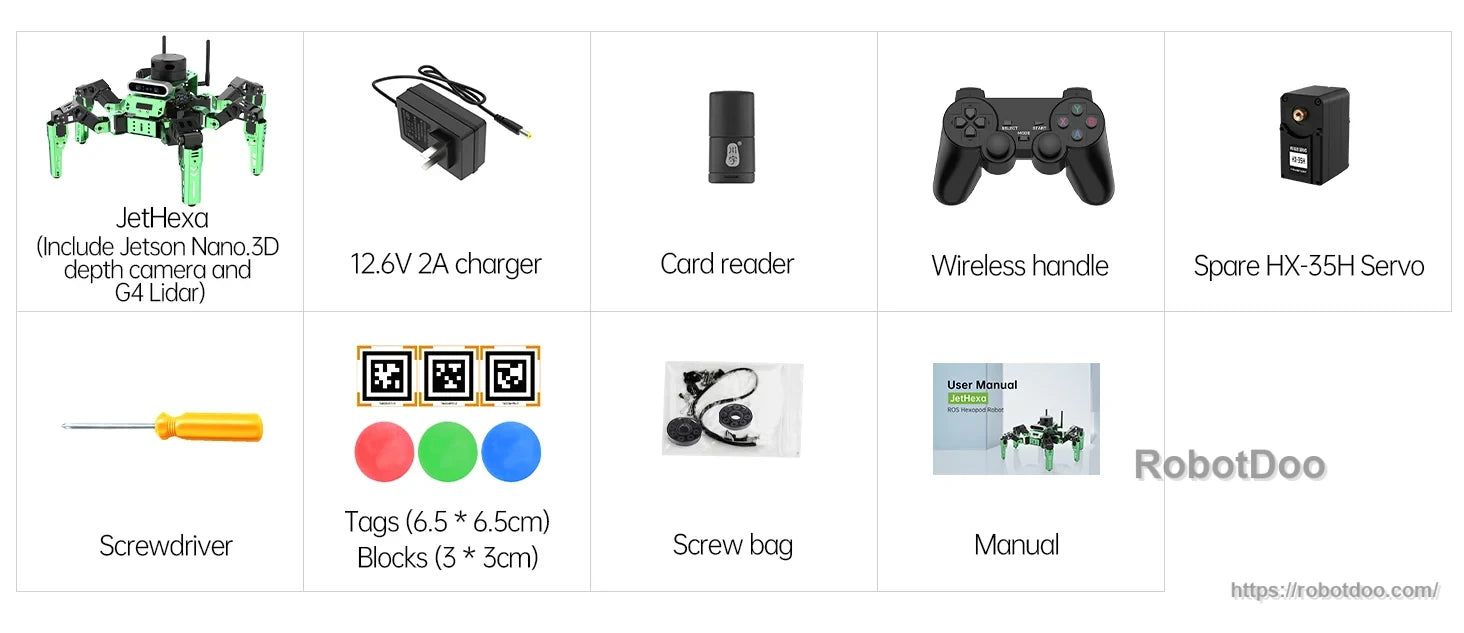
JetHexa ROS hexapod robot kit includes the robot, 12.6V charger, wireless handle, spare HX-35H servo, screwdriver, screws, and manual.