Overview
Hiwonder MentorPi T1 Raspberry Pi Robot Car - Tank Chassis is an ROS2-enabled educational and development platform powered by Raspberry Pi 5. It combines a full-metal tank chassis, Hall encoder DC geared motors, Oradar MS200 LiDAR, and an Aurora930 Pro 3D depth camera for machine vision, SLAM mapping, path planning, navigation, and robotics programming. The platform supports Raspberry Pi OS, Ubuntu 22.04 LTS, and ROS2 Humble through Docker, with development resources for Python, C, C++, and JavaScript.
For technical assistance, contact RobotDoo at https://robotdoo.com/.
Read the MentorPi T1 tutorials for setup and development guidance.
Key Features
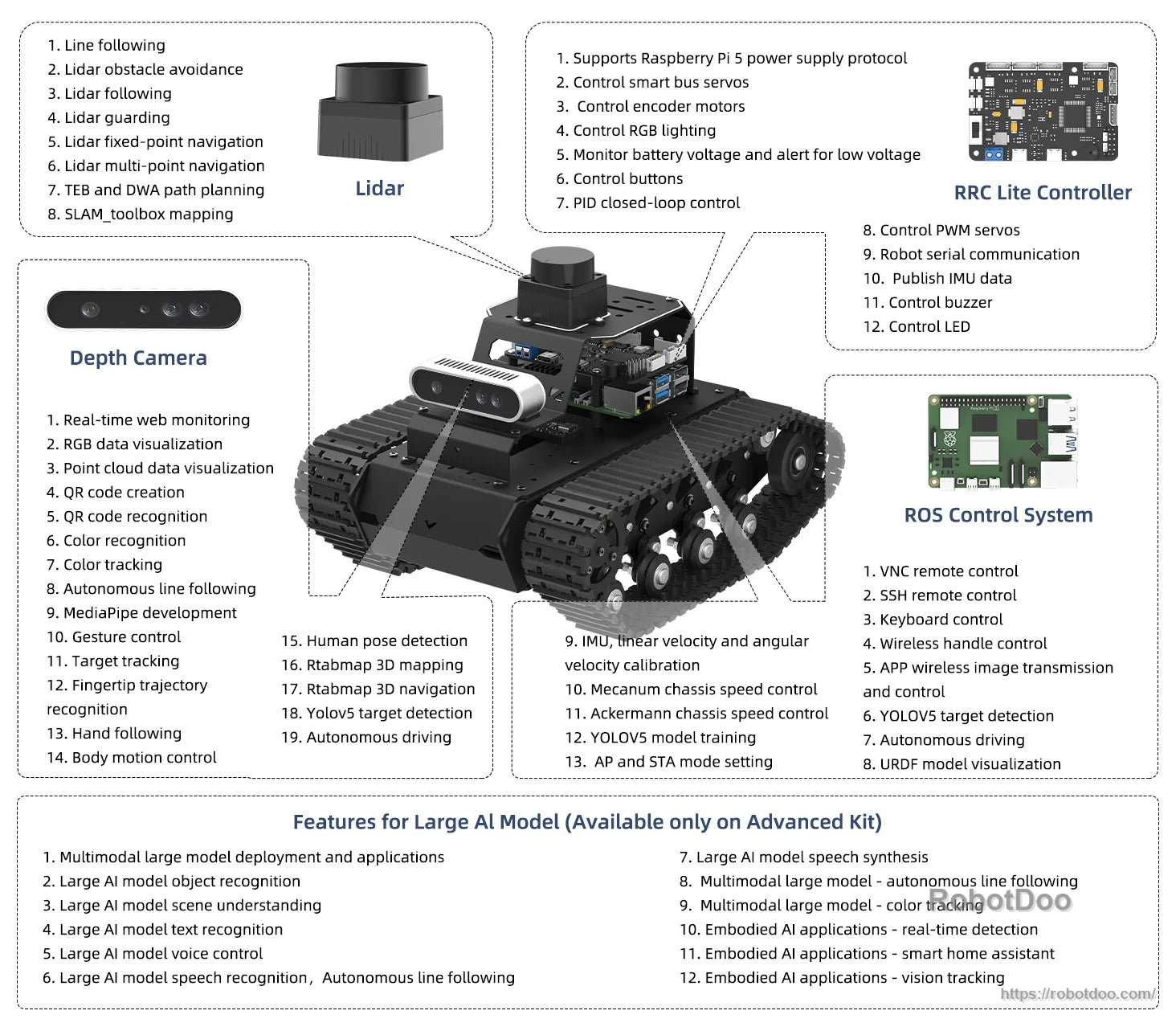
- Dual-controller architecture: Raspberry Pi 5 handles ROS robot control, AI visual image processing, deep neural network workloads, voice interaction, advanced AI algorithms, and SLAM localization and mapping. The RRC Lite controller provides high-frequency PID control, motor closed-loop control, servo control and feedback, IMU data acquisition, and power status monitoring.
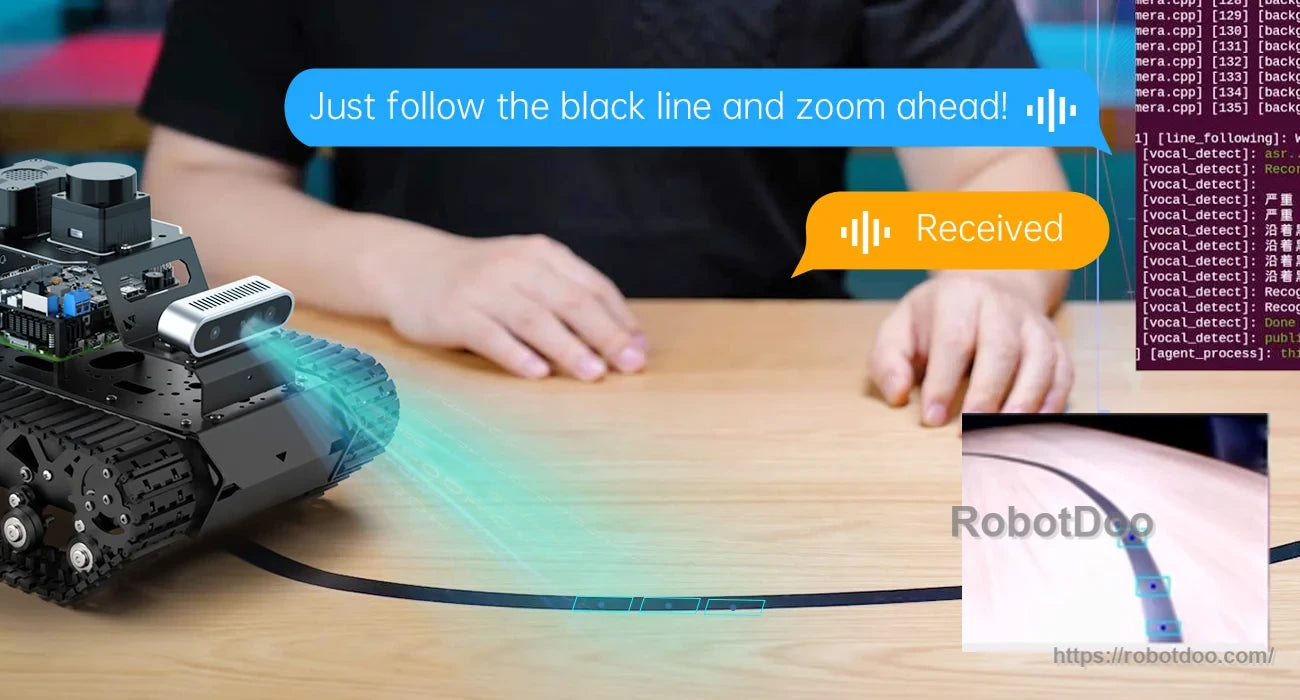
- 3D depth vision: The Aurora930 Pro depth camera supports depth, RGB, and IR data for visual perception, point-cloud visualization, QR code recognition, color recognition, target tracking, line following, and MediaPipe development.
- LiDAR mapping and navigation: The Oradar MS200 supports obstacle avoidance, LiDAR following, fixed-point and multi-point navigation, TEB and DWA path planning, and SLAM Toolbox mapping.
- Closed-loop tracked drive: Hall encoder DC geared motors use AB-phase incremental Hall encoders to measure rotation direction and speed for precise motion control.
- AI and vision applications: Supported applications include semantic understanding, environmental perception, scene understanding, voice control, color tracking, autonomous patrolling, vision tracking, color recognition, QR code recognition, and vision line tracking.
- Control and development: The robot supports Wi-Fi and Ethernet communication, an iOS/Android app, wireless controller control, ROS2 development, and programming with Python, C, C++, and JavaScript.
Specifications
| Chassis type | Tank chassis |
|---|---|
| Dimensions | 27.8 x 19.5 x 18.2 cm |
| Weight | 1.88 kg |
| Chassis material | Full metal aluminum alloy with anodizing process |
| Motor | Hall encoder DC geared motor |
| Encoder | AB-phase incremental Hall encoder |
| Controllers | RRC Lite controller + Raspberry Pi 5 controller |
| Depth camera | Aurora930 Pro 3D depth camera |
| LiDAR | Oradar MS200 |
| Battery | 7.4V 2200mAh 10C LiPo battery with protection board |
| Continuous operating time | Up to 60 minutes |
| Operating systems | Raspberry Pi OS + Ubuntu 22.04 LTS + ROS2 Humble (Docker) |
| Communication | Wi-Fi / Ethernet |
| Software | iOS / Android app |
| Programming languages | Python / C / C++ / JavaScript |
| Storage | 64GB TF card |
Aurora930 Pro Depth Camera
| Module dimensions | 76.5 x 20.7 x 21.8 mm |
|---|---|
| Depth data format | 16-bit Raw |
| Baseline | 40 mm |
| Depth resolution / frame rate | 640 x 400 @ 12fps |
| Field of view | 74° x 51° |
| RGB data format | NV12 |
| IR data format | 8-bit Raw |
| Depth accuracy | ±8 mm @ 1 m |
| Working distance | 15-300 cm |
| Interface | USB 2.0 wafer connector |
| Power supply | 5V ±10%, 1.5A |
| Average power consumption | <1.6W |
| Operating temperature | -10°C to 55°C |
| Operating humidity | 0% to 95% RH, non-condensing |
| Operating illuminance | 3-80,000 Lux |
| OS compatibility | Linux / ARMv8 / ROS / Windows |
| Firmware update | USB OTA update |
| Hot start delay | <300ms |
| Safety rating | Class 1 laser safety |
Applications
MentorPi T1 is suited to ROS2 learning, Raspberry Pi robotics, OpenCV machine vision, LiDAR SLAM, autonomous navigation, encoder motor control, AI model experimentation, color and target tracking, QR code recognition, line following, and embodied AI development.
What's Included
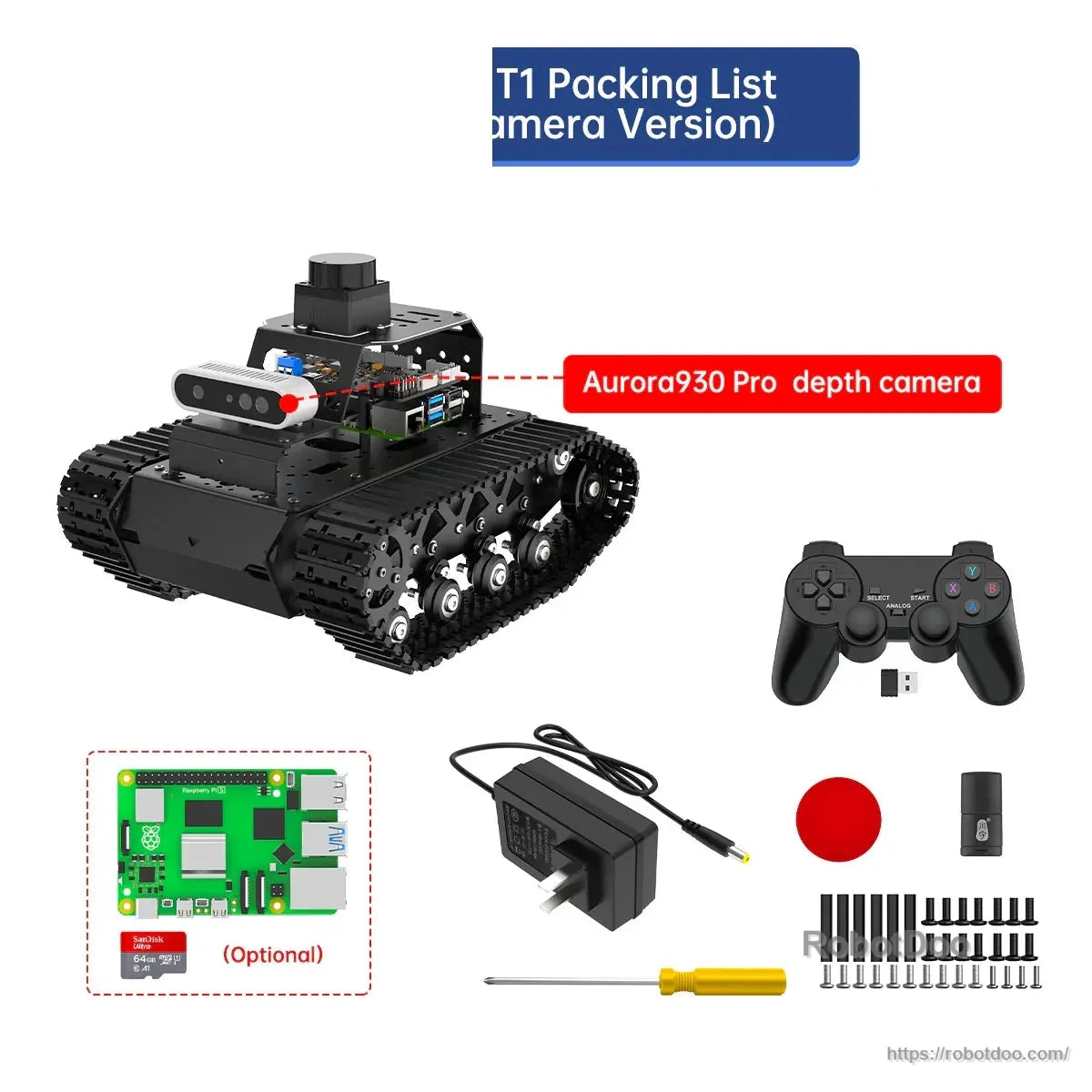
The supplied materials include the MentorPi T1 tank chassis platform, development tutorials, video tutorials, ROS source code, system image, software, and a 64GB TF card. The listed configuration includes the Aurora930 Pro 3D depth camera, Oradar MS200 LiDAR, Raspberry Pi 5 controller, RRC Lite controller, and 7.4V 2200mAh 10C LiPo battery with protection board.
Details
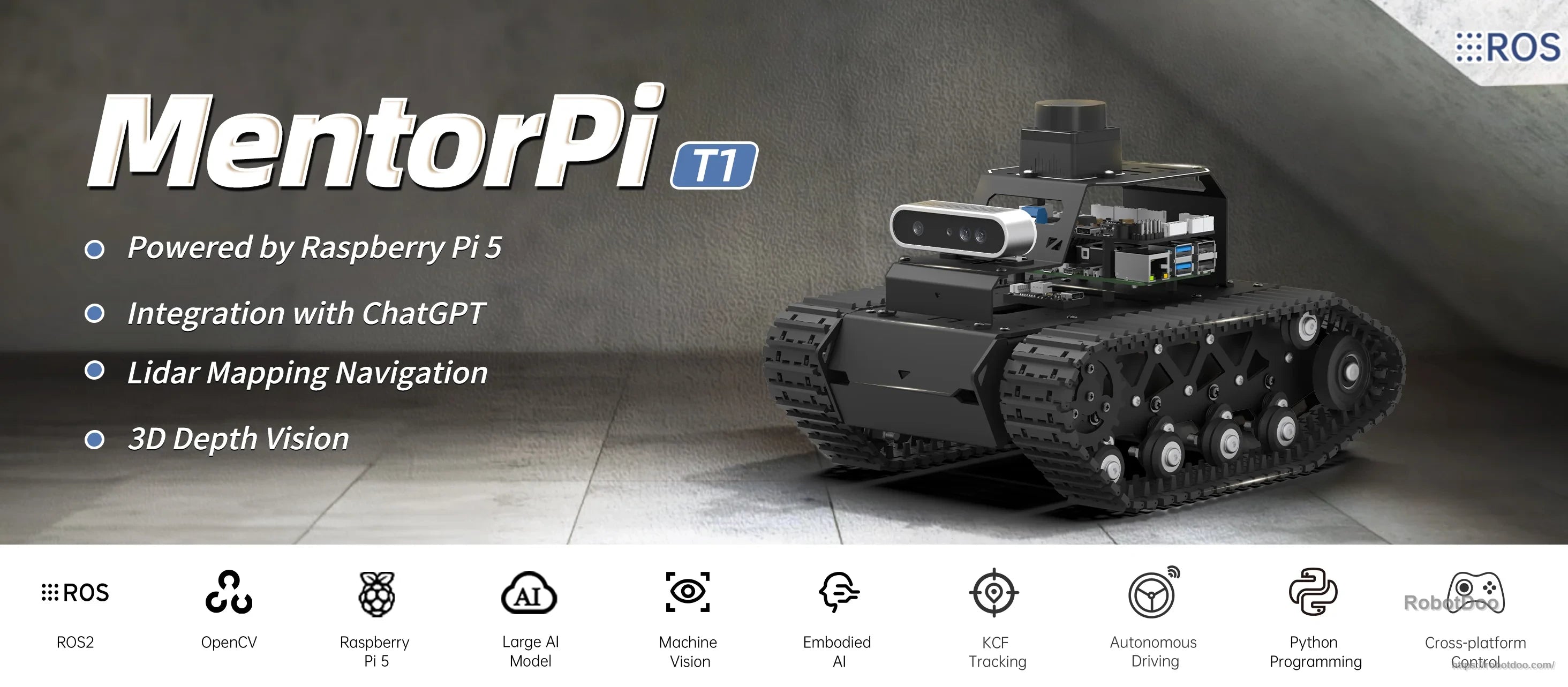
MentorPi T1 combines Raspberry Pi 5 control, tracked mobility, LiDAR navigation, and 3D depth vision in one ROS2 platform.
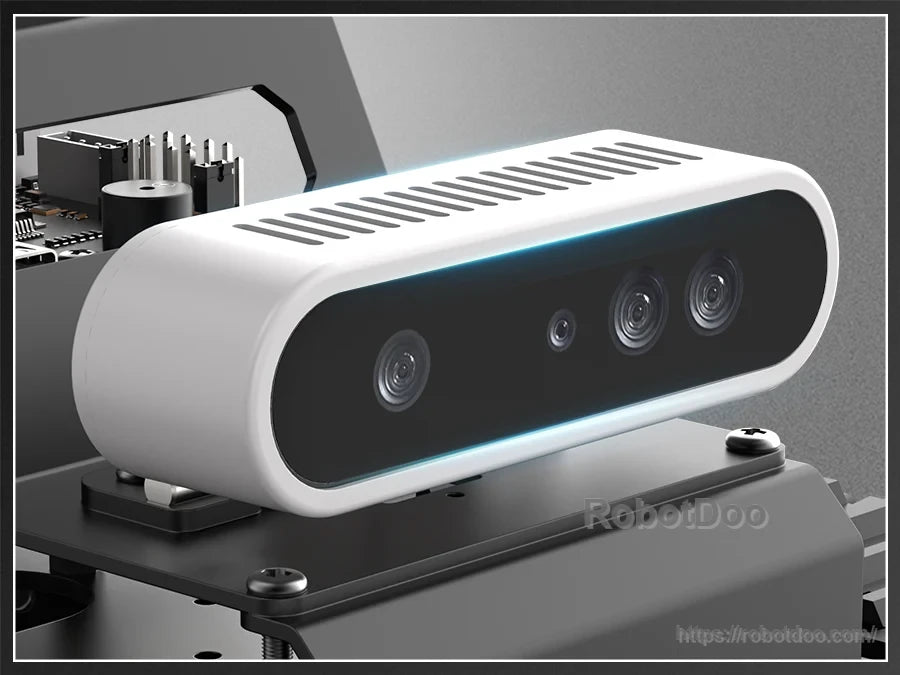
The Aurora930 Pro camera supplies RGB, depth, and IR data for visual perception and point-cloud applications.
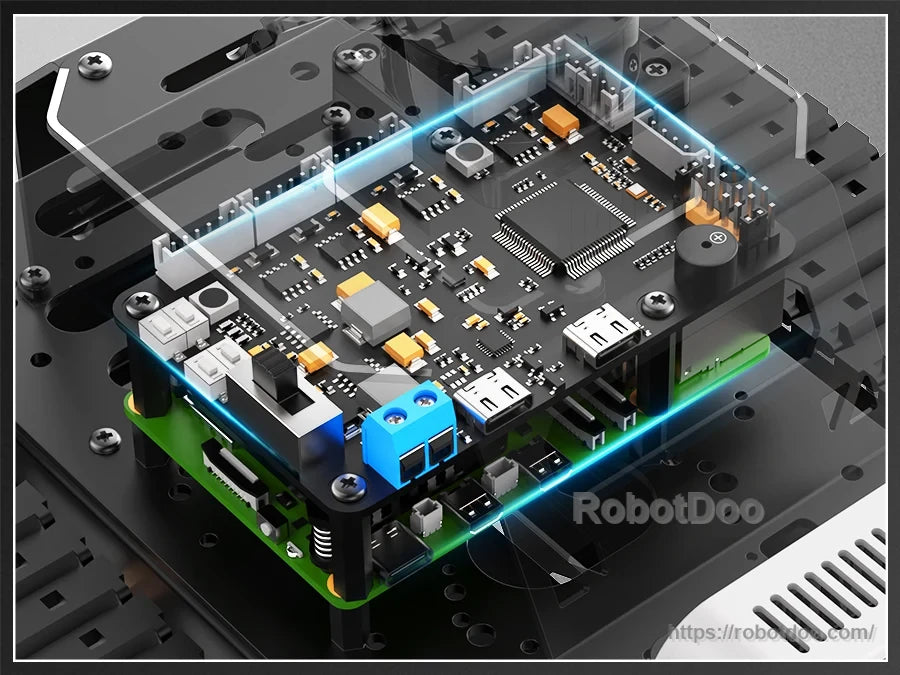
A dual-controller design pairs Raspberry Pi 5 processing with the RRC Lite controller for responsive motor, servo, IMU, and power management.
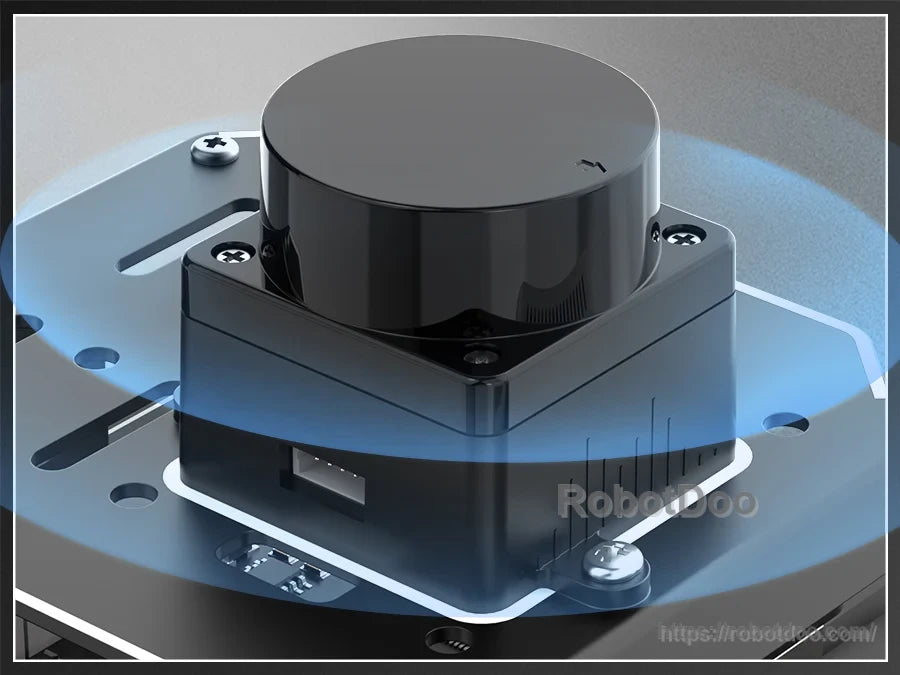
Oradar MS200 LiDAR supports SLAM mapping, obstacle avoidance, and autonomous navigation workflows.
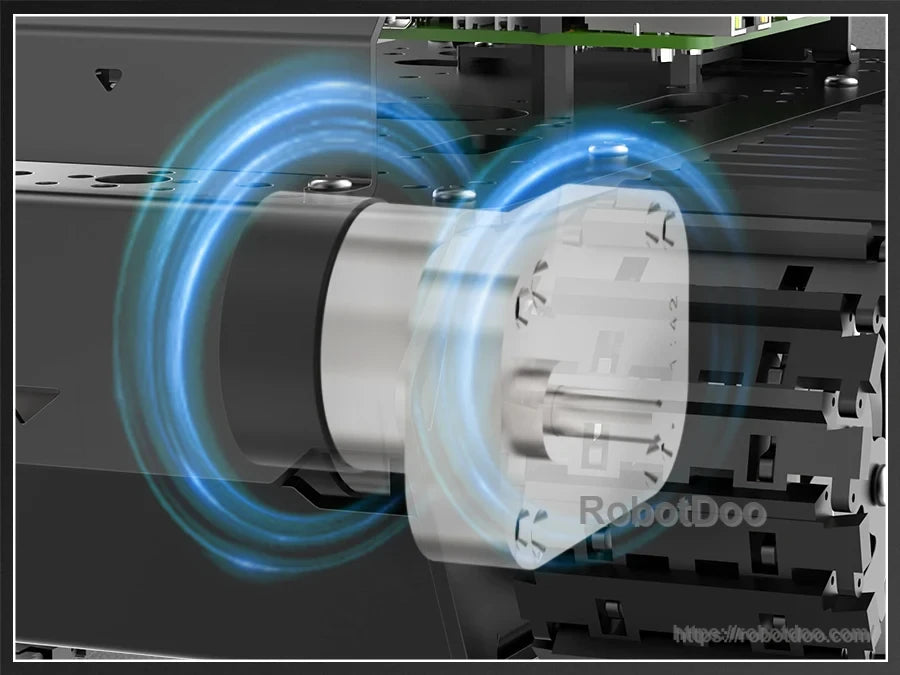
Hall encoder DC geared motors provide closed-loop feedback for precise tracked motion control.
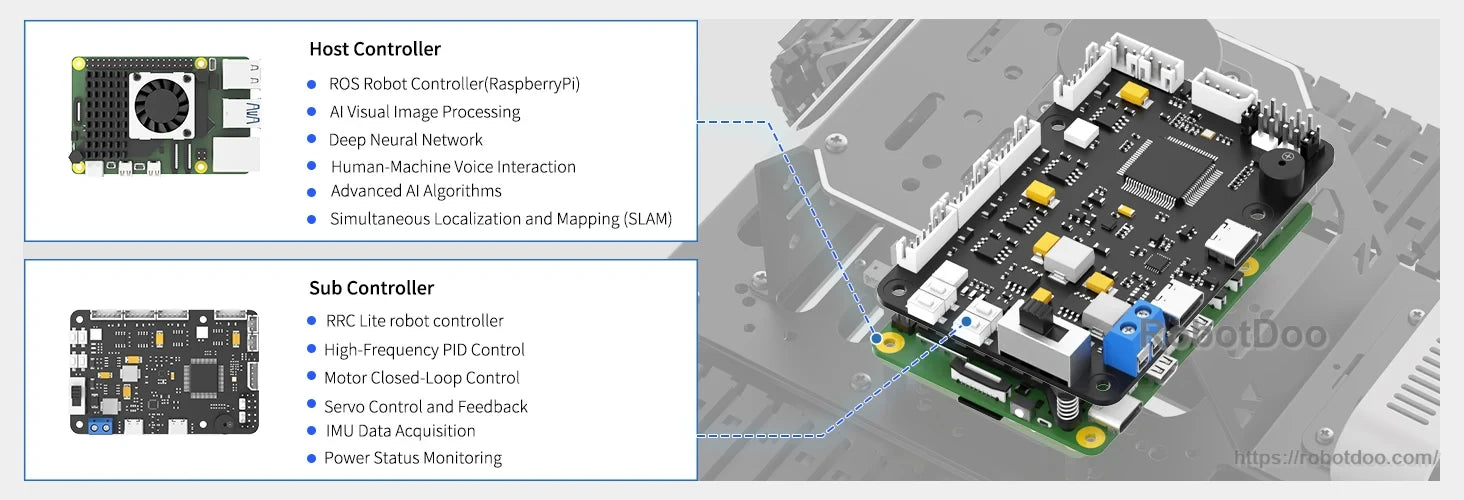
Raspberry Pi 5 handles ROS, AI vision, and SLAM workloads while the sub-controller manages real-time hardware control.
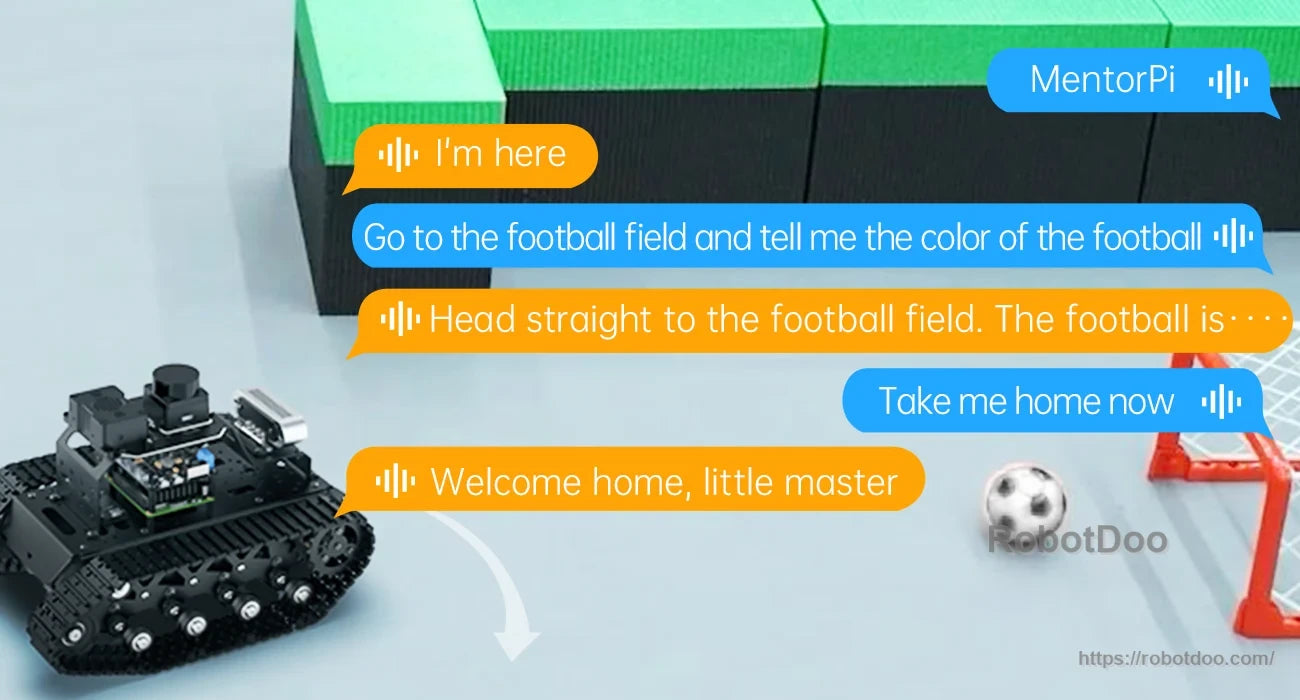
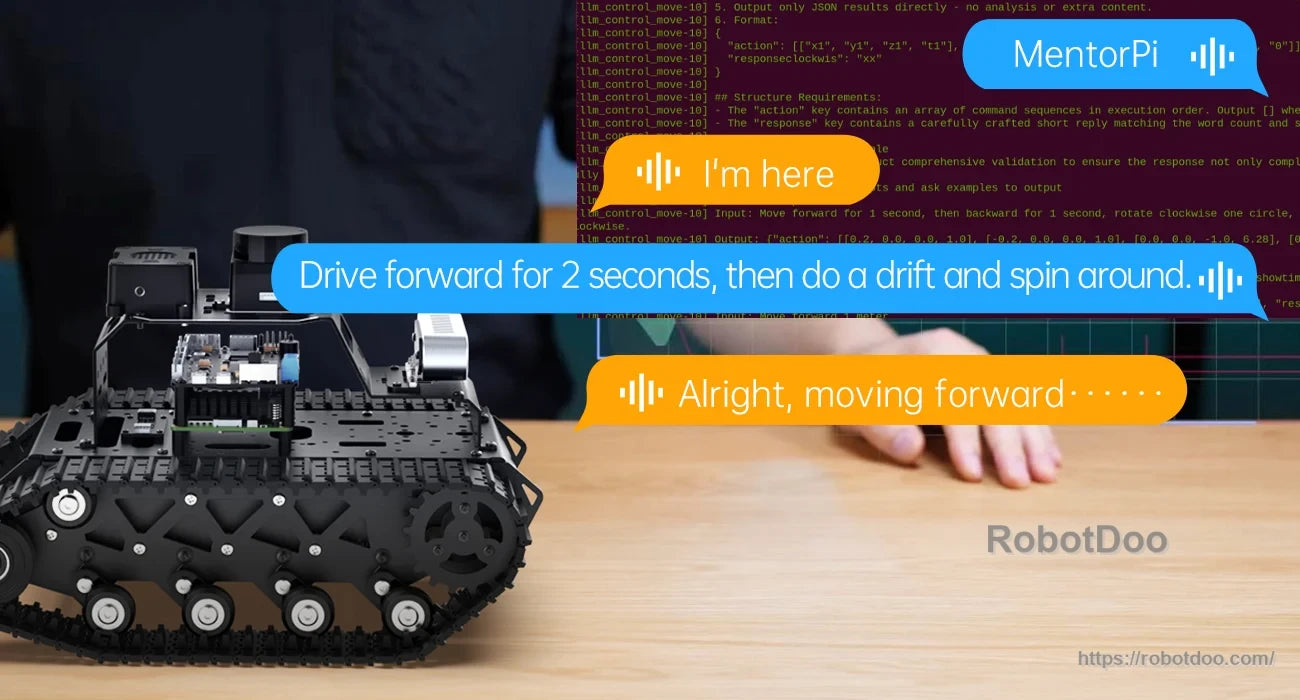
Voice interaction can direct the robot to navigate a course and identify objects within its environment.
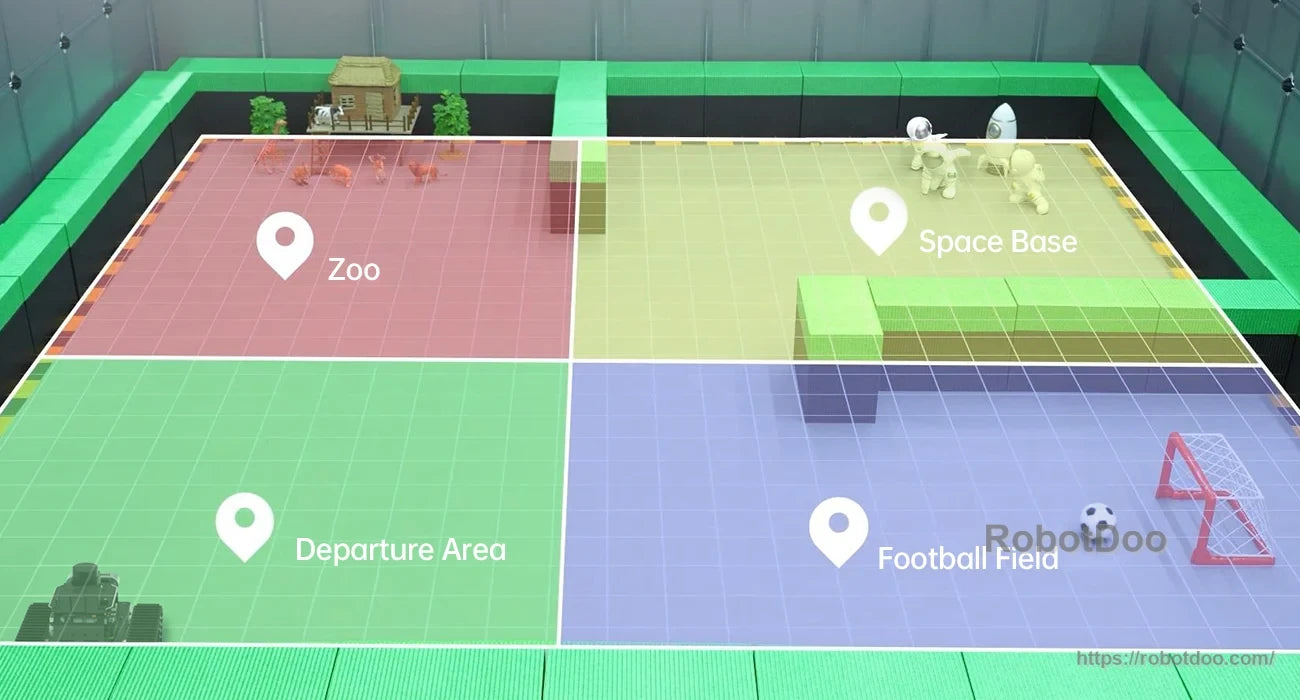
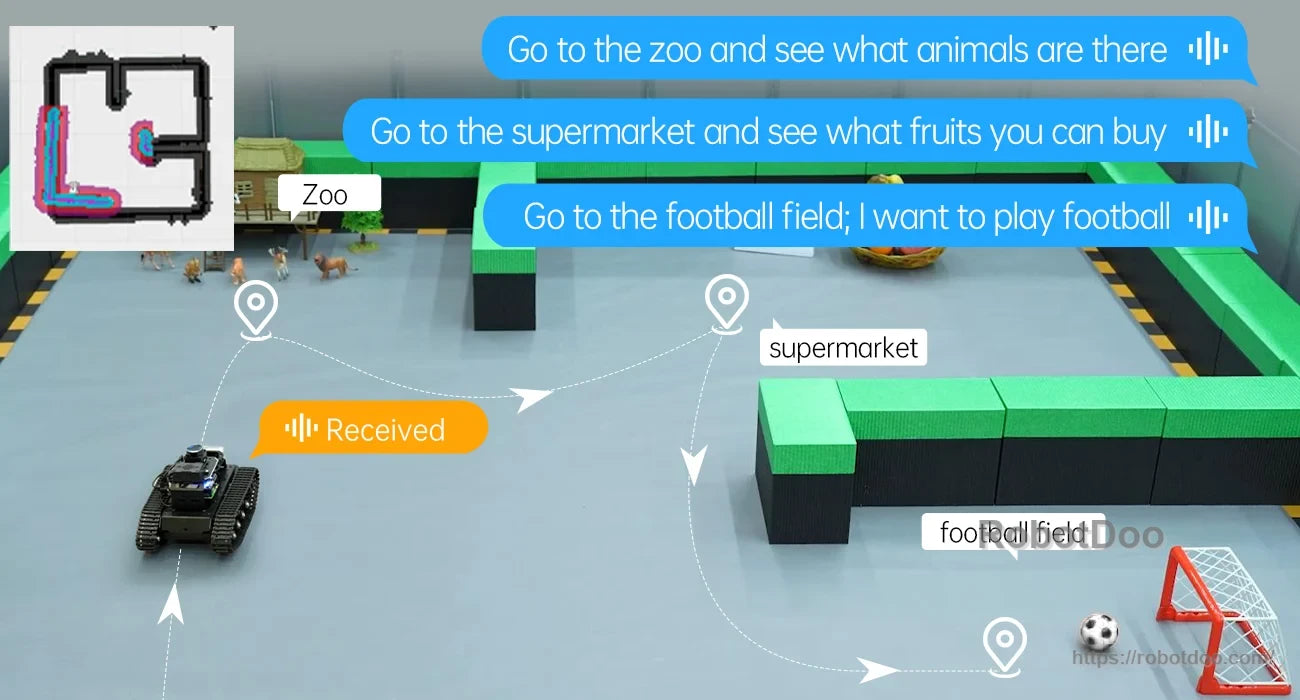
Natural-language destination commands can be combined with autonomous route navigation in a prepared environment.
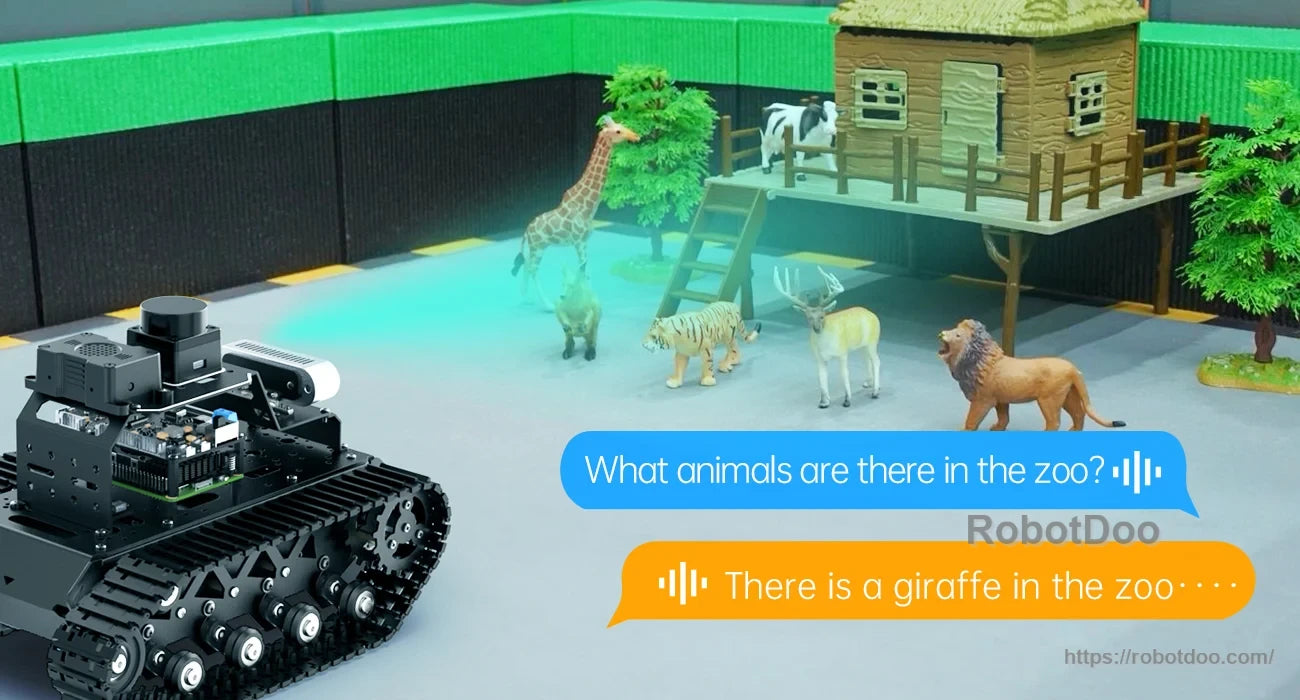
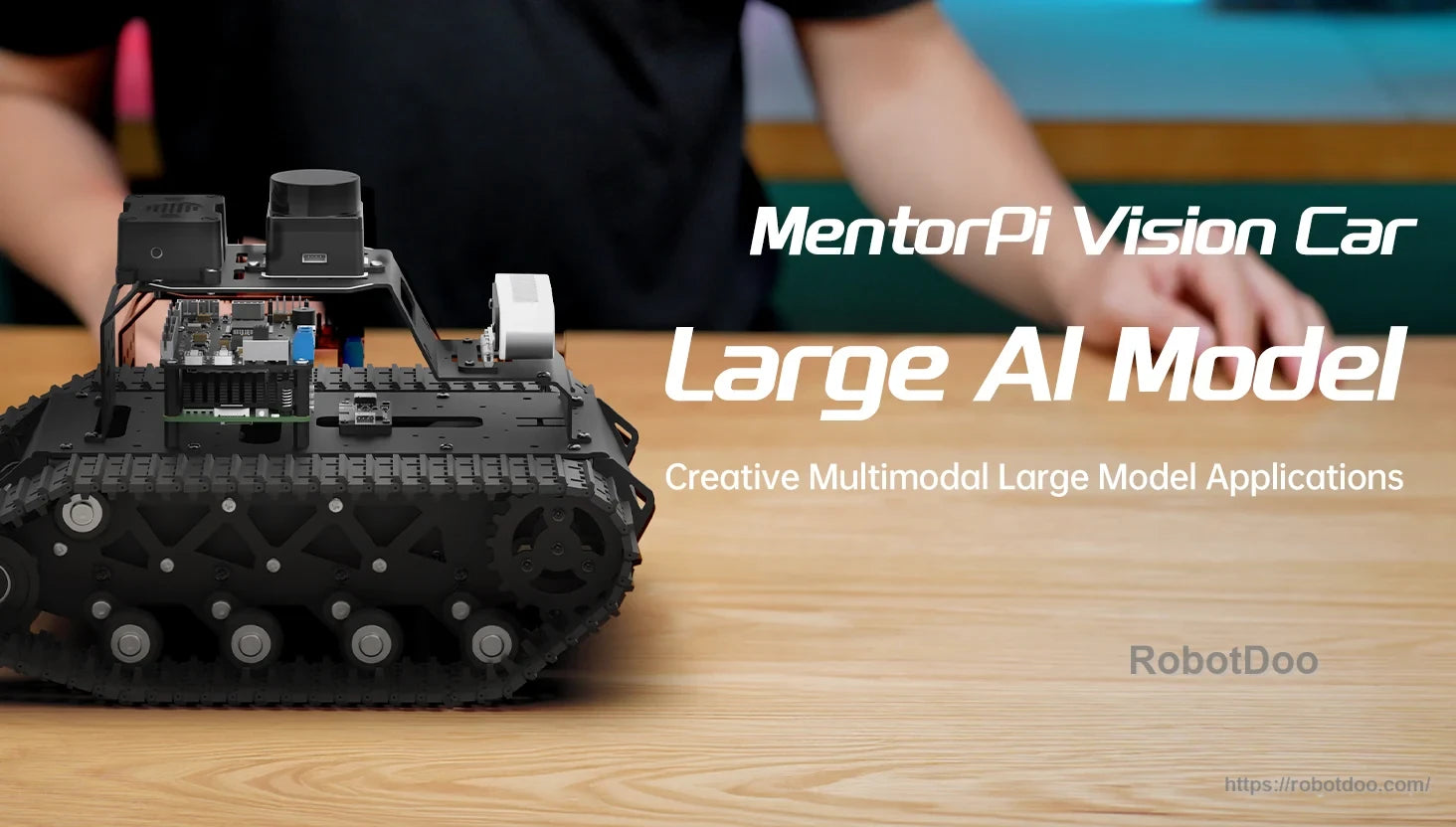
Multimodal large-model applications extend the platform's capabilities for voice, vision, and robotics interaction.
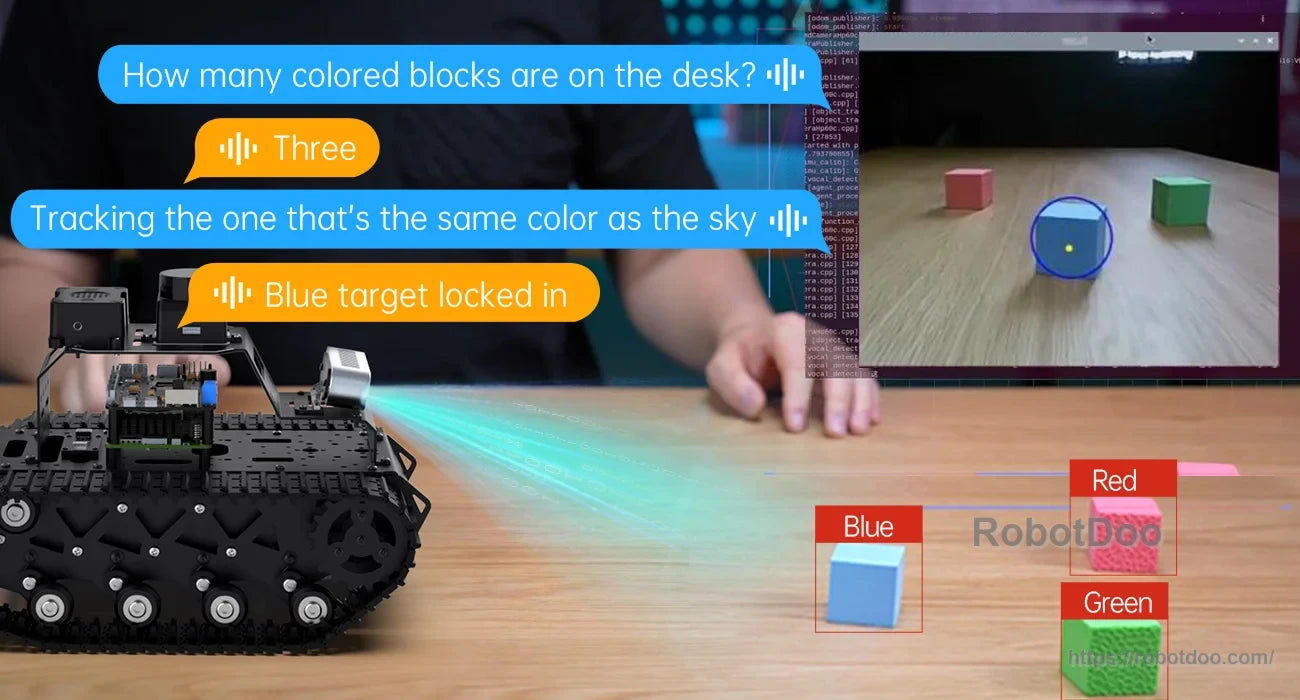
Color recognition and tracking enable the robot to identify selected objects and follow a matching target.
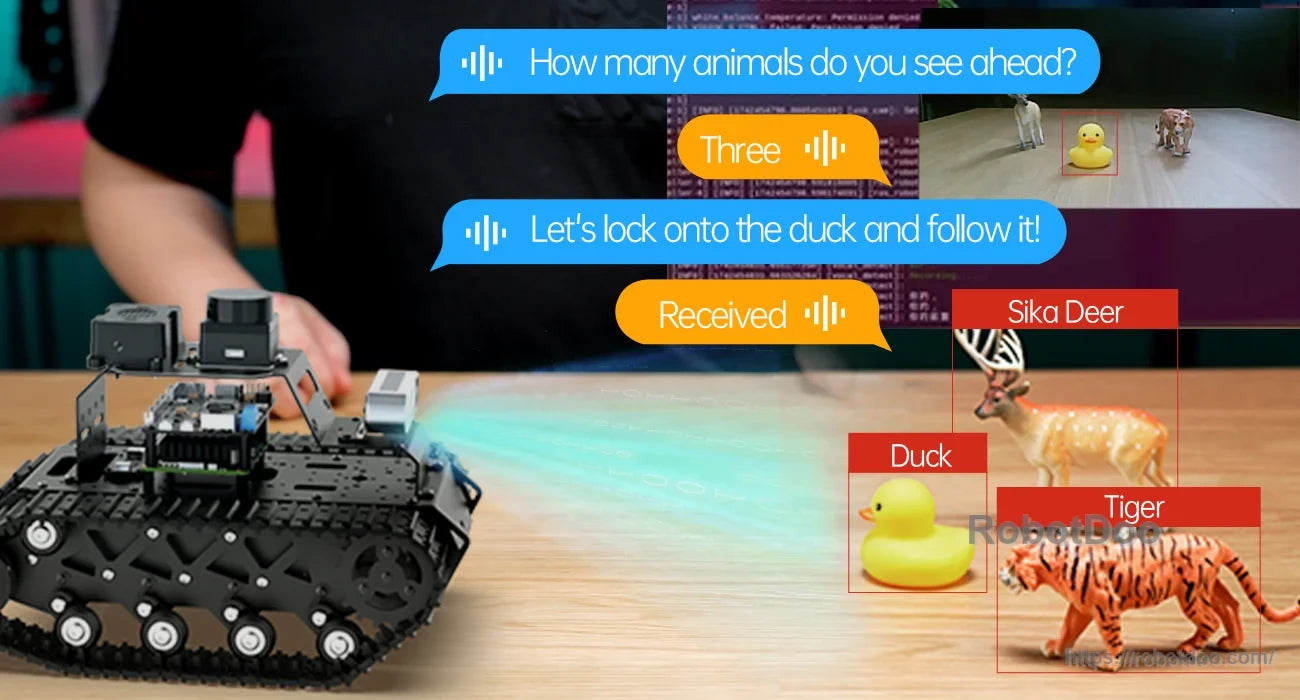
Object detection can identify multiple targets for interactive visual perception tasks.
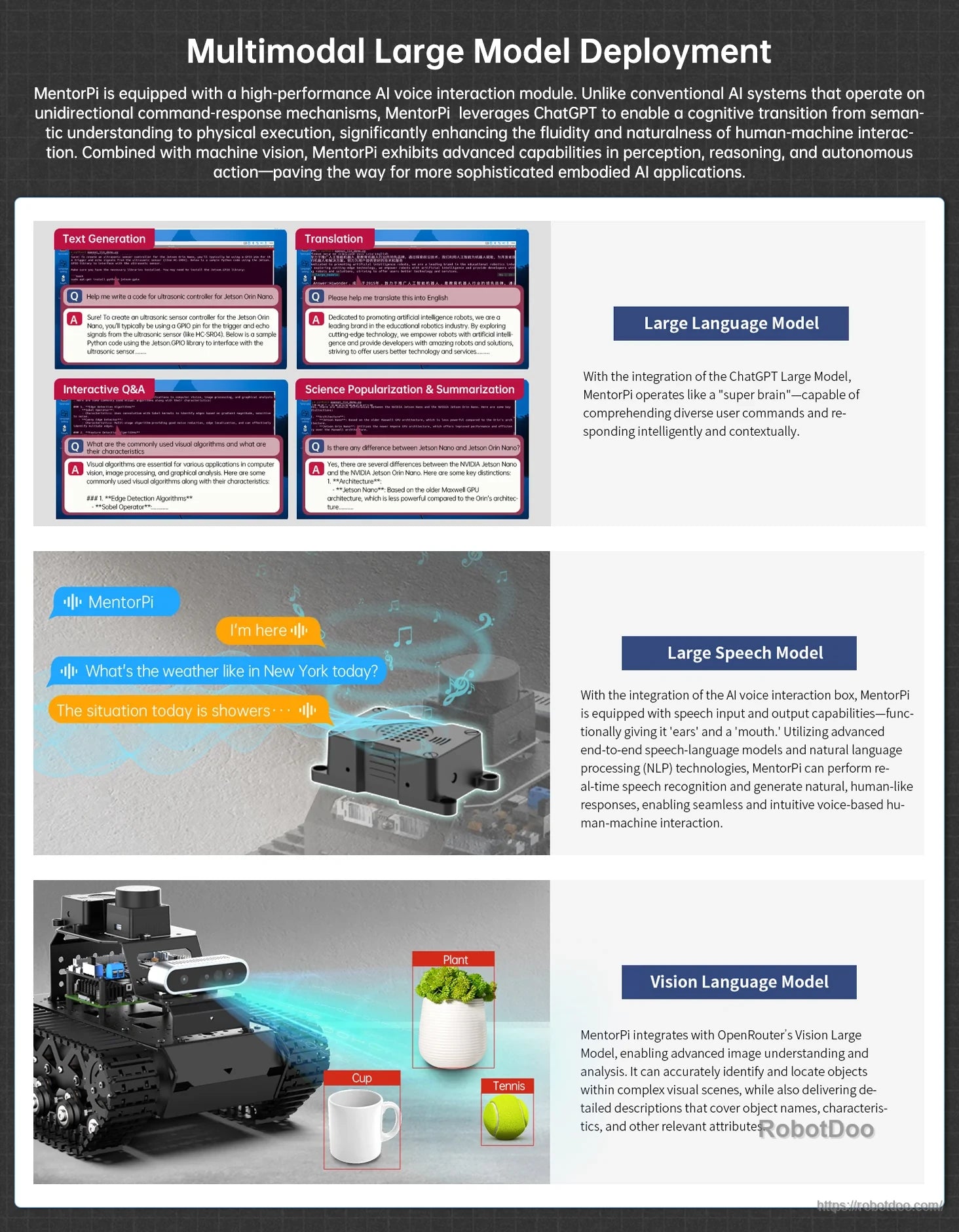
Deployment resources cover large language, speech, and vision-language model applications for robotics development.
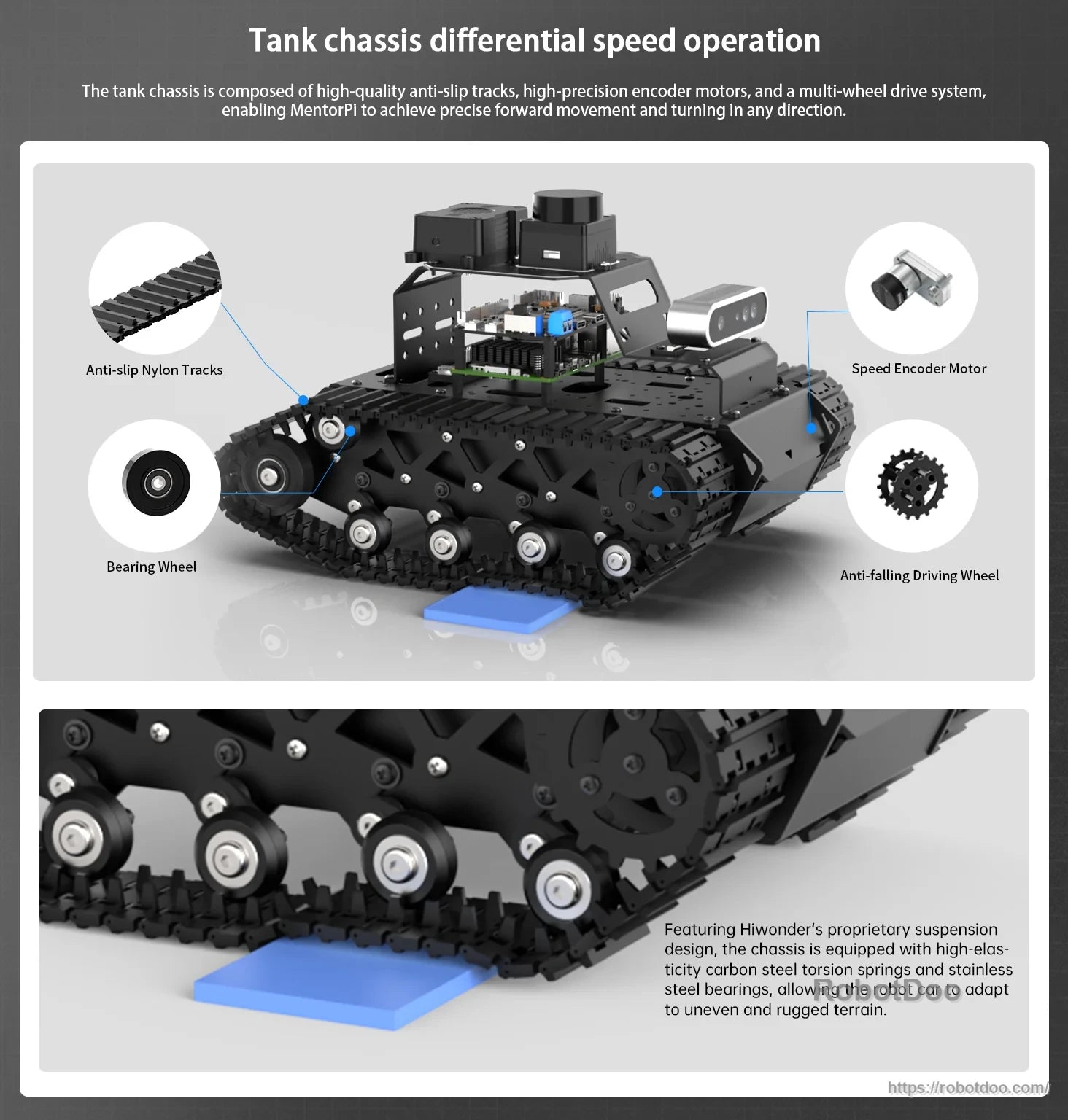
The tracked chassis combines rubber tracks, encoder motors, and a multi-wheel drive system for differential-speed movement.
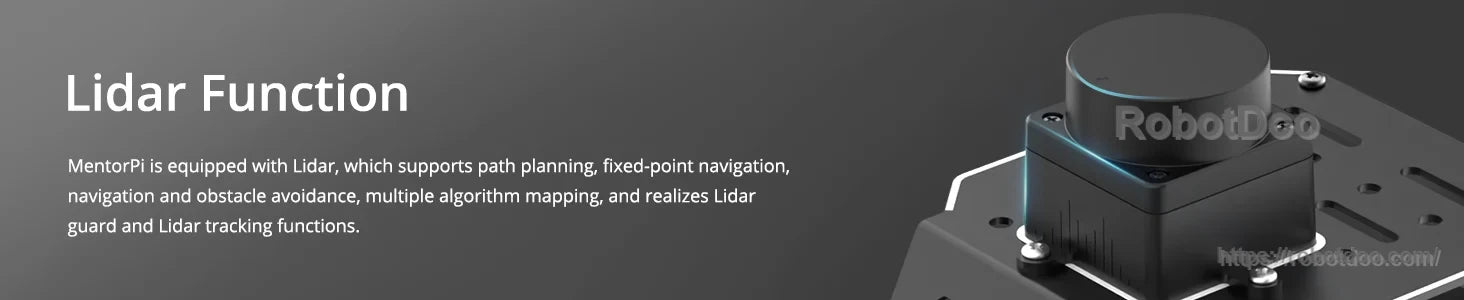
The top-mounted lidar sensor supports path planning, fixed-point navigation, map creation, and lidar tracking functions.
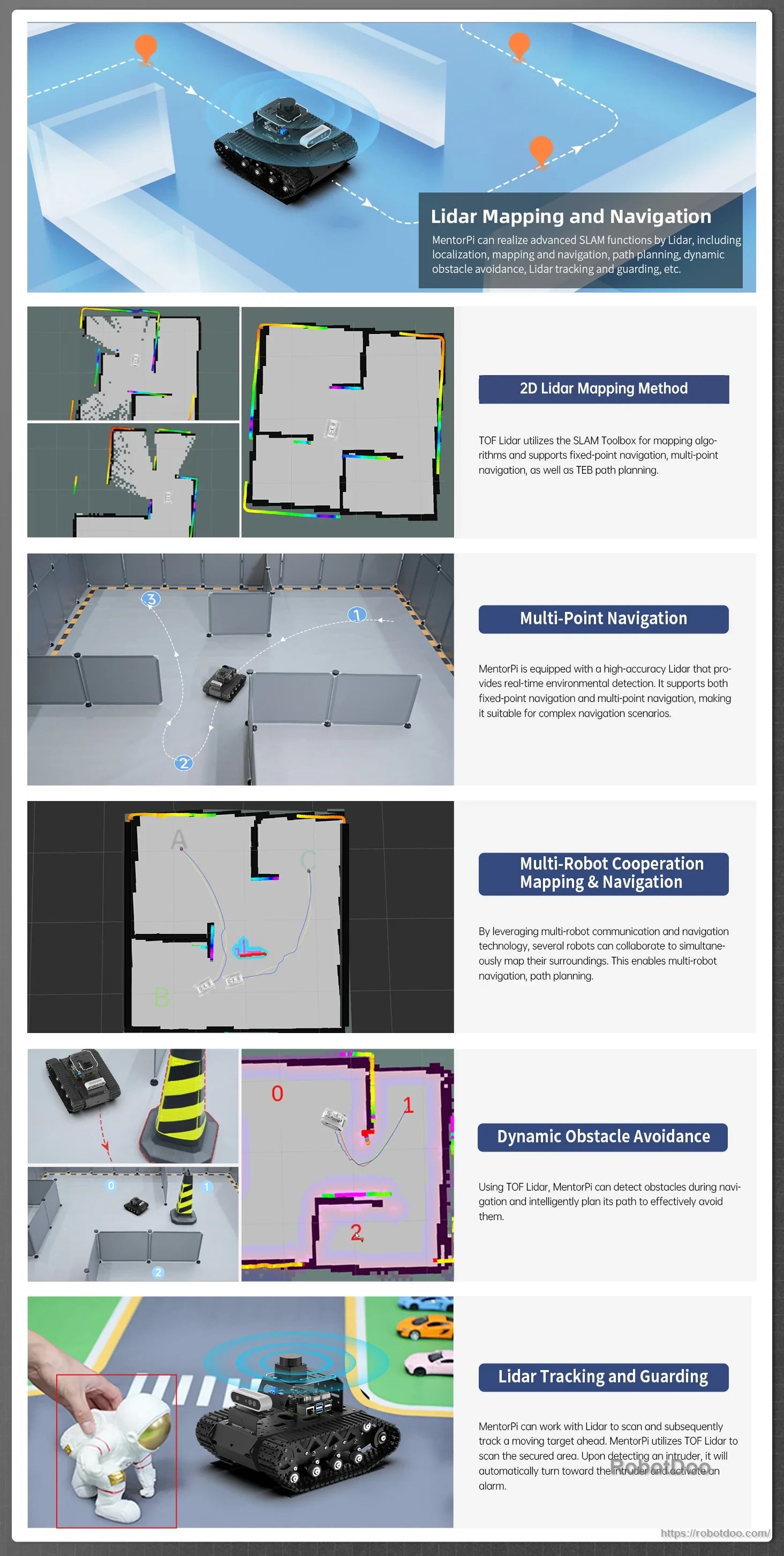
MentorPi T1 combines LiDAR mapping and navigation with multi-point routing, dynamic obstacle avoidance, and tracking and following functions.
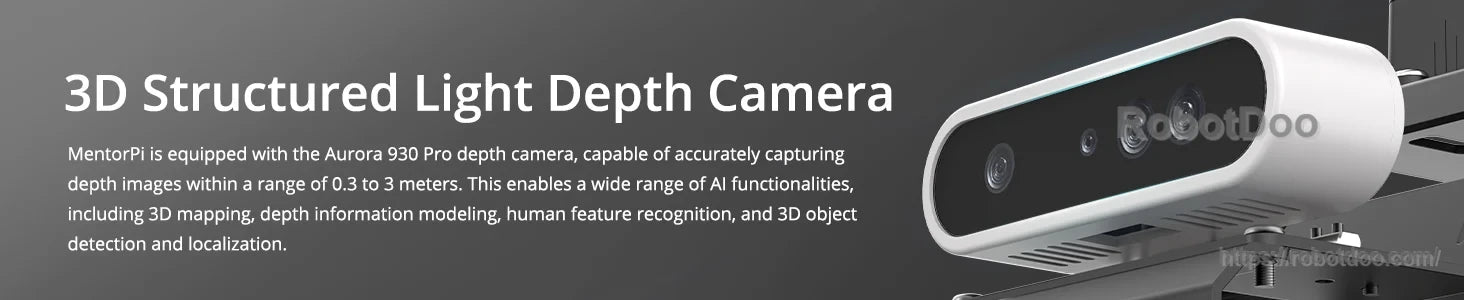
The 3D structured-light depth camera supports depth sensing from 0.15 to 5 meters for mapping and object detection tasks.
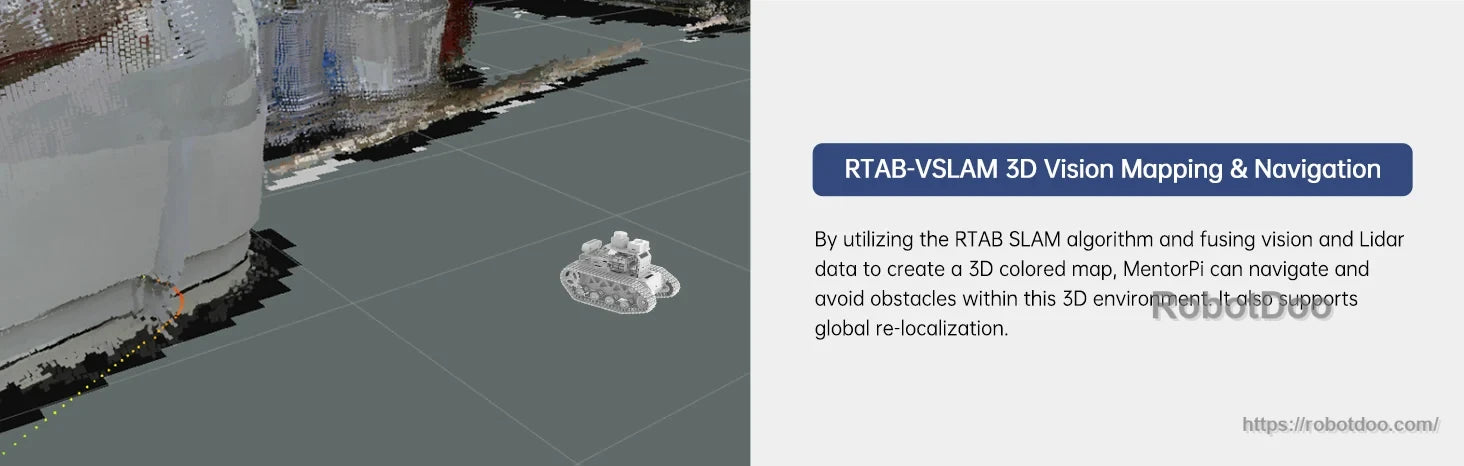
RTAB-VSLAM combines vision and laser data to support 3D mapping, navigation, and obstacle avoidance.
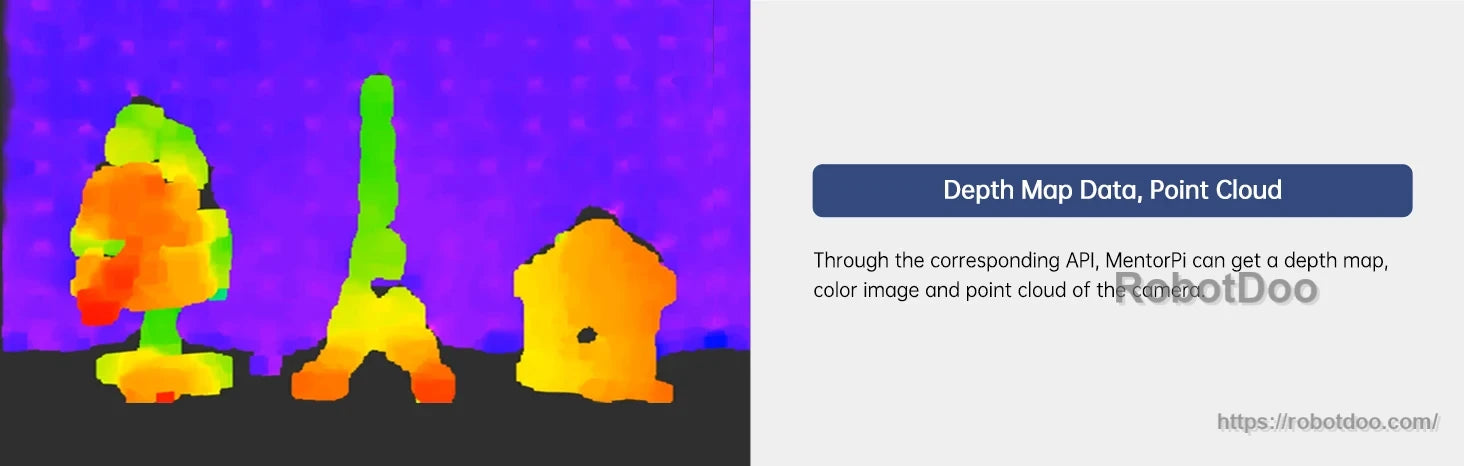
Depth map data and point cloud output support ROS2-based perception tasks with the MentorPi T1 robot.
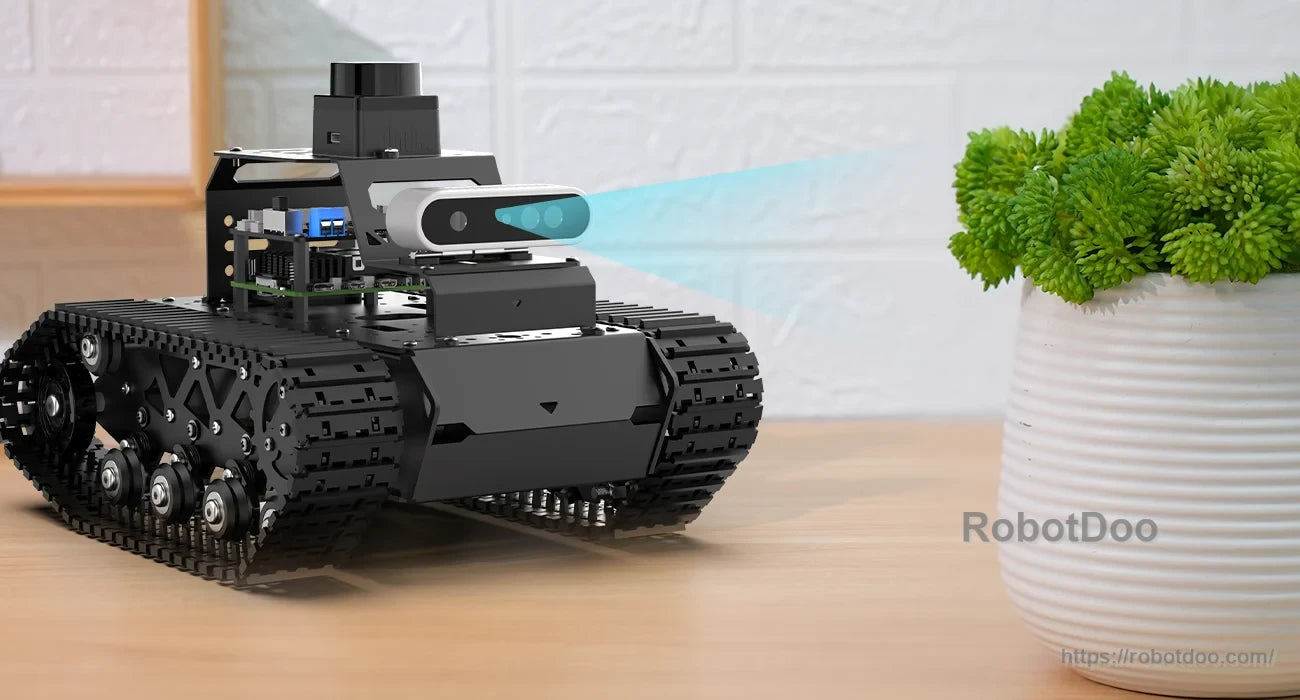
The MentorPi T1 combines rubber tank treads with a front-mounted camera module for mobile robotics projects.
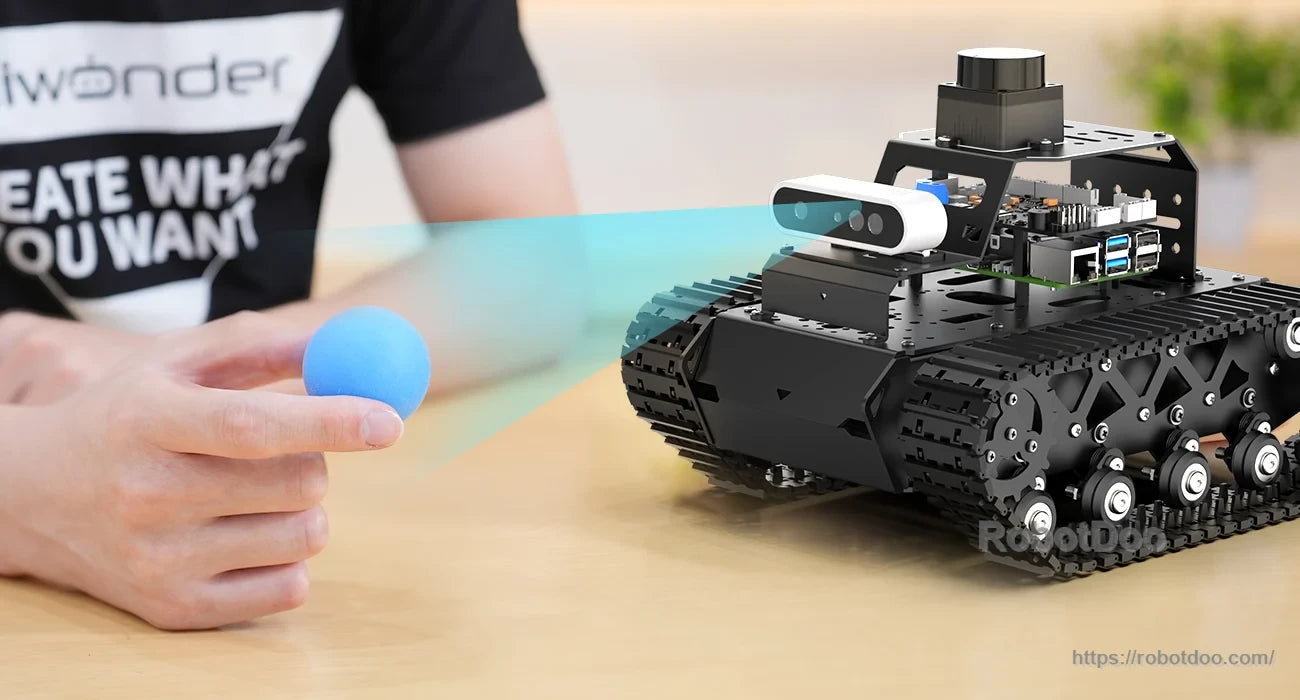
The MentorPi T1 combines a tracked chassis, front gripper, and camera module for hands-on Raspberry Pi 5 ROS2 robotics projects.
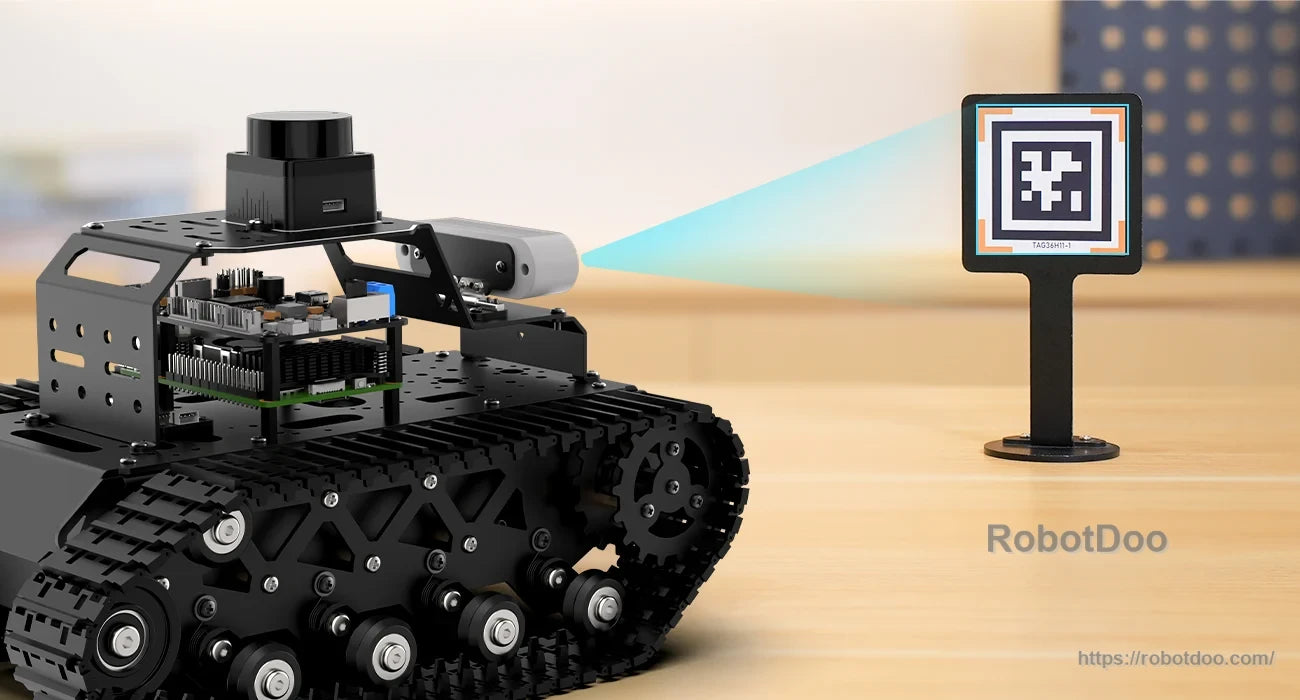
The tracked ROS2 robot combines an onboard camera module with an AprilTag target for vision-based robotics development.
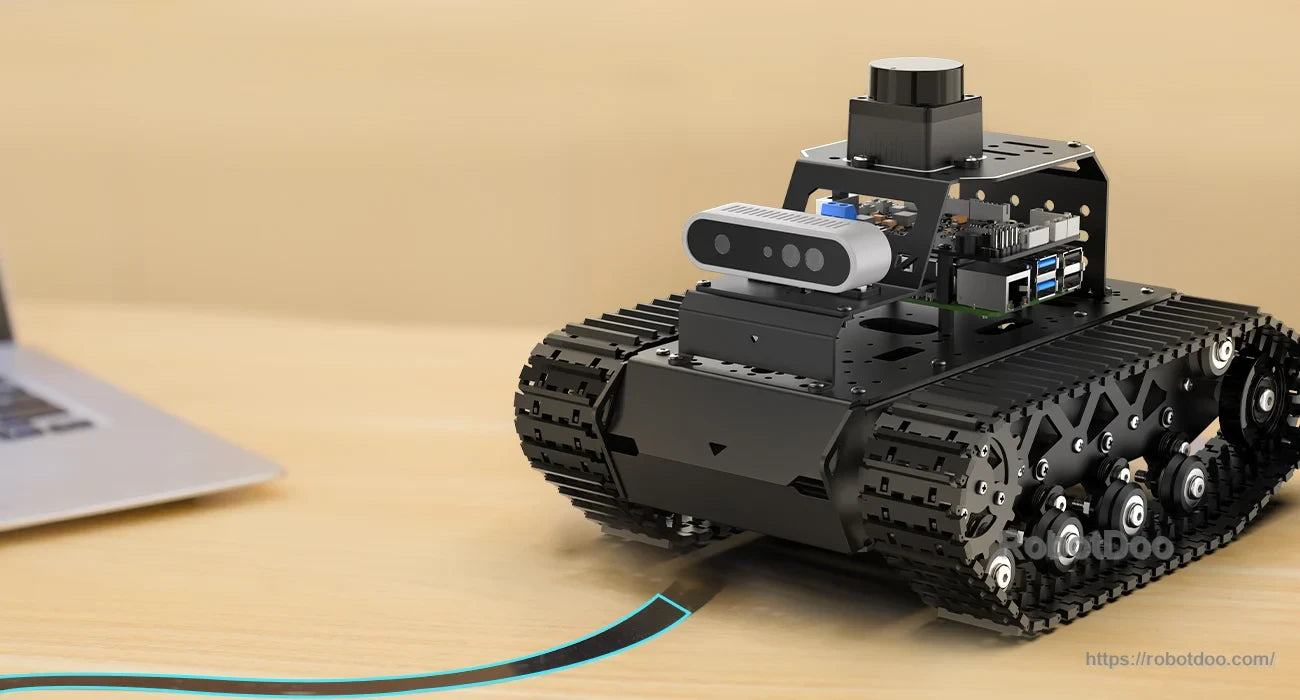
The MentorPi T1 combines a tracked mobile chassis with an onboard camera module, lidar sensor, and accessible side USB ports.
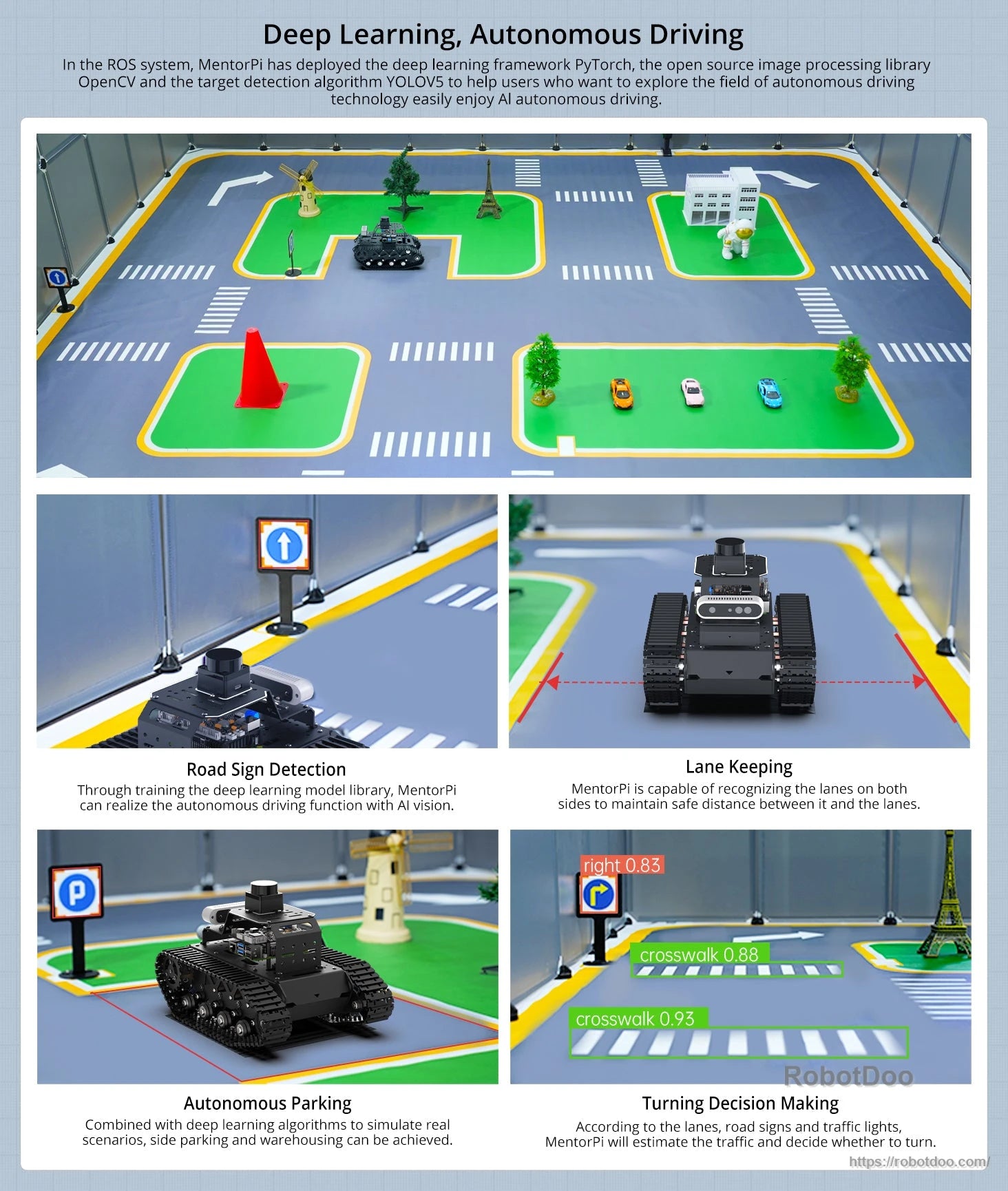
Hiwonder MentorPi T1 supports ROS2-based autonomous driving exercises including road sign detection, lane keeping, parking and turning decisions.
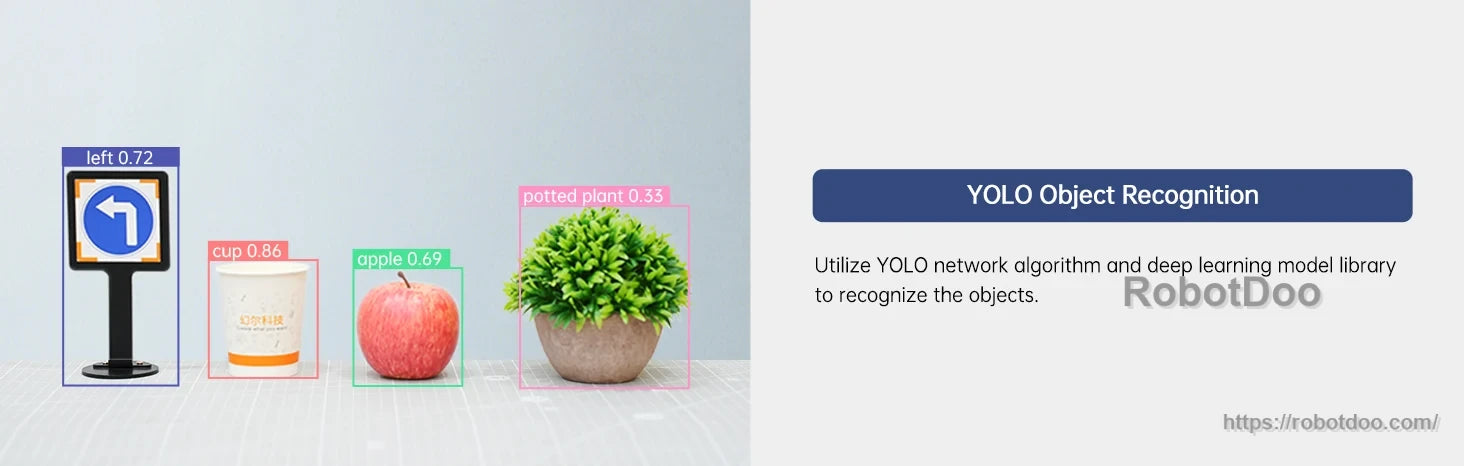
YOLO object recognition uses a pre-trained model library to identify objects such as signs, cups, fruit and plants.
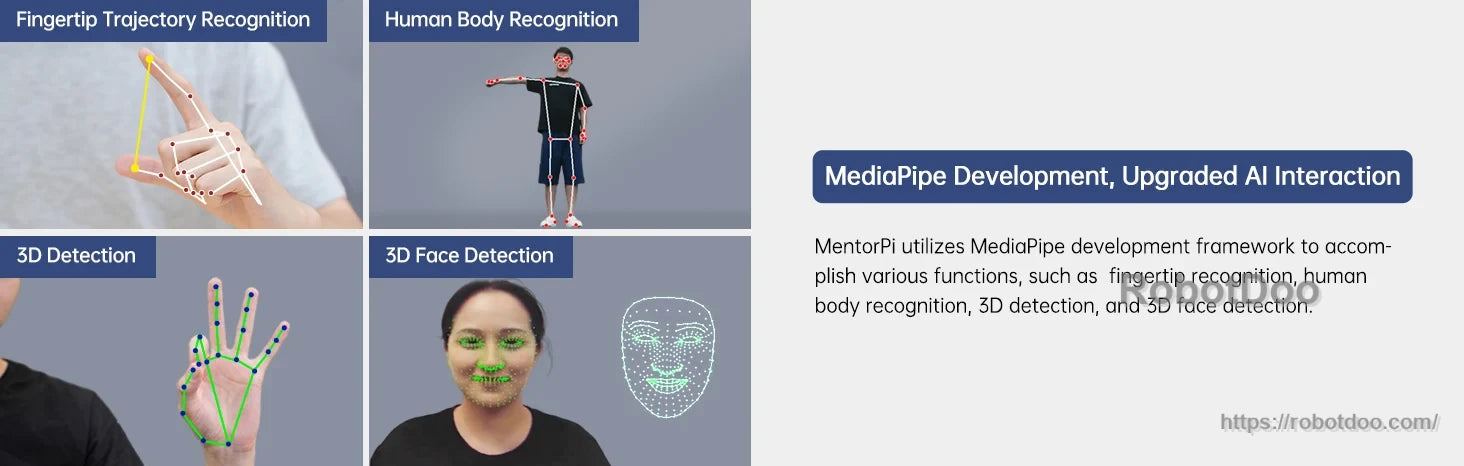
MentorPi T1 supports Mediapipe-based vision development for fingertip trajectory, body, hand and 3D face detection.
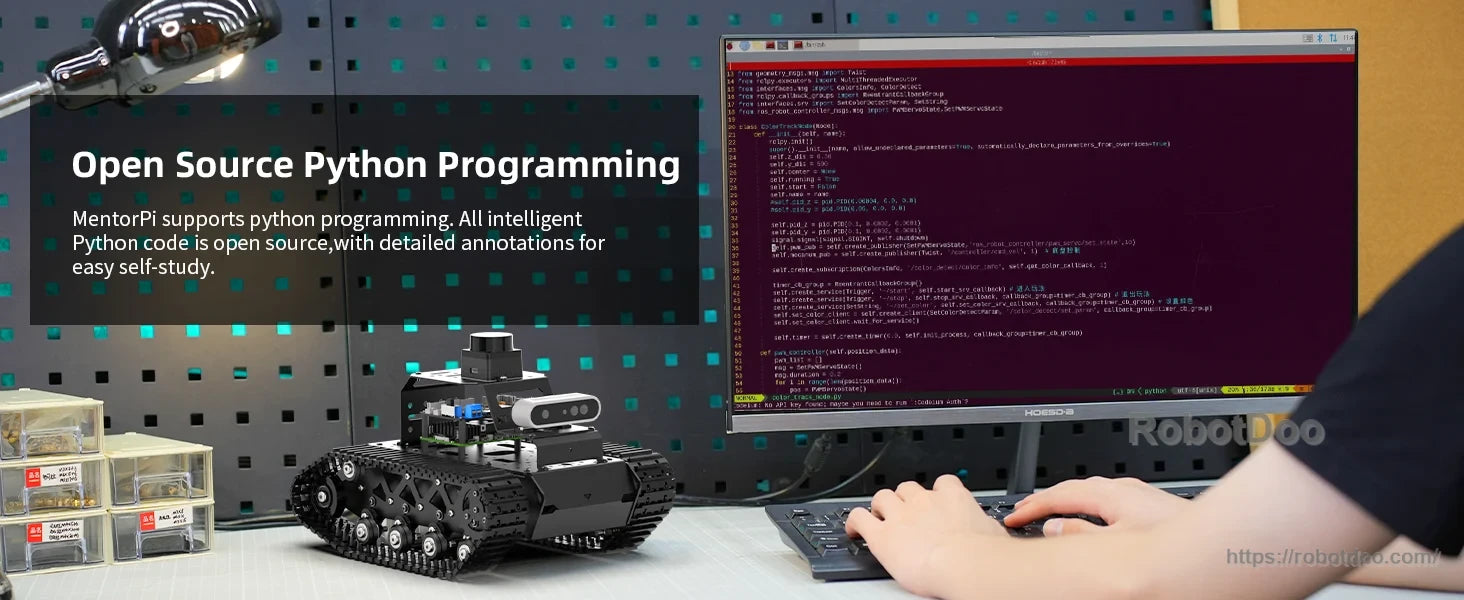
MentorPi T1 supports open-source Python programming for robotics projects and autonomous navigation development.
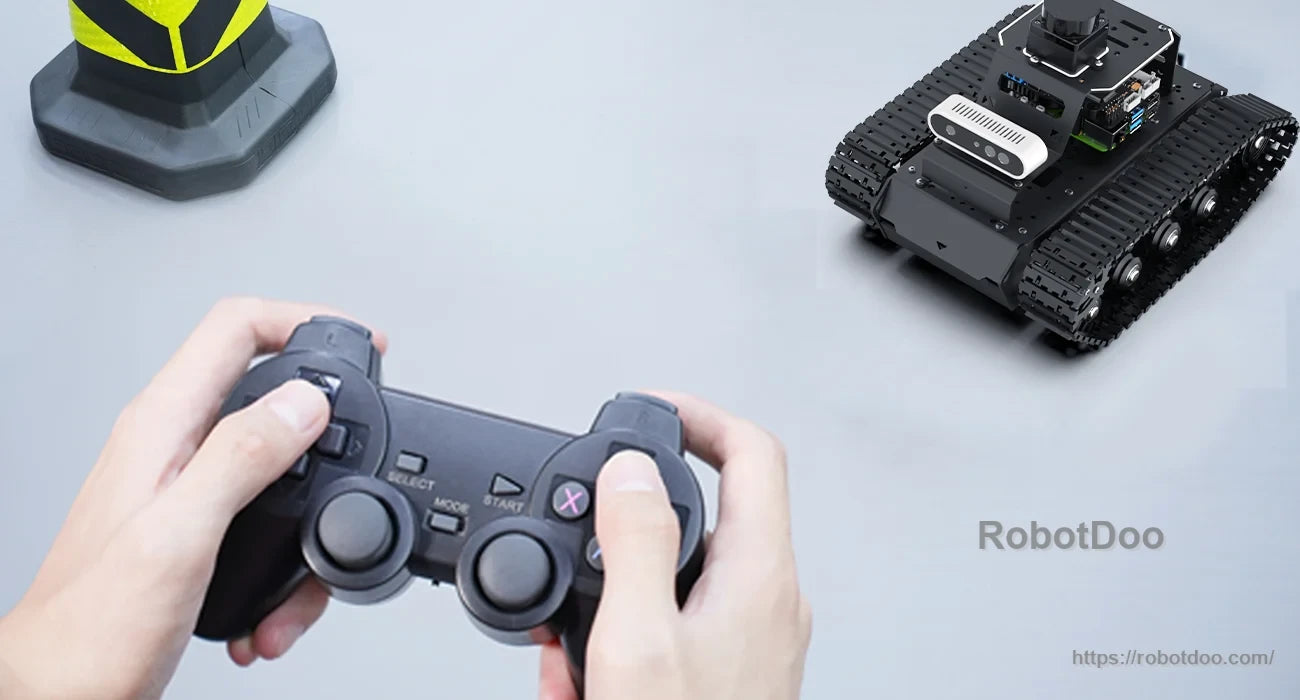
The tracked MentorPi T1 robot is operated with a gamepad controller for responsive movement control.
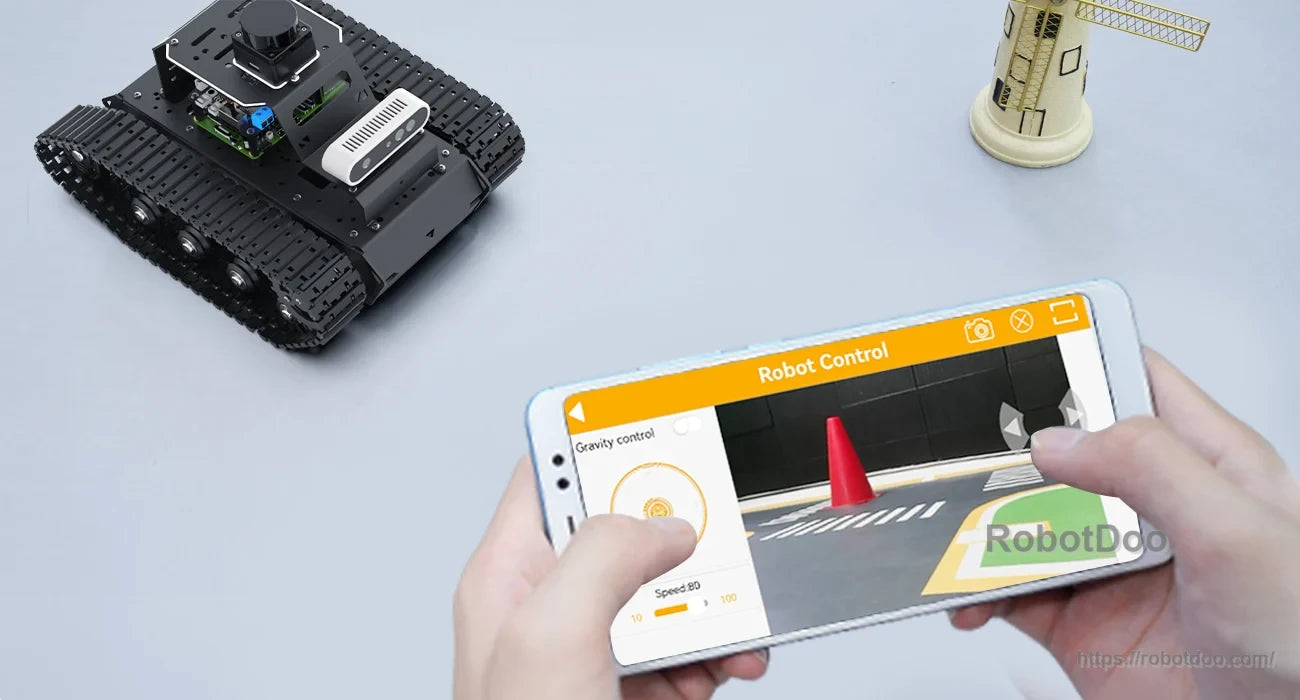
The MentorPi T1 tracked robot supports smartphone app control with a live camera-view interface for convenient remote operation.

The ROS and MoveIt ecosystem supports communication mechanisms, development tools, and application functions for Raspberry Pi 5 robotics projects.
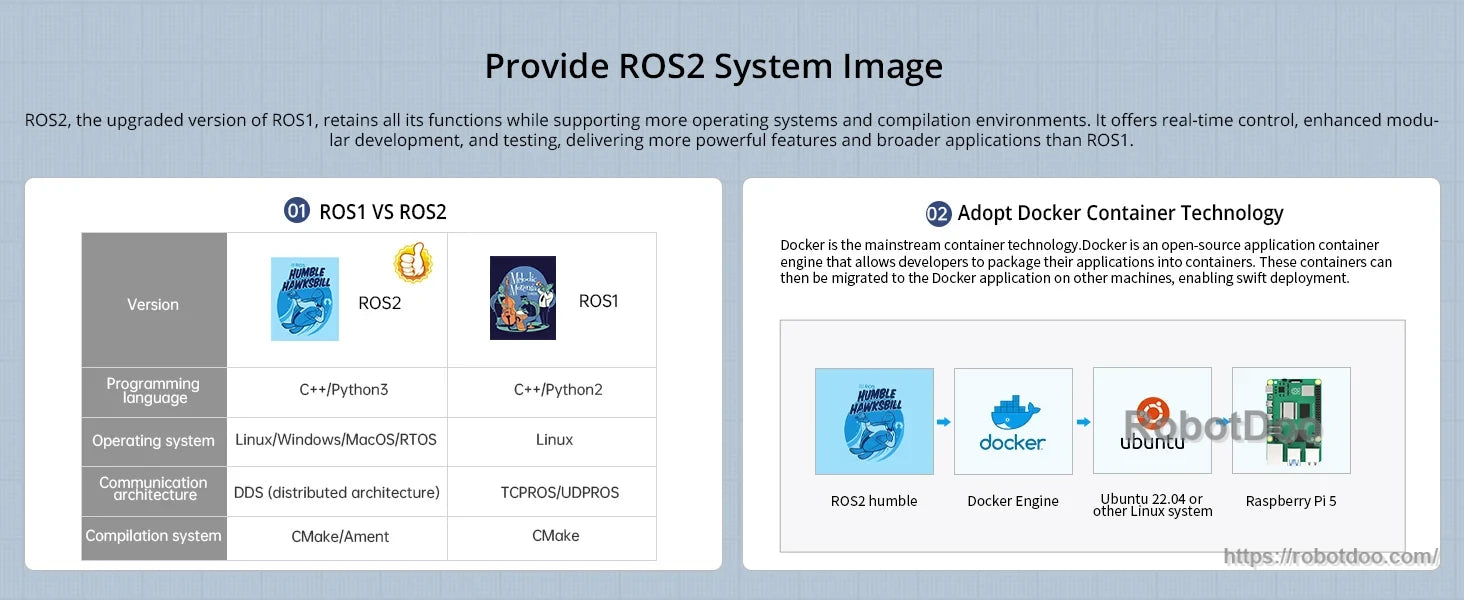
The MentorPi T1 Raspberry Pi 5 ROS2 robot provides a ROS2 system image and adopts Docker container technology for its software environment.
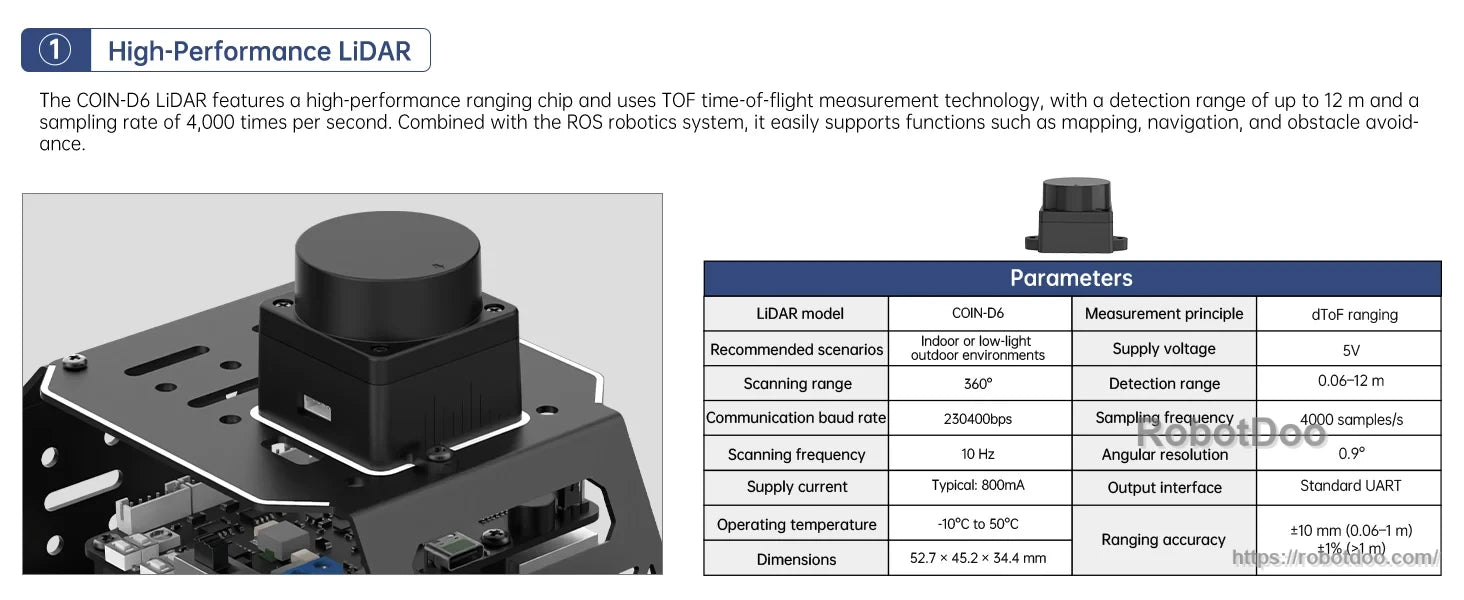
The top-mounted LiDAR supports ROS2 mapping and navigation with a 360° scanning range and up to 12 m detection range.
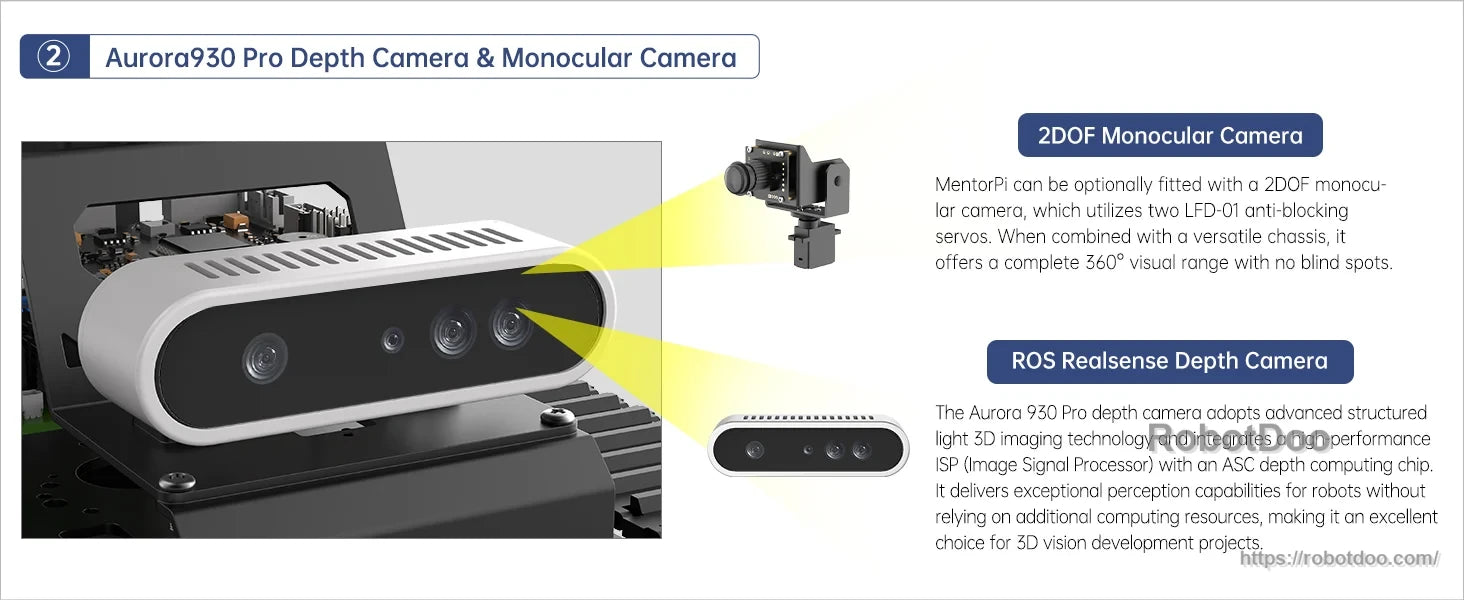
The Aurora930 Pro camera assembly combines monocular and depth-sensing modules for robot vision tasks.
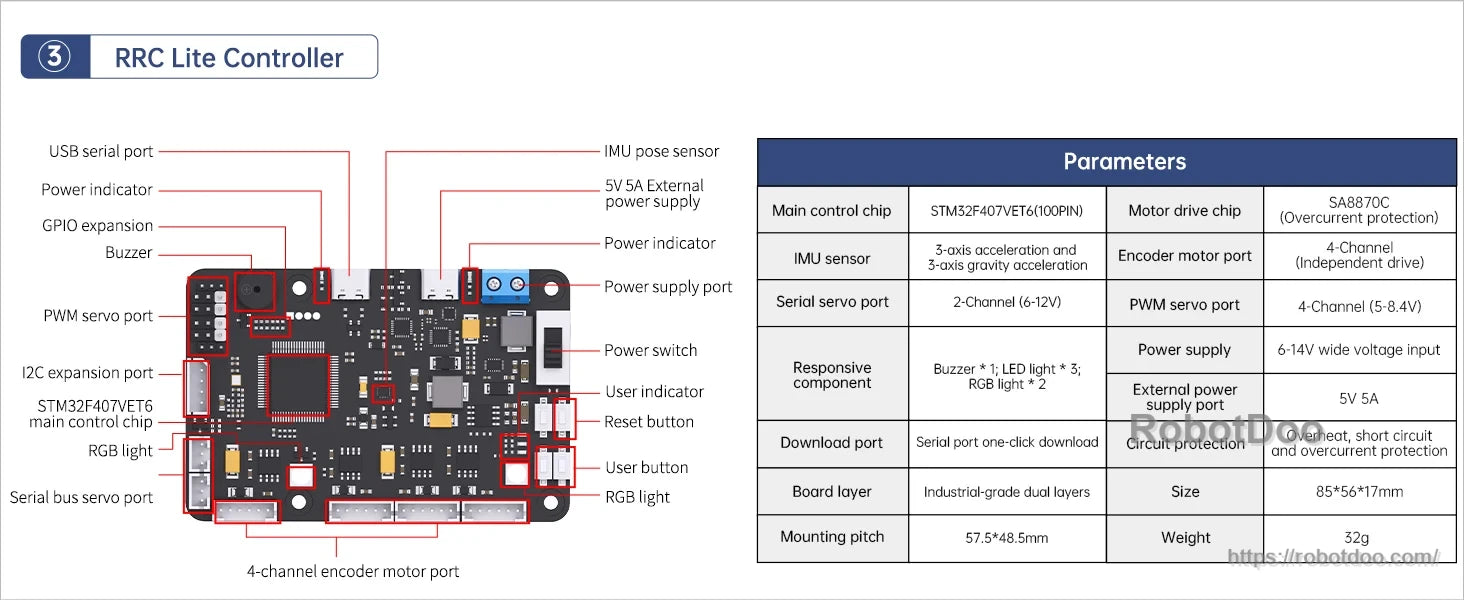
The RRC Lite controller provides labeled USB, PWM servo, DC motor, serial, and I2C connections for organized robot wiring.
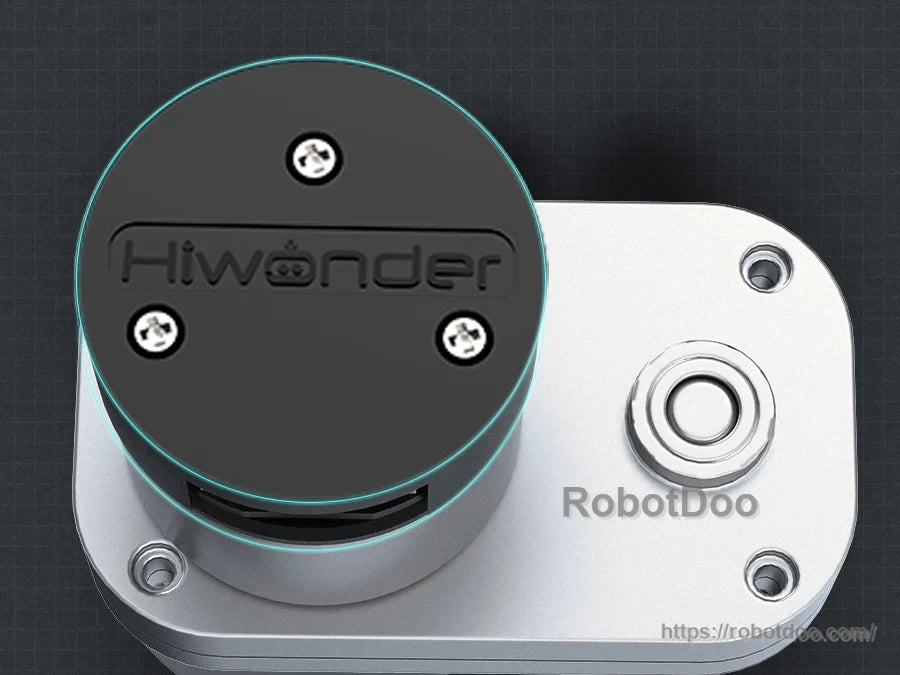
The MentorPi T1 assembly includes a round Hiwonder-branded module mounted on a compact metal plate with a central bearing hub.
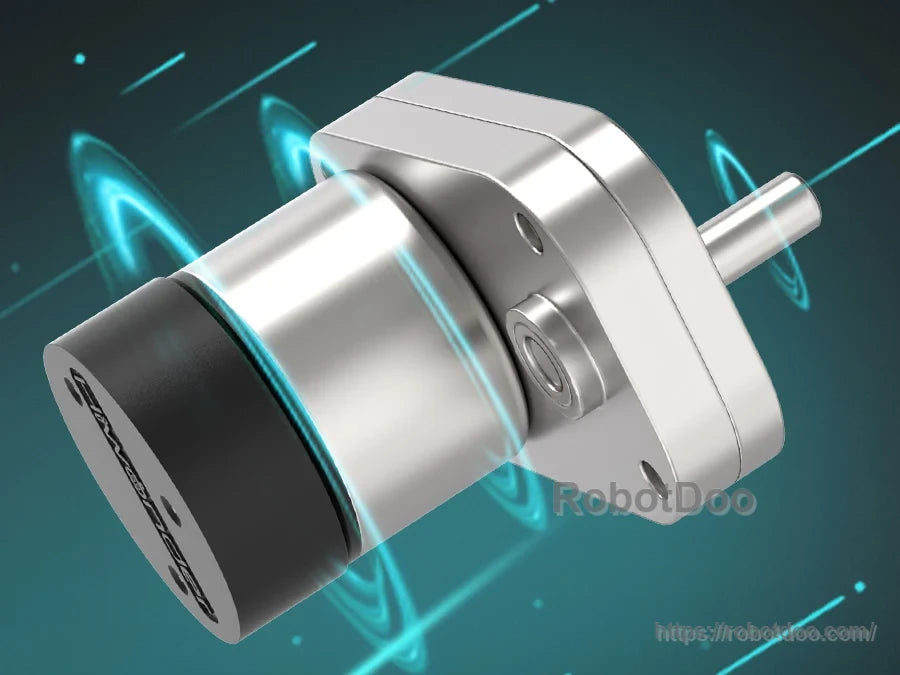
The metal drive motor combines a cylindrical housing, mounting flange, and single output shaft for mechanical integration.
The Hiwonder MentorPi T1 is built around Raspberry Pi 5 computing for ROS2 robotics projects.
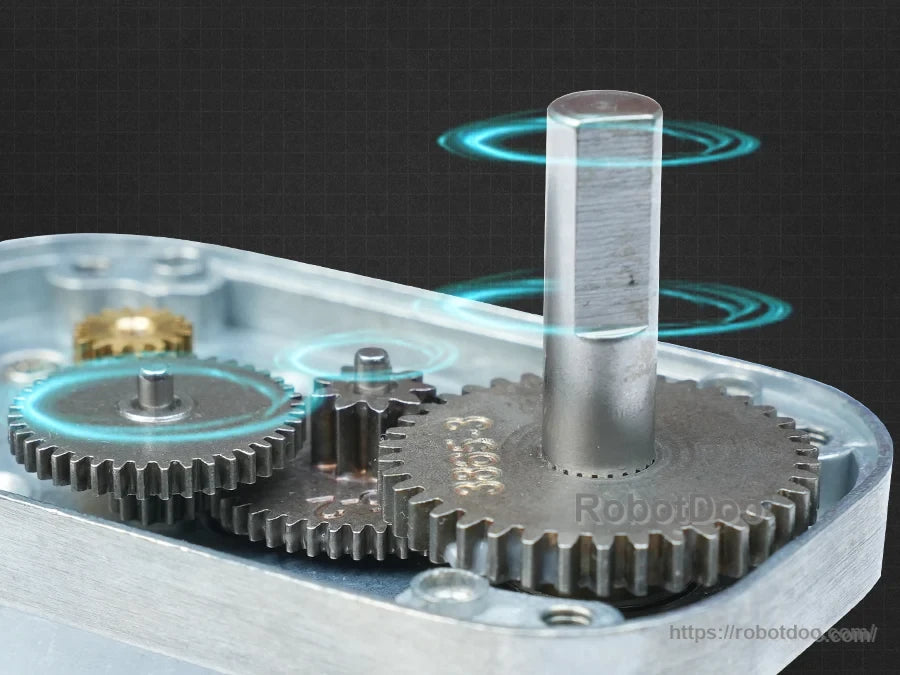
A metal gear train and upright output shaft provide the robot’s mechanical drive connection.
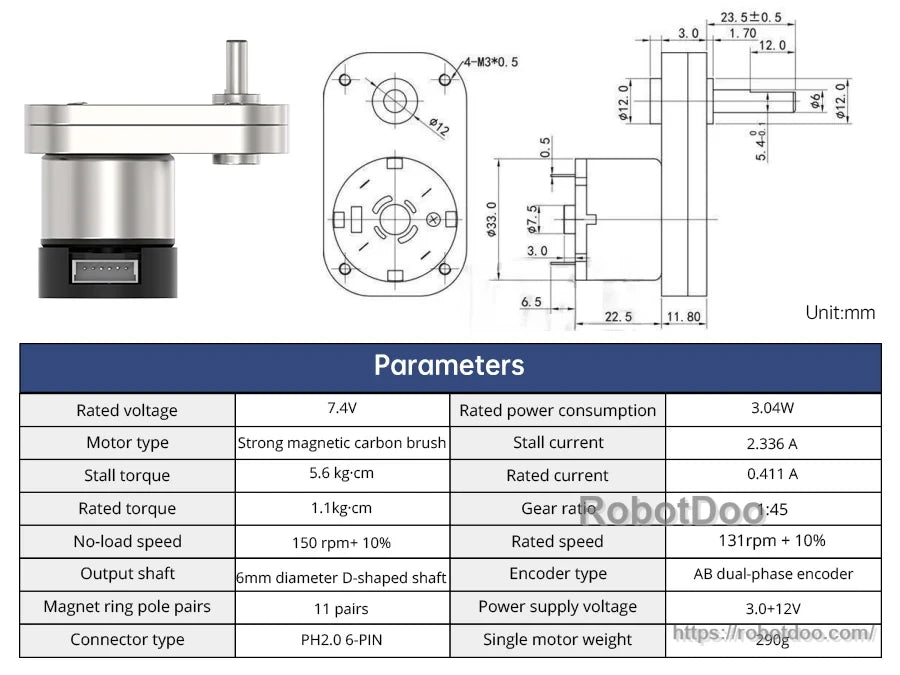
The 7.4V geared motor uses a 6 mm D-shaped output shaft and AB dual-phase encoder for position feedback.
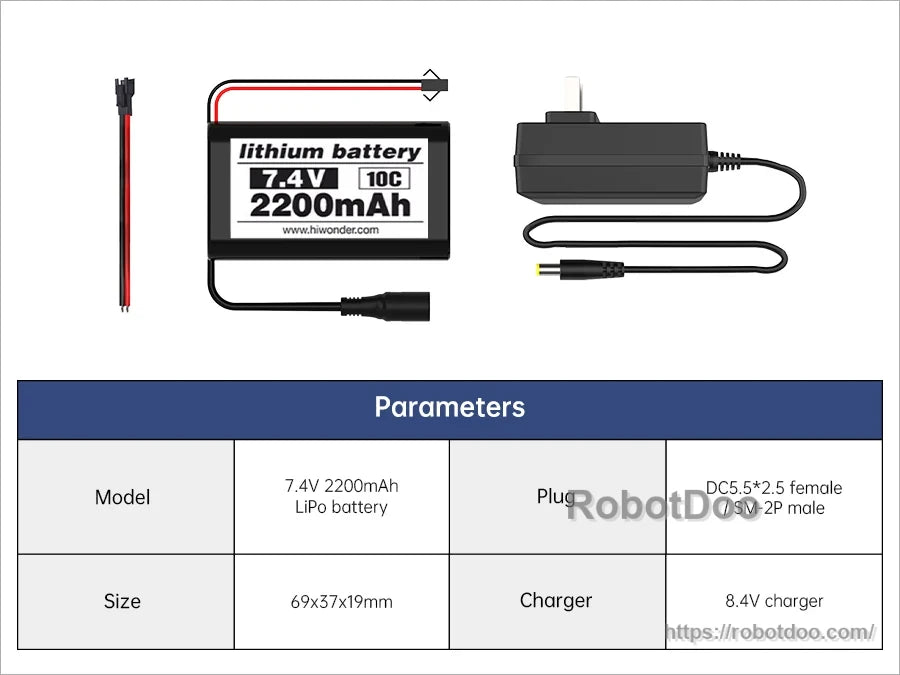
The 7.4V 2200mAh LiPo battery uses a 2-pin plug and includes an 8.4V charger for powering the robot.
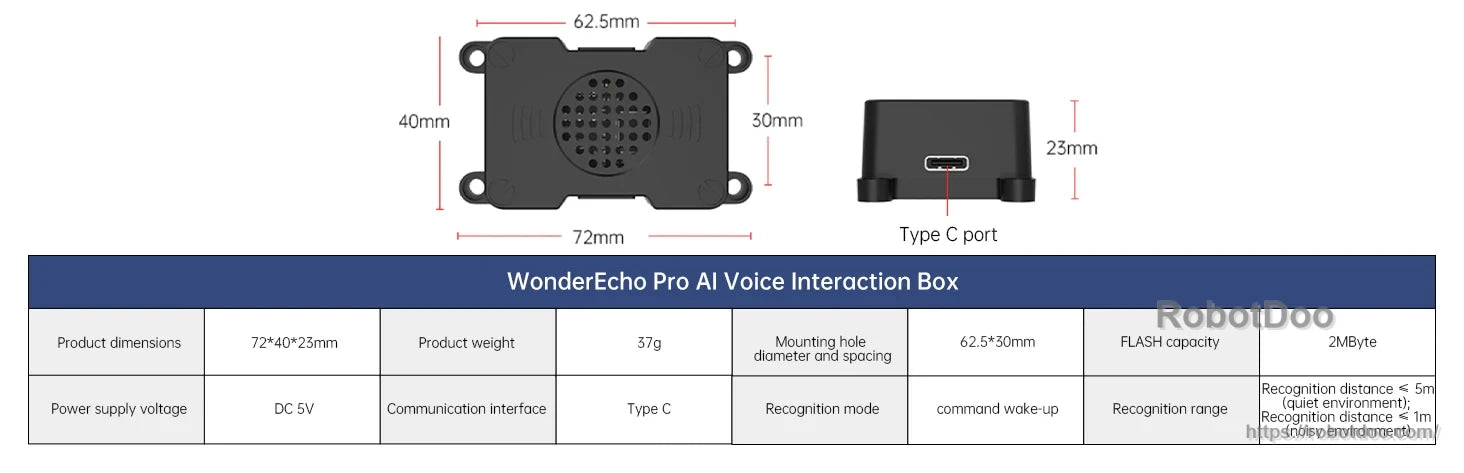
The compact controller box includes a speaker grille and USB-C port, with a 72 mm wide enclosure for tidy robot integration.
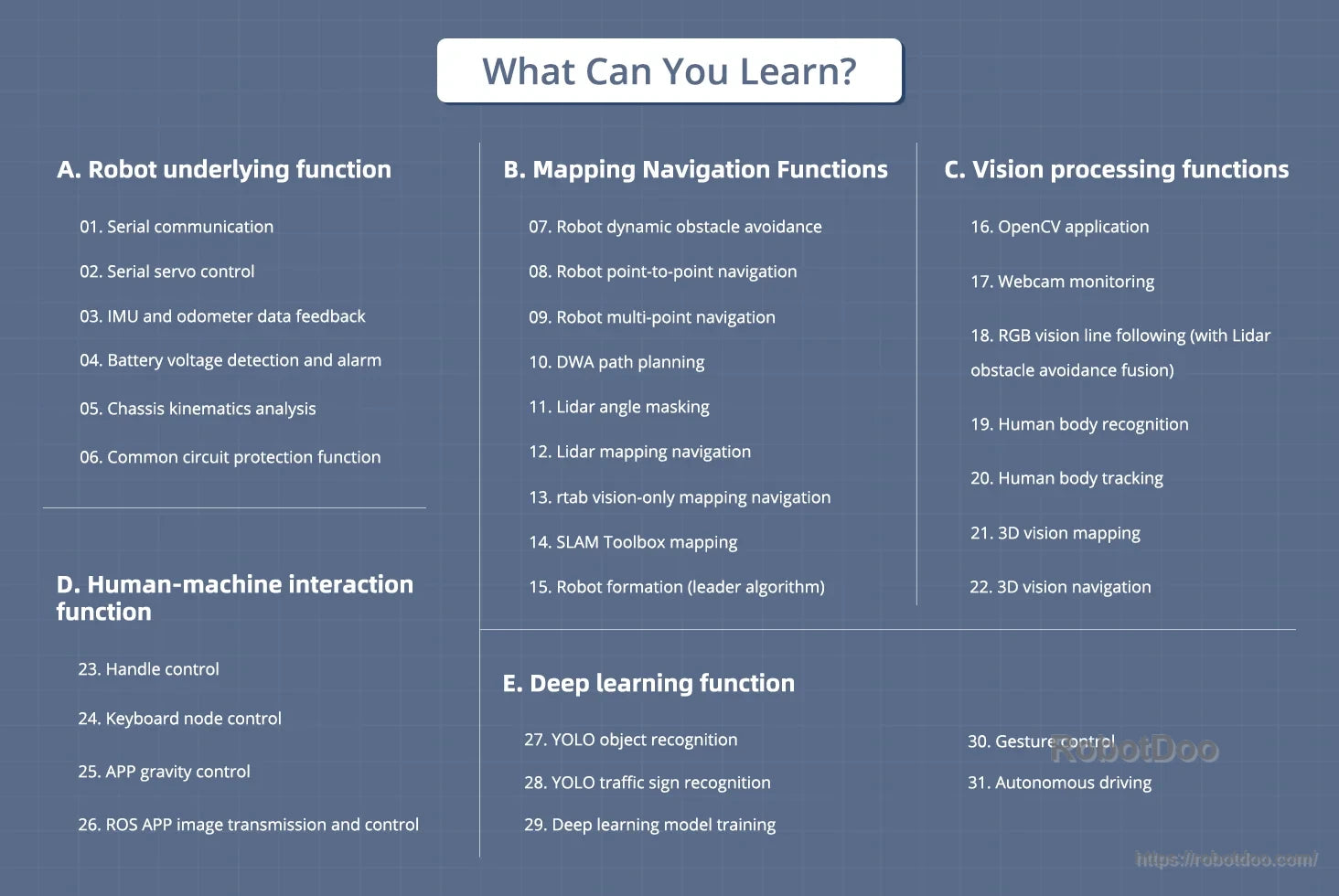
MentorPi T1 learning content covers robot control, mapping and navigation, vision processing, human-machine interaction, and deep learning functions.
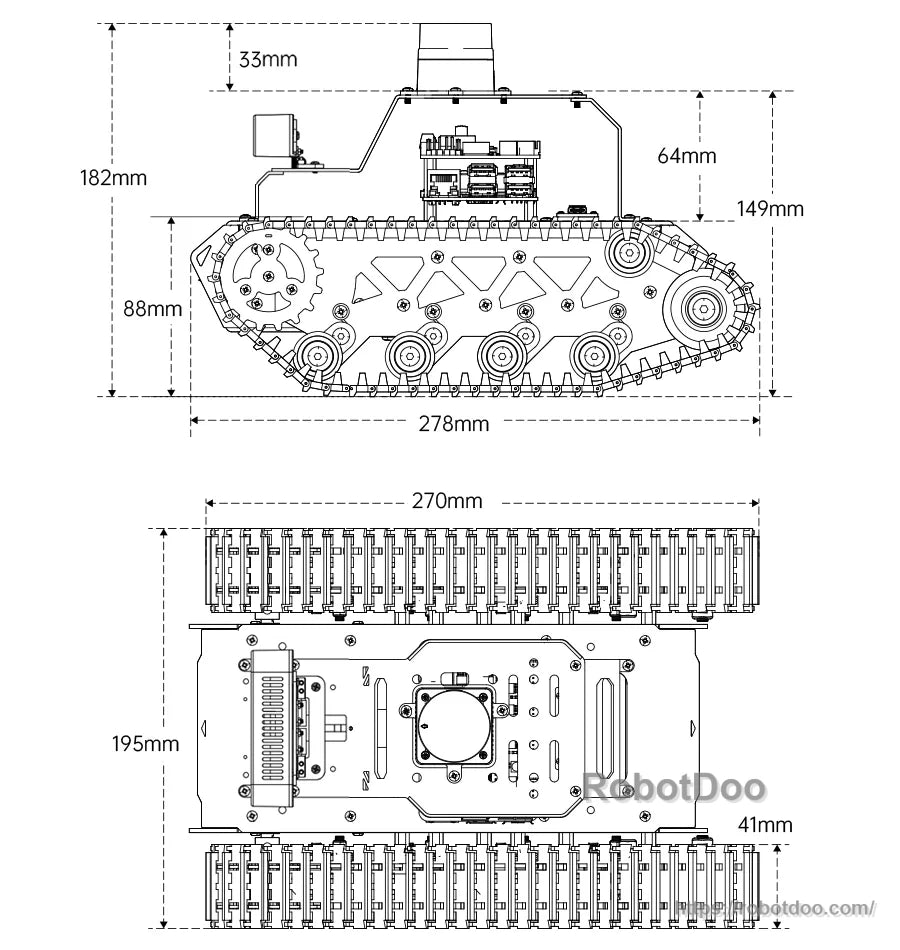
The tracked robot chassis measures 278 mm long, 270 mm wide, and 195 mm high, with a 41 mm ground clearance.
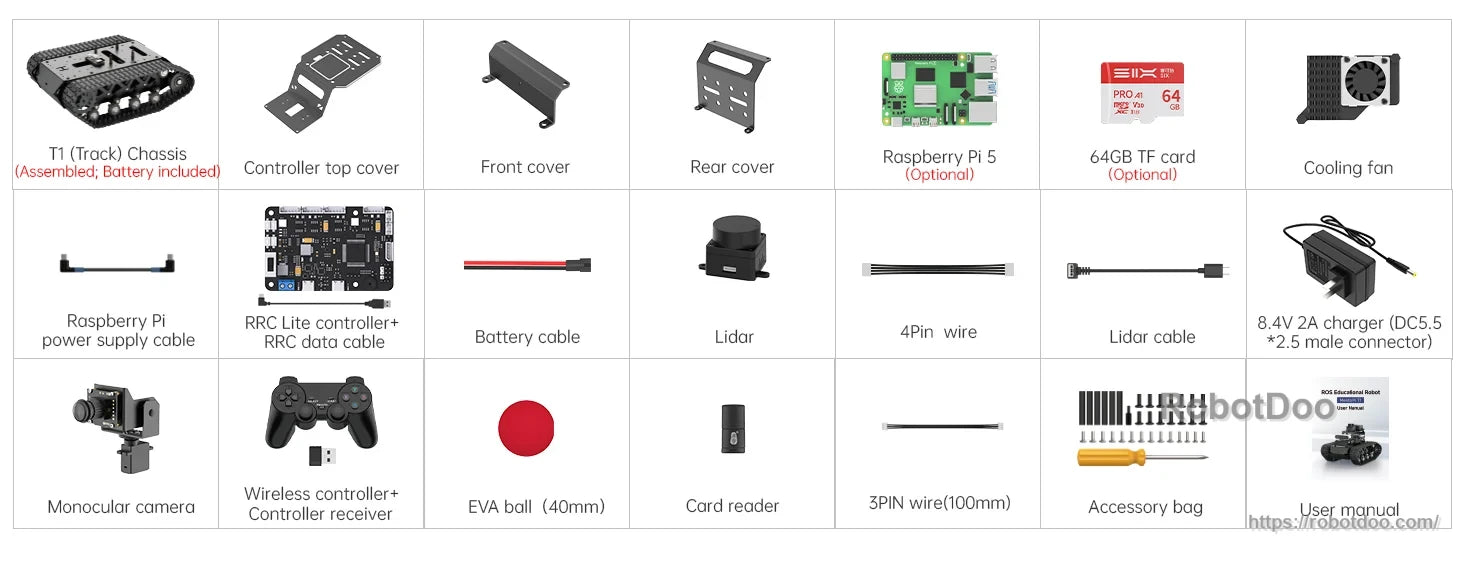
The MentorPi T1 kit combines a Raspberry Pi 5 robot chassis with LiDAR, a monocular camera, wireless controller, cooling fan, cables, and accessory hardware.
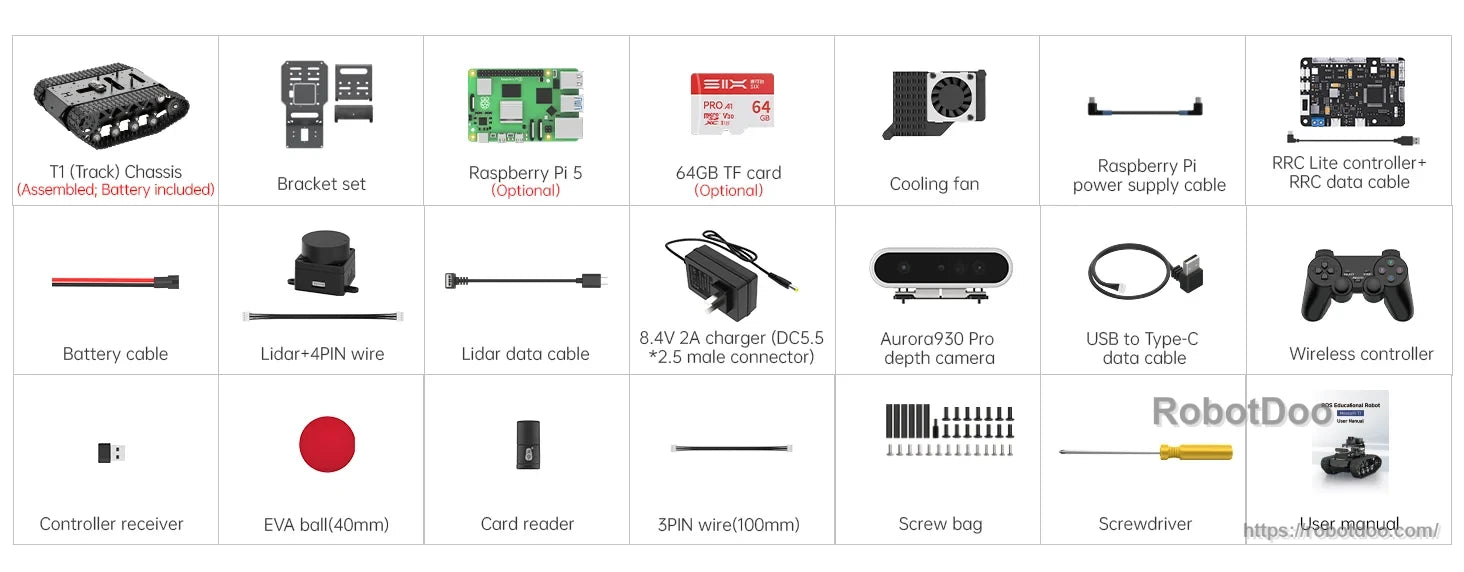
The MentorPi T1 kit includes a Raspberry Pi 5, 64GB TF card, cooling fan, USB-C cable, wireless controller, and installation hardware.