Overview
Hiwonder miniAuto is an AI vision robot built for Arduino-based robotics learning, programming, and sensor-expansion projects. Its Mecanum-wheel chassis supports 360-degree omnidirectional movement, while the ESP32-S3 WiFi vision module, ultrasonic sensor, and 4-channel infrared line follower support interactive machine-vision, ranging, and line-following activities.
Key Features
- Arduino programming: Arduino UNO R3 (ATmega328P) control system compatible with the Arduino IDE.
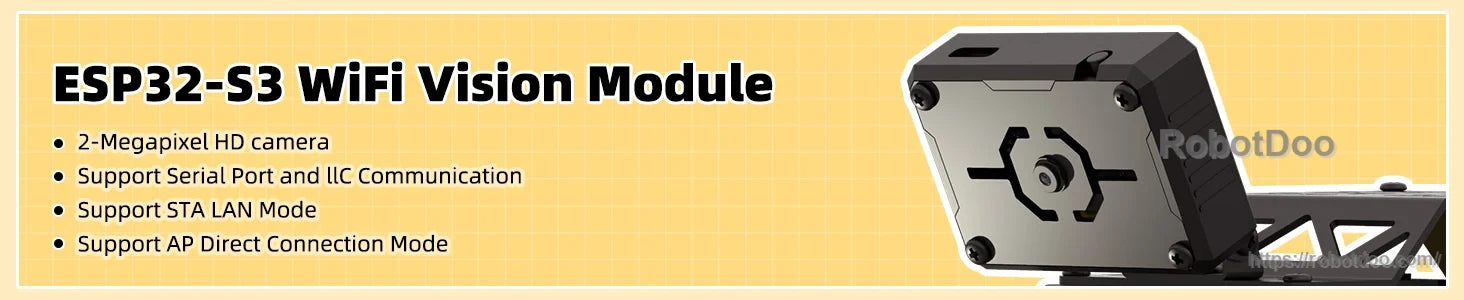
- ESP32-S3 WiFi vision module: 2-megapixel HD camera with serial and IIC communication, STA LAN mode, and AP direct-connection mode. Supports WiFi real-time video transmission.
- Vision functions: Supports programmed color recognition, color tracking, face recognition, and vision-based line following.
- Omnidirectional chassis: Four Mecanum wheels enable forward, lateral, diagonal, and rotational movement.
- Ranging and line detection: Glowy ultrasonic sensor provides distance measurement and colored-light feedback; the 4-channel line follower uses infrared detection.
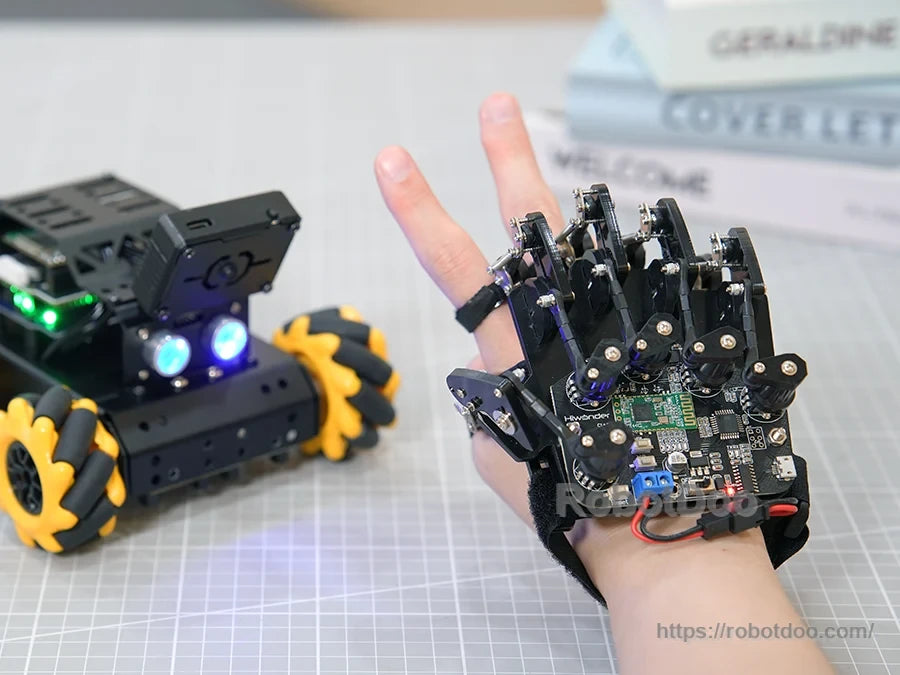
- Bluetooth control: Supports iOS and Android app control through Bluetooth 4.0. Wireless glove control is supported with a separately sold glove.
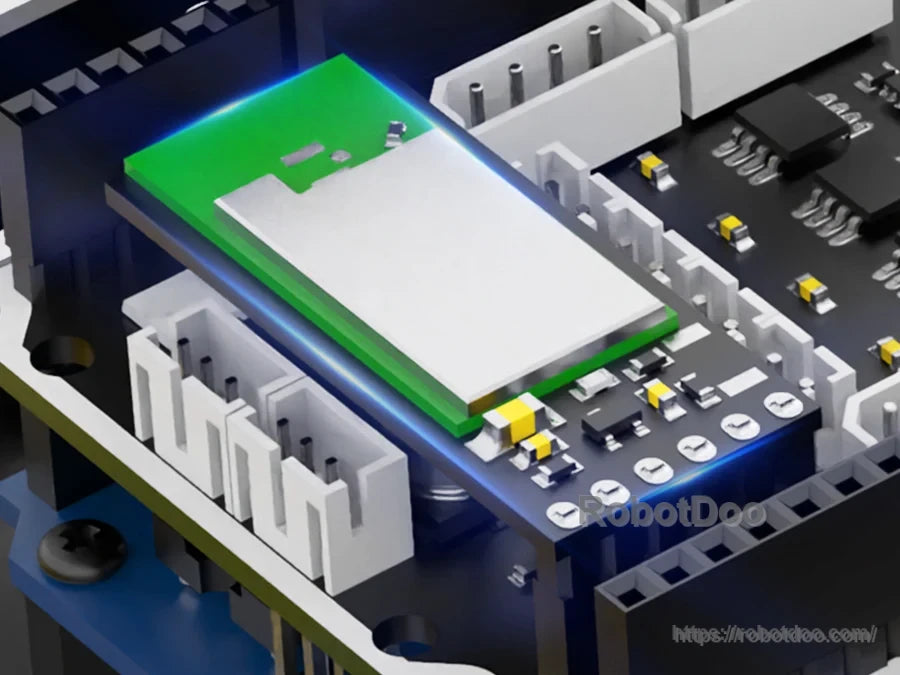
- Expansion interfaces: UNO R3 expansion board provides Arduino UNO expansion, Bluetooth module, IIC, 4-channel motor, 2-channel serial bus servo, and 2-channel PWM servo ports.
- Gripper expansion: Supports gripper-based handling projects, including programmed vision-guided transport tasks.
Specifications
| Product type | AI vision robot |
| Dimensions | 176 x 164 x 138 mm |
| Weight | About 710 g |
| Bracket material | Metal |
| Camera | 2-megapixel HD |
| Vision module | ESP32-S3 WiFi vision module |
| Main controller | Arduino UNO R3 (ATmega328P) |
| Drive motors | HY3277-130 TT motors |
| Line follower | 4-channel infrared |
| Communication | Bluetooth 4.0 and WiFi |
| App compatibility | iOS and Android |
| Power supply | 2 x 3.7 V 18650 batteries (1800 mAh) |
| Package dimensions | 30 x 17 x 12 cm |
| Package weight | About 1.1 kg |
Applications
Suitable for Arduino programming practice, AI vision experiments, color-based object tracking, line following, ultrasonic ranging, obstacle avoidance, and robotics development projects.
Manuals
Source code, schematics, and video guides are available in the miniAuto documentation. For product assistance, contact RobotDoo customer service.
Details
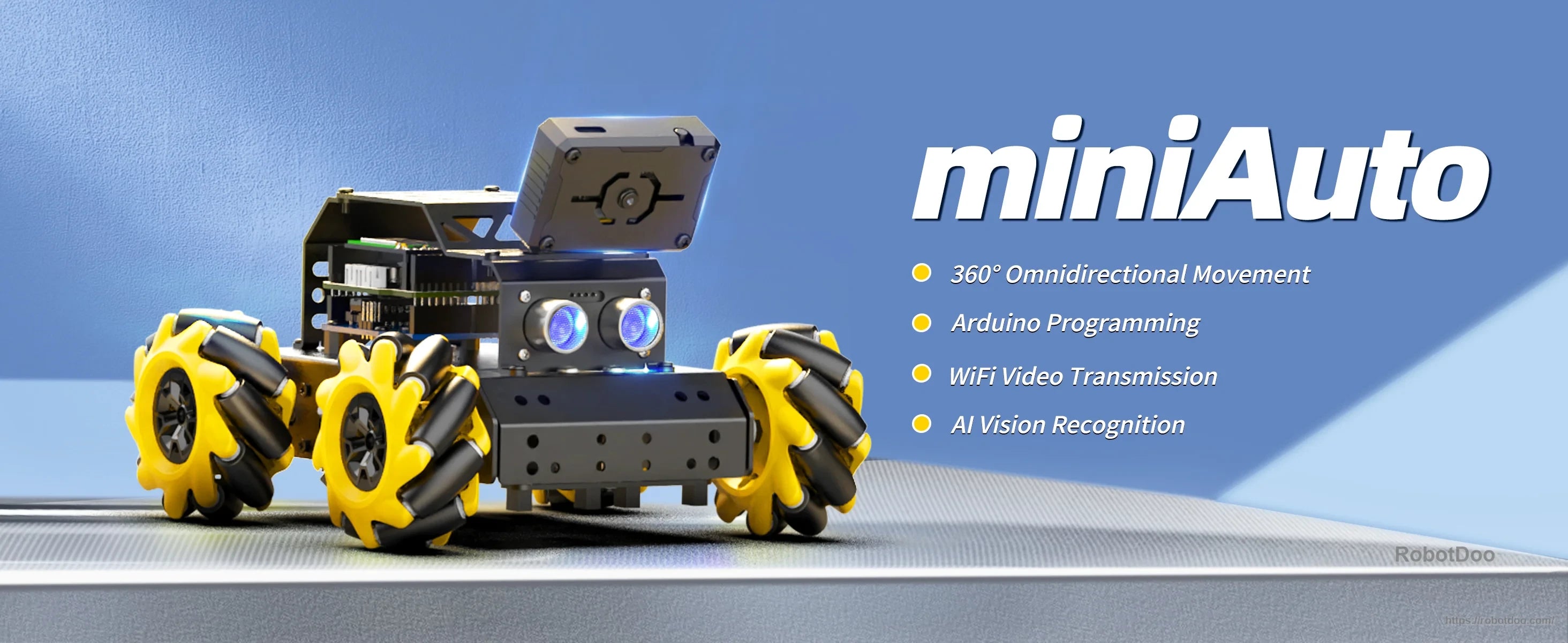
The Hiwonder miniAuto AI Vision Robot combines omnidirectional Mecanum movement with Arduino programming and WiFi vision projects.
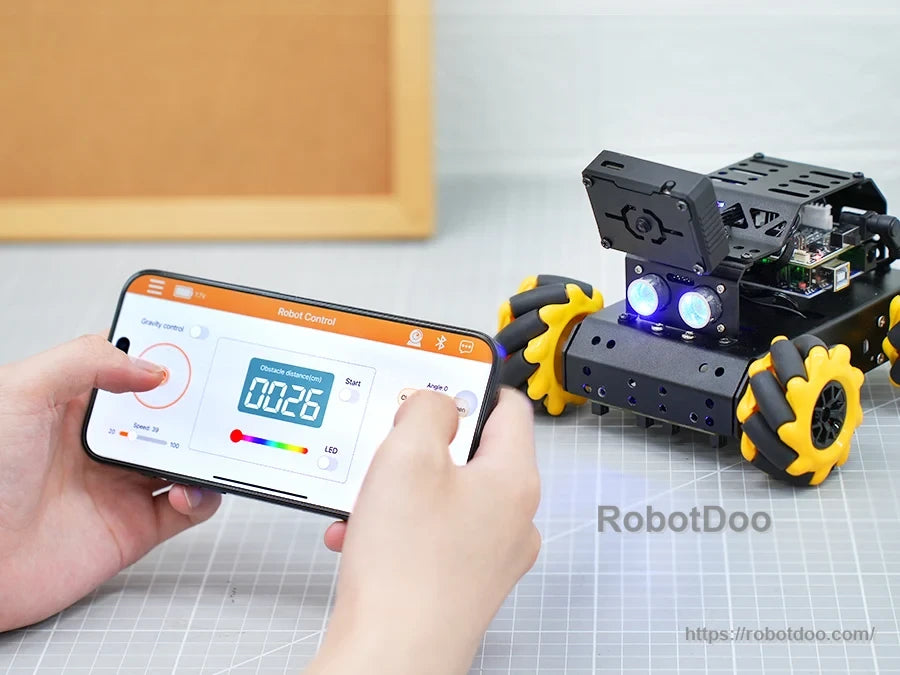
Bluetooth app control supports hands-on driving and interactive robotics experiments from iOS or Android devices.
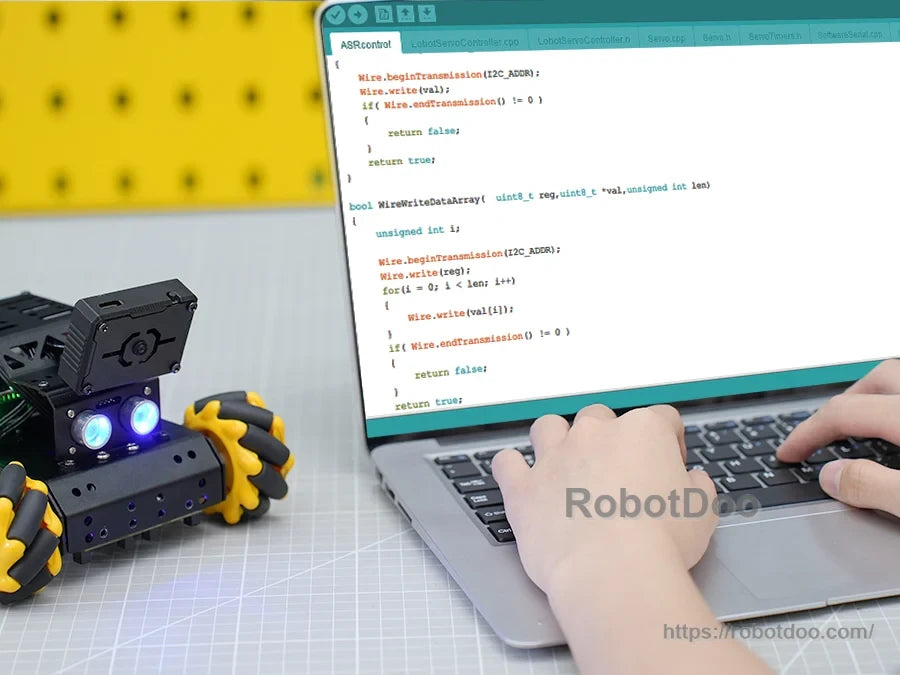
Use the Arduino IDE to build, test, and adapt control programs for the robot's sensors and movement.
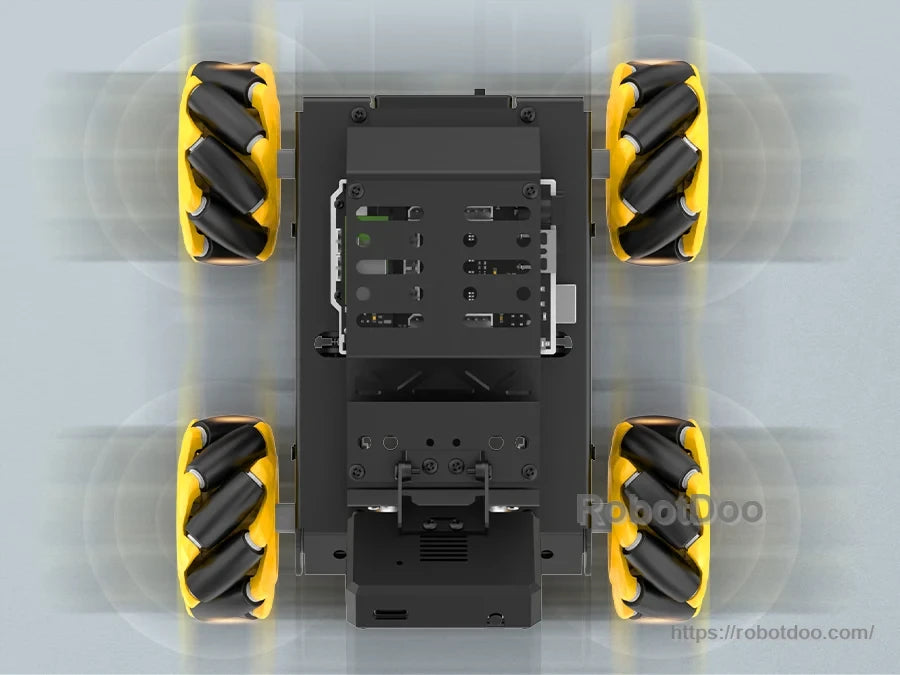
Four Mecanum wheels let the chassis move forward, sideways, diagonally, and rotate in place.
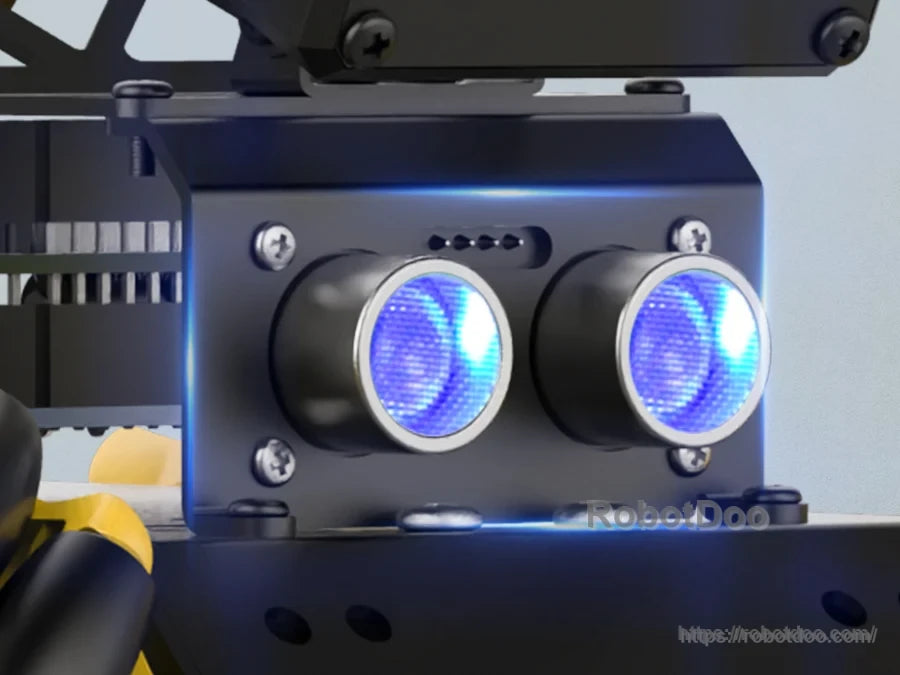
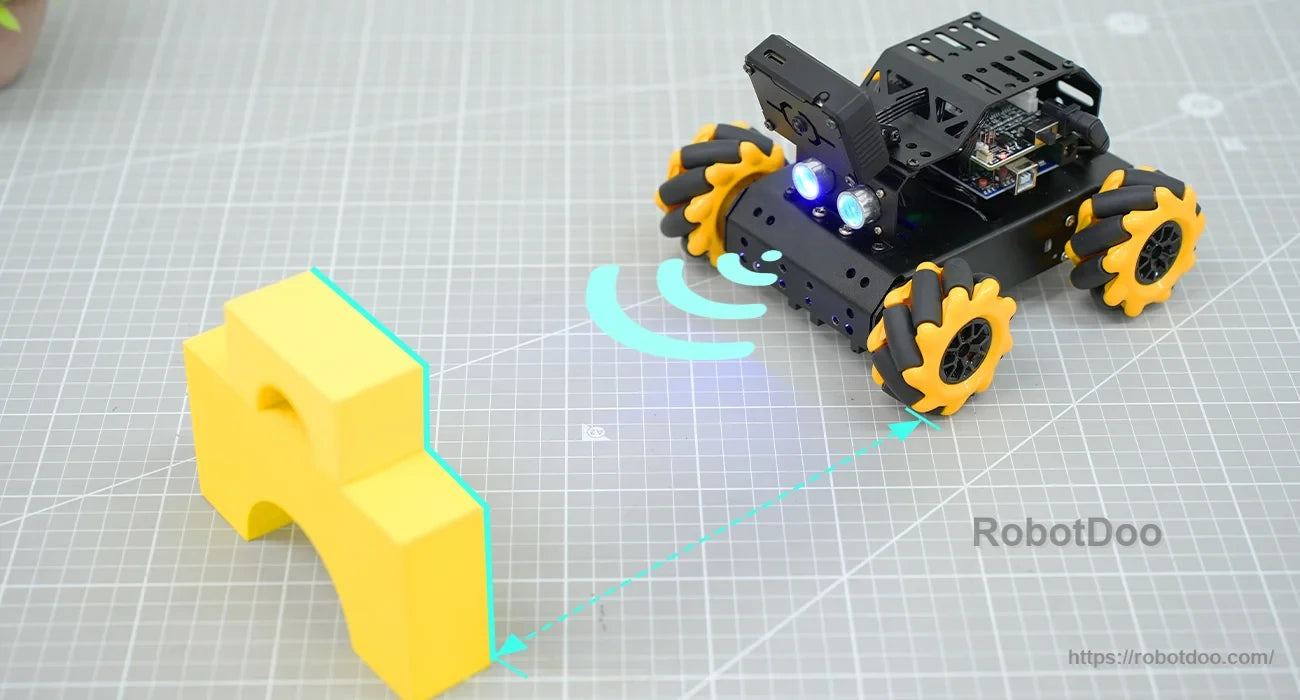
The Glowy ultrasonic sensor measures distance while providing colored-light feedback.
The ESP32-S3 WiFi vision module provides a 2-megapixel camera and real-time video transmission.
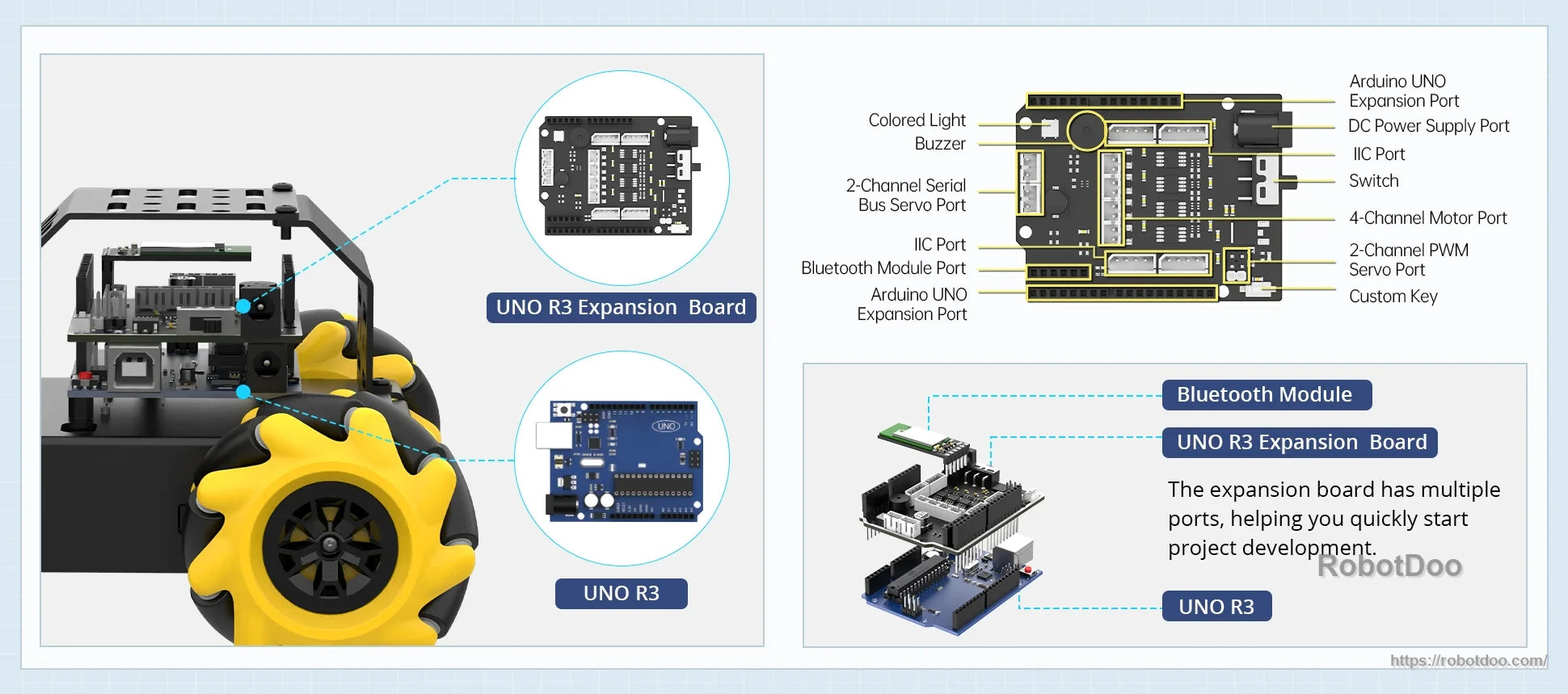
The UNO R3 expansion board adds interfaces for motors, serial bus servos, PWM servos, Bluetooth, and IIC devices.
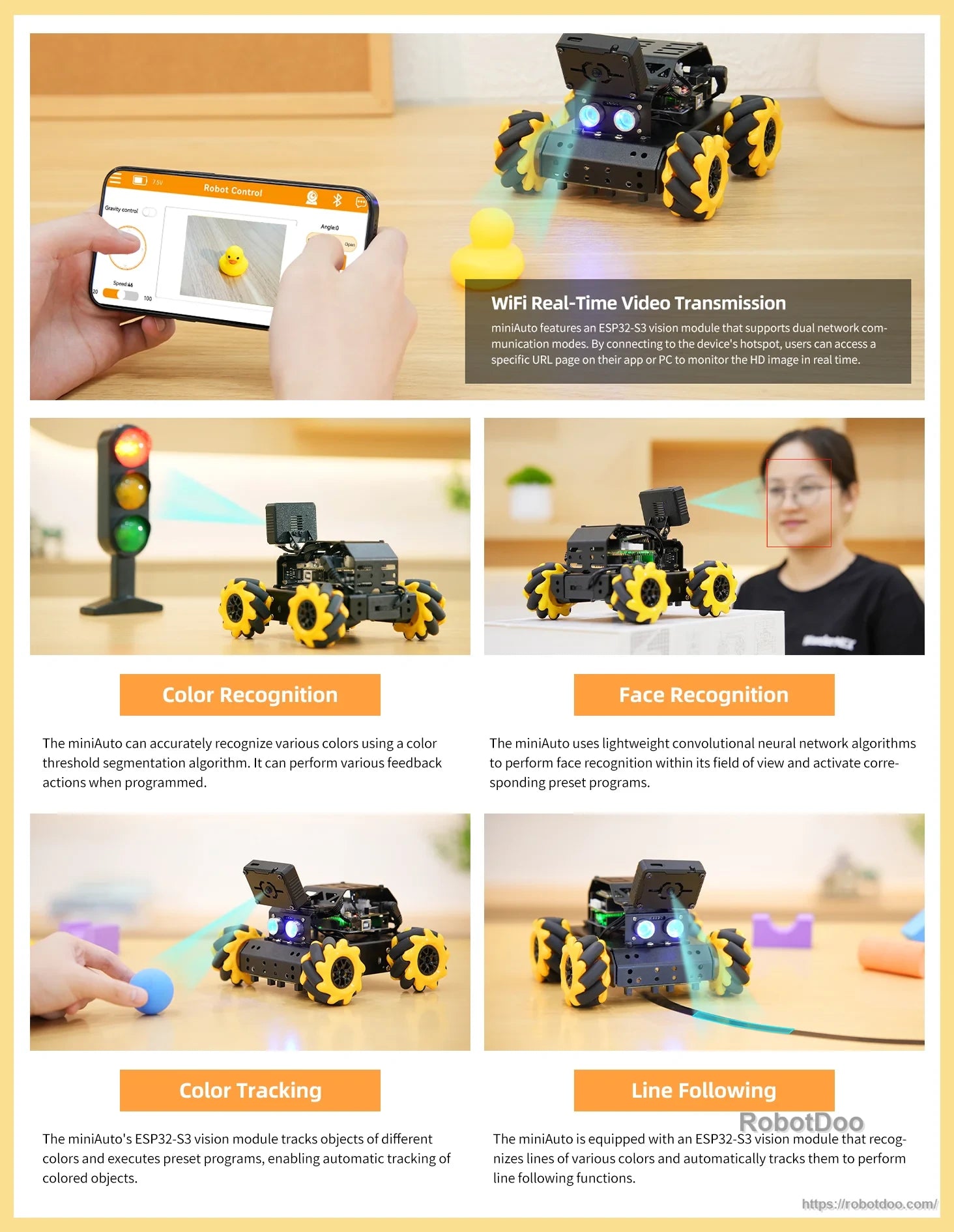
Program vision activities including color recognition, color tracking, face recognition, and vision-based line following.
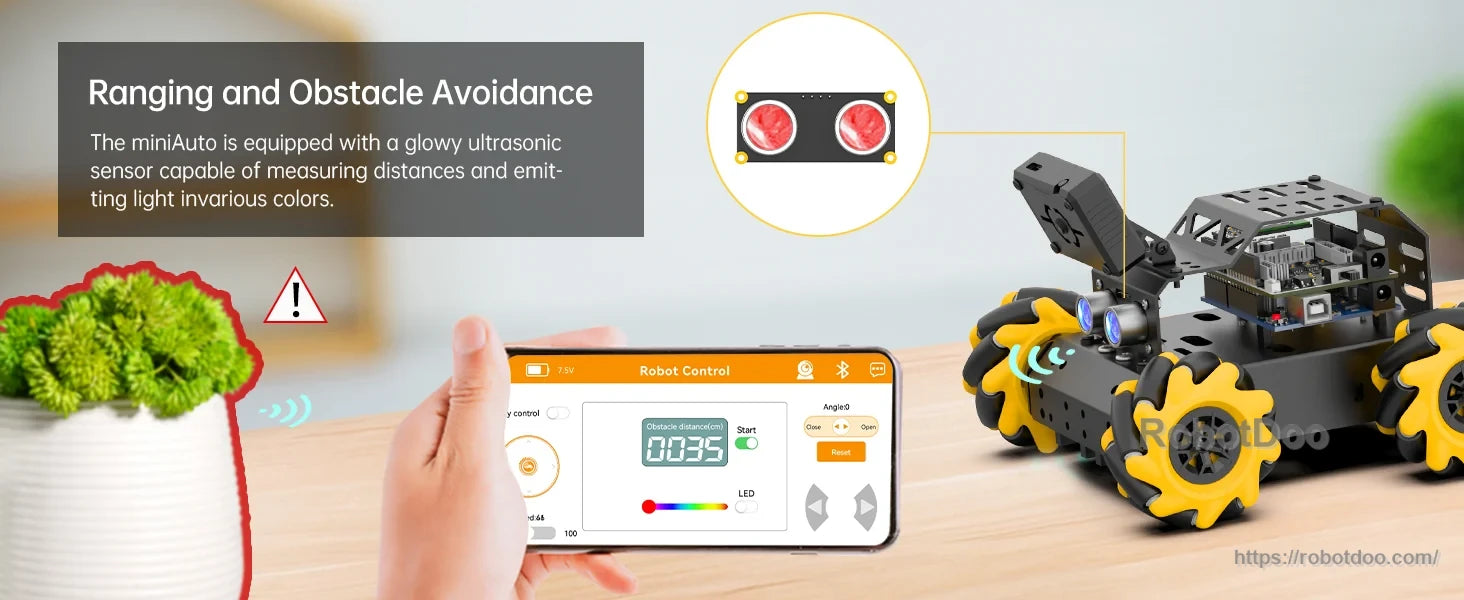
Distance sensing supports obstacle-avoidance experiments with live feedback through the mobile app.
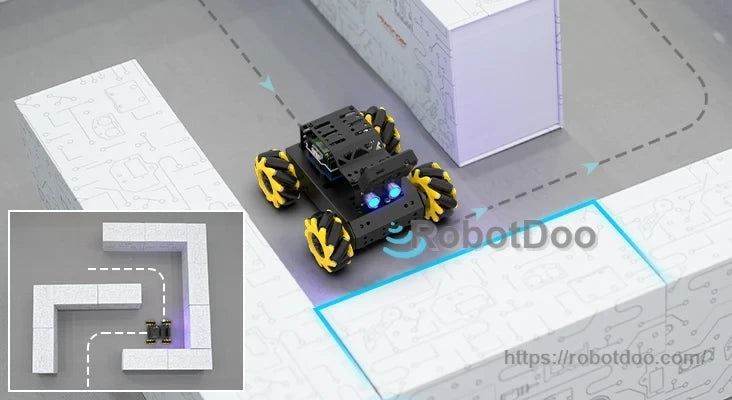
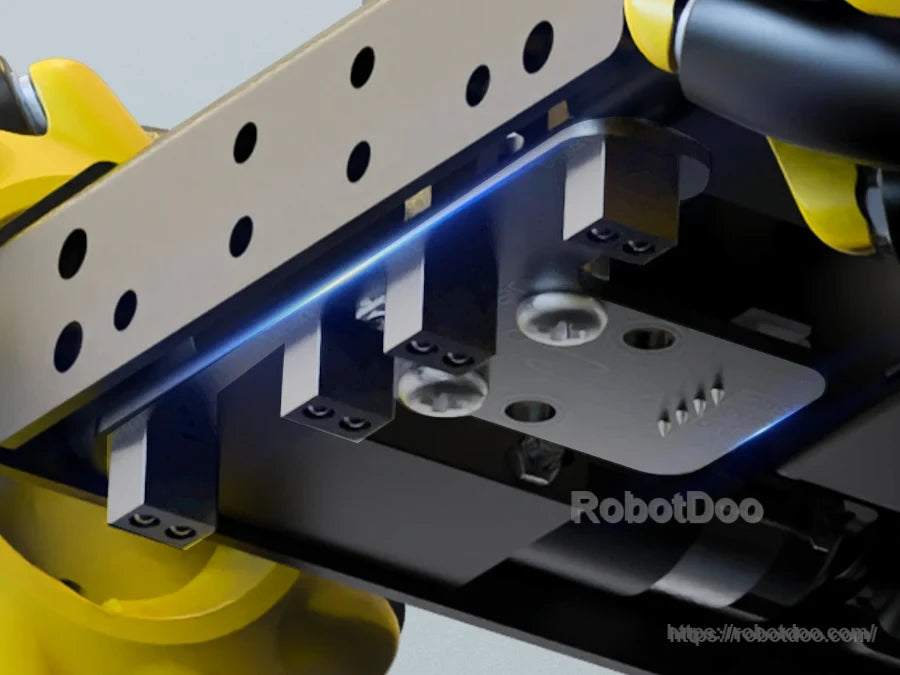
The infrared line follower supports autonomous navigation along marked paths and around course layouts.
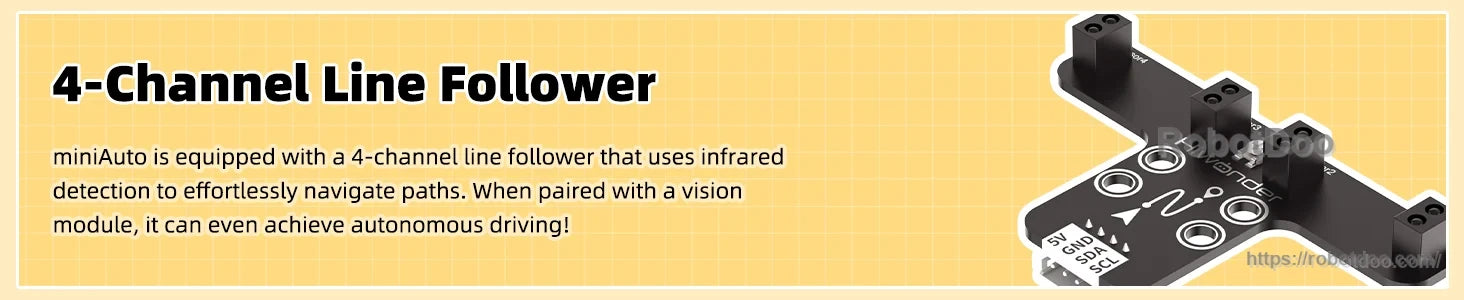
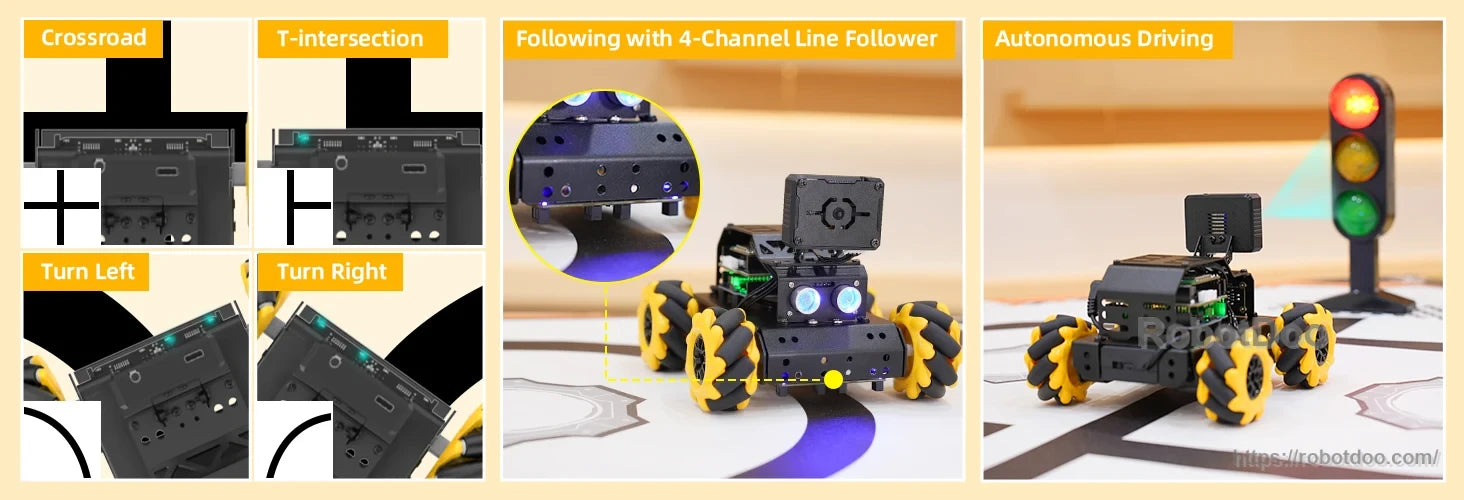
Four-channel infrared detection enables route handling at turns, intersections, and crossings.
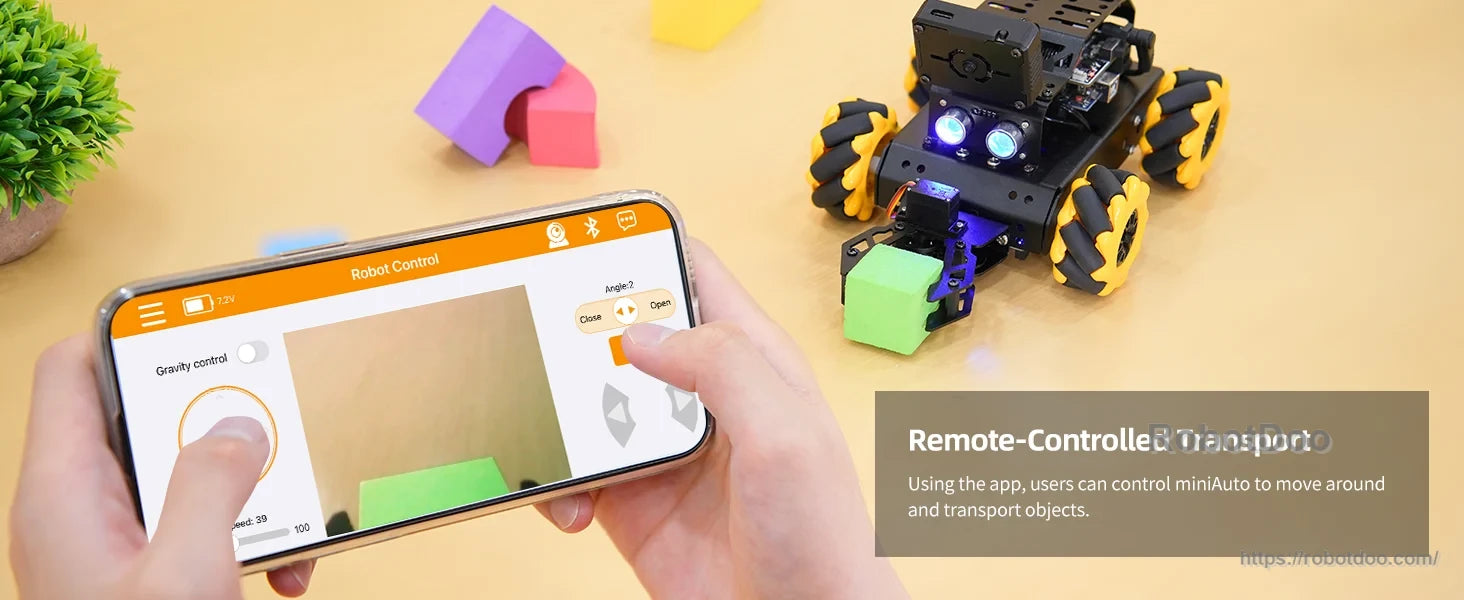
Remote control can be paired with handling projects that move small objects around a workspace.
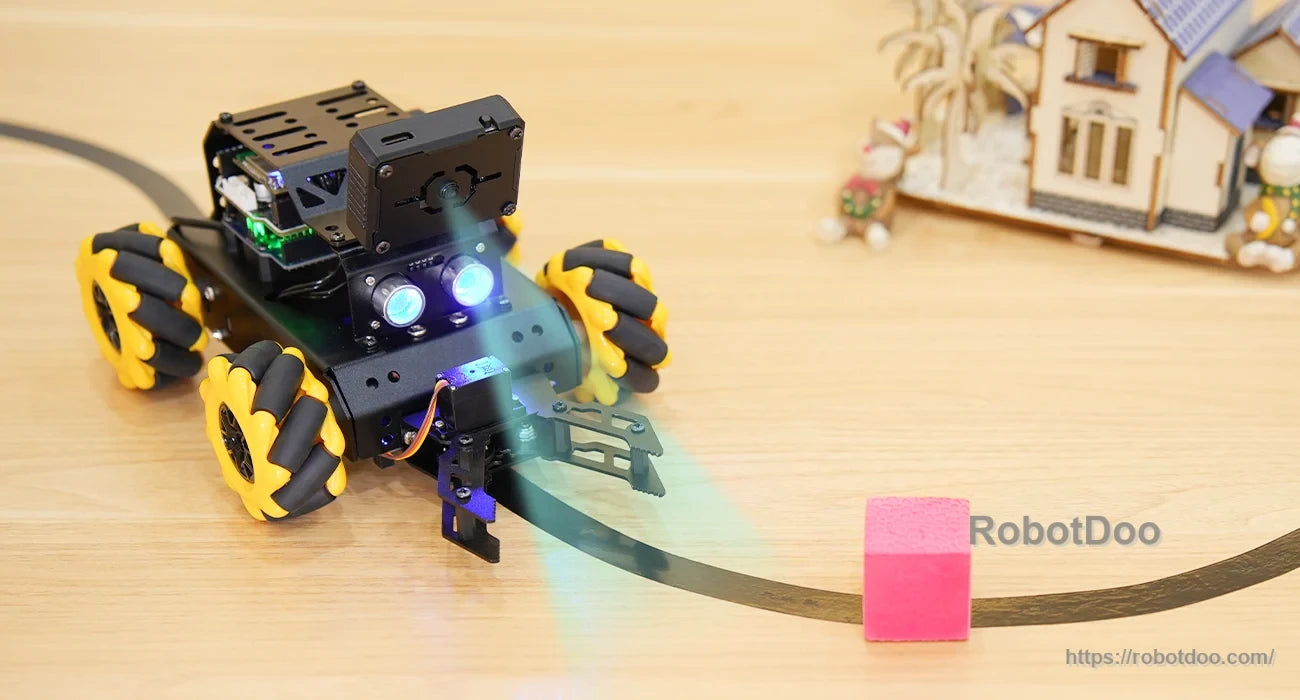
Add a gripper for vision-guided transport and object-handling projects.
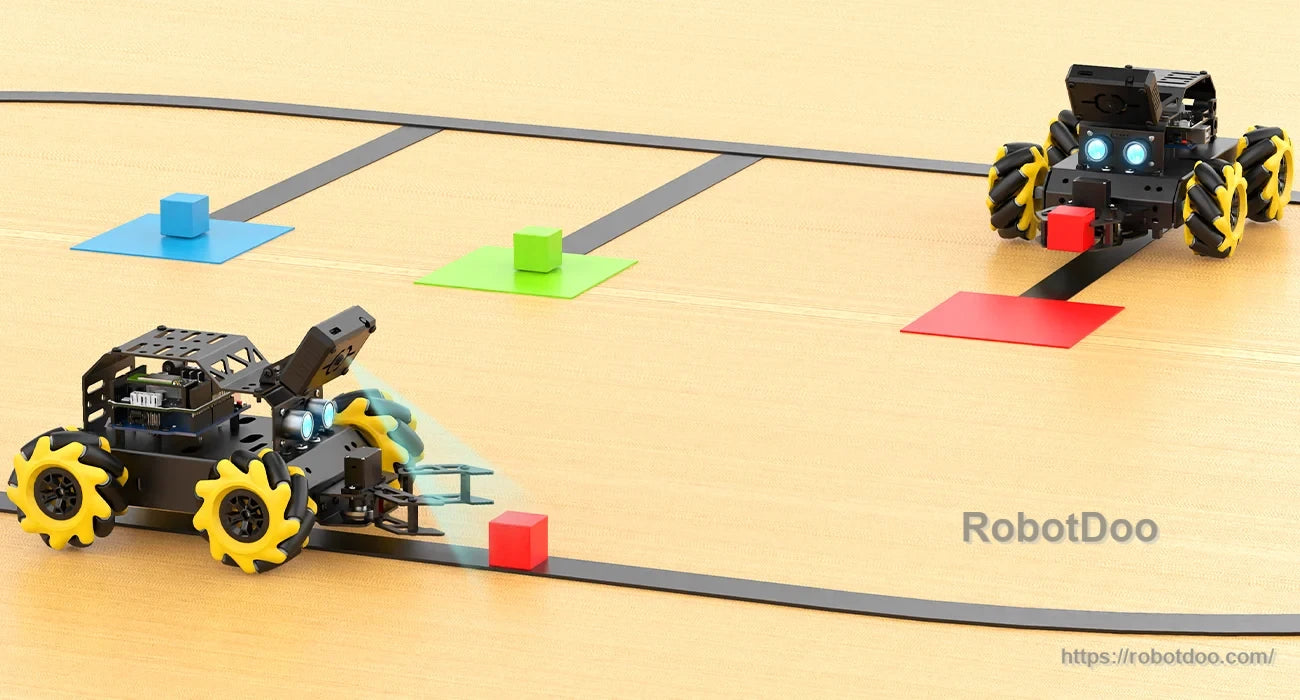
Hiwonder miniAuto AI vision robots combine camera-equipped mobile platforms with a line track and colored blocks for interactive programming projects.
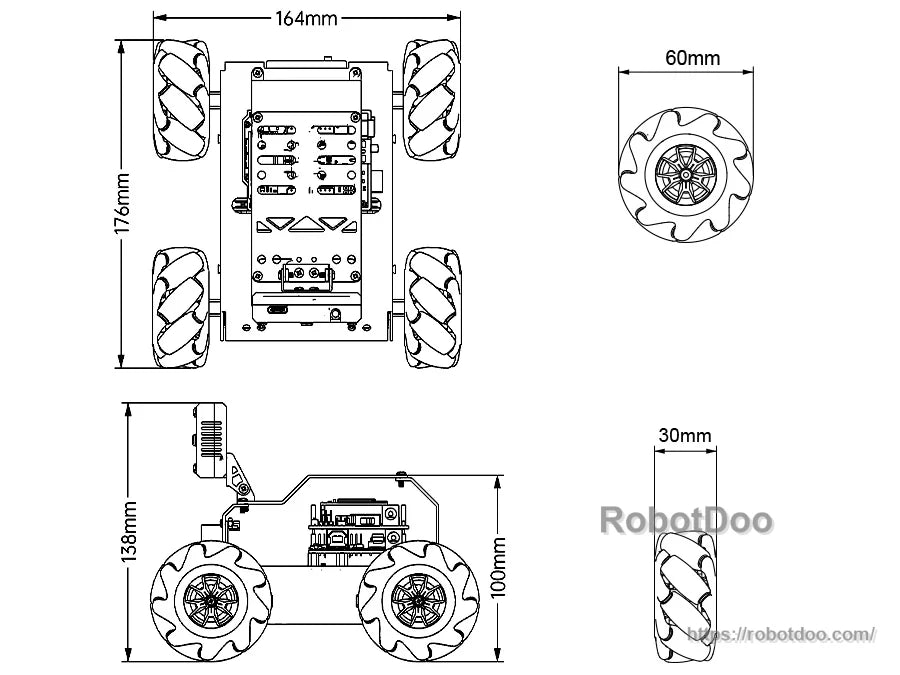
The miniAuto AI vision robot uses a four-wheel chassis with a 164 x 176 mm footprint, 60 mm wheels, and a 100 mm overall height.
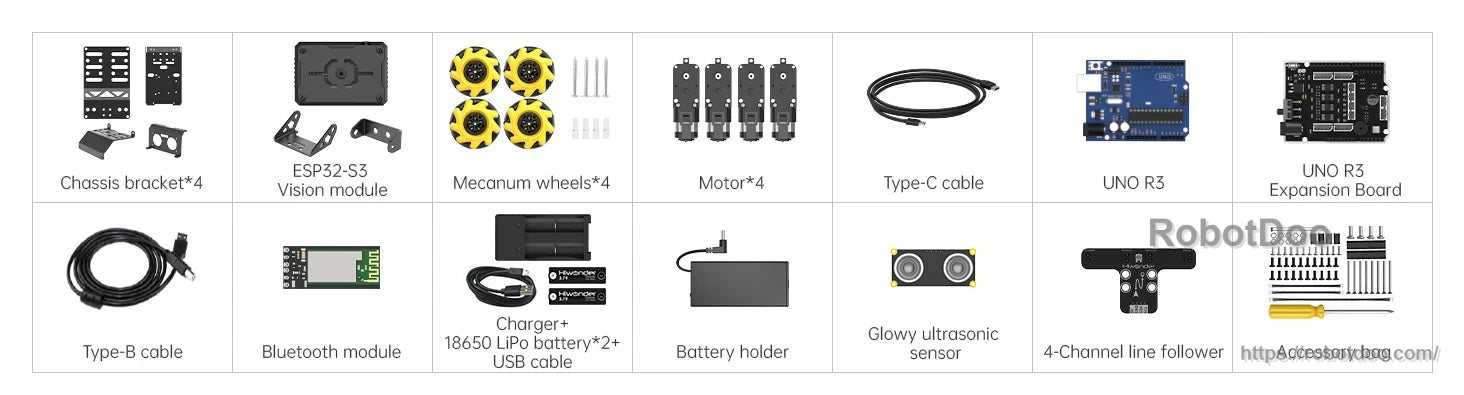
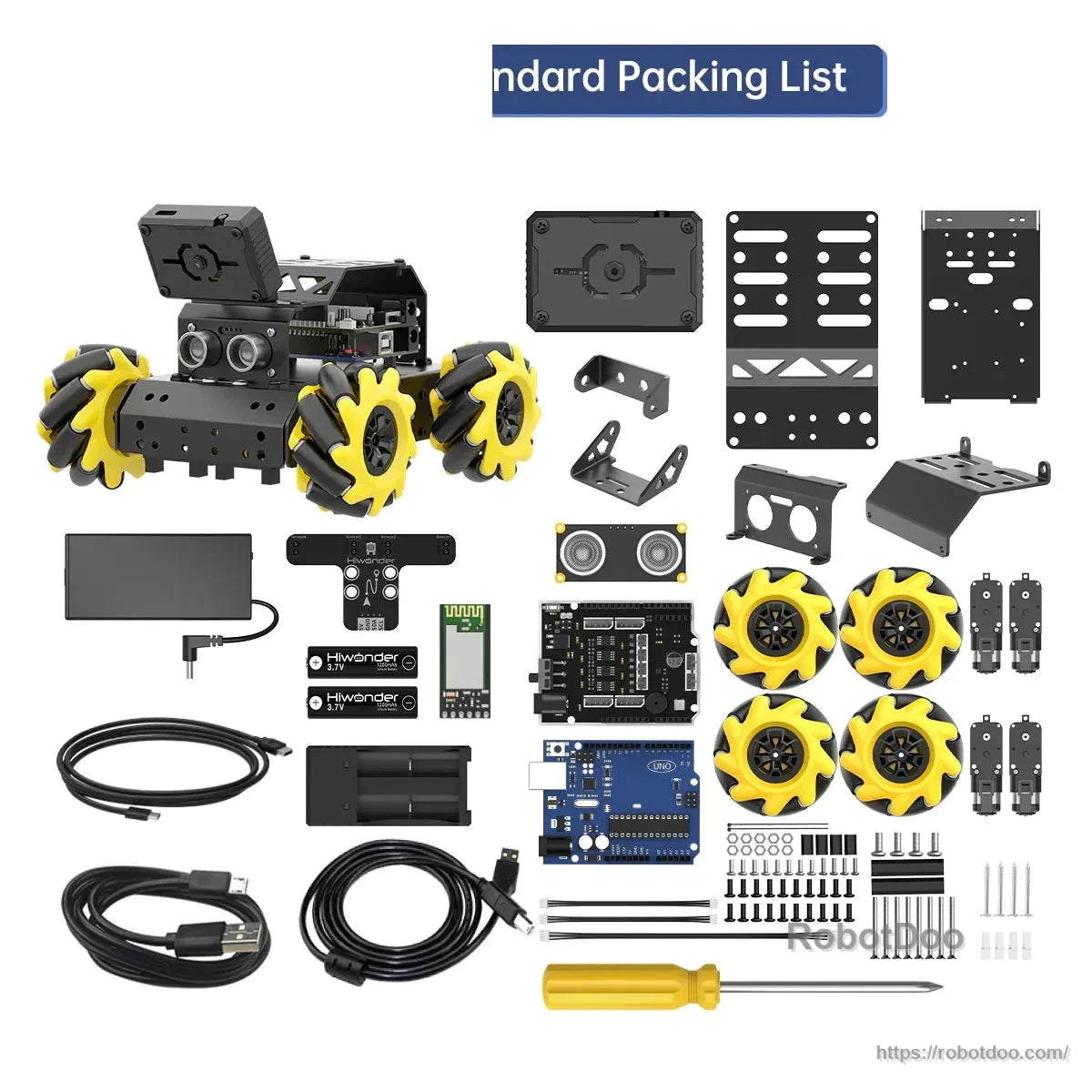
The miniAuto kit combines a camera module, four drive units, yellow wheels, control boards, and a USB cable for assembly.
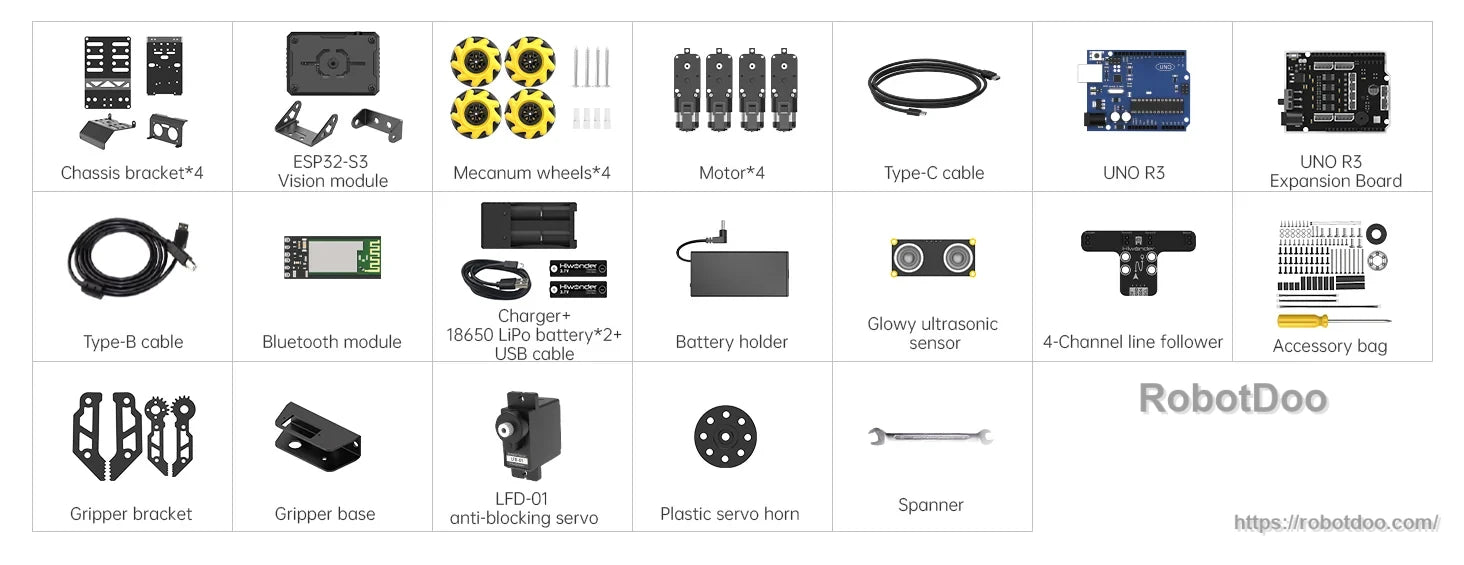
The miniAuto kit combines an ESP32 board, four motors and wheels, ultrasonic and line-following sensors, and wiring accessories for assembly.