Overview
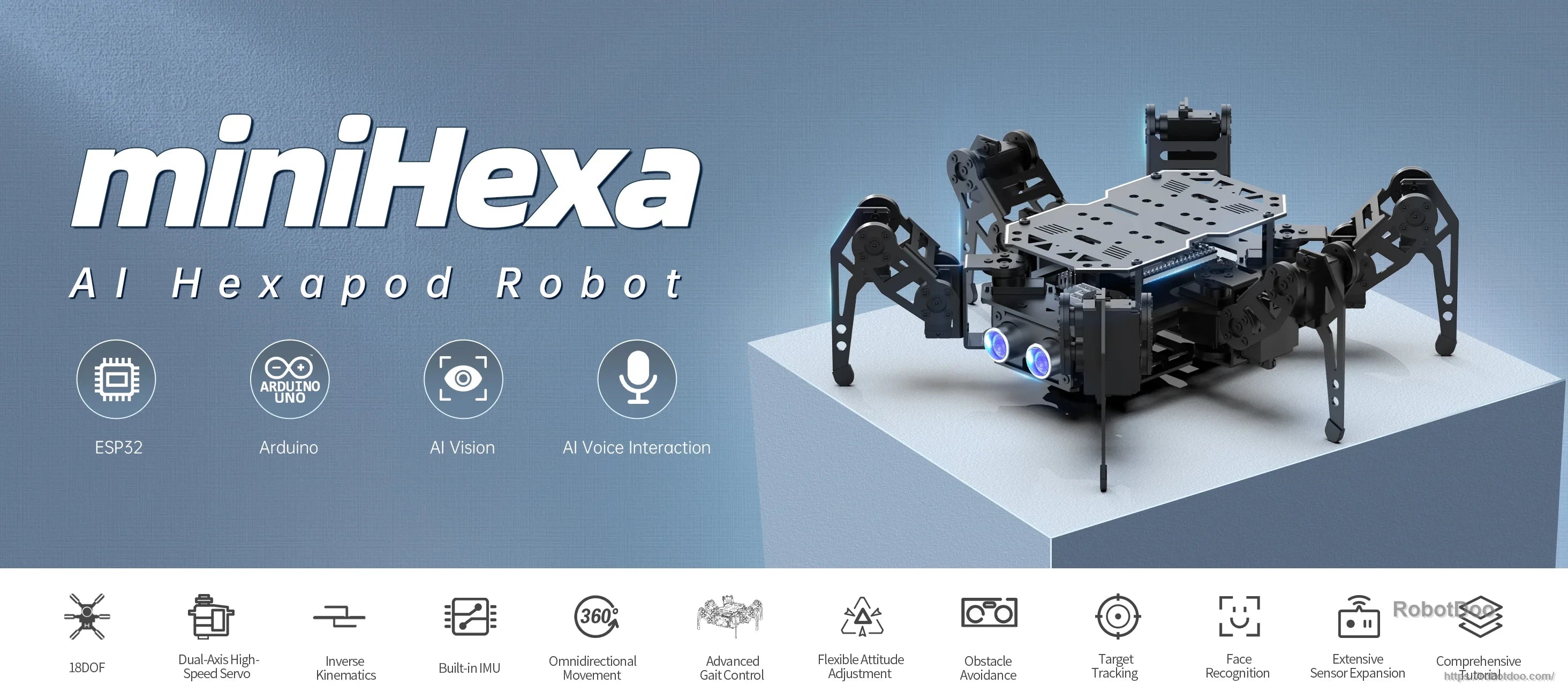
The Hiwonder miniHexa AI Hexapod Robot is an 18DOF Arduino-programmable robotics platform for learning motion control, sensor integration, and AI vision and voice-interaction projects. Its ESP32 controller, inverse kinematics, built-in IMU, and six-leg aluminum alloy structure support omnidirectional movement, gait control, posture adjustment, and balance control.
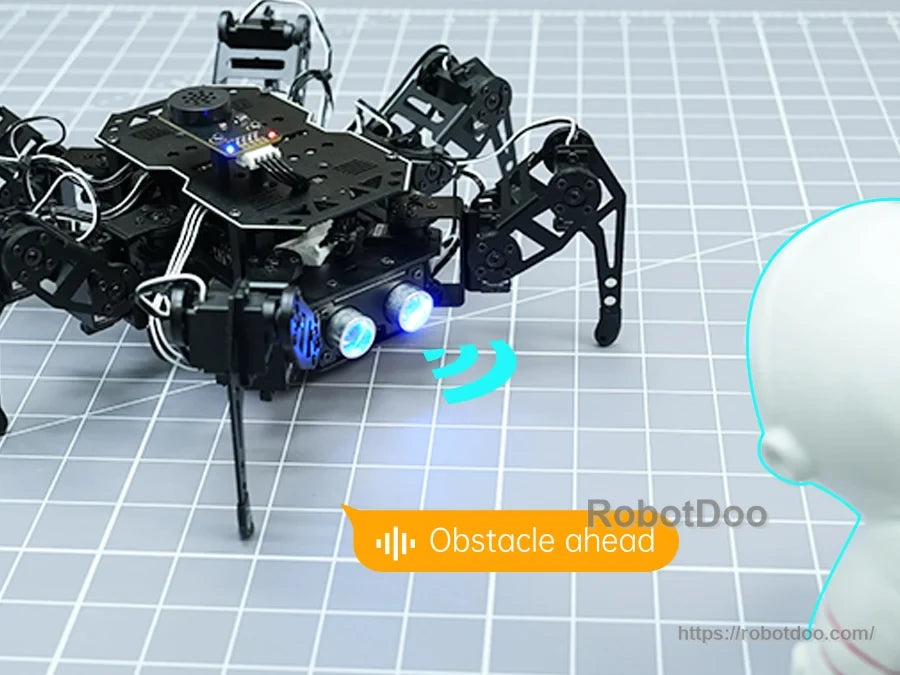
The robot integrates an RGB glowy ultrasonic sensor for distance measurement and obstacle avoidance. Its sensor interfaces support further expansion, while the dot-matrix display can show ultrasonic distance data.
Key Features
- 18DOF hexapod mechanism: Six legs with 3 DOF per leg, driven by HPD-0127 mini dual-axis high-speed servos with anti-stall clutch protection.
- Motion control: Inverse kinematics supports 360 degree omnidirectional movement, gait switching, body-height adjustment, and pitch, roll, and yaw adjustment.
- ESP32 control platform: Supports Arduino programming, PC software, Android app, and iOS app control.
- Ultrasonic and infrared sensing: Supports distance measurement, obstacle avoidance, and edge detection for fall prevention.
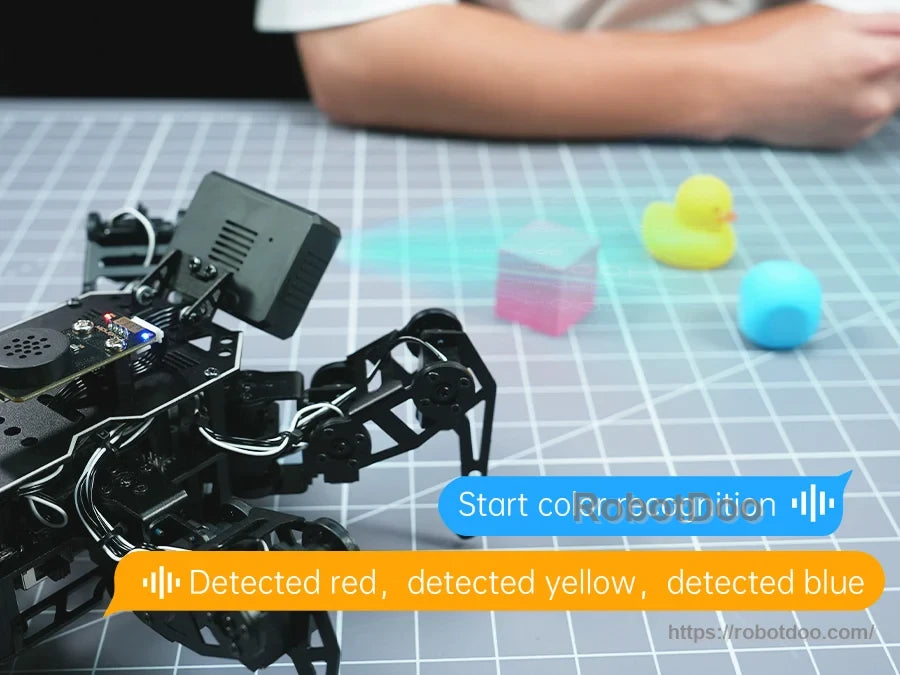
- AI vision functions: The ESP32-S3 vision module features a 2-megapixel HD camera and supports AP direct connection, STA LAN mode, serial-port and IIC communication, color recognition, color tracking, and vision line following.
- Voice interaction: The WonderEcho AI voice interaction module supports voice control, voice broadcast, and customization. Voice commands can be recognized within 5 m to trigger predefined actions and voice responses.
- PC action editor: Visual software supports coordinate control, attitude control, and frame-by-frame action-group editing.
- Robust frame: Anodized hard aluminum alloy brackets form the robot structure.
Specifications
| Degrees of freedom | 18DOF |
| Leg configuration | 3 DOF per leg x 6 |
| Controller | Open-source ESP32 controller |
| Vision module | ESP32-S3 vision module |
| Camera | 2-megapixel HD camera |
| Servos | HPD-0127 Mini Dual-Axis High-Speed Servo |
| Structure | Full-metal hard aluminum alloy bracket, anodized |
| Ultrasonic ranging distance | ≤100 cm |
| Battery | 2 x 3.7 V 18650 batteries (2200 mAh) |
| Continuous working time | 60 min |
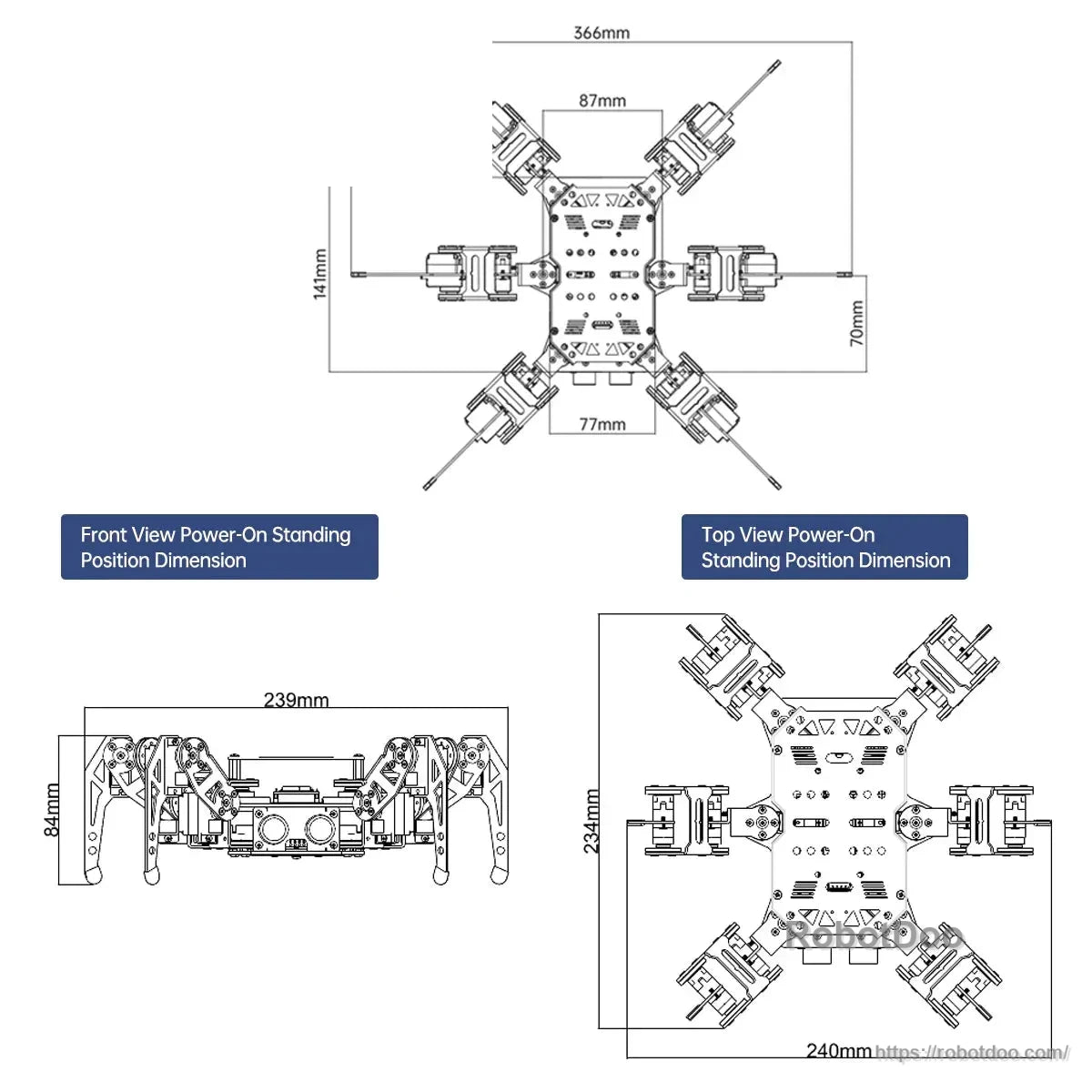
| Dimensions | 240 x 234 x 84 mm |
| Weight | 0.58 kg |
| Control methods | PC software, Android app, iOS app |
| Package size | 28 x 20 x 12 cm |
| Package weight | 1.1 kg |
Applications
Suitable for Arduino programming practice, hexapod motion-control learning, sensor experiments, computer vision projects, voice-interaction development, and custom robot action design.
Manuals and Resources
Download source code, schematic diagrams, tutorials, and videos from the miniHexa documentation. For product assistance, contact support@robotdoo.com.
Details
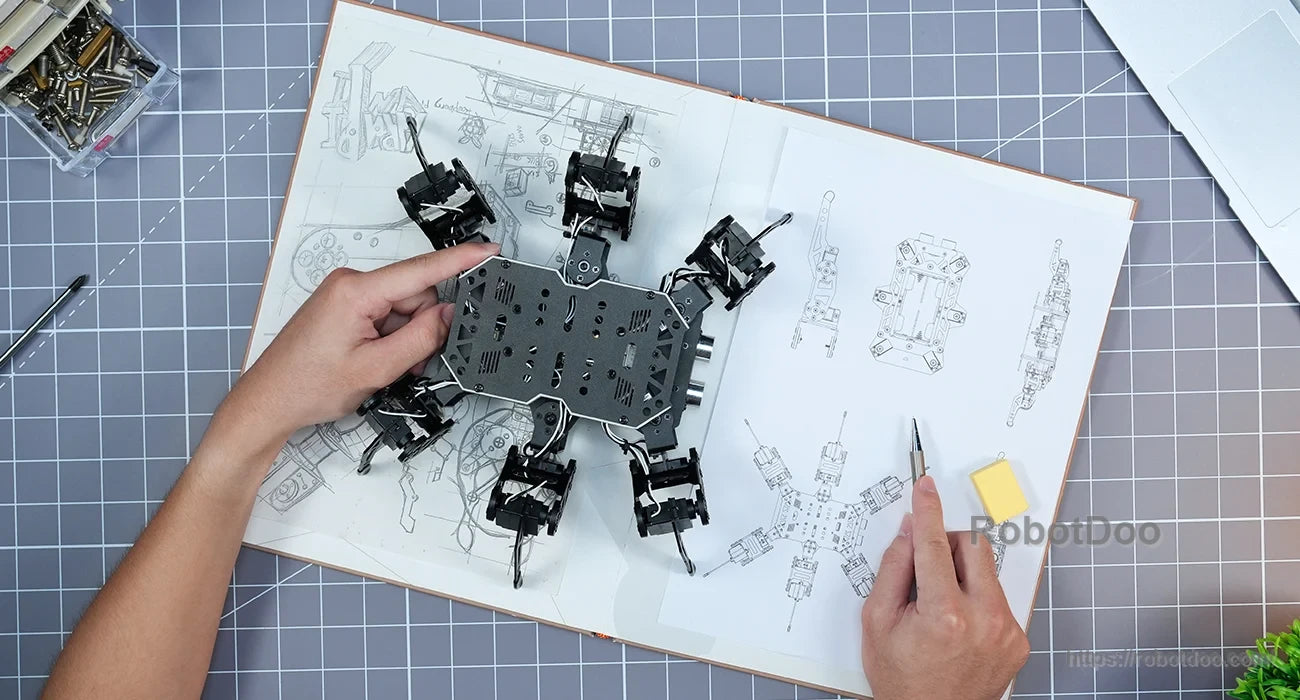
Designed as a hands-on robotics platform, miniHexa supports Arduino programming, motion-control experiments, and custom builds.
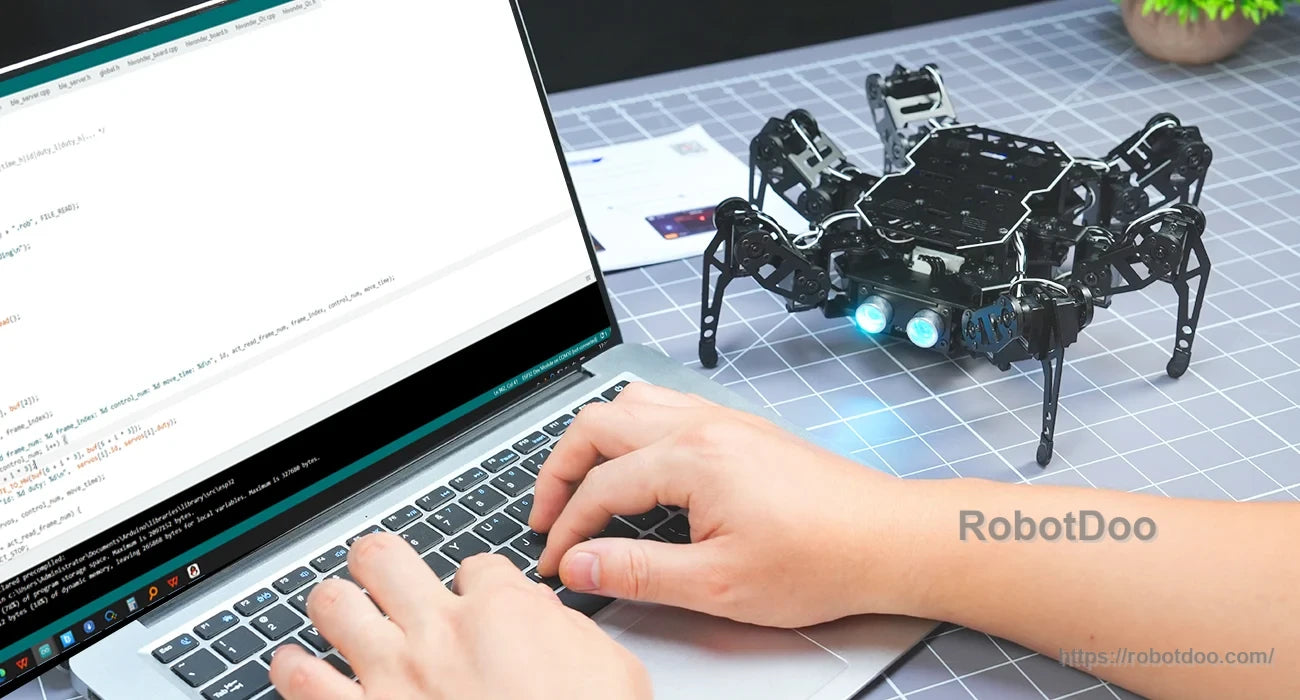
Write and test custom robot behaviors through the ESP32-based control platform.
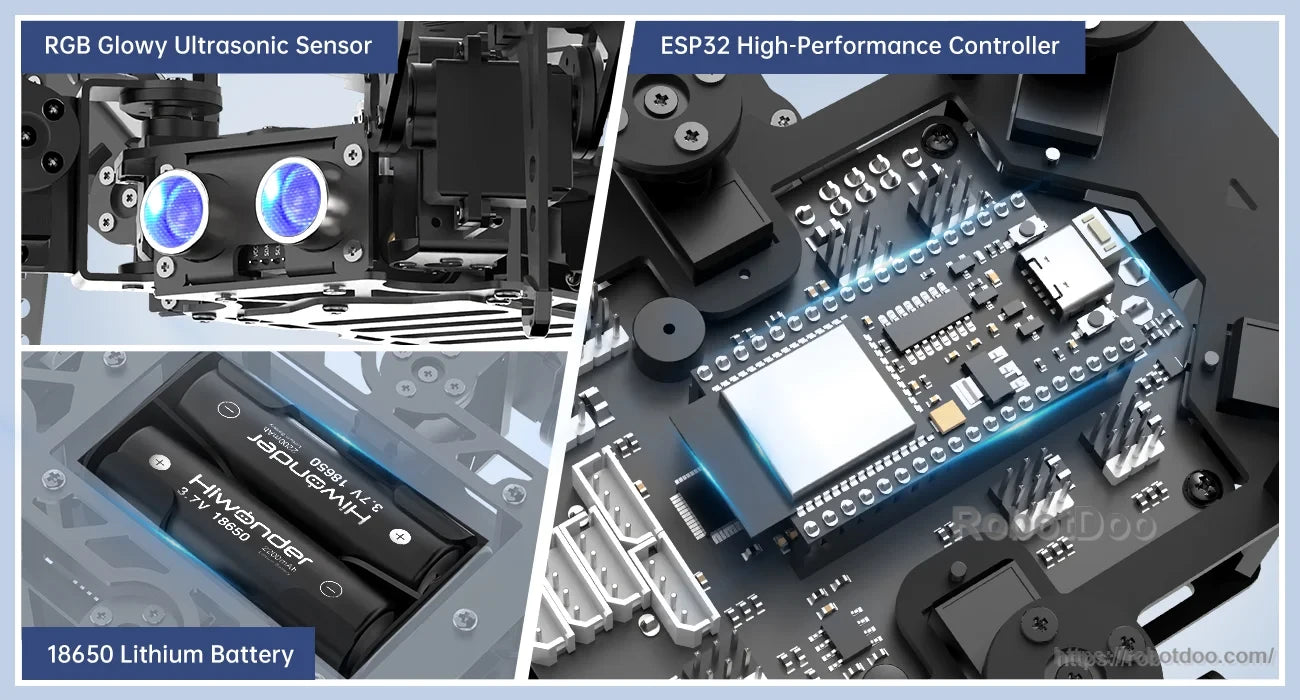
The integrated RGB ultrasonic sensor supports distance measurement and obstacle-avoidance projects.
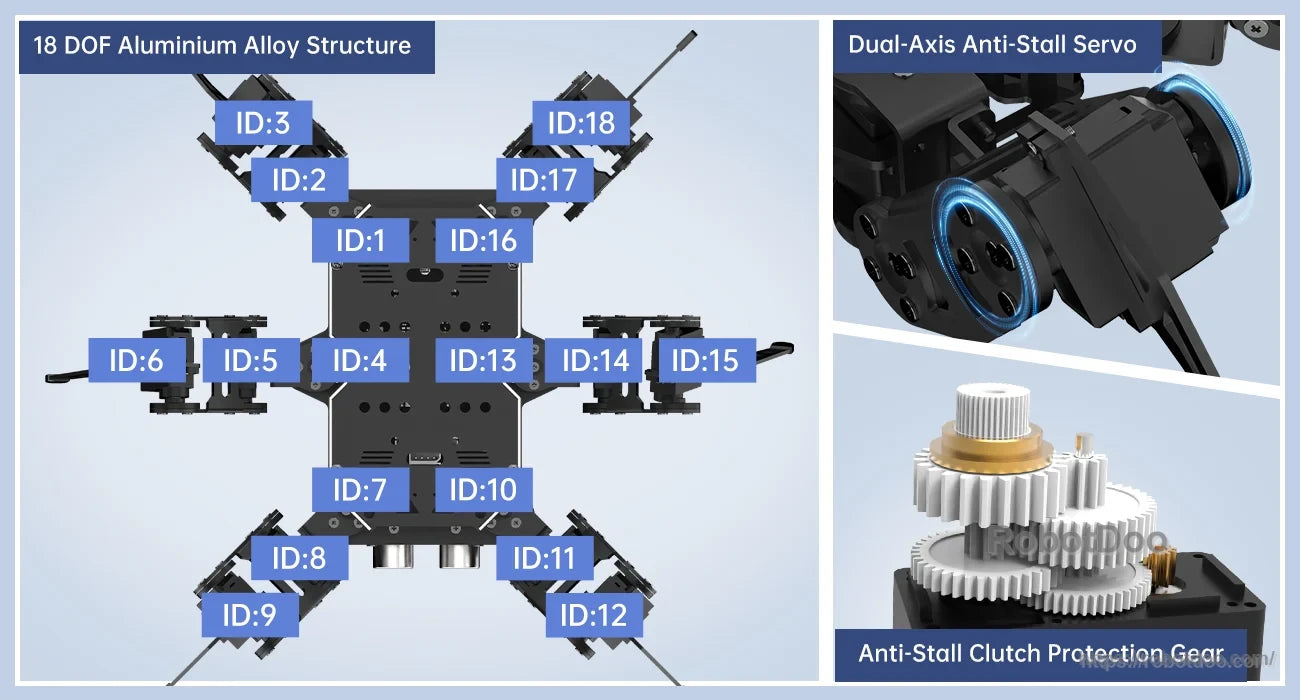
Six legs with three degrees of freedom each provide the mechanical foundation for flexible gait control.
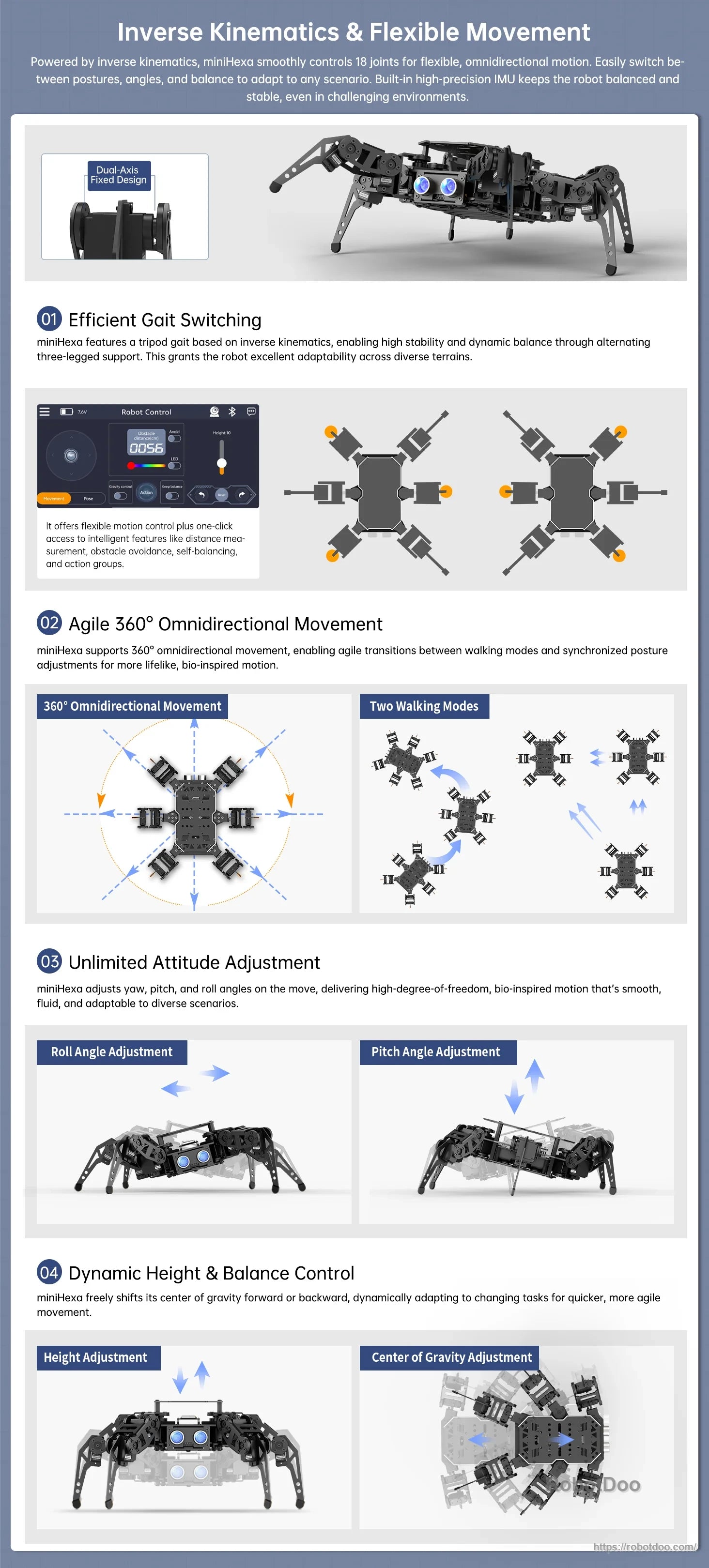
Inverse kinematics enables omnidirectional movement, gait switching, and pitch, roll, and yaw adjustment.
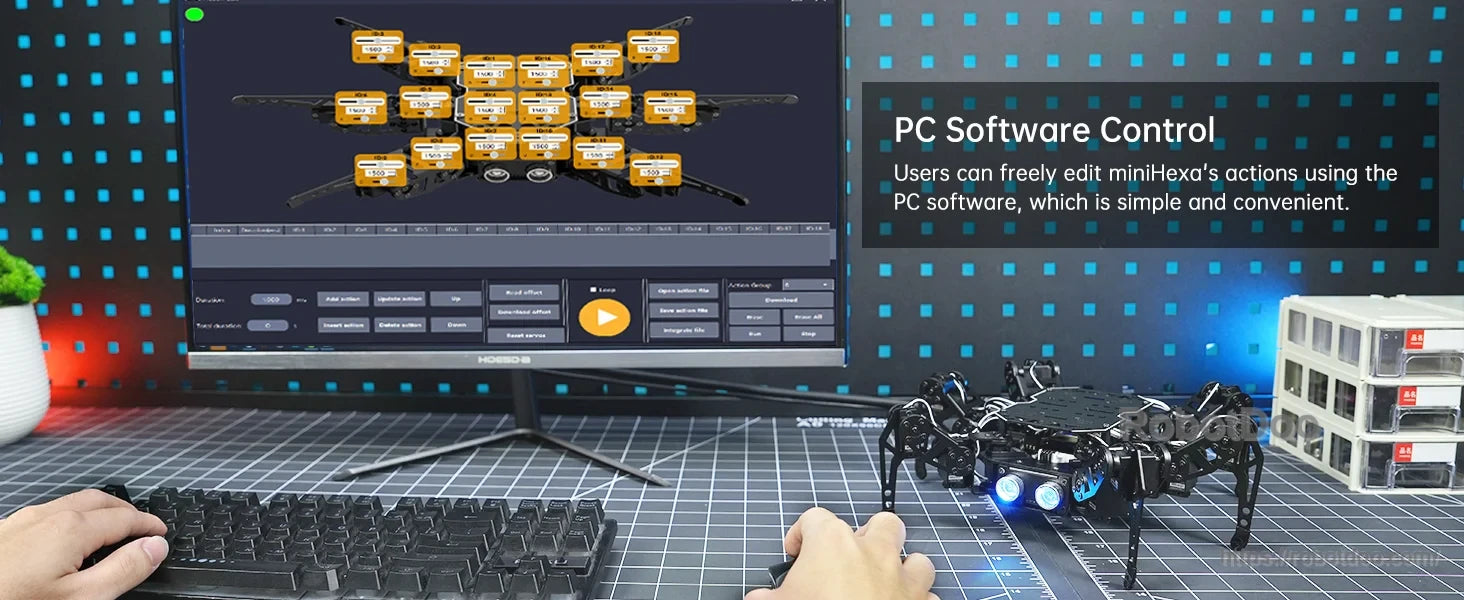
PC software provides an accessible workspace for controlling movements and creating action sequences.
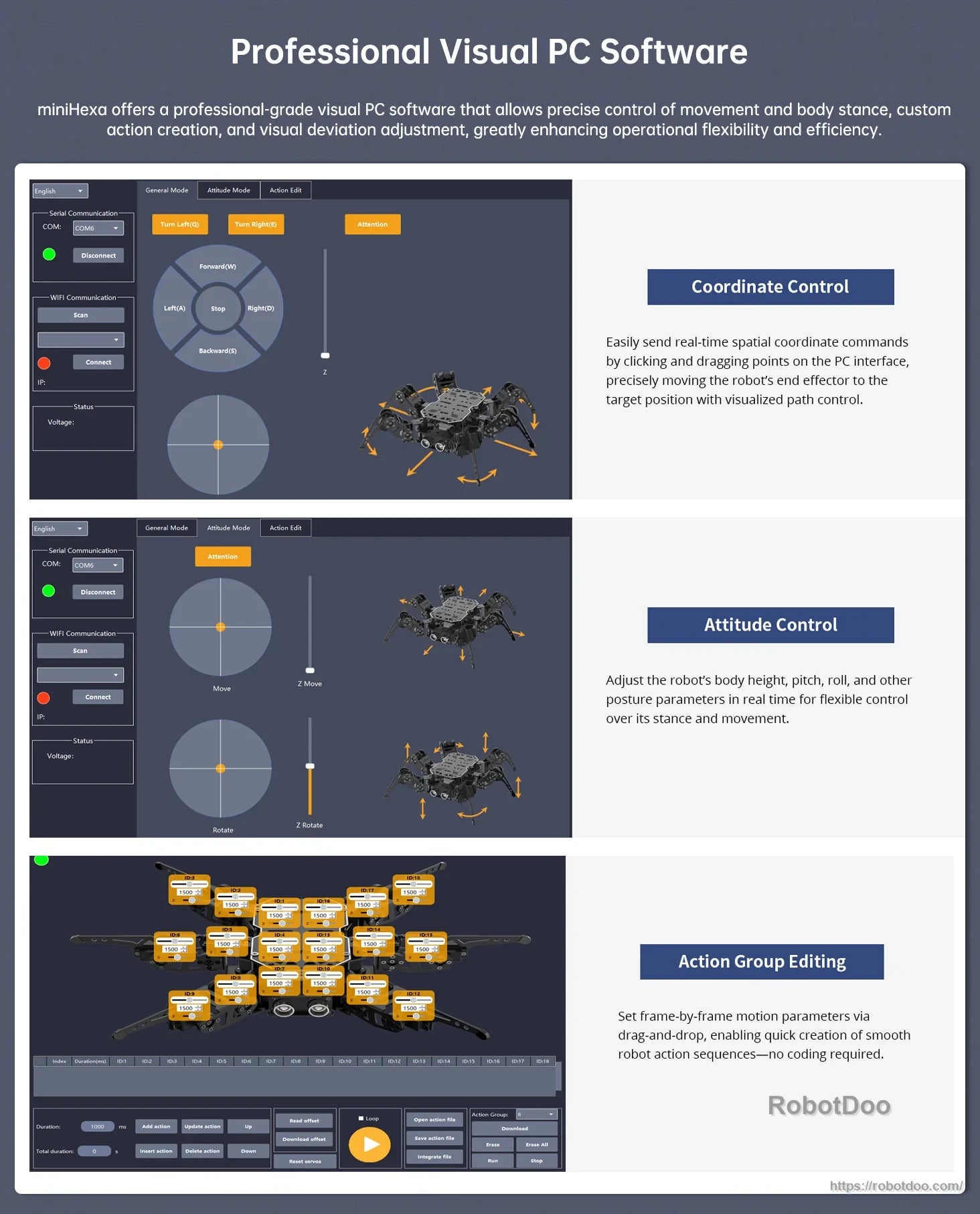
Coordinate, attitude, and frame-by-frame action-group tools help refine custom robot motions.
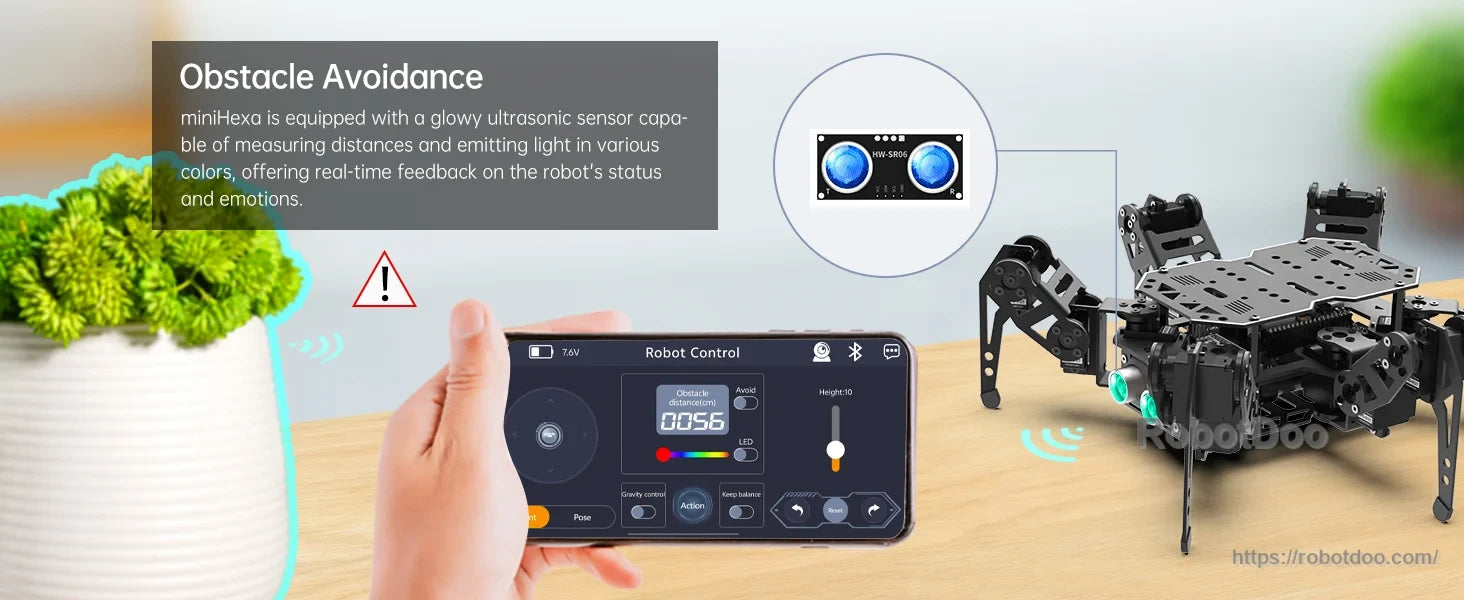
Obstacle avoidance uses ultrasonic distance data to help the robot respond to objects in its path.
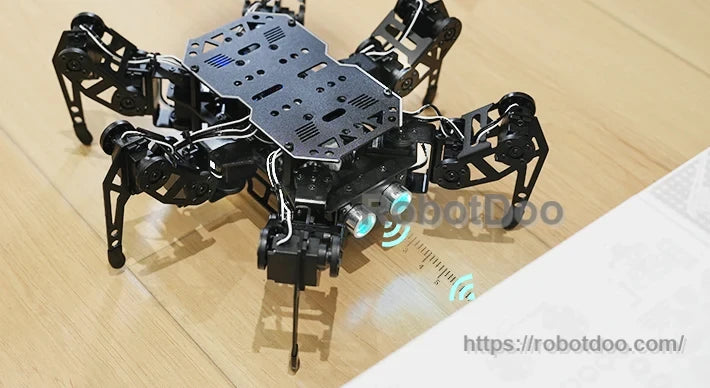
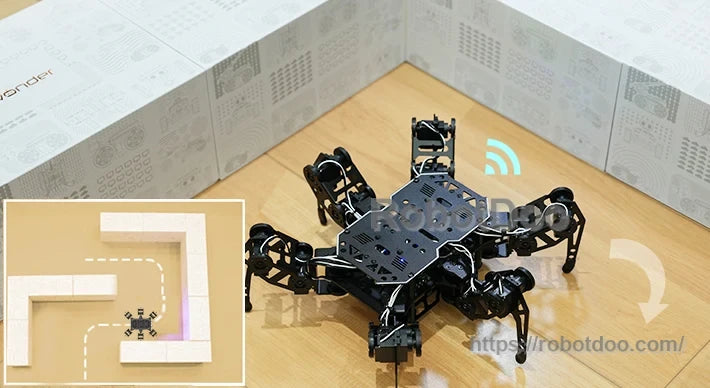
Infrared edge detection expands autonomous movement experiments with fall-prevention behavior.
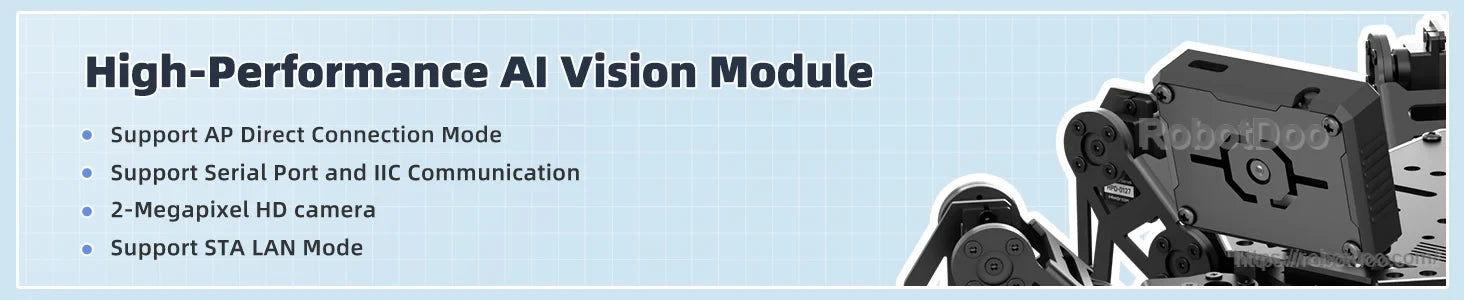
The ESP32-S3 vision module adds a 2-megapixel camera for AI vision projects.
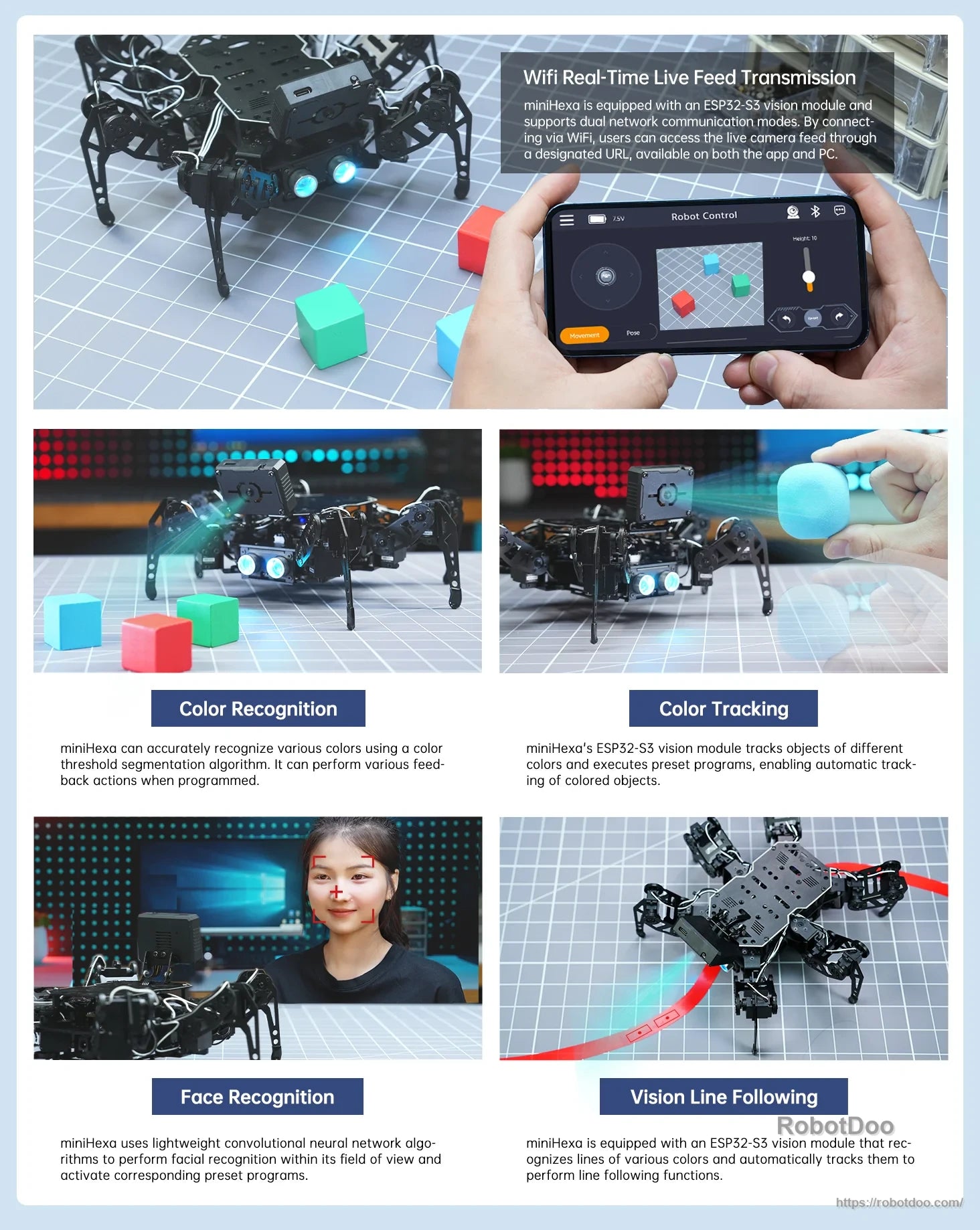
Vision features support color recognition and tracking, face recognition, and line-following applications.
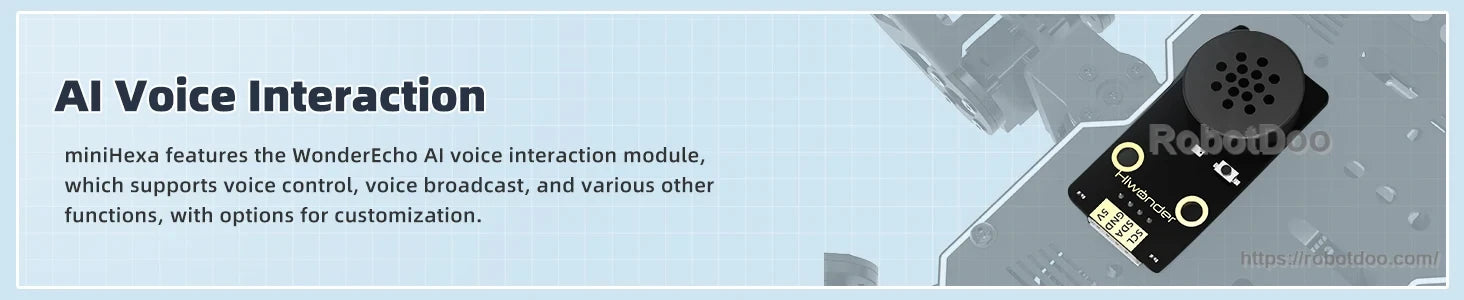
WonderEcho voice interaction supports predefined voice commands, responses, and customization.
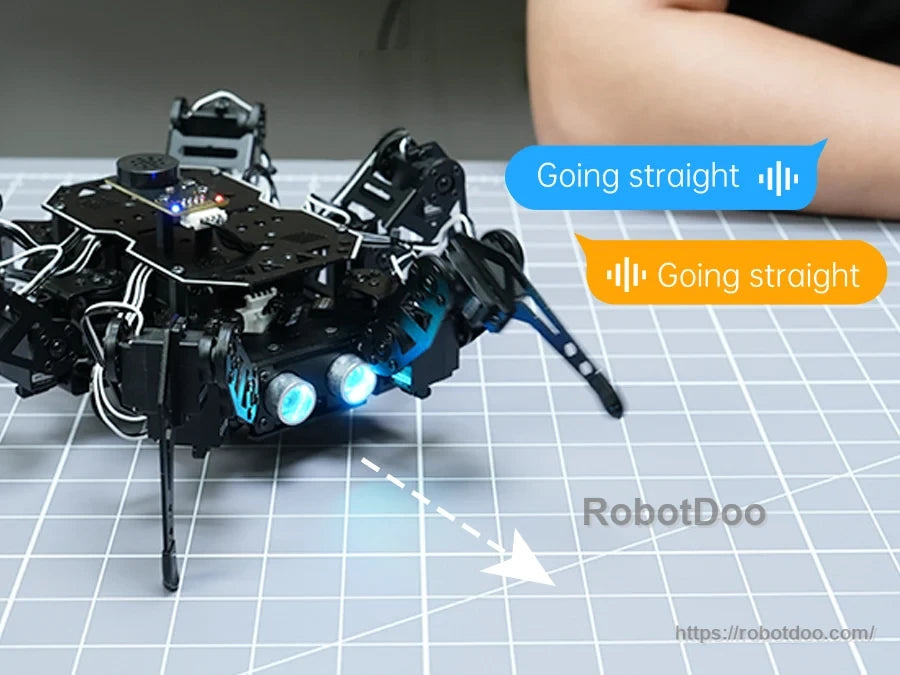
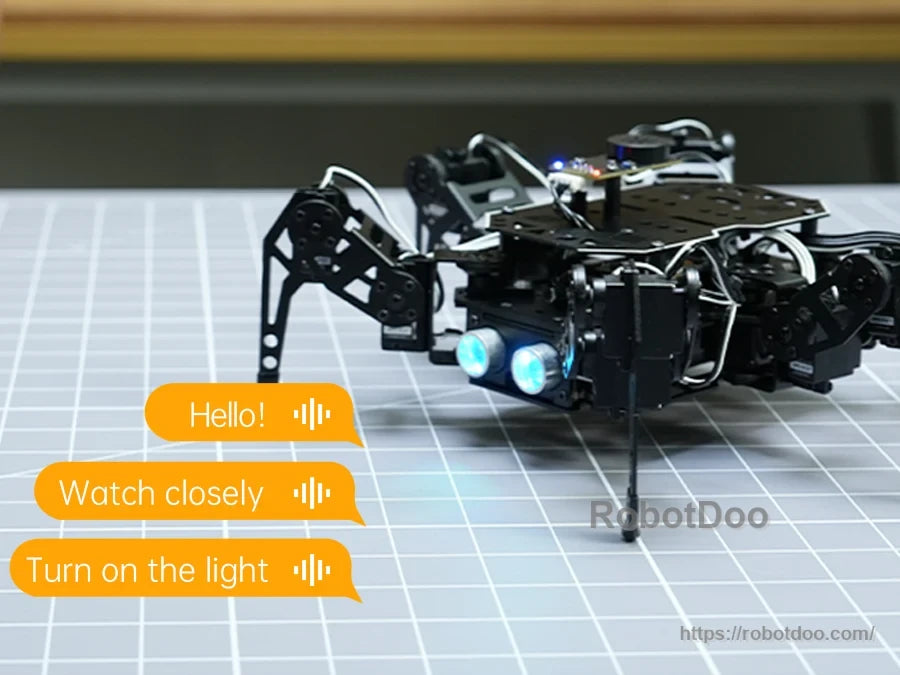
Voice commands can trigger programmed actions and voice responses for interactive robotics projects.
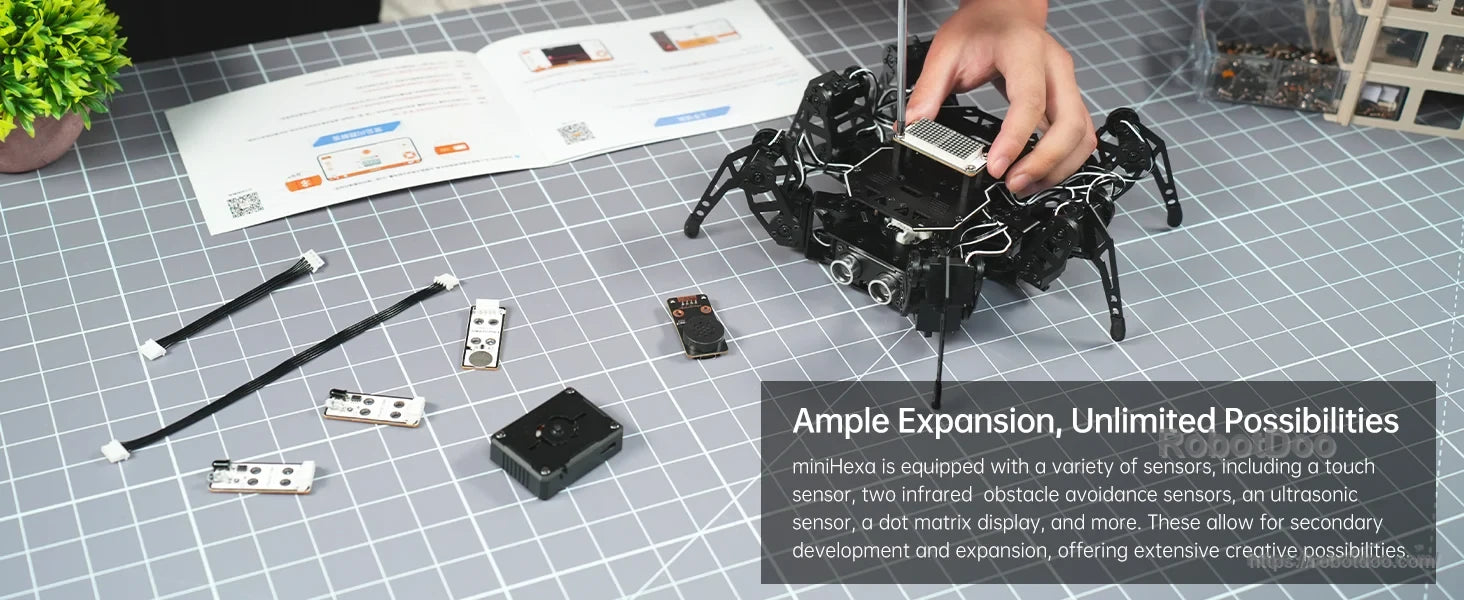
The miniHexa hexapod robot includes a compact black leg assembly with separate cables and expansion modules for building and customization.
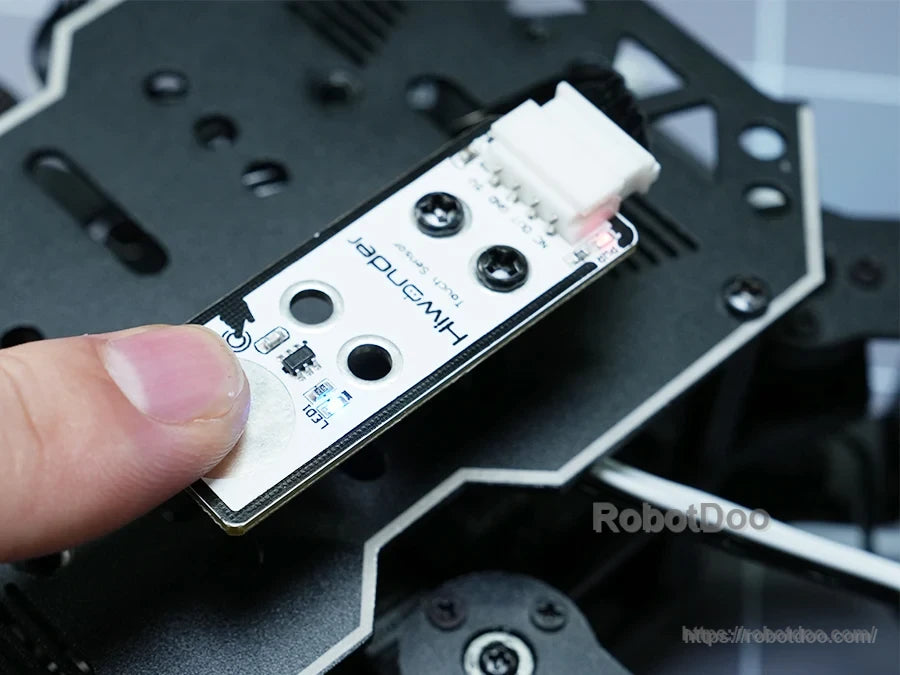
The compact control board uses two push buttons and a white connector for straightforward integration into the miniHexa robot chassis.
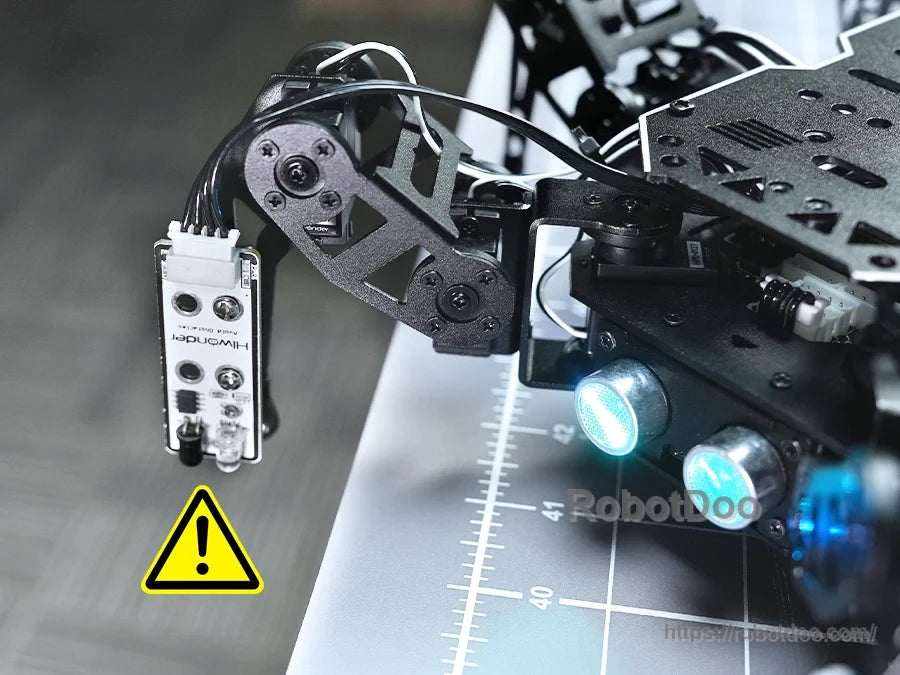
The compact hexapod design uses articulated servo-driven legs and front LED lights for robotic movement projects.
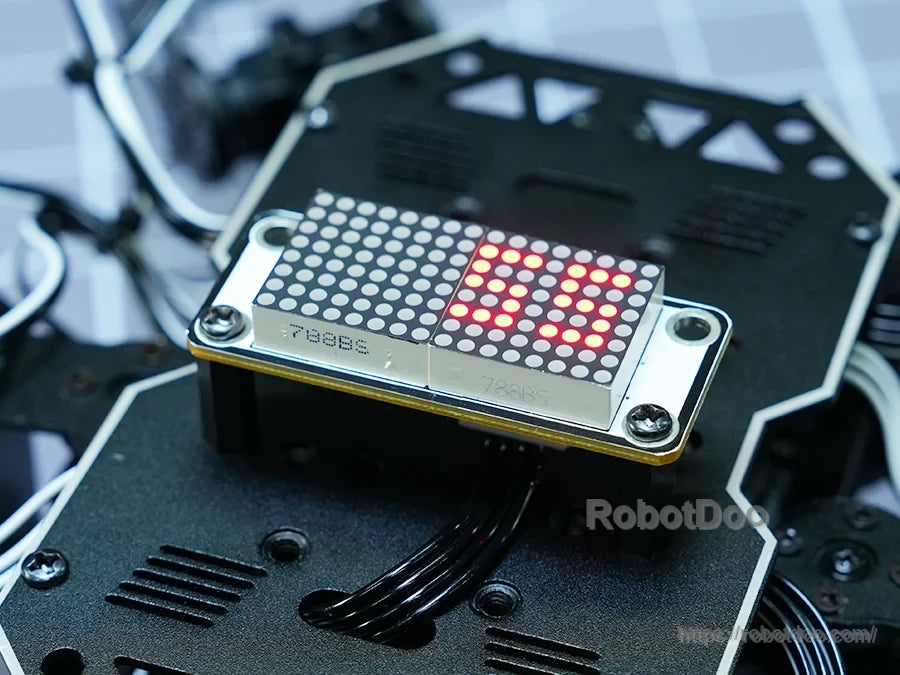
The dual LED dot-matrix display adds animated red eye expressions to the miniHexa robot.
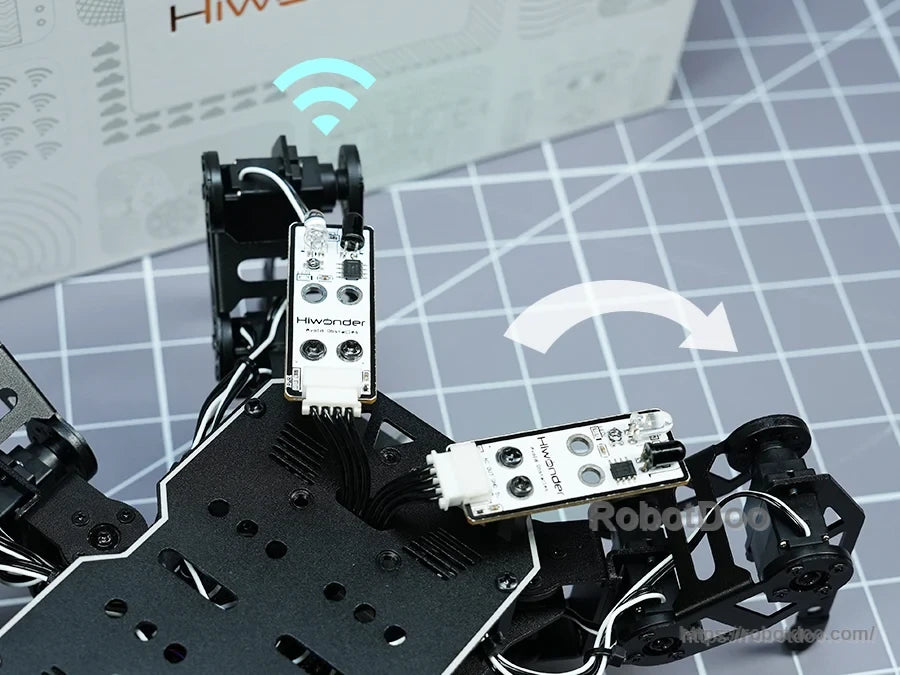
The miniHexa’s six articulated legs, compact black chassis and wireless control module support flexible robot setup and control.
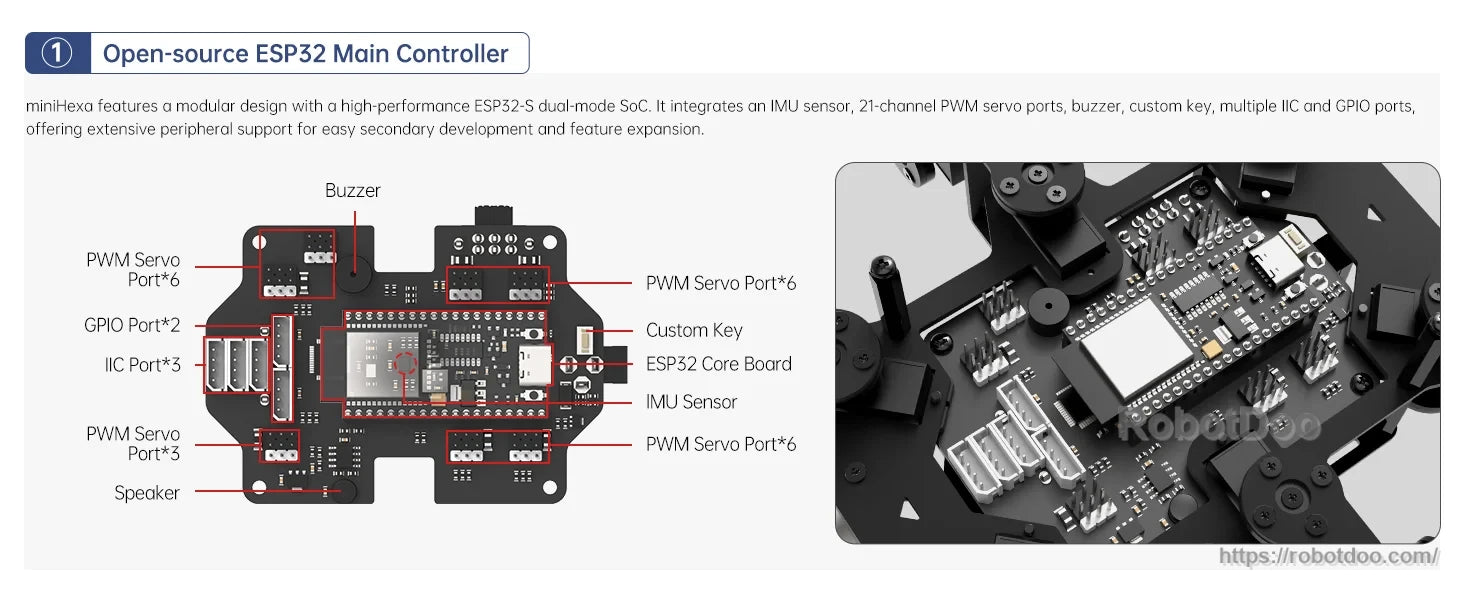
The open-source ESP32 main controller provides labeled PWM servo, sensor, buzzer, and communication connections for organized hexapod wiring.
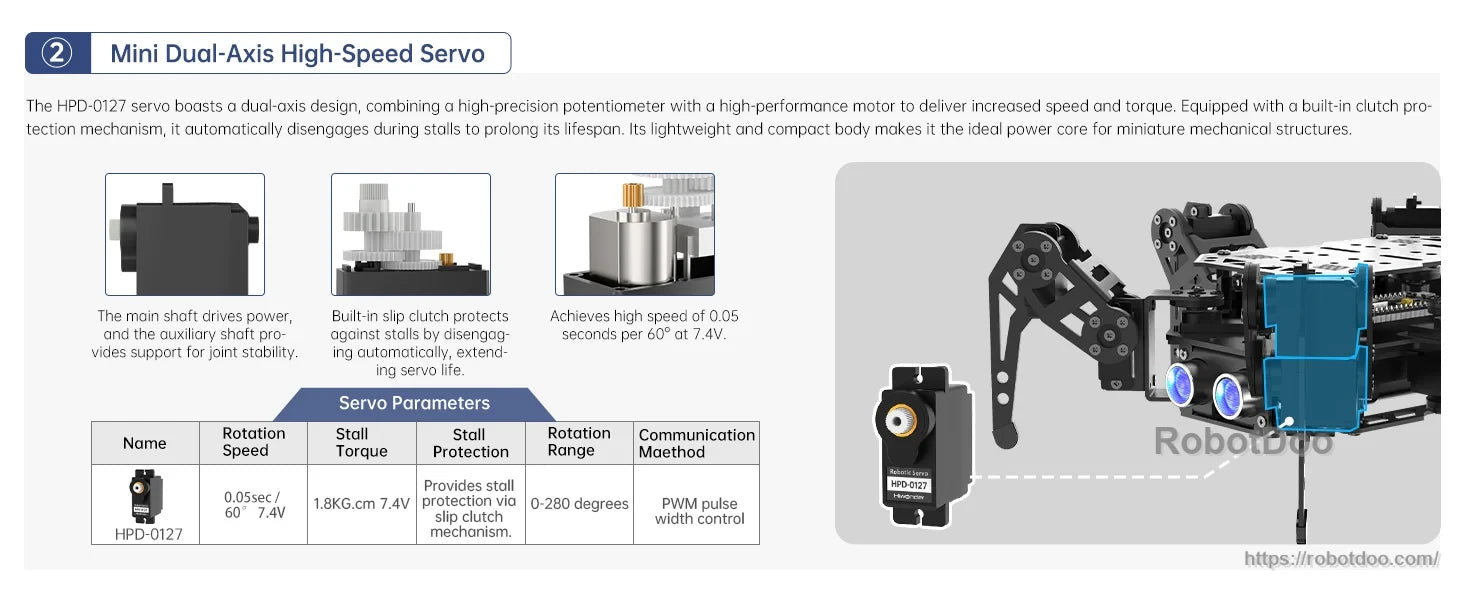
Mini dual-axis high-speed servos support the articulated leg joints of the miniHexa 18DOF hexapod robot.
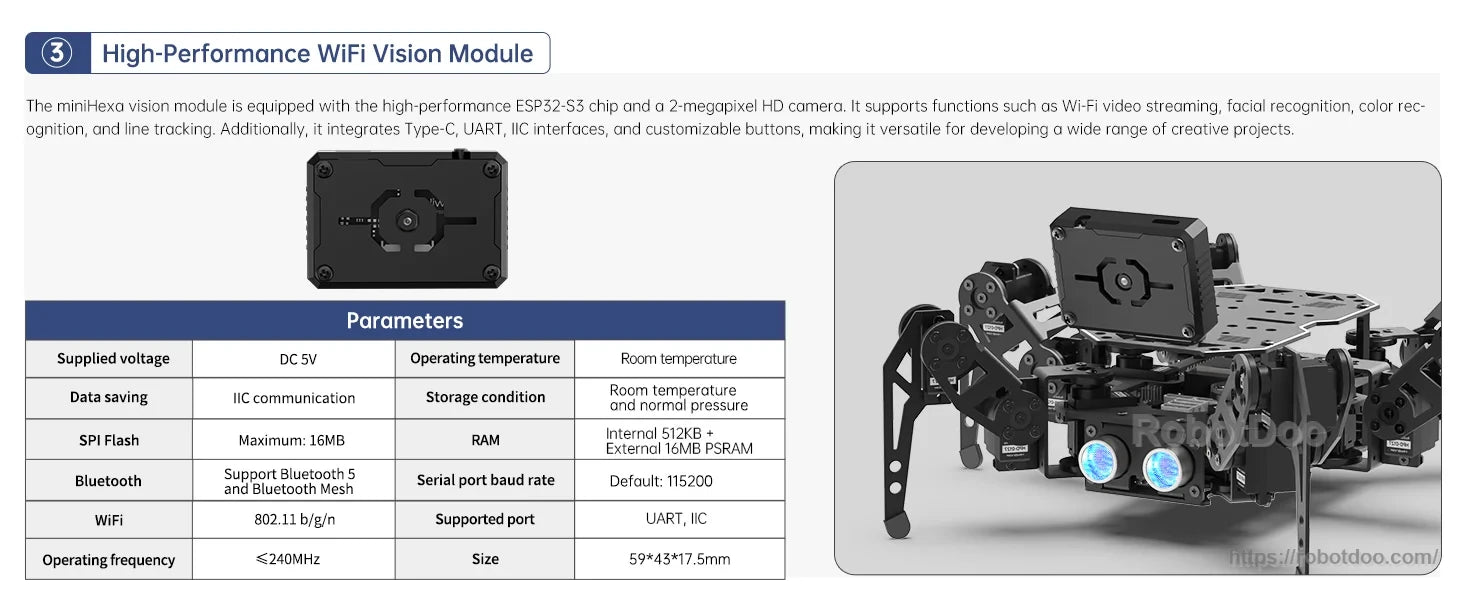
The high-performance WiFi vision module mounts above the hexapod chassis, while dual front sensors support its compact robot layout.
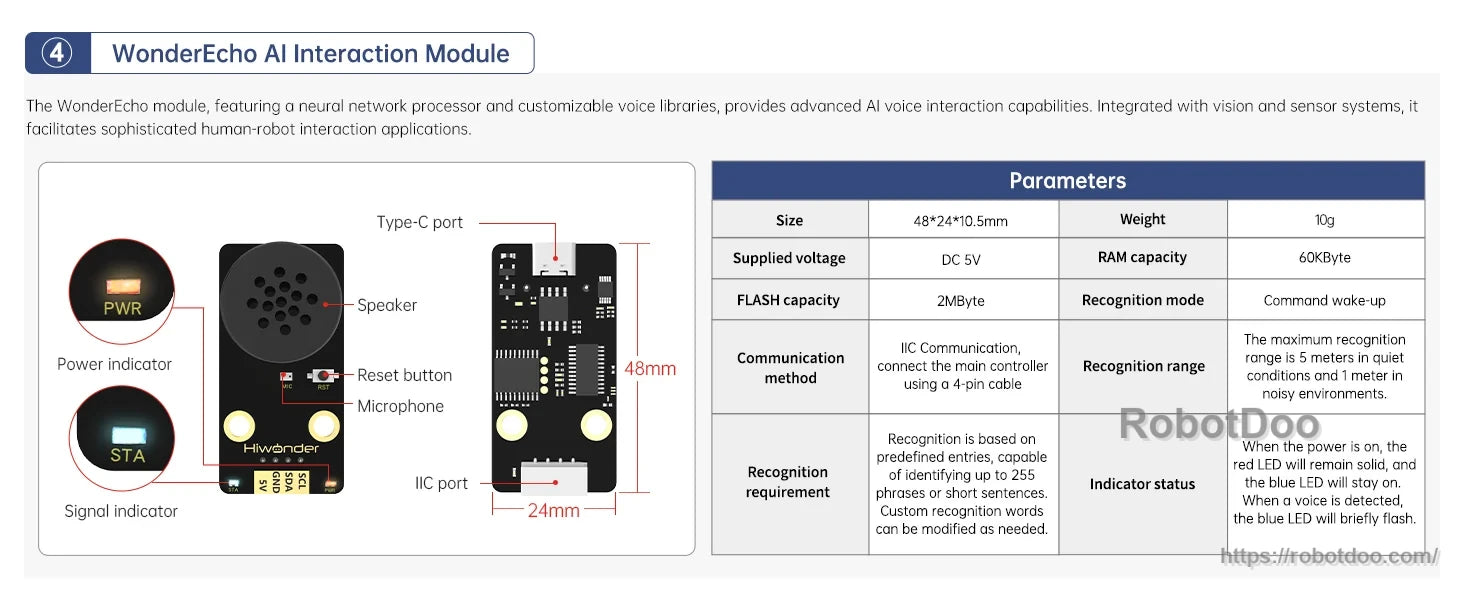
The WonderEcho AI interaction module combines an onboard speaker, microphone, USB-C connection, reset button, and status indicators in a compact board layout.
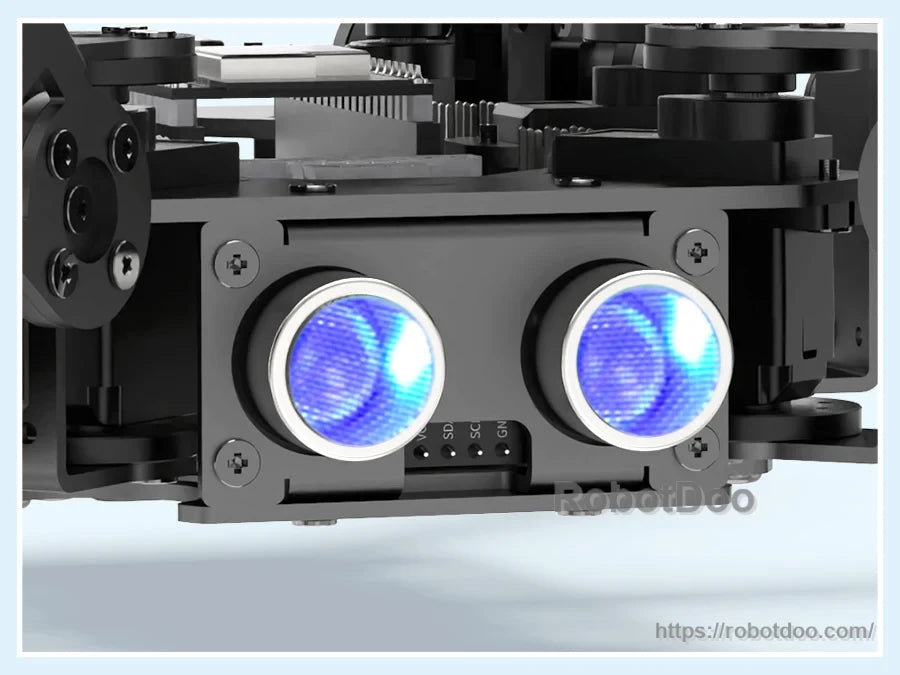
The miniHexa hexapod robot features two blue illuminated circular lights on its front panel.
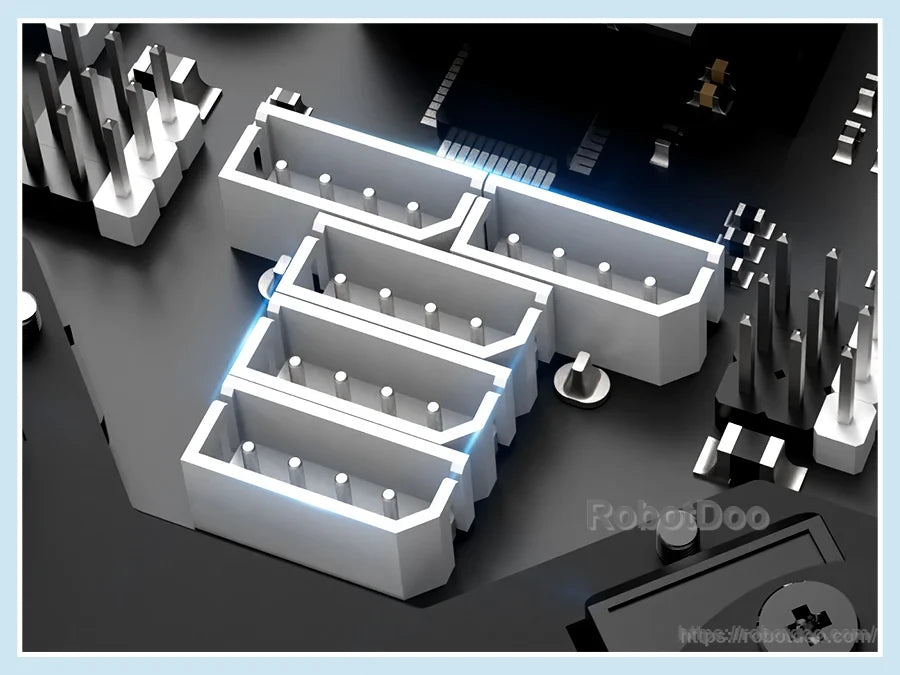
The miniHexa robot uses six articulated leg assemblies with integrated servo mounting points for its 18DOF hexapod design.
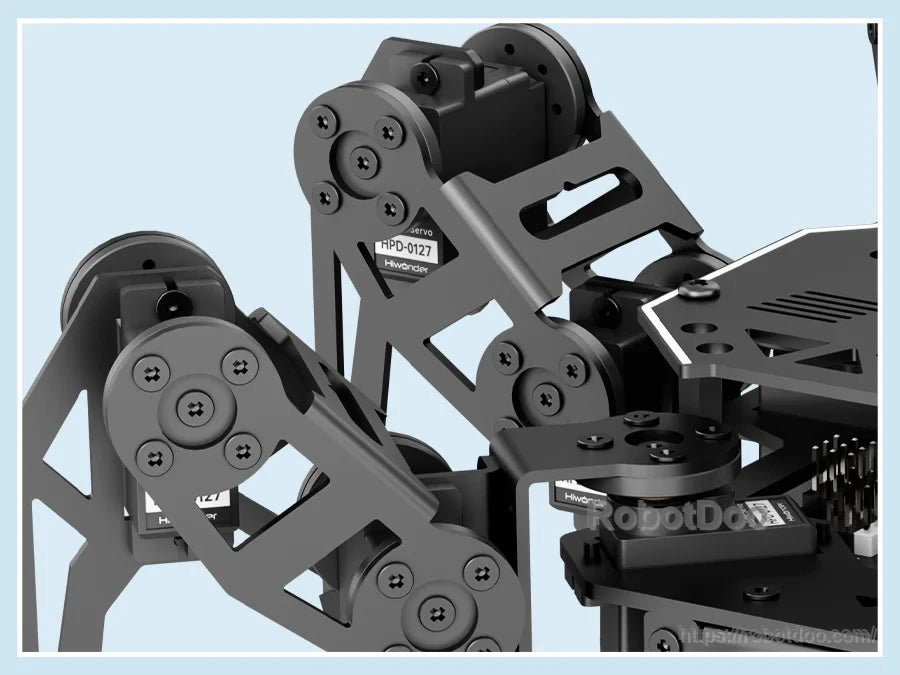
The miniHexa uses articulated servo-driven legs and metal brackets to support multi-legged robot movement.
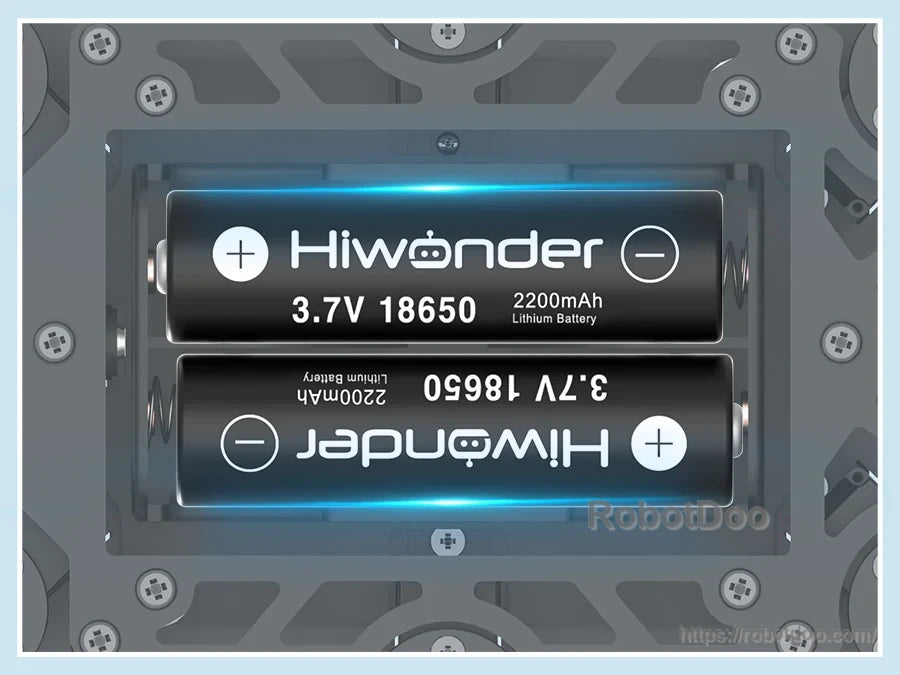
The miniHexa uses two 3.7V 18650 2200mAh lithium batteries in a dedicated onboard battery compartment.
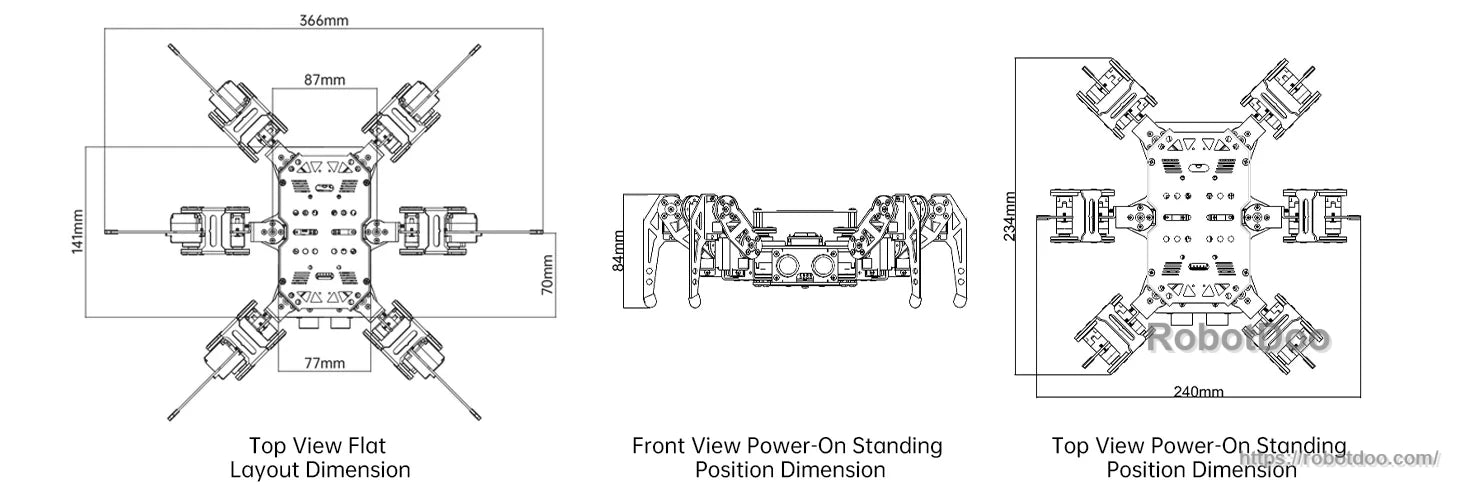
Hiwonder miniHexa uses a six-leg layout with 18 servo-driven joints, with top and front dimensions provided for placement planning.

The miniHexa kit includes a battery cover, 3.7V 1850mAh LiPo battery, 8.4V charger, USB-C cable, accessory bag, and user manual.