Overview
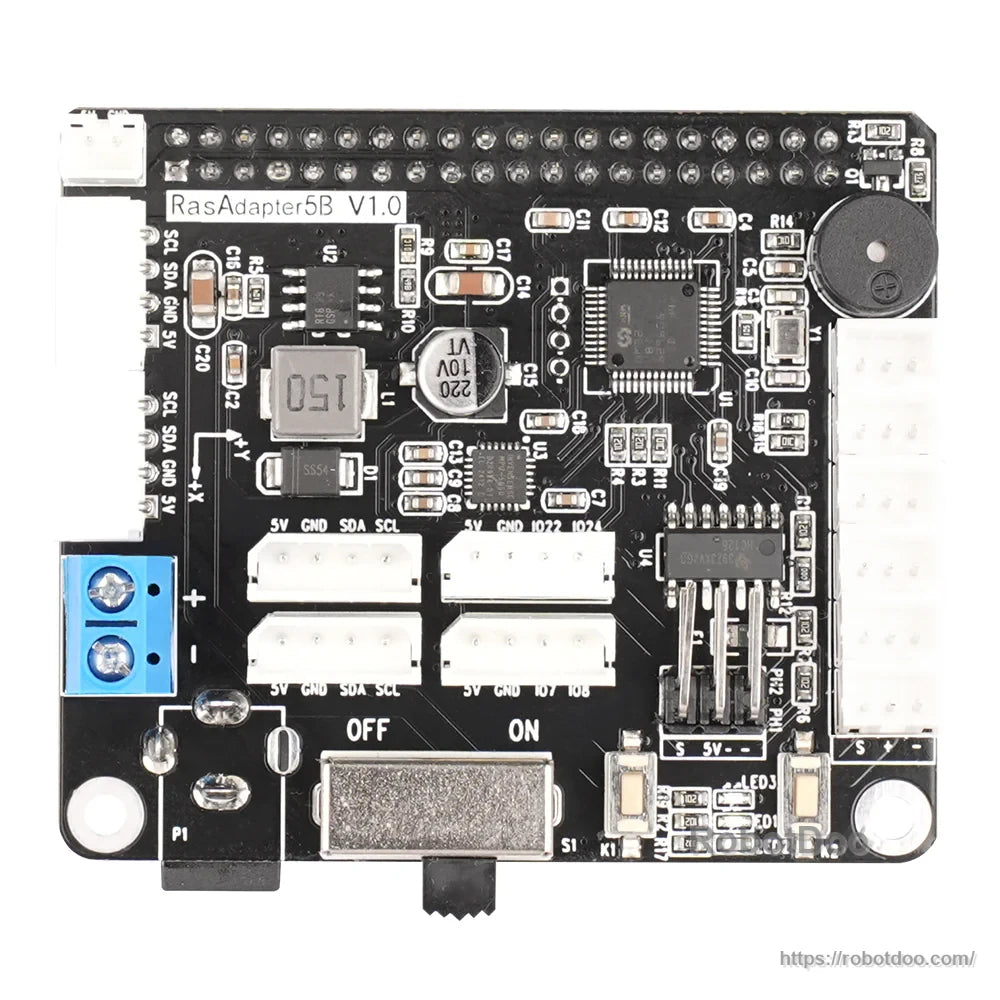
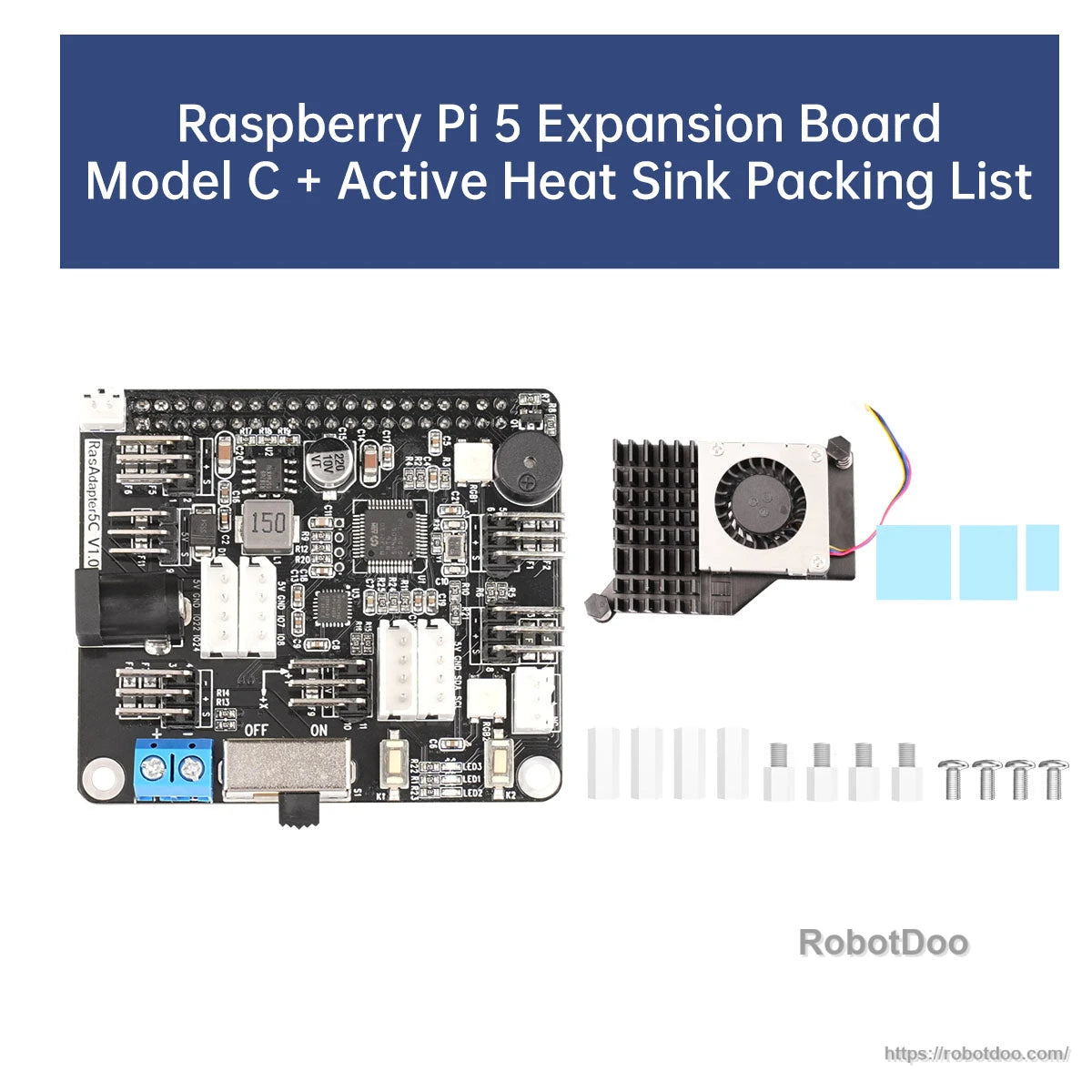
This Raspberry Pi 5 expansion board is a multi-functional servo motor driver and robot controller designed for Raspberry Pi 5 and Raspberry Pi 4B. It integrates a Cortex-M3 32-bit high-performance Arm chip and a Co-MCU to drive motors, servos, sensors, and other peripherals, using CRC (cyclic redundancy check) for communication. Multiple versions are available (Model A/B/C) to match different robot car and robot arm interface requirements.
Key Features
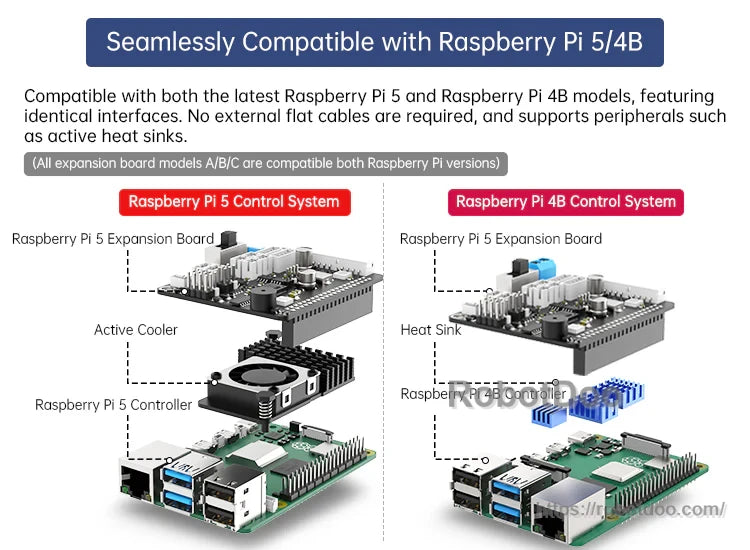
- Compatible platforms: Raspberry Pi 5 and Raspberry Pi 4B (all expansion board models A/B/C).
- Motor control: Drives 4 motors simultaneously and supports PID speed control (Model A motor version).
- Servo support: Onboard PWM servo ports and serial bus servo ports for robotic arm and humanoid development (Model A/B support both PWM and bus servos; Model C supports PWM servo only).
- IMU support: 6-axis IMU (MPU6050) providing 3-axis accelerometer + 3-axis gyroscope (supported on models B/C).
- Onboard interfaces (as labeled on board): IIC port, GPIO port, RGB lights (on applicable models), buzzer, built-in power switch, and dedicated function keys.
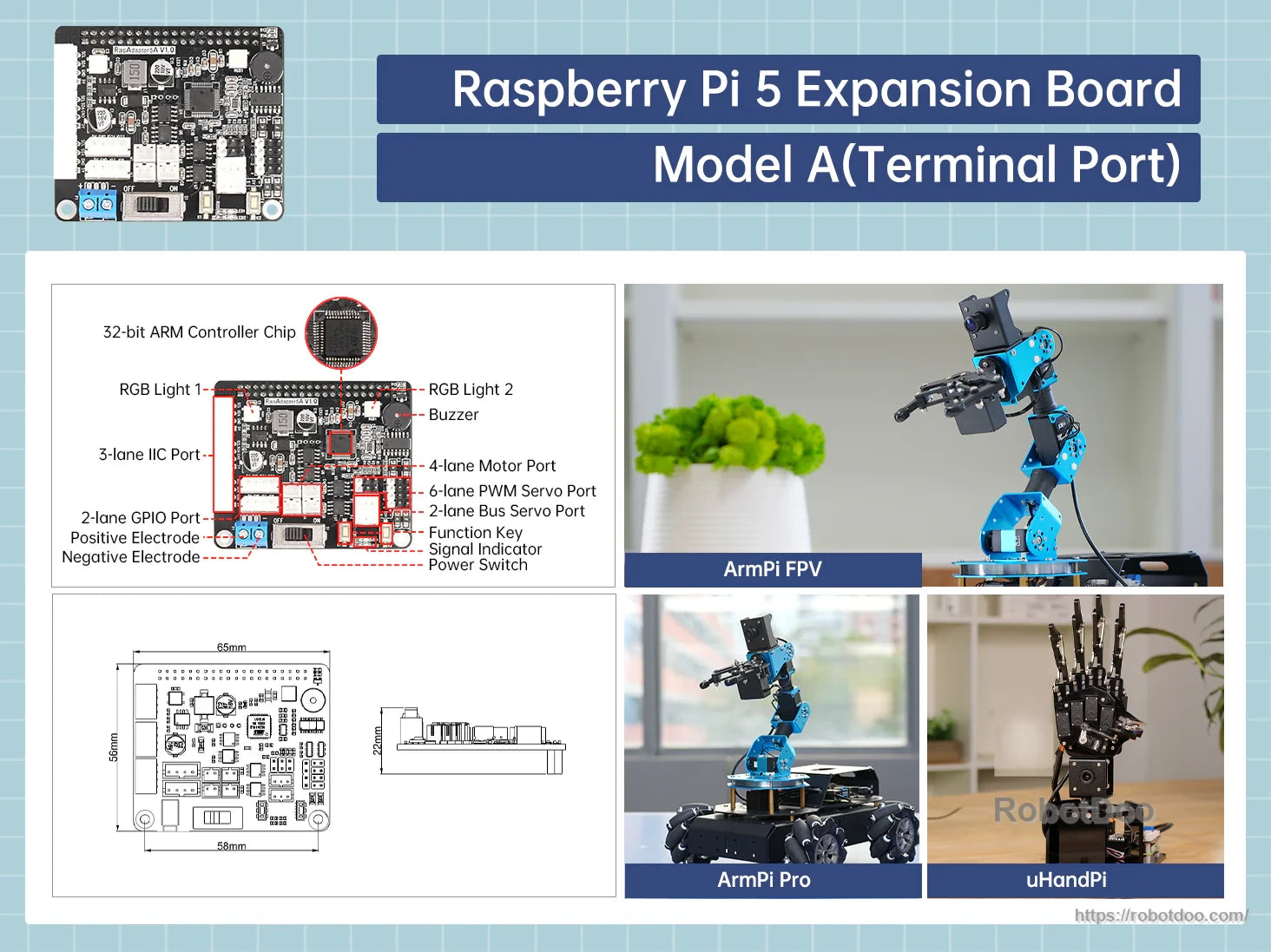
- Power input: 5-12V; power supply interface differs by model (DC port / terminal port / DC + terminal).
Specifications
| Parameter | Model A (DC Port) | Model A (Terminal Port) | Model B | Model C |
| Power supply interface | DC Port | Terminal Port | DC + Terminal Port | DC + Terminal Port |
| Processor | Cortex-M3 32-bit high-performance Arm chip | |||
| Co-MCU | Featuring 1 Co-MCU, it effectively distributes the workload from the Raspberry Pi, reducing resource utilization on the Raspberry Pi. | |||
| IMU attitude sensor | / | / | 3-axis accelerator / 3-axis gyroscope | |
| Power input | 5-12V | |||
| Motor control | 4-lane motor port | / | / | |
| Bus servo port | 2-lane bus servo port | 6-lane bus servo port | / | |
| PWM servo port | 6-lane PWM servo port | 2-lane PWM servo port | 11-lane PWM servo port | |
| IIC port | 3-lane IIC port | 4-lane IIC port | 2-lane IIC port | |
| GPIO port | 2-lane GPIO port | |||
| RGB lights | 2 RGB lights support user customization | / | 2 RGB lights support user customization | |
| Buzzer | Featuring 1 buzzer that support user customization | |||
| Programmable customization key | Featuring 2 keys that support user customization | |||
| Dimension | 65mm*65mm | |||
| Weight | 31g | |||
| Mounting hole spacing | 58mm | |||
| Board layer | Industrial-grade double-layer board | |||
Applications
- Robot car chassis and mobile robots: two-wheeled, differential four-wheeled, mecanum wheel, omnidirectional wheel, steering, and Ackermann robot cars
- Robotic arms (including 6-degree-of-freedom arms) and humanoid robot development using PWM and/or serial bus servos (model dependent)
- Example application projects by model: Model A (DC Port): ArmPi mini, TurboPi, MasterPi, GoGoPi; Model A (Terminal Port): ArmPi FPV, ArmPi Pro, uHandPi; Model B: TonyPi, TonyPi Pro, SpiderPi, SpiderPi Pro; Model C: PuppyPi, PuppyPi Pro
Video
Details
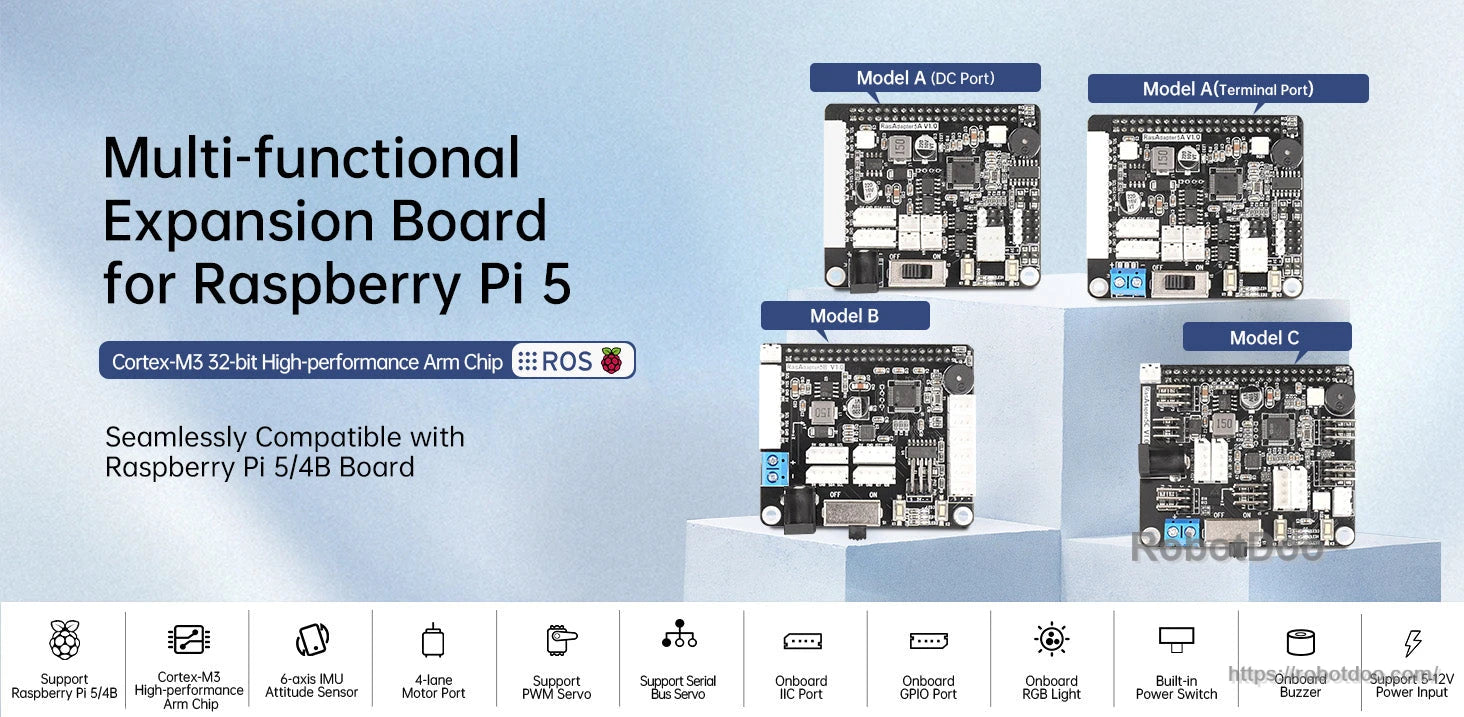
Choose the interface layout that matches your build—Model A (DC or terminal power), Model B, or Model C for different robot car and manipulator arm setups.
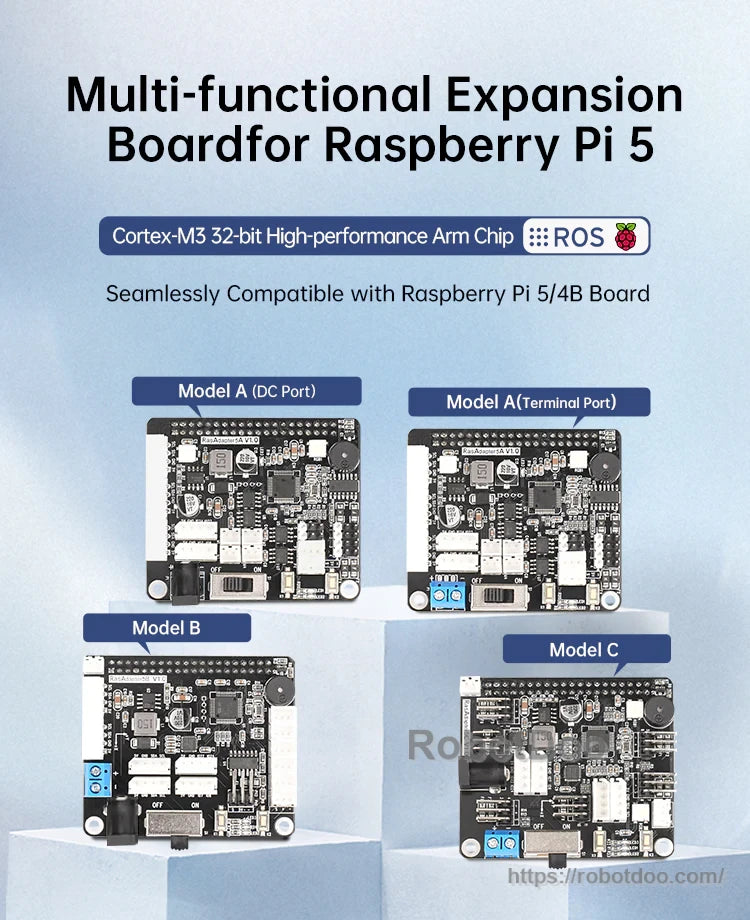
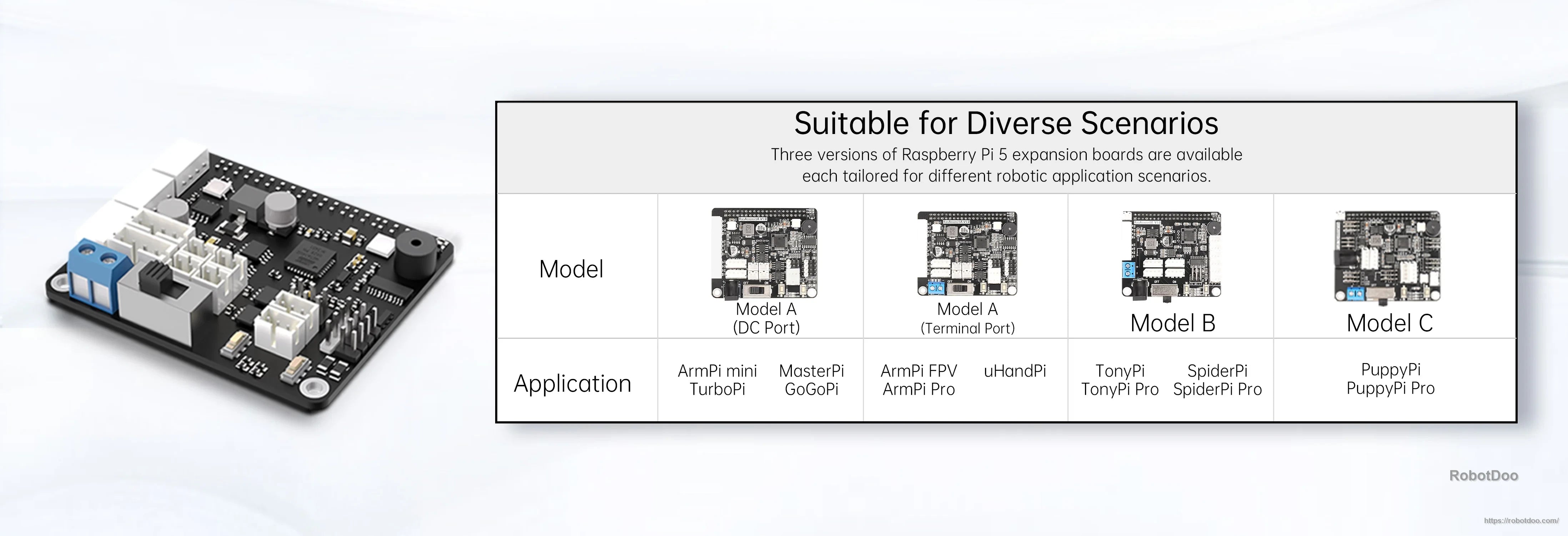
Multiple board versions are available so you can prioritize motor ports, bus servos, or PWM servo headers depending on the project.
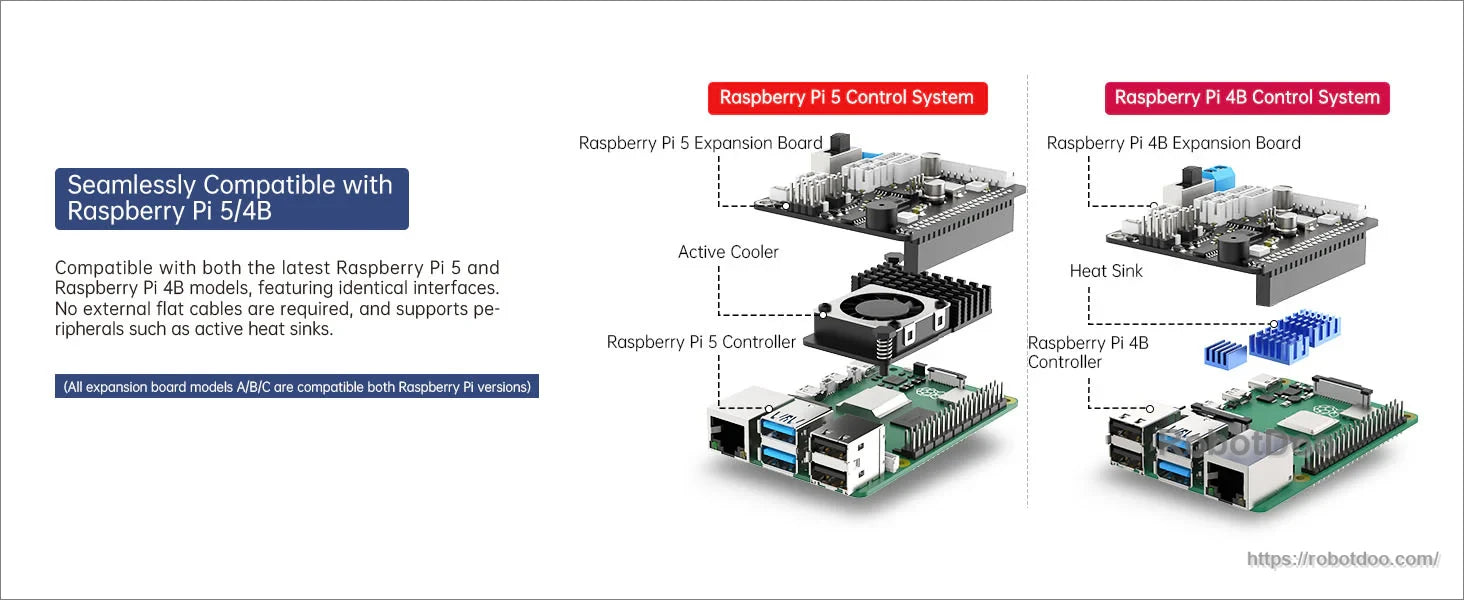
Designed to fit Raspberry Pi 5 and Raspberry Pi 4B while keeping room for common cooling solutions.
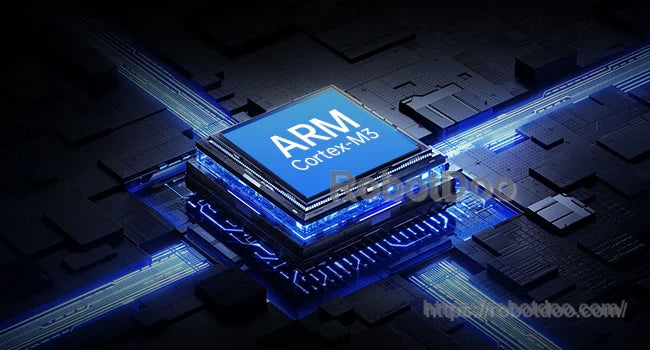
An onboard Cortex‑M3 controller and co‑MCU help offload real-time control tasks from the Raspberry Pi.
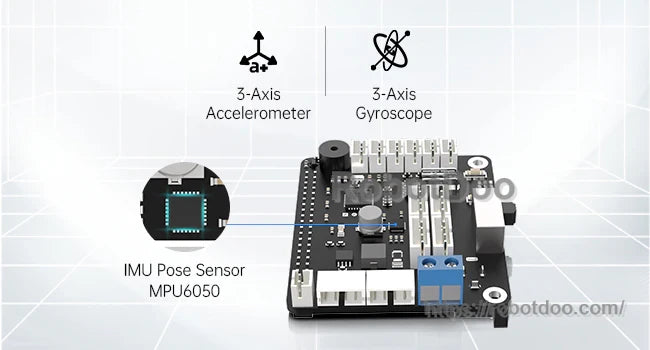
Models with the 6‑axis MPU6050 IMU add motion and attitude sensing for balancing and navigation experiments.
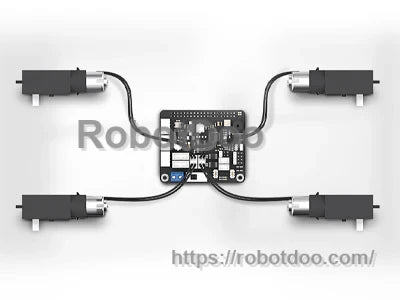
Motor outputs support common robot car drivetrains, including 4‑motor chassis configurations.
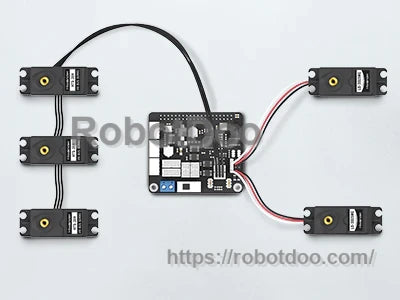
Connect multiple servos for robotic arm or pan/tilt projects using the onboard servo connectors.
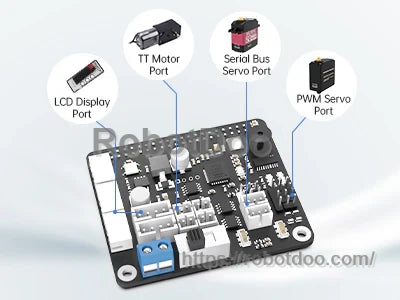
Clear on-board connectors make it easy to hook up DC motors, PWM servos, serial bus servos, and optional displays.
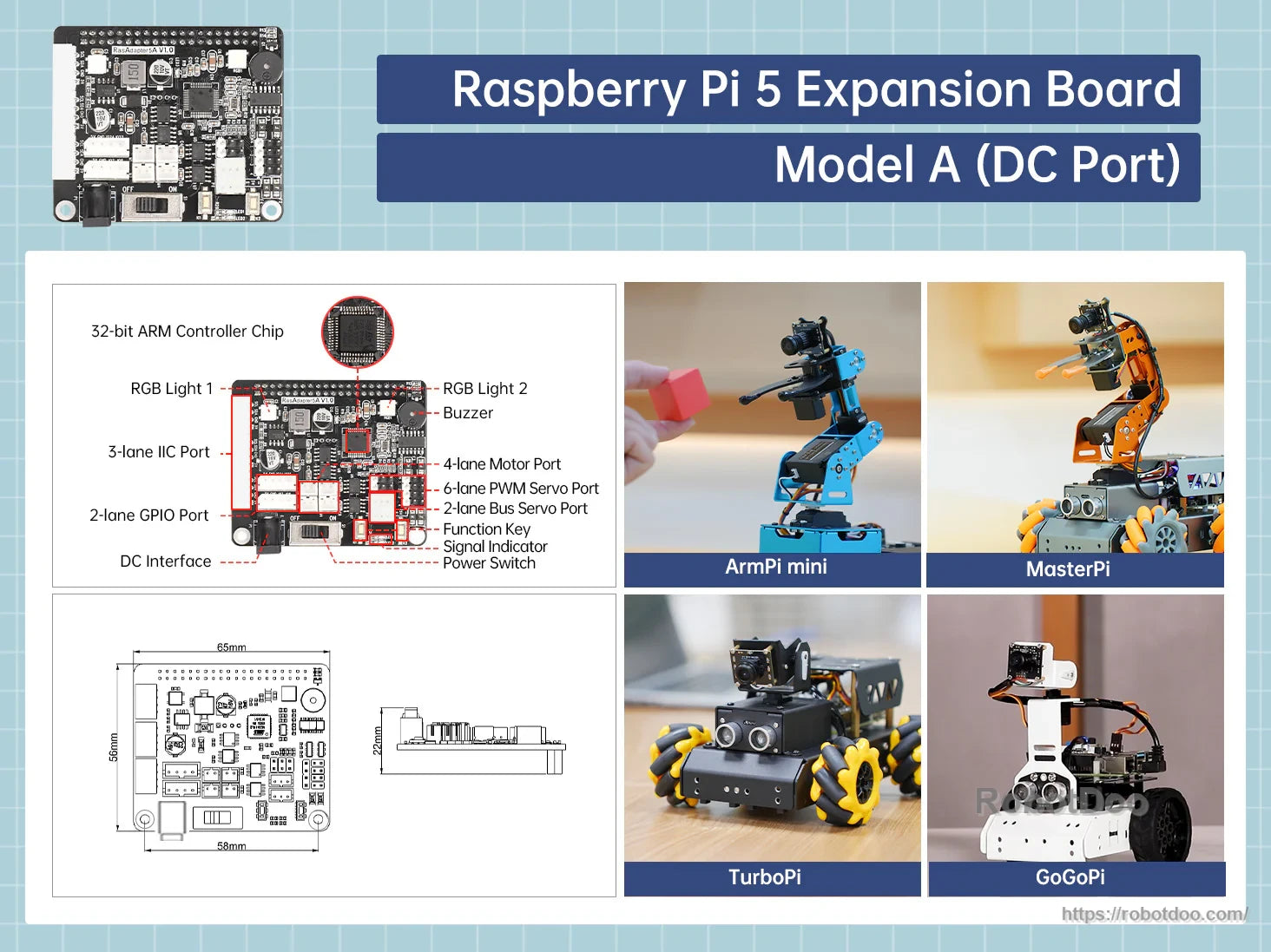
Model A focuses on robot car control with motor ports plus both PWM and serial bus servo connections.
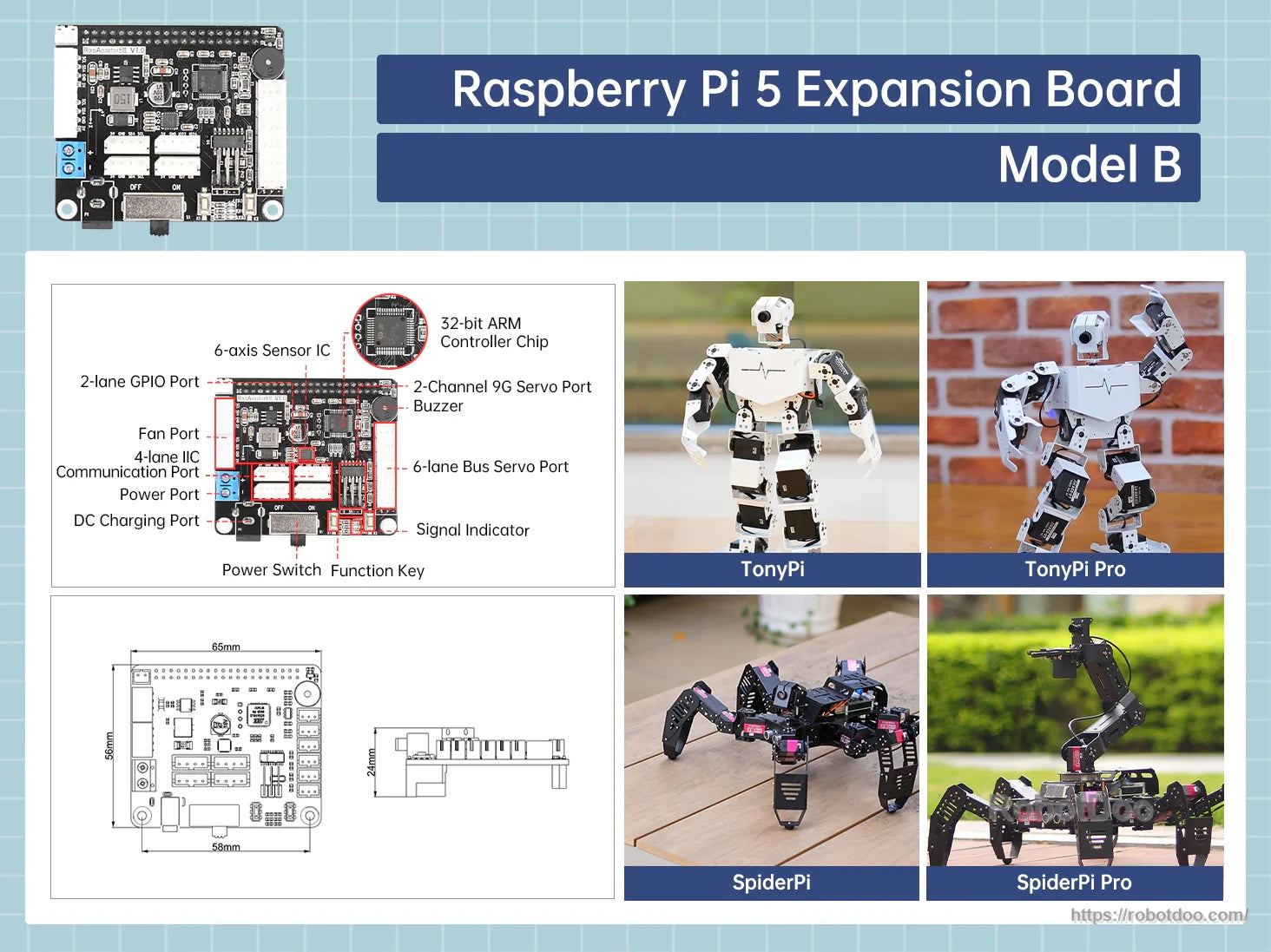
Model B adds IMU support and expanded serial bus servo connectivity for humanoid and multi-servo robots.
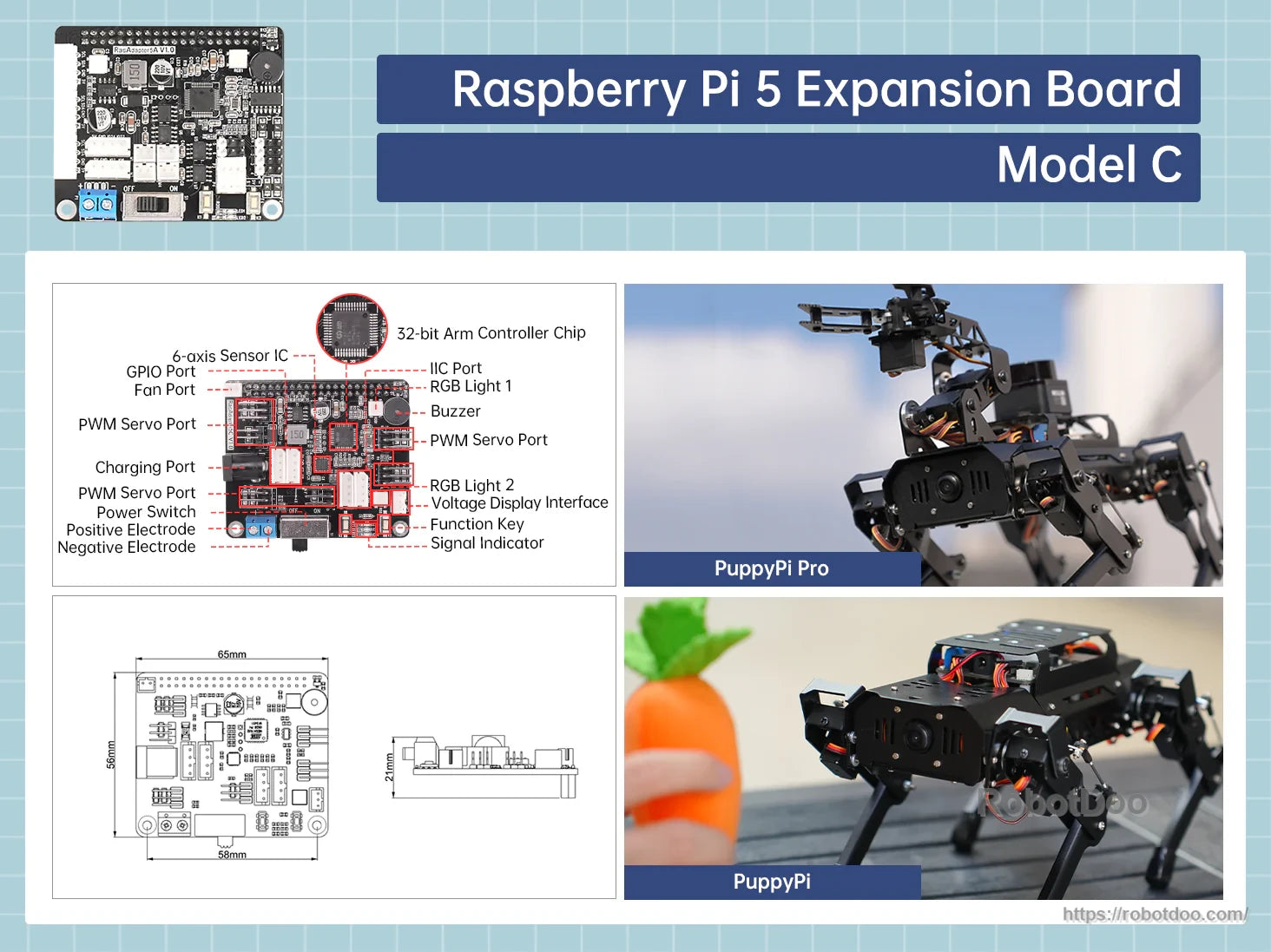
Model C emphasizes high-count PWM servo outputs for servo-heavy builds that don’t require bus servos.
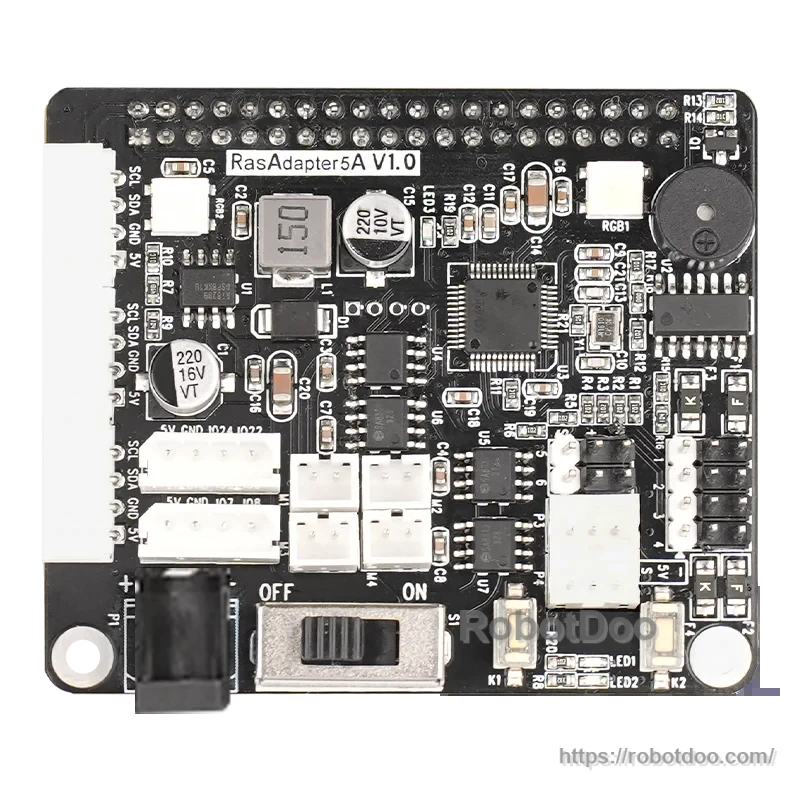
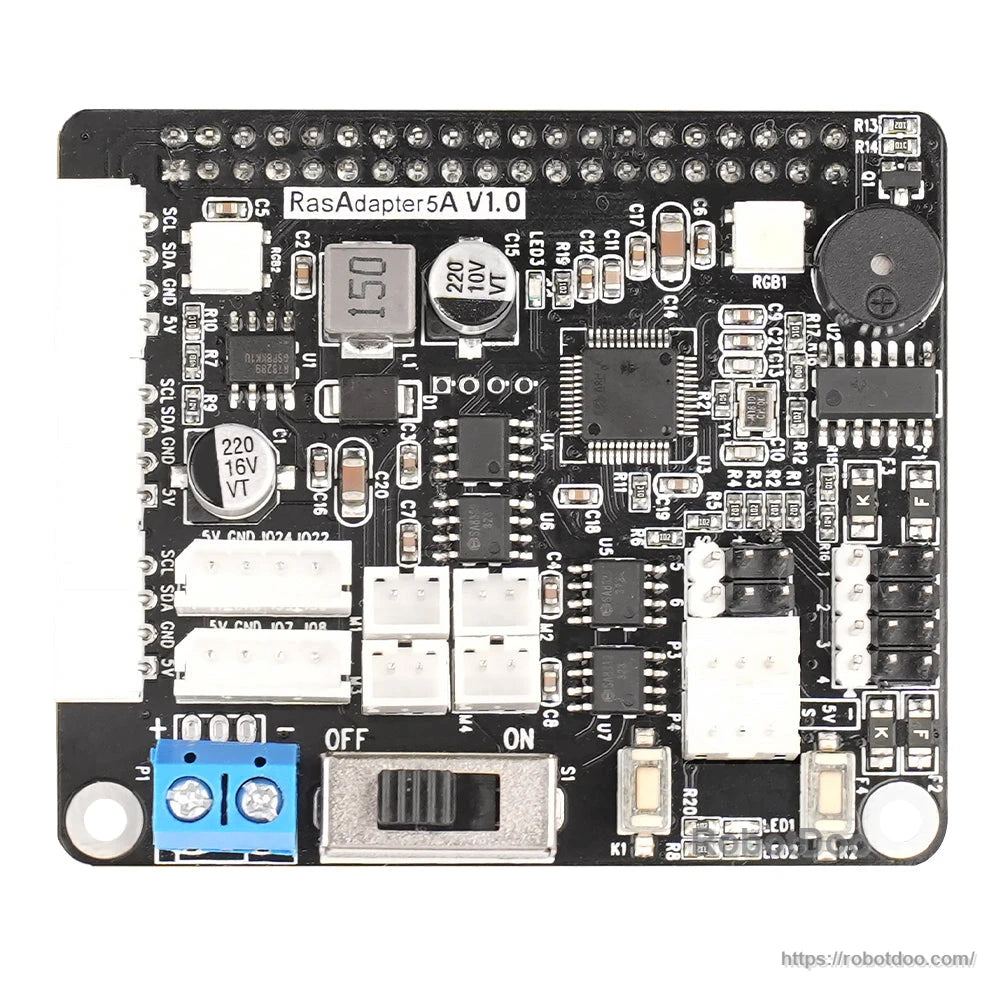
Board-level details include an onboard power switch and clearly labeled headers for fast wiring and maintenance.