Overview
The Hiwonder SpiderPi Pro Hexapod Robot is a Raspberry Pi-based robotics platform with a 5DOF AI vision robotic arm, 18-DOF walking structure, camera, ultrasonic sensor, IMU, and LED dot matrix display. It supports Python programming and OpenCV-based learning projects including color recognition, target tracking, visual line following, shape recognition, and obstacle avoidance.
The robot uses high-voltage serial bus servos and supports control through the WonderPi app for Android and iOS, graphical PC software, WiFi, and Ethernet.
Key Features
- Six-legged design with 3DOF per leg for an 18-DOF walking mechanism.
- 5DOF robotic arm with a 120° wide-angle, 480P camera and manual focus support.
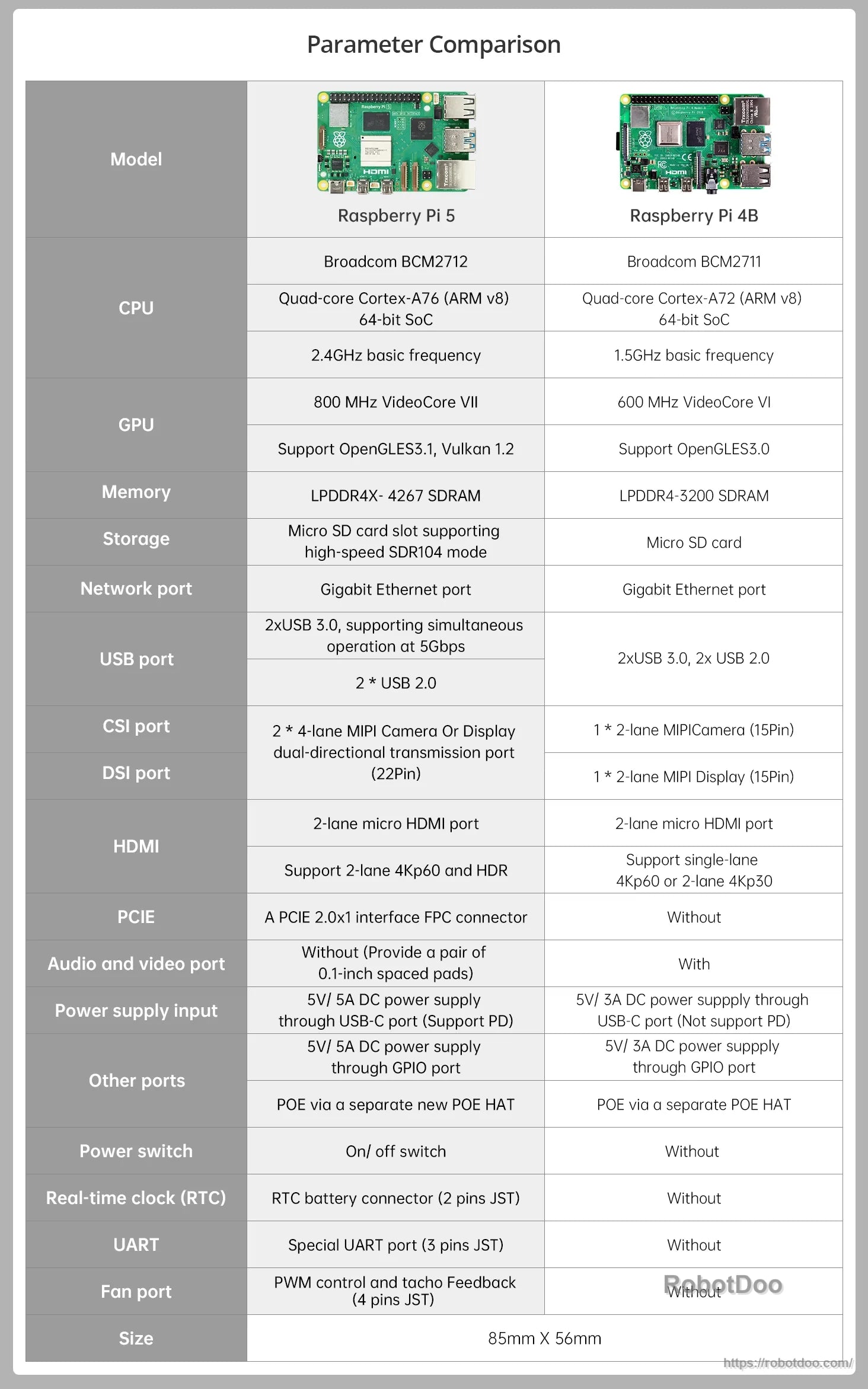
- Raspberry Pi 4B/5 hardware platform with a Raspberry Pi expansion board.
- Built-in IMU for real-time body-attitude sensing and travel-direction detection.
- Ultrasonic ranging sensor with illuminated display for obstacle-avoidance projects.
- OpenCV learning functions for color recognition, target tracking, visual line following, and shape recognition.
- Supports object sorting and transfer demonstrations using inverse kinematics.
- WonderPi mobile app supports Android and iOS; graphical PC software enables servo adjustment and action-group editing without coding.
- High-voltage serial bus servos with metal gears, including LX-224HV and HTS-20H models.
- Course materials are provided for motion control, machine vision, OpenCV, and Python projects.
Specifications
| Robot weight | About 3.1 kg |
| Material | Metal and fiberglass panels |
| Leg configuration | 3DOF per leg x 6 |
| Robotic arm | 5DOF |
| Camera | 480P, 120° wide angle |
| Ultrasonic ranging distance | 2-400 cm |
| Controller hardware | Raspberry Pi 4B/5 and Raspberry Pi expansion board |
| Software | WonderPi app and PC software |
| Communication | WiFi, Ethernet |
| Servo models | LX-224HV, HTS-20H |
| Servo torque | 20 kg.cm at 11.1V |
| Battery | 11.1V 3500mAh 5C LiPo battery |
| Continuous working time | 40 min |
| Package size | 40 x 40 x 17 cm |
| Package weight | About 4.8 kg |
Servo Parameters
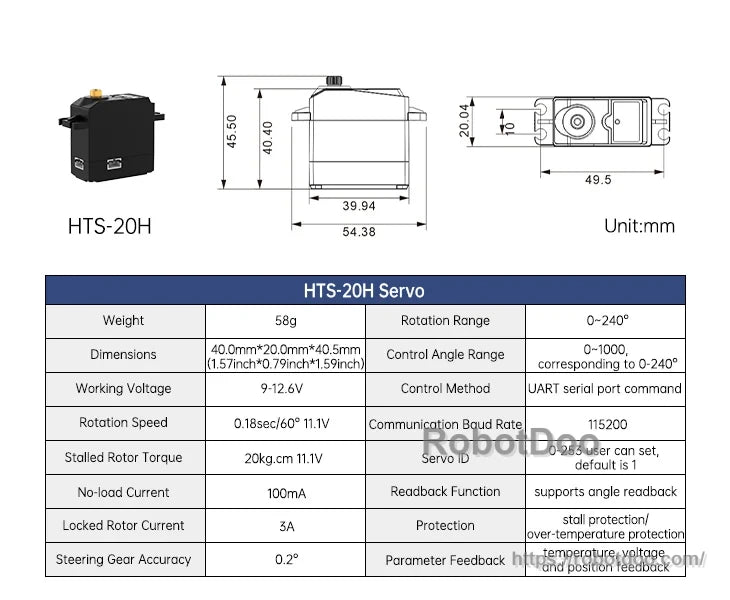
| HTS-20H weight | 58 g |
| HTS-20H dimensions | 40 x 20 x 40.5 mm |
| HTS-20H working voltage | 9-12.6V |
| HTS-20H rotation range | 0-240° |
| HTS-20H rotation speed | 0.18 sec/60° at 11.1V |
| HTS-20H communication baud rate | 115200 |
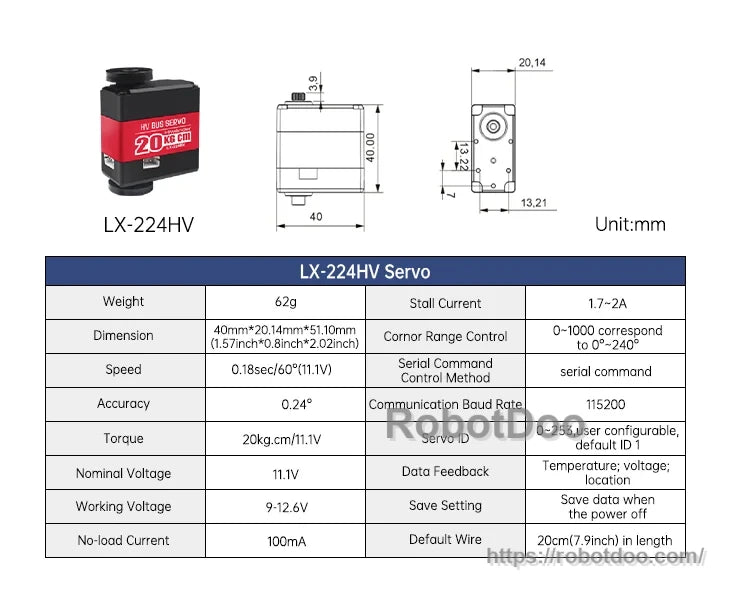
| LX-224HV weight | 62 g |
| LX-224HV dimensions | 40 x 20.14 x 51.10 mm |
| LX-224HV working voltage | 9-12.6V |
| LX-224HV rotation speed | 0.18 sec/60° at 11.1V |
| LX-224HV communication baud rate | 115200 |
Applications
Suitable for Raspberry Pi programming, hexapod motion control, robot kinematics, computer vision, OpenCV, AI vision experiments, and robotics education. For product assistance, contact RobotDoo.
Details
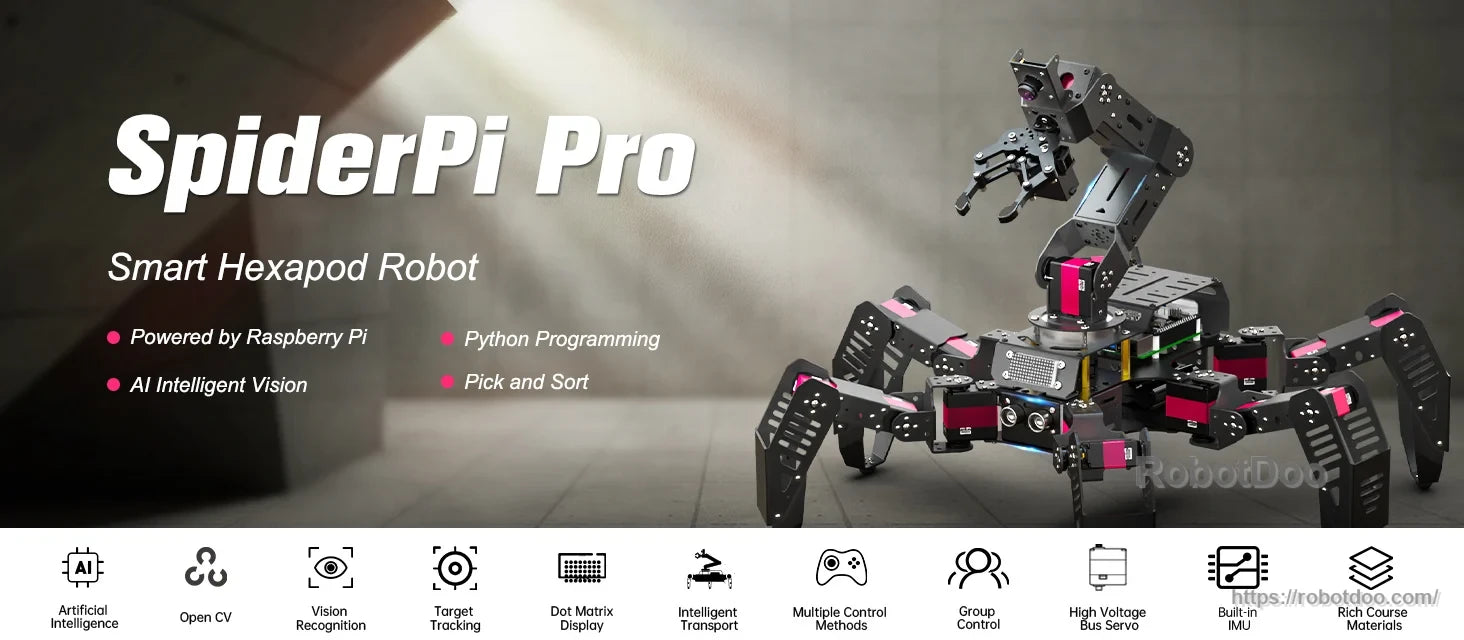
SpiderPi Pro combines an 18-DOF hexapod chassis with a 5DOF vision robotic arm for hands-on AI robotics projects.
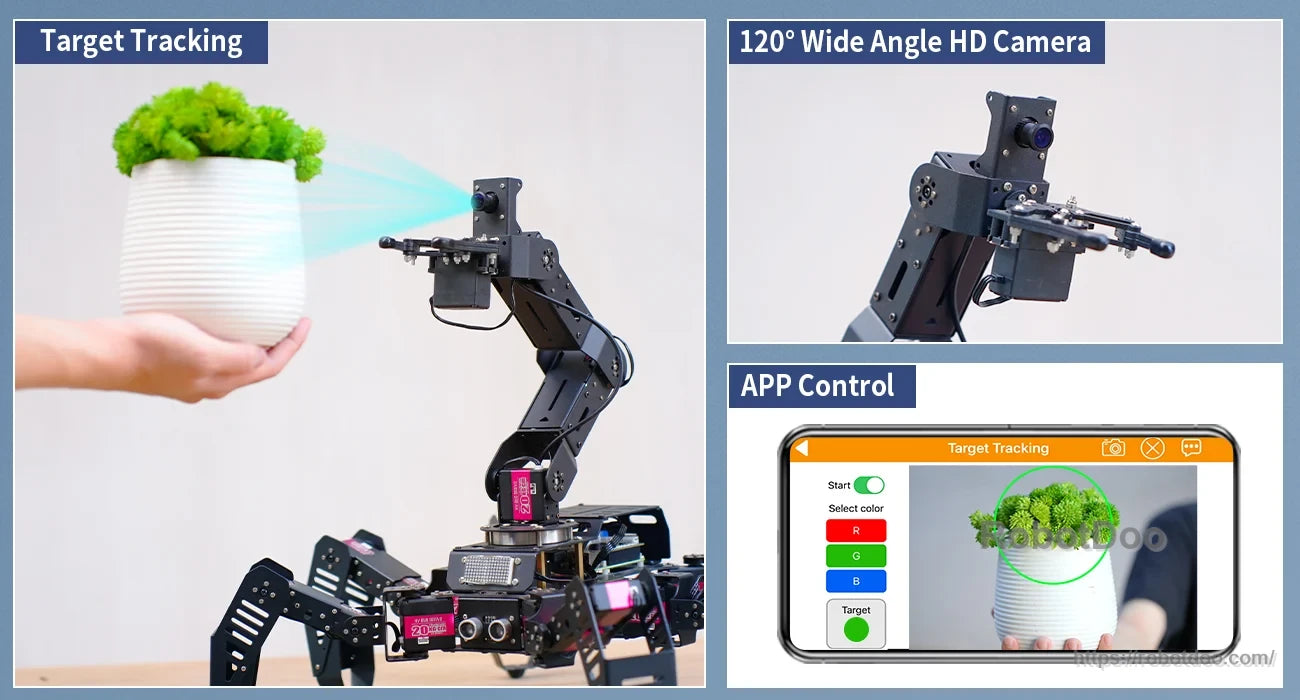
Target-tracking projects pair the 120° wide-angle camera with live app-based control.
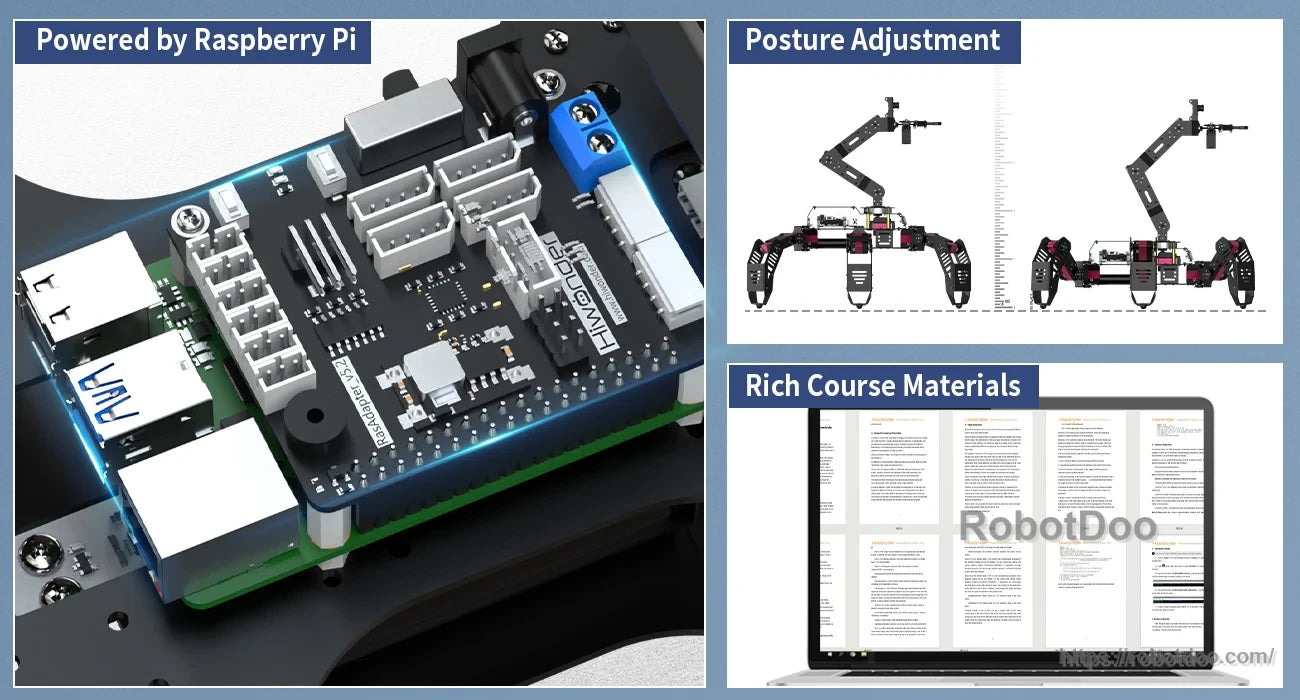
The Raspberry Pi platform supports posture adjustment and guided learning materials for building robotics skills.
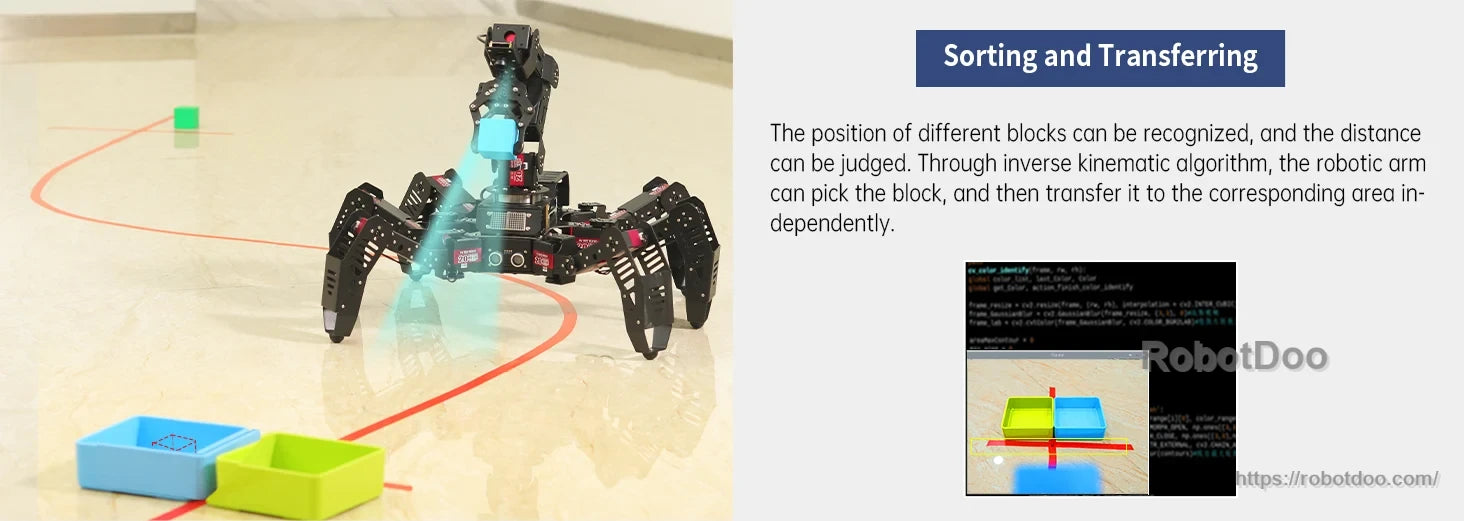
Object sorting and transfer exercises demonstrate vision recognition with inverse-kinematics arm movement.
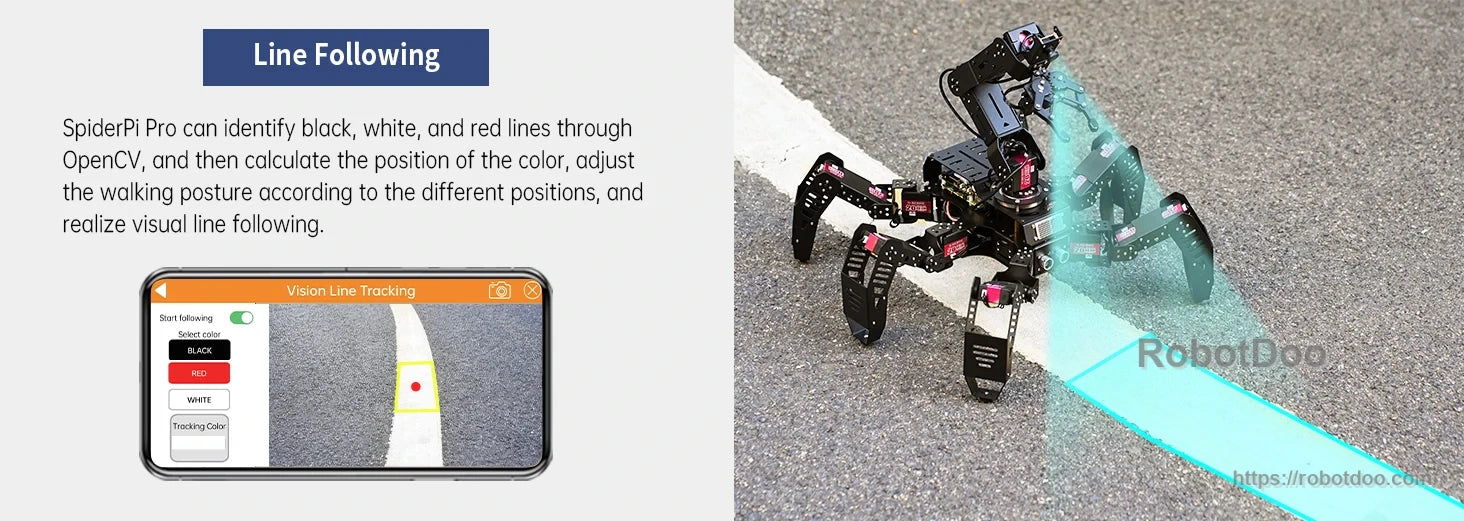
OpenCV visual line following enables the robot to detect colored paths and adjust its walking direction.
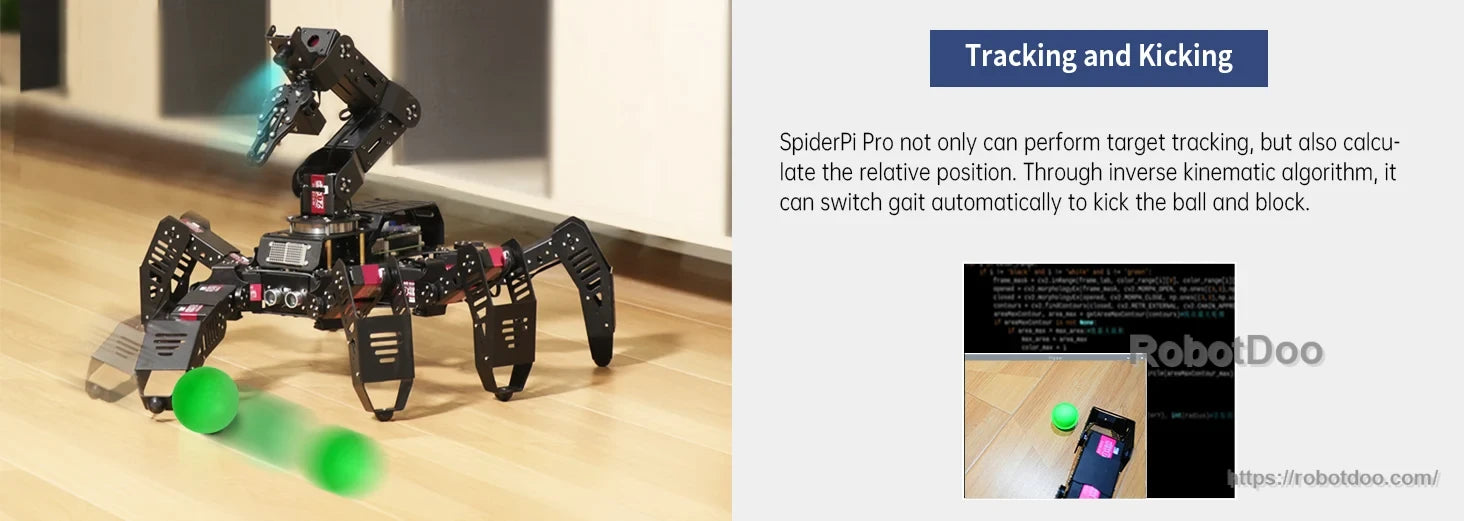
Color-based tracking can trigger interactive actions such as kicking a detected ball.
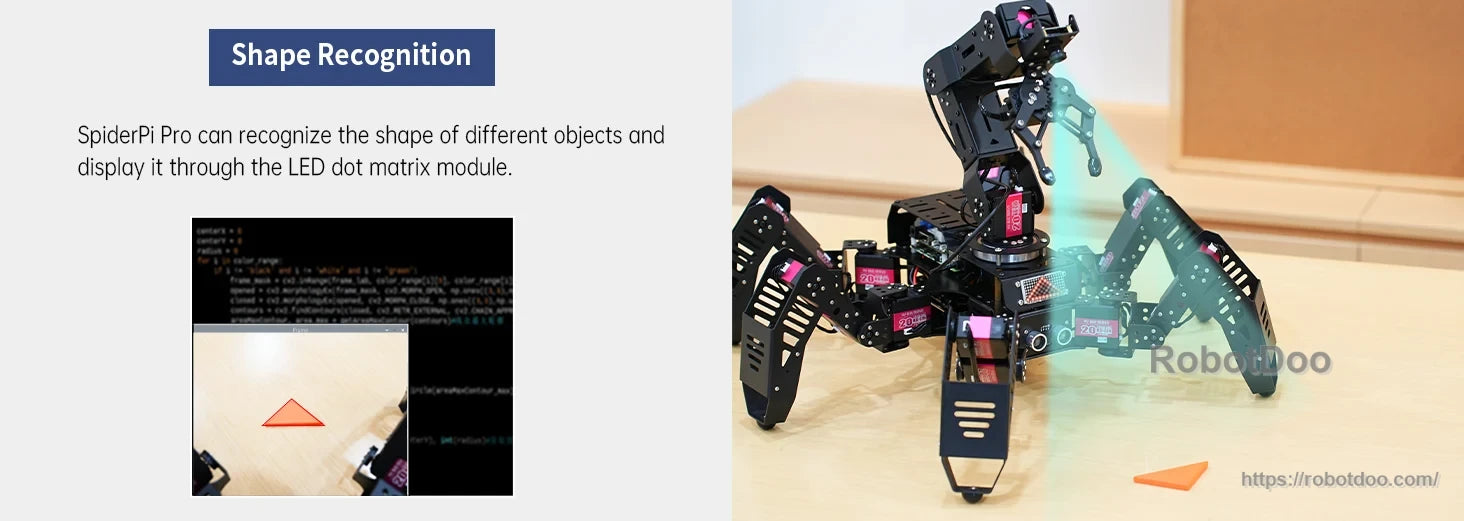
Shape-recognition projects identify object outlines and return results through the onboard display.
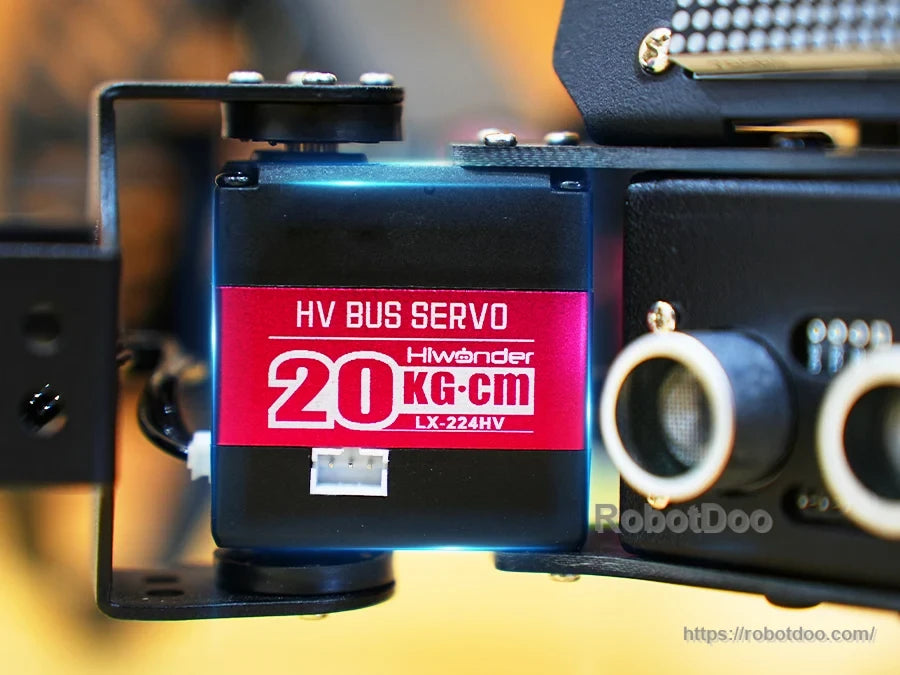
High-voltage serial bus servos provide the controlled movement needed for the legs and robotic arm.
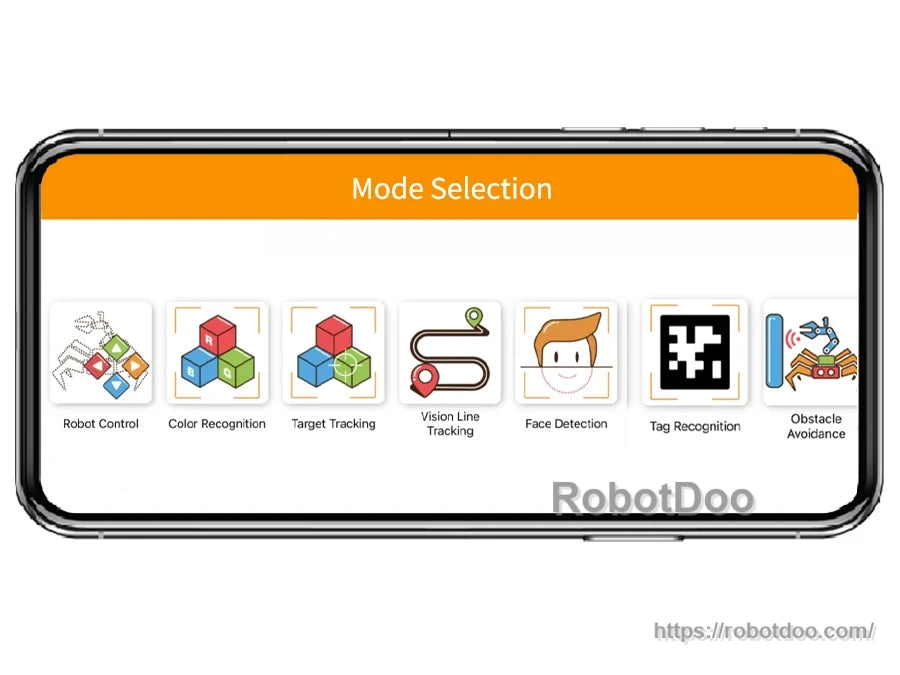
The WonderPi app provides accessible modes for robot control, color recognition, tracking, and obstacle avoidance.
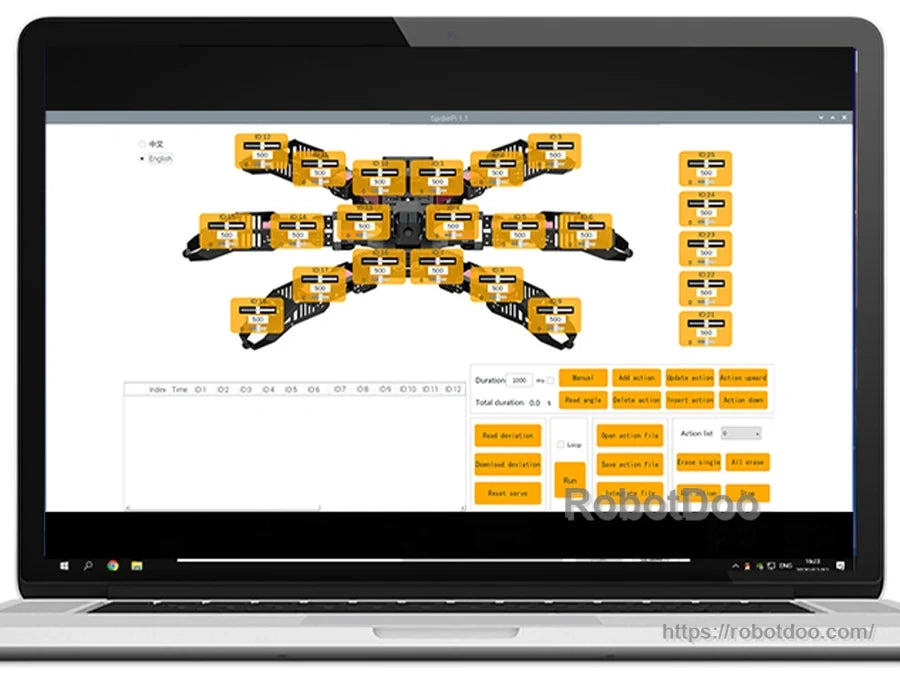
Graphical PC software lets users adjust servo positions and create action groups without coding.
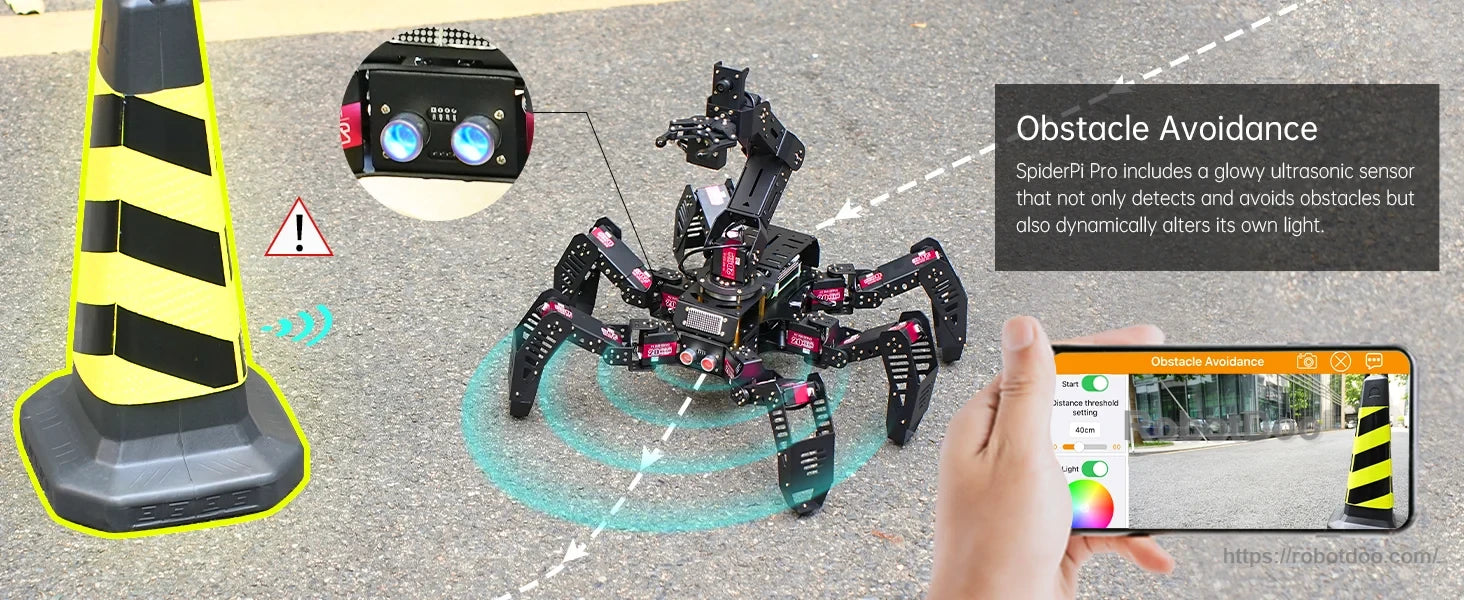
Ultrasonic ranging supports obstacle-avoidance projects with distance feedback in the app.
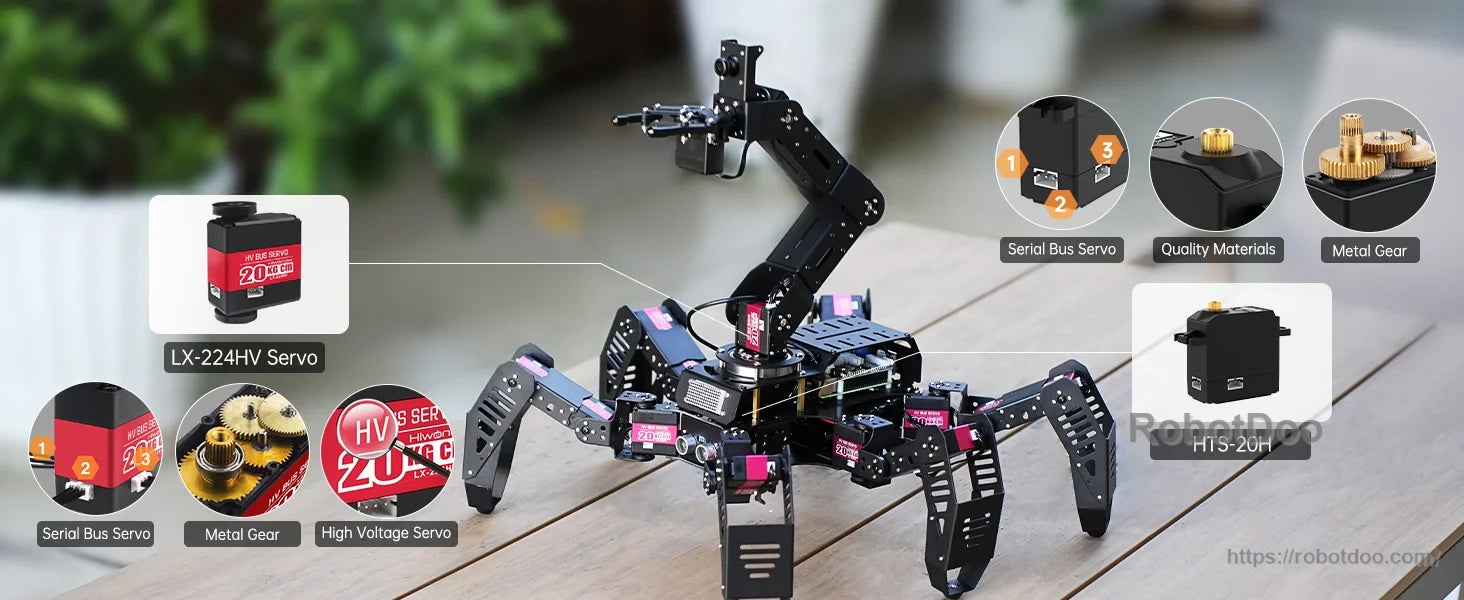
Metal-geared servos, durable connectors, and a high-voltage power system support demanding motion tasks.
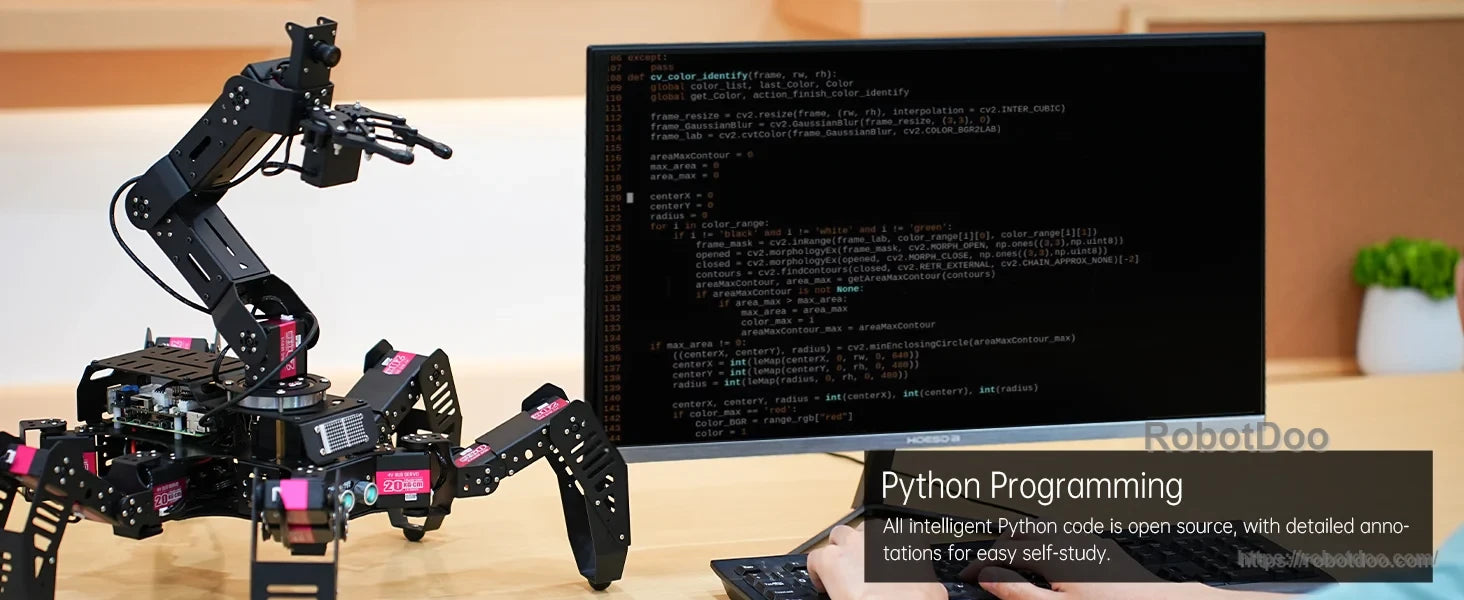
Python programming resources help makers develop custom motion control and computer-vision applications.
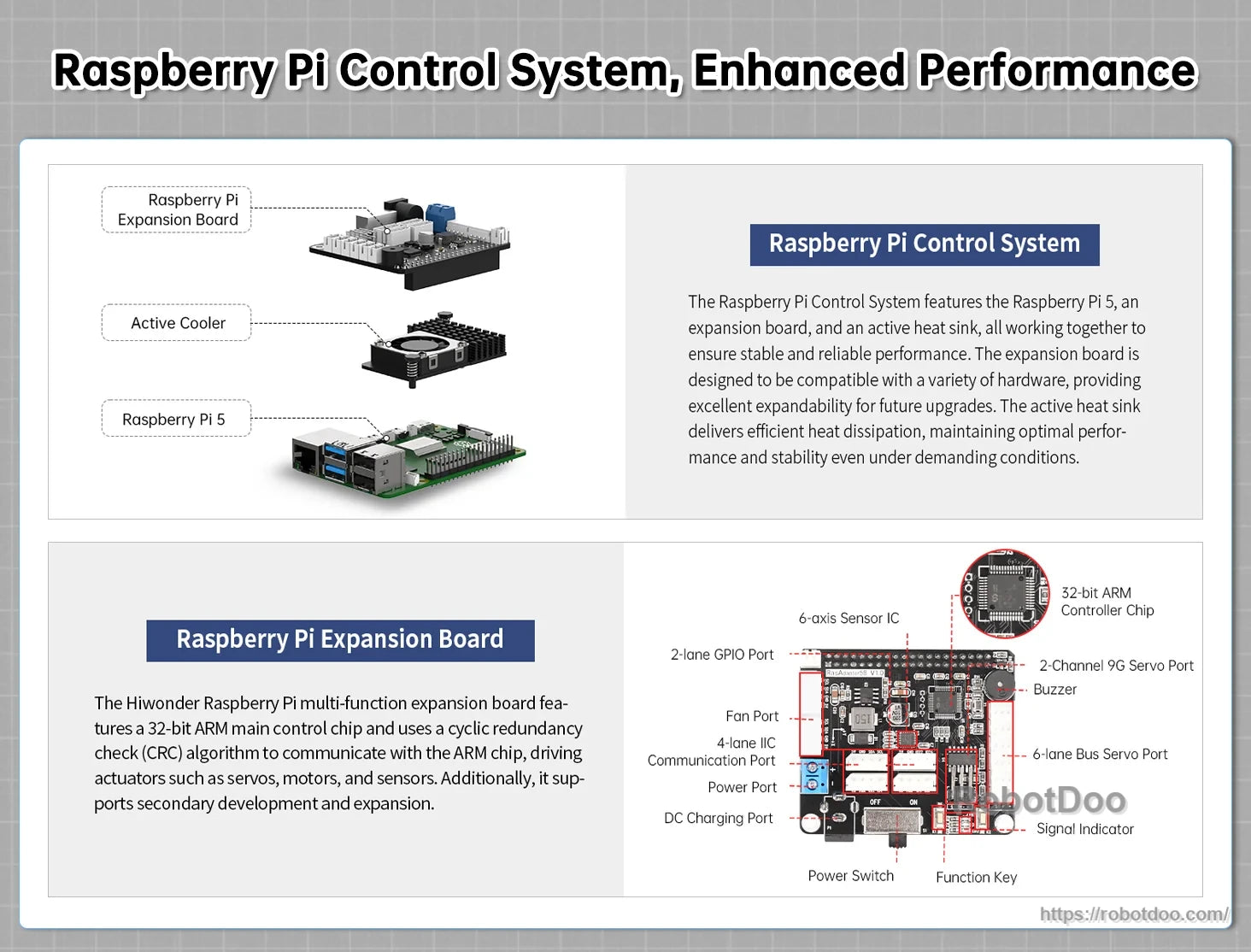
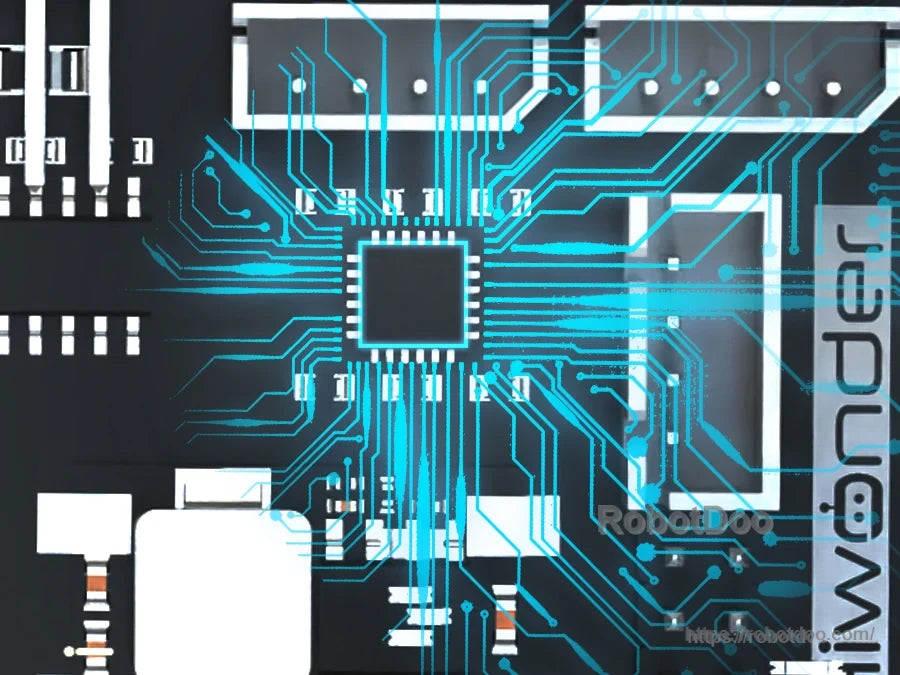
The controller system is built around a Raspberry Pi 4B or Raspberry Pi 5 with a dedicated expansion board.
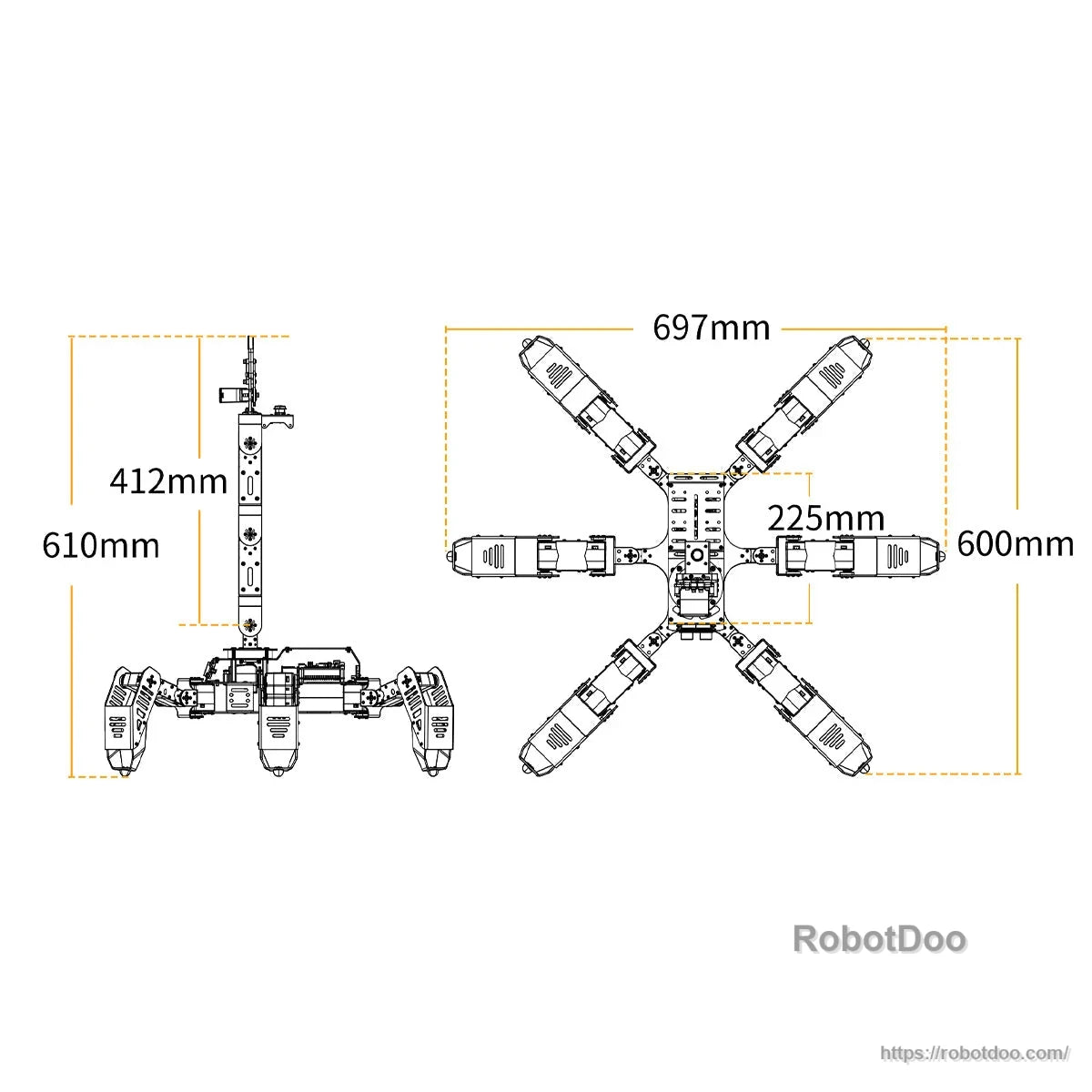
The SpiderPi Pro hexapod robot measures approximately 697 mm across, 610 mm long, and 600 mm high.
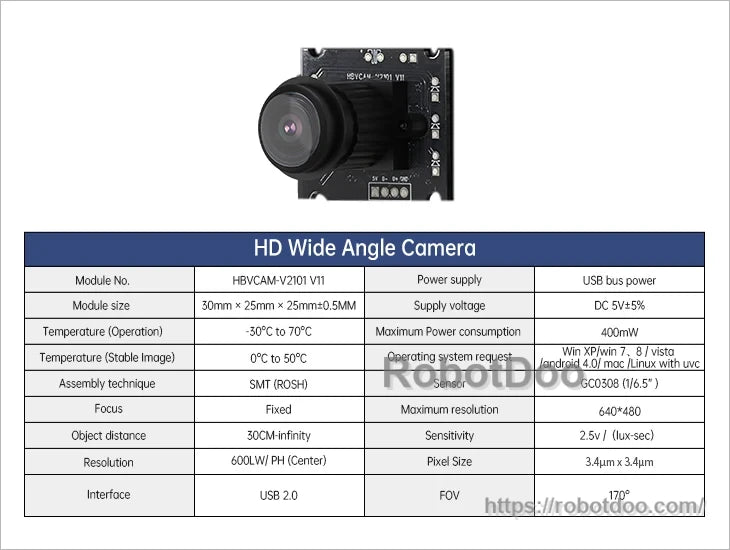
The HD wide-angle camera uses a USB 2.0 connection and provides a 170° field of view for robot vision projects.
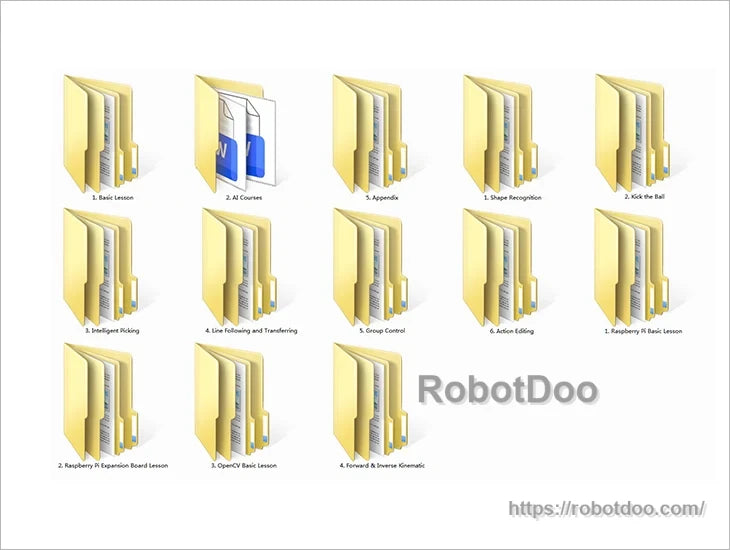
SpiderPi Pro learning materials are organized into AI, vision, OpenCV, Raspberry Pi, and forward and inverse kinematics lessons.
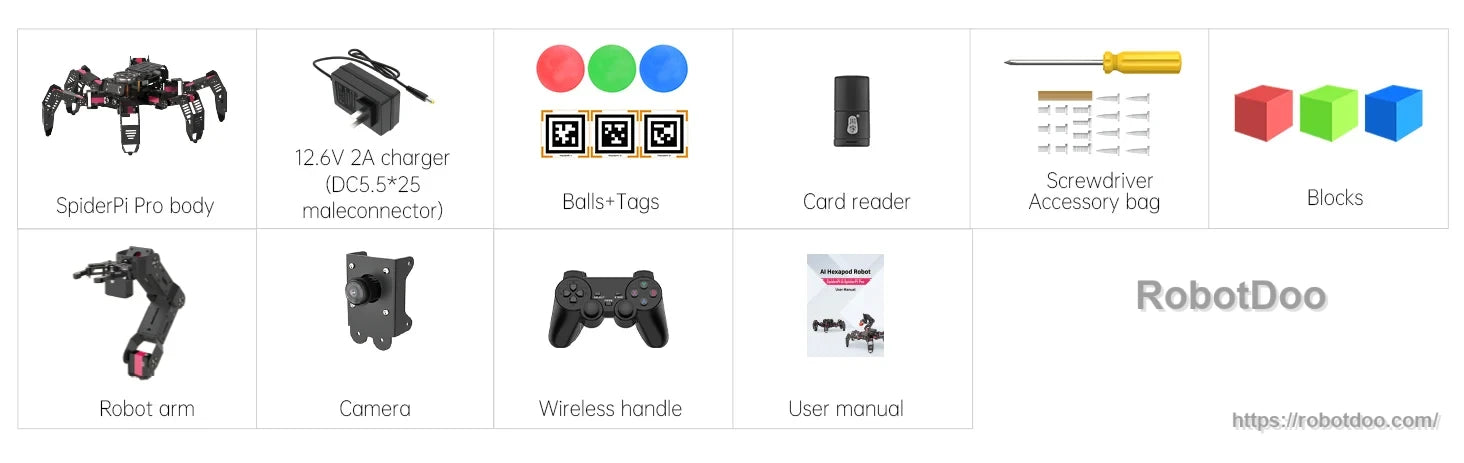
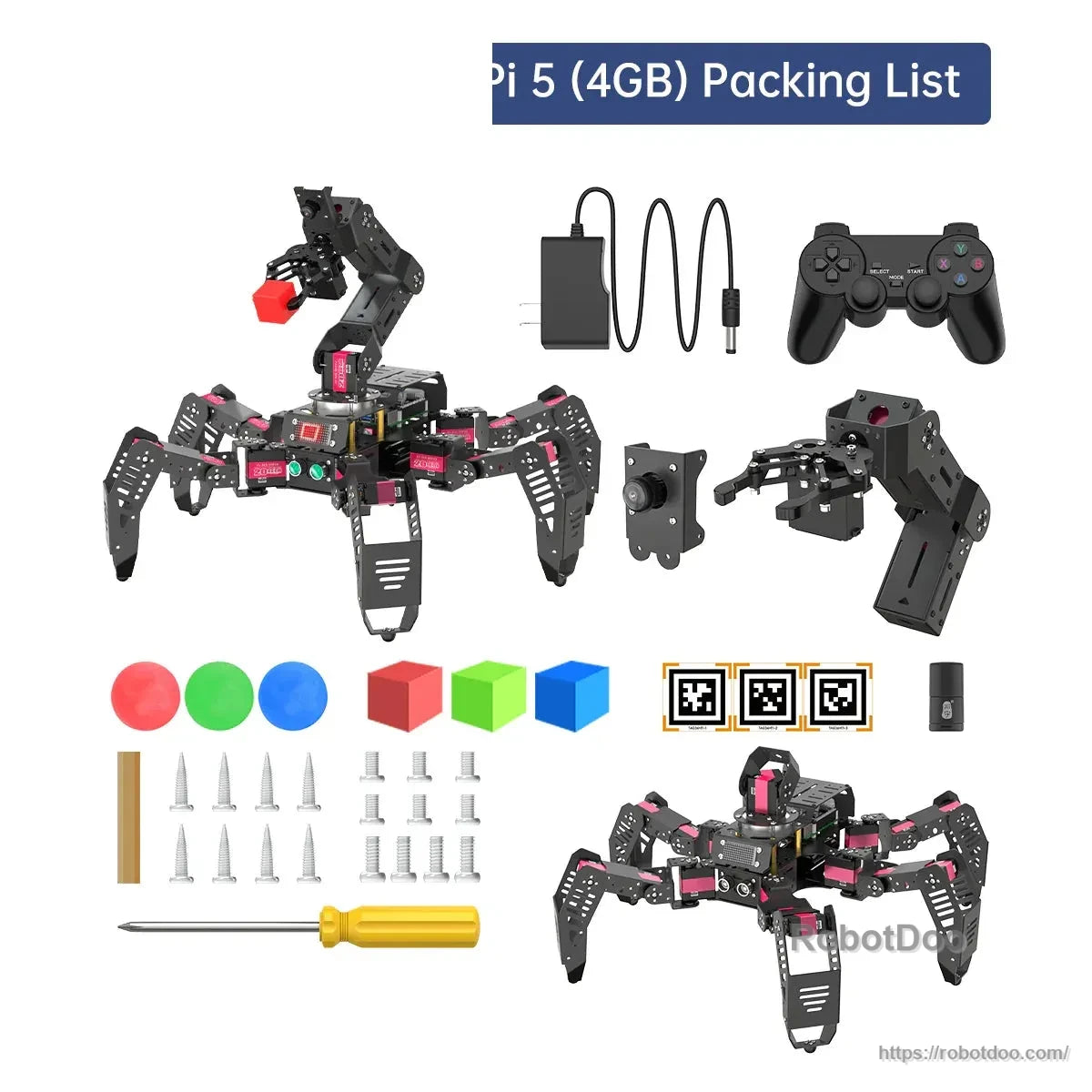
The SpiderPi Pro kit includes the hexapod robot body, robot arm, camera, wireless handle, card reader, accessory bag, blocks, and user manual.