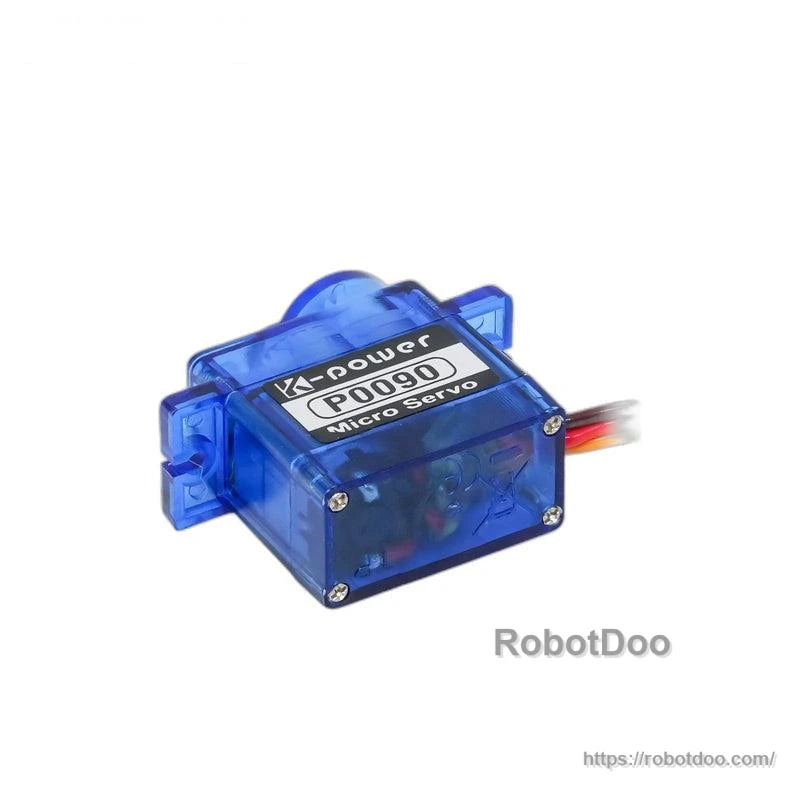
Overview
Kpower P0090 is a micro servo motor designed for compact, lightweight actuation in robotics and RC model mechanisms. It uses a plastic gear train and supports multiple control interfaces (PWM, TTL, RS-485) for integration with common controllers.
Key Features
- Plastic gear micro servo (label: “P0090 Micro Servo”)
- Low-noise plastic gear (60 dB)
- Lightweight body design
- Standard PWM servo signal support
- Servo lead pinout: Brown = GND, Red = Vcc, Orange = Signal
Technical Specifications
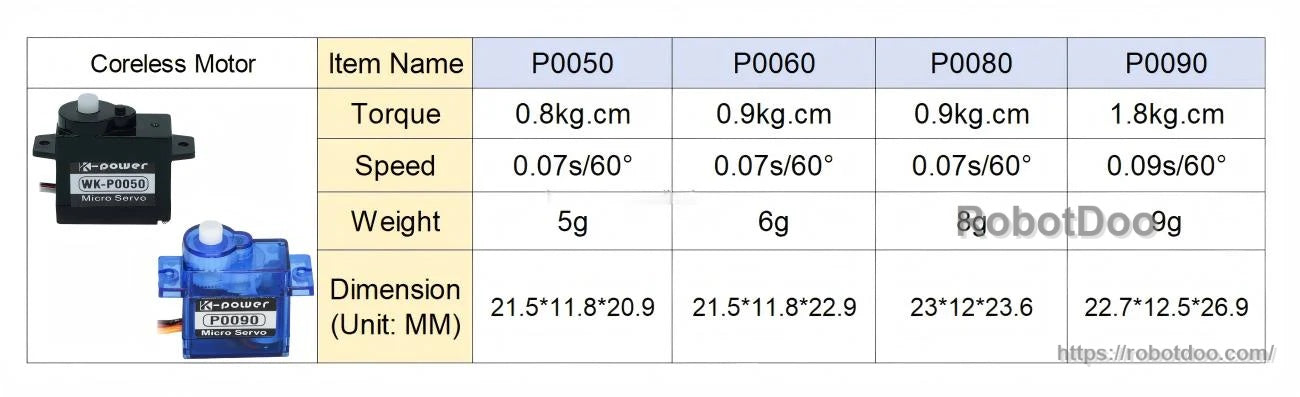
| Stall Torque | 1.8 kg.cm |
| Torque (at 4.8 V) | 1.6 kg.cm |
| Torque (at 6.0 V) | 1.8 kg.cm |
| Rated Torque | 0.5 kg |
| No-load Speed | 0.09 s/60° |
| Speed (at 4.8 V) | 0.10 sec/60° |
| Speed (at 6.0 V) | 0.09 sec/60° |
| Weight | 9 g |
| Dimension | 22.7 × 12.5 × 26.9 mm |
| Travel Angle Range | 120° (Customizable) |
| Operating Voltage | 4.8 ~ 8.4 V |
| Horn Gear Spline | 21T φ4.8 mm |
| Gear Material | POM |
| Motor | DC Brushed |
| Protocol | PWM | TTL | RS-485 |
| No-load Current | 1000 mA |
| Position Sensor | Potentiometer |
| Case Material | Plastic |
| Ball Bearing | 2BB |
| Working Frequency | 50 ~ 333 Hz |
| Operating Temperature | -10 ~ 50°C |
| IP Rating | IP42 |
| Wire Length | 275 mm |
Applications
- Humanoid robots
- Robotic arms
- Exoskeletons
- Quadruped robots
- AGV vehicles
- ARU robots
- Micro multi-legged bionic robot, STEAM education, robot toys
- R/C aircraft models (including fixed-wing)
- UAV drone mechanisms
- Micro robots
- Intelligent medical devices
Manuals
Details
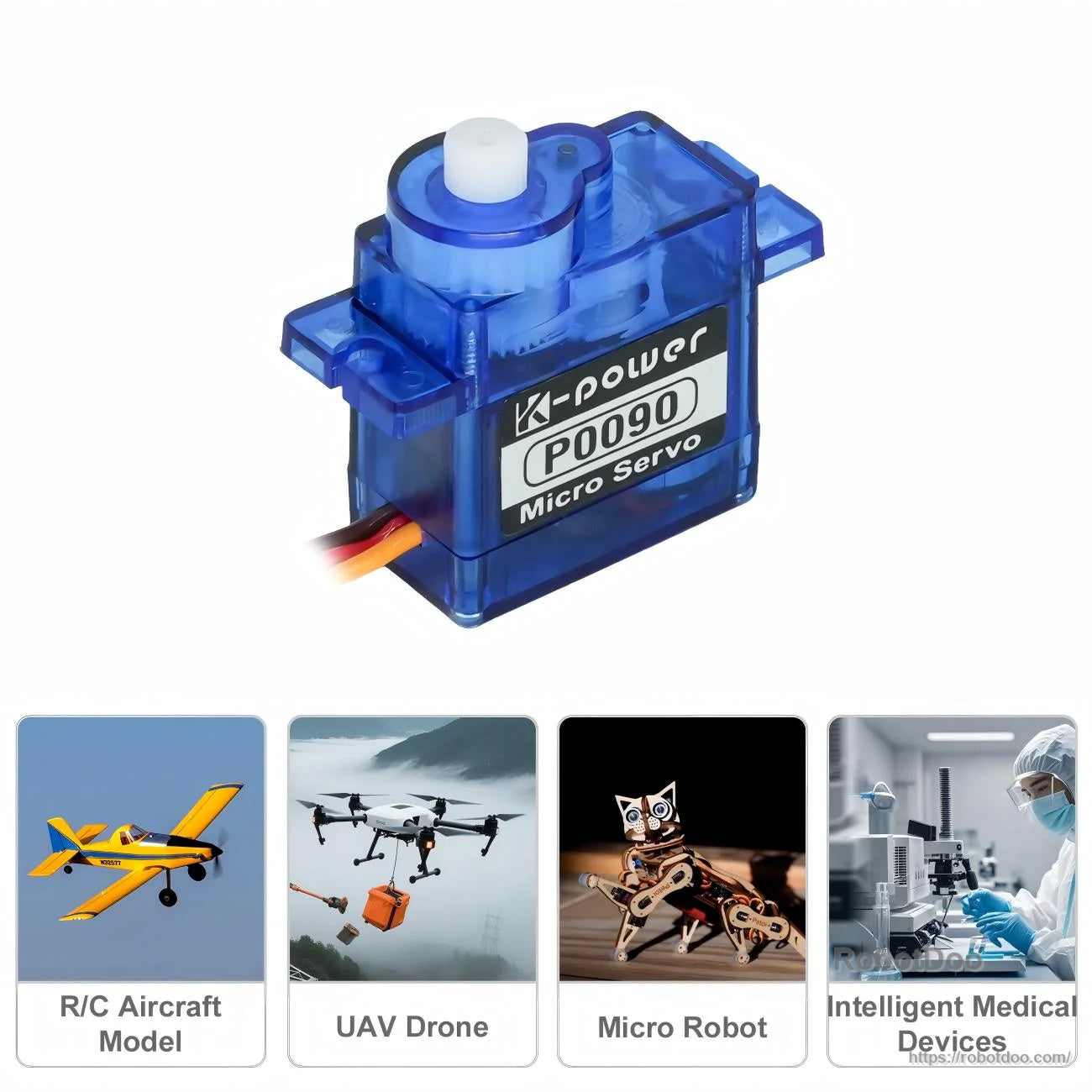
Compact micro servo for lightweight mechanisms in robots and RC models, with a standard 3‑wire servo lead.
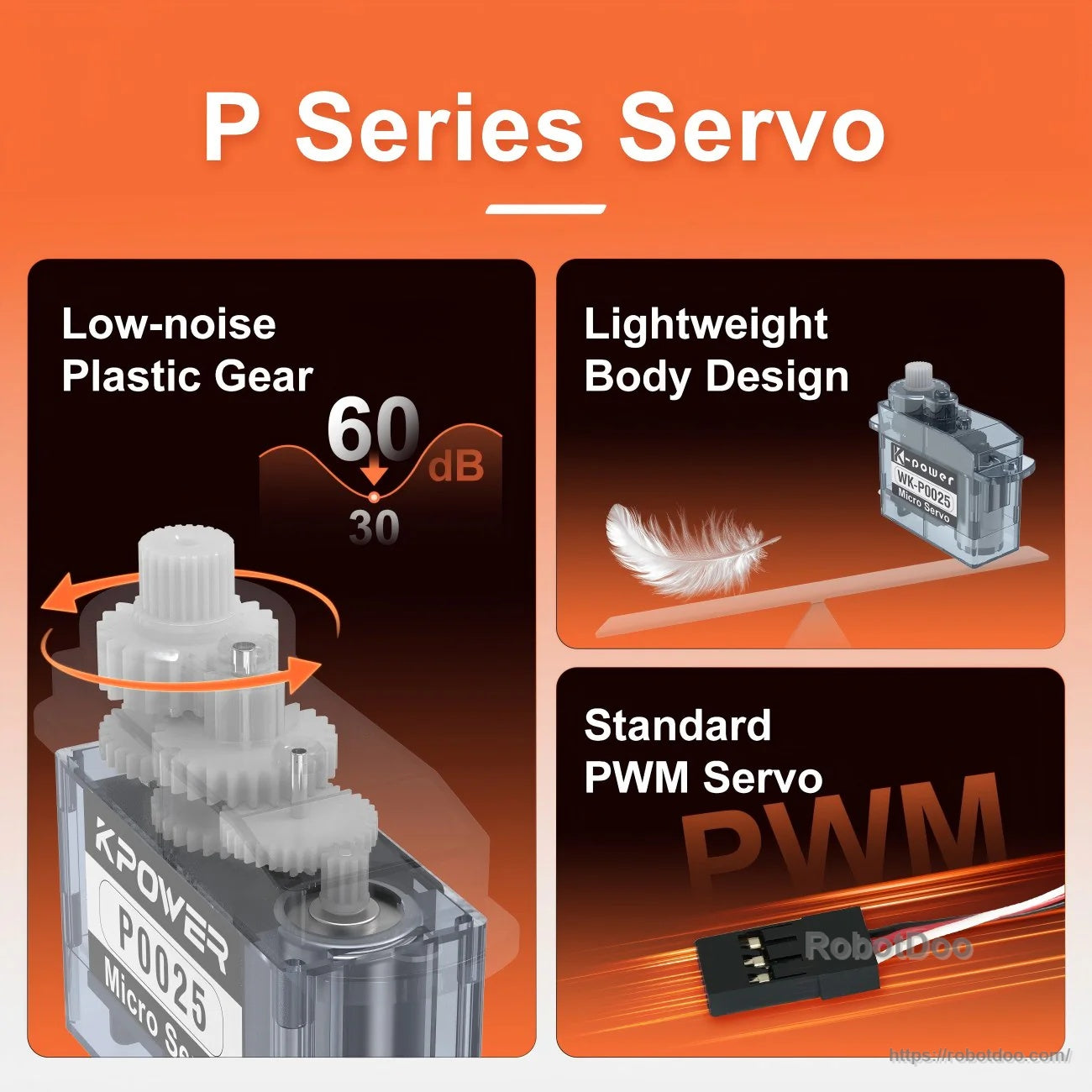
Low-noise plastic gearing and a lightweight body help keep small builds responsive without adding bulk.
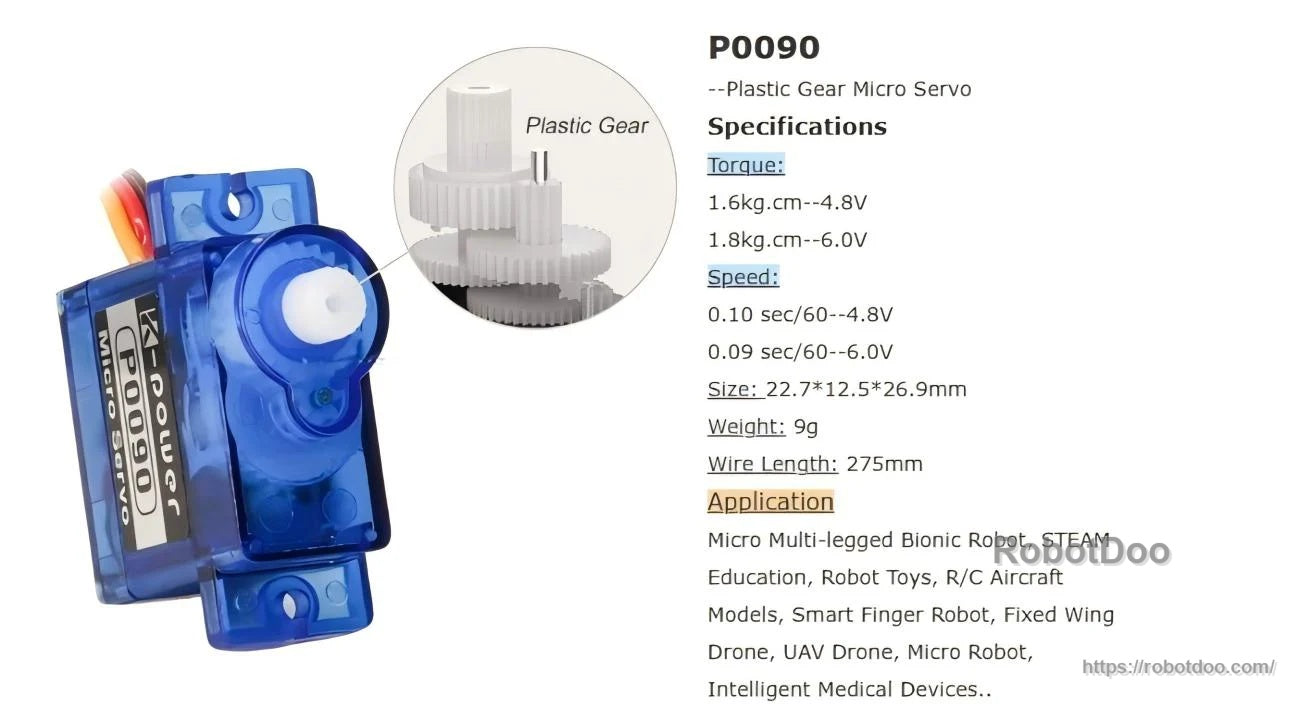
Key specs are summarized for quick selection, including torque at 4.8 V and 6.0 V and a compact footprint.

A good fit for small R/C aircraft mechanisms where weight and size are critical.
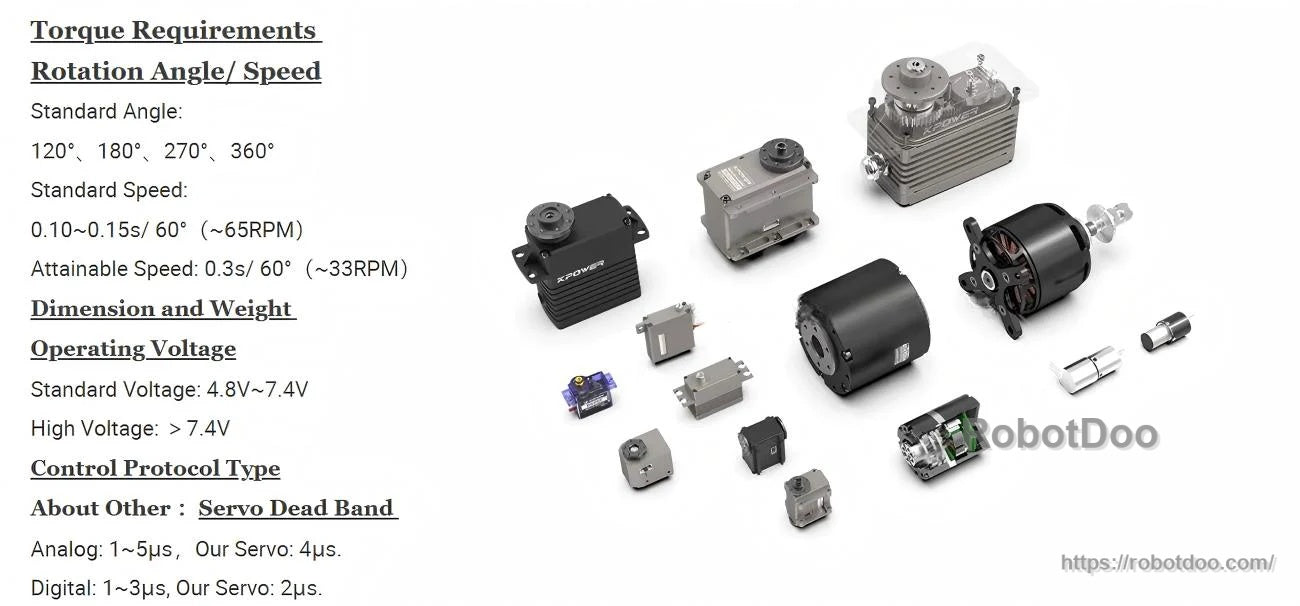
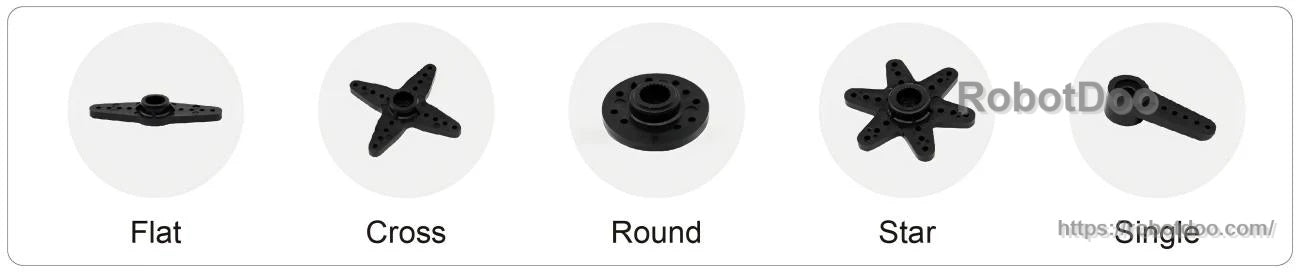
Multiple horn shapes make it easier to match the output to linkages, wheels, or custom brackets.
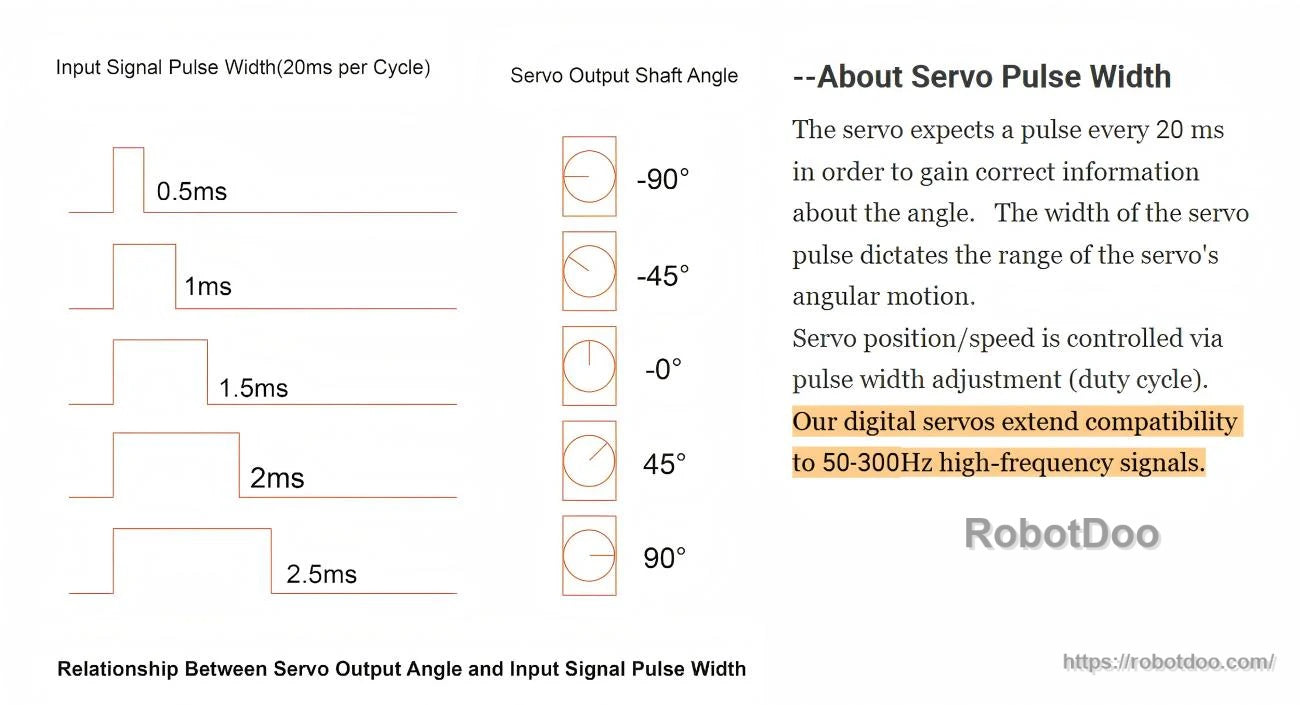
Standard PWM pulse widths control the output angle, with compatibility information for higher-frequency signals.
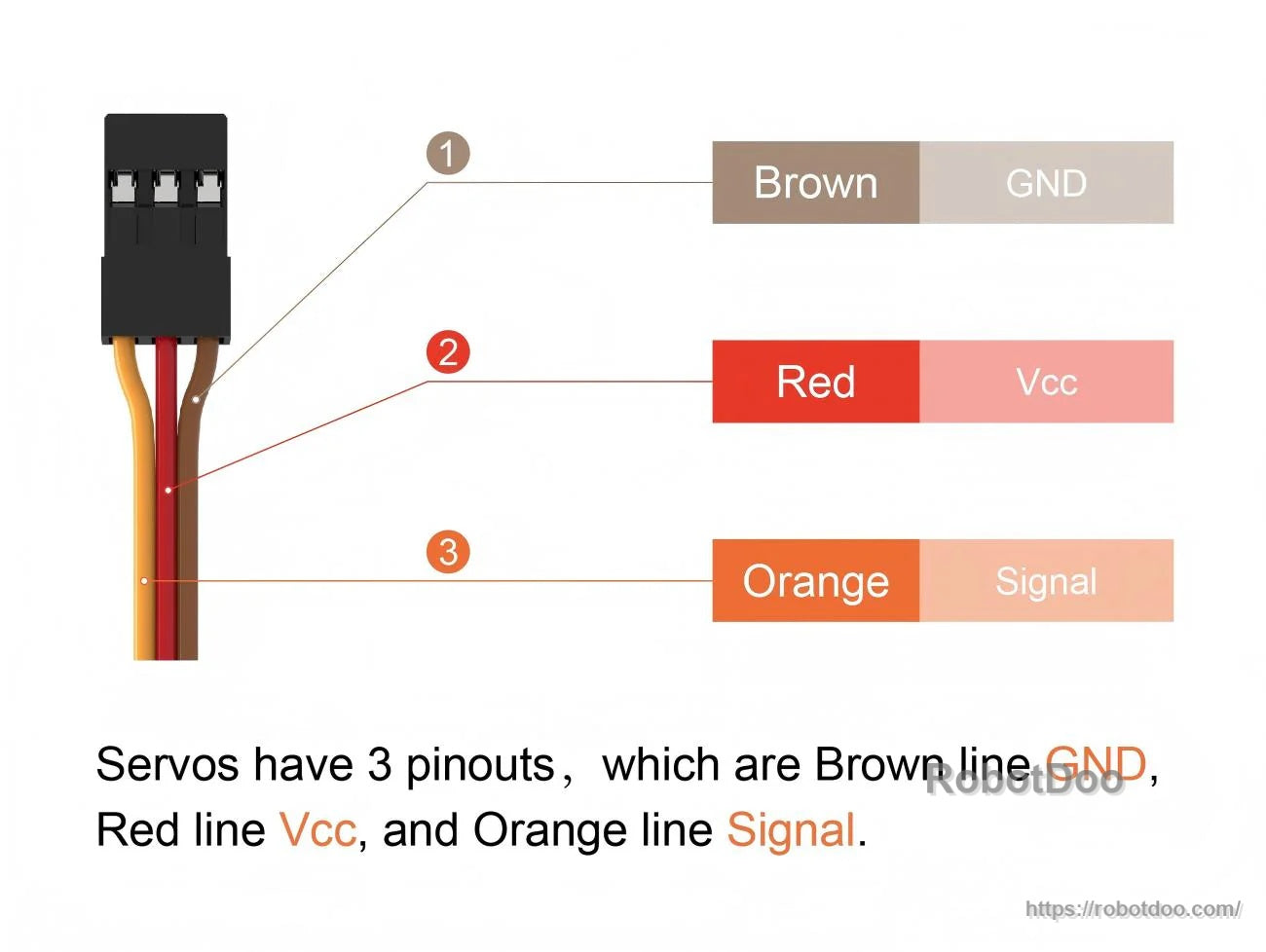
Wiring is straightforward: brown to GND, red to Vcc, and orange to the control signal pin.